Our verdict
川田 occupies a basement space in Nihonbashiningyocho, Chuo City, one of Tokyo's older mercantile neighbourhoods where the dining scene tends toward precision over spectacle. The address places it within a tier of serious Japanese restaurants that favour depth of curation over visibility, with a wine and beverage program that draws on the same philosophy of careful selection that defines the kitchen.

Pearl is the En Primeur Club membership app, where members save venues, book tables and use the concierge.
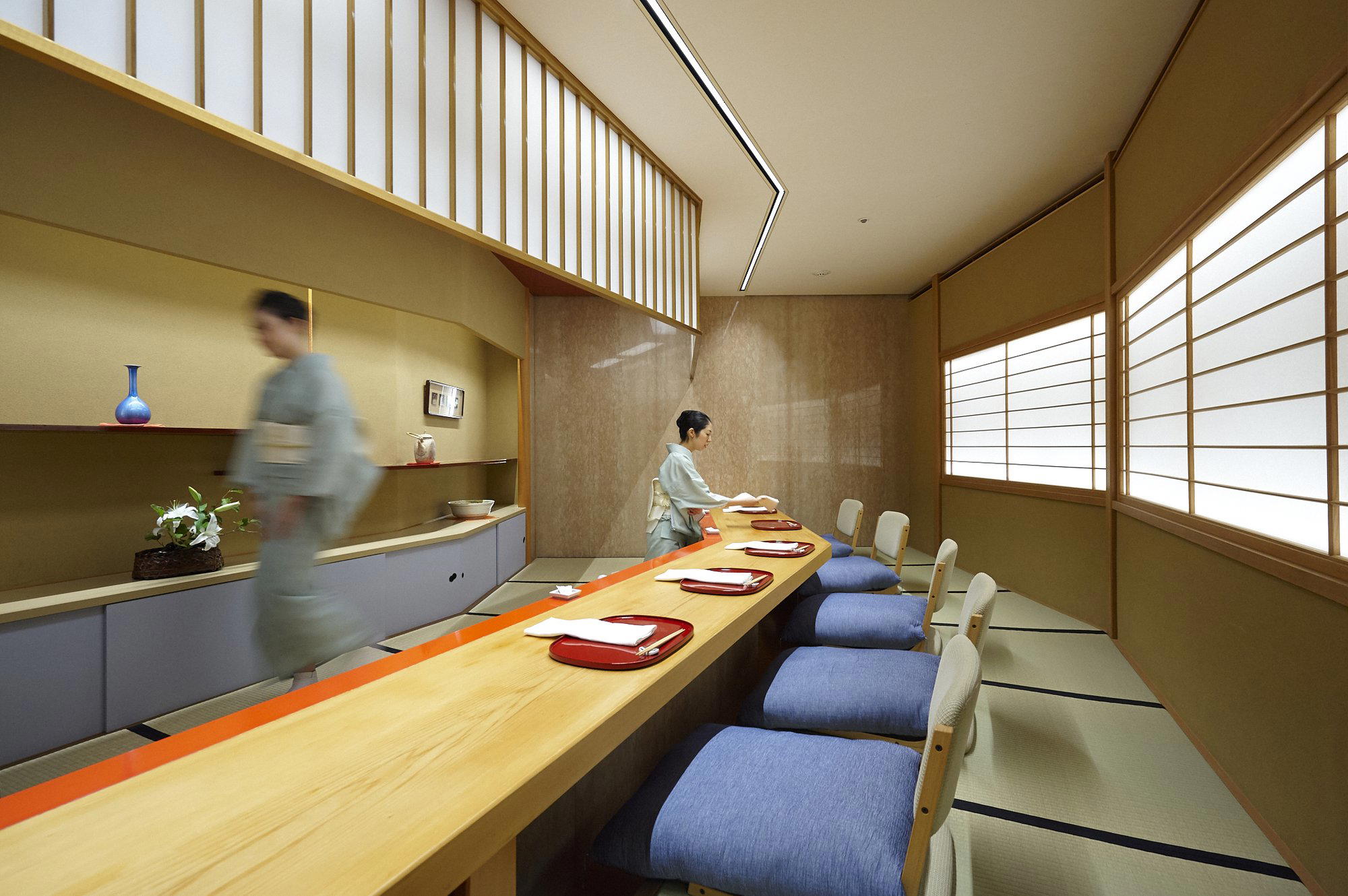
Nihonbashiningyocho and the Restaurants That Suit It
There is a version of Tokyo dining that operates entirely outside the Ginza-Roppongi axis, quieter, less photographed, and often more serious for it. Nihonbashiningyocho, a neighbourhood in Chuo City whose commercial roots stretch back to the Edo period, belongs to that category. The streets around the old doll-makers' district have accumulated a particular kind of restaurant: basement rooms, counter seating, menus built for repeat visitors rather than first-timers. 川田, addressed at 1-Chome-5-5 Nihonbashiningyocho in a basement level, fits that pattern precisely.
The neighbourhood itself functions as a form of editorial curation. Restaurants that open here are not chasing foot traffic or a location premium. They are, almost by definition, drawing a clientele that has sought them out, which shapes everything from the pacing of service to the assumptions a kitchen can make about its guests. That context matters when reading any restaurant in this part of Chuo City.
Basement Rooms and What They Signal
In Tokyo, the basement restaurant carries specific meaning. Unlike the ground-floor visibility of a Ginza counter or the view-dependent positioning of a Roppongi dining room, the B1 address communicates a certain lack of interest in passive discovery. Guests arrive because they already know. The physical environment, descending into a space, the particular acoustics of below-grade rooms, the sense of separation from the street, has become a recognisable format among the city's more considered dining addresses.
川田's basement location in Nihonbashiningyocho places it within a cohort of Tokyo restaurants where the room itself is not the draw. What matters at these addresses is what happens at the counter or table: the sequencing of a meal, the depth of a drinks program, the knowledge a host brings to the pairing of food and wine. These are the variables that determine whether a below-street-level room becomes a destination or a footnote.
The Wine Program as the Central Editorial Question
In Japanese fine dining, the wine list has undergone a significant shift over the past two decades. Through the 1990s and into the 2000s, even serious kaiseki and Japanese cuisine restaurants treated wine as a secondary consideration, with sake, shochu, and tea occupying the primary beverage role. That has changed. Tokyo now hosts a number of restaurants, across French, innovative, and traditional Japanese formats, where the wine program operates at a level that matches or exceeds European peer addresses.
The question for any serious restaurant in this city is where it positions itself on that spectrum. At the upper end of the market, addresses like L'Effervescence and Sézanne have built wine lists with genuine cellar depth, drawing on both classic French appellations and the growing category of serious Japanese domestic producers. RyuGin approaches the question through a kaiseki lens, where the integration of Japanese spirits and wine into a traditional format reflects a different kind of curatorial intelligence. Crony sits at the innovative end, where the beverage program is part of the conceptual proposition rather than a separate department.
For a restaurant in Nihonbashiningyocho, the beverage program is particularly consequential. The neighbourhood's clientele skews toward Tokyo professionals with established tastes, the kind of guest who will notice whether the by-the-glass selection has been thought through, whether the sake list shows regional range, whether the wine choices reflect a sommelier who understands the kitchen's direction. A serious program here signals that 川田 is operating in that upper register of neighbourhood dining where all components are expected to match.
Placing 川田 in the Broader Tokyo Dining Map
Tokyo's serious dining scene is often discussed through its most visible nodes: the Ginza omakase counter, the Azabu kaiseki room, the Marunouchi hotel restaurant. But a meaningful portion of the city's most considered dining happens in quieter districts, at addresses that function more like the restaurants of Lyon's backstreets or Copenhagen's side-canal neighbourhoods than the marquee addresses of either city's main drag.
Nihonbashiningyocho occupies that position in Tokyo's internal geography. Restaurants here sit in a peer group that includes serious addresses across the Chuo and Nihonbashi area, places where the assumption is that a guest arriving for dinner has done their research. That peer orientation changes how a kitchen approaches its menu and how a front-of-house team reads the room.
For those planning broader Japan itineraries, the calibre of dining in this register extends well beyond Tokyo. HAJIME in Osaka and Gion Sasaki in Kyoto represent the same tier of seriousness in their respective cities. akordu in Nara and Goh in Fukuoka show how that approach extends into smaller cities. Regional addresses worth noting include 一本杉 川嶋制 in Nanao, 夕佳亭山乃 in Sapporo, 湖邸庄屋 in Takashima, and 鶴羽屋 in Nishikawa Machi. The pattern repeats: basement or discrete entry, counter-centric format, beverage program treated as a primary discipline. Birdland in Sakai and Bistro Ange in Toyohashi demonstrate how the same philosophy of careful curation applies even further from major metropolitan centres.
For a transatlantic reference point, the sommelier-led dining model that has shaped places like Le Bernardin in New York City and the beverage-integrated tasting format at Atomix offer useful comparisons, addresses where the drinks program is not supplementary but constitutive of the dining proposition. That framing applies with equal force to where 川田 likely positions itself.
For context on the full Tokyo scene, including how Nihonbashiningyocho addresses compare to the city's other serious dining districts, see our full Tokyo restaurants guide. Peer sushi addresses worth benchmarking include Harutaka, which operates at the ¥¥¥¥ tier in a comparable format of intimate, credential-heavy counter dining.
What makes 川田 worth seeking out?
The address itself answers part of that question. Nihonbashiningyocho is not a neighbourhood where restaurants open for visibility; the clientele is local, repeat-oriented, and knowledgeable. A restaurant operating at the B1 level in this district, in a dining culture that rewards exactly this kind of quiet seriousness, is likely building its reputation through the consistency of what happens inside rather than through external promotion. The beverage program, in particular, is the variable most worth investigating, it is the dimension that most reliably distinguishes a serious address from a competent one at this level of Japanese dining.
How does 川田's Nihonbashiningyocho location shape the dining experience compared to more central Tokyo restaurant districts?
Chuo City's Nihonbashiningyocho sits at a remove from the high-visibility dining corridors of Ginza and Azabu, which means the restaurants that operate here are self-selected for a guest who already knows where they are going. That geographic specificity tends to compress the tourist-to-regular ratio in the room, which in turn shapes everything from the assumptions a kitchen makes about its guests' familiarity with the format to the depth of conversation a sommelier or host is likely to engage in. For a first-time visitor to Tokyo's serious dining scene, the neighbourhood warrants comparison against the broader map in our Tokyo restaurants guide before committing to an evening here.
Budget and Context
A small set of peers for context, based on recorded venue fields.
| Venue | Cuisine | Price | Awards | Notes |
|---|---|---|---|---|
| å·ç°This venue (the venue you are viewing) | Sushi Omakase | Not listed | Not listed | Not listed |
| Harutaka | Edo-Style Omakase Sushi | $200–300 | 3 Michelin Stars · World's 50 Best #76 | Sushi |
| L'Effervescence | Modern French with Japanese Influences | $200–300 | 3 Michelin Stars · World's 50 Best #69 | French |
| RyuGin | Modern Kaiseki | $500+ | 3 Michelin Stars · World's 50 Best #41 | Kaiseki, Japanese |
| Crony | Modern French with Japanese Influences | $150–200 | 2 Michelin Stars · World's 50 Best #34 | Innovative, French |
| Florilège | Modern French-Japanese Plant-Based Fine Dining | $50–100 | 2 Michelin Stars · World's 50 Best #31 | French |
Continue exploring
More in Tokyo
Restaurants in Tokyo
All restaurants in Tokyo →

Bars in Tokyo
All bars in Tokyo →

Details
- Special Occasion
- Chefs Counter
- Sake Program
- Omakase
Laid-back setting on the 38th floor.