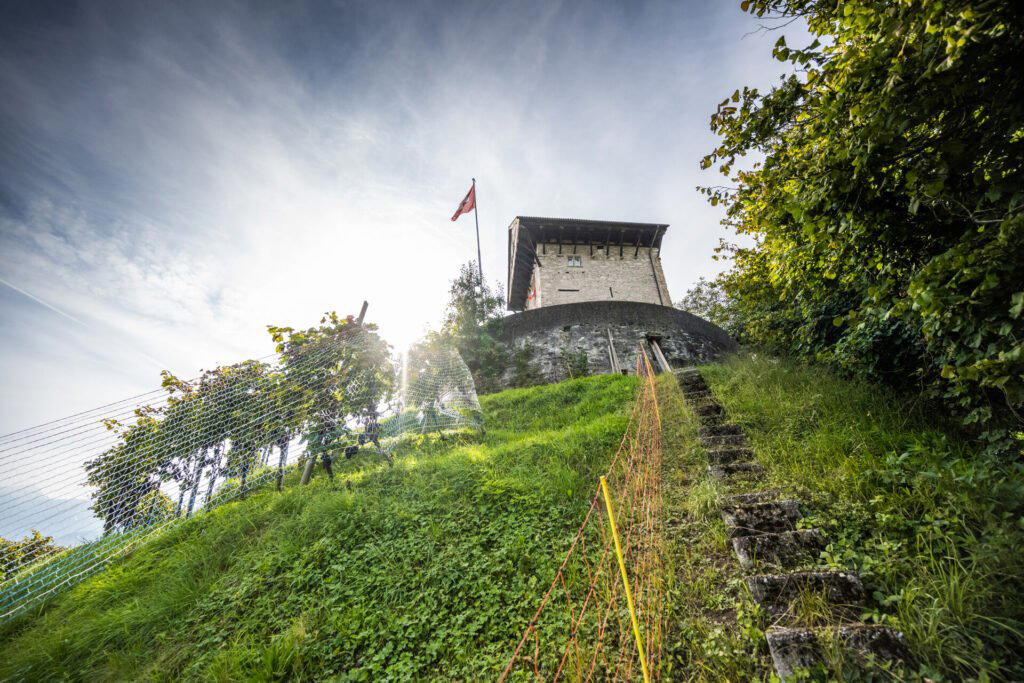
Perched on the heights above Bregenz, Burgrestaurant Gebhardsberg occupies a medieval castle setting that frames Lake Constance and the Vorarlberg hills in equal measure. The restaurant draws on Austria's tradition of castle dining, where the ritual of the meal is inseparable from the drama of the approach. It sits within a city whose cultural calendar, anchored by the Bregenzer Festspiele, attracts an audience accustomed to considered experiences.
Pearl is the En Primeur Club membership app — saves, bookings, and concierge access live there. Same editors, same standards.
- Address
- Gebhardsbergstraße 1, 6900 Bregenz, Austria
- Phone
- +43557442515
- Website
- greber.cc
- Directions
- Get directions
 Saves & bookings on Pearl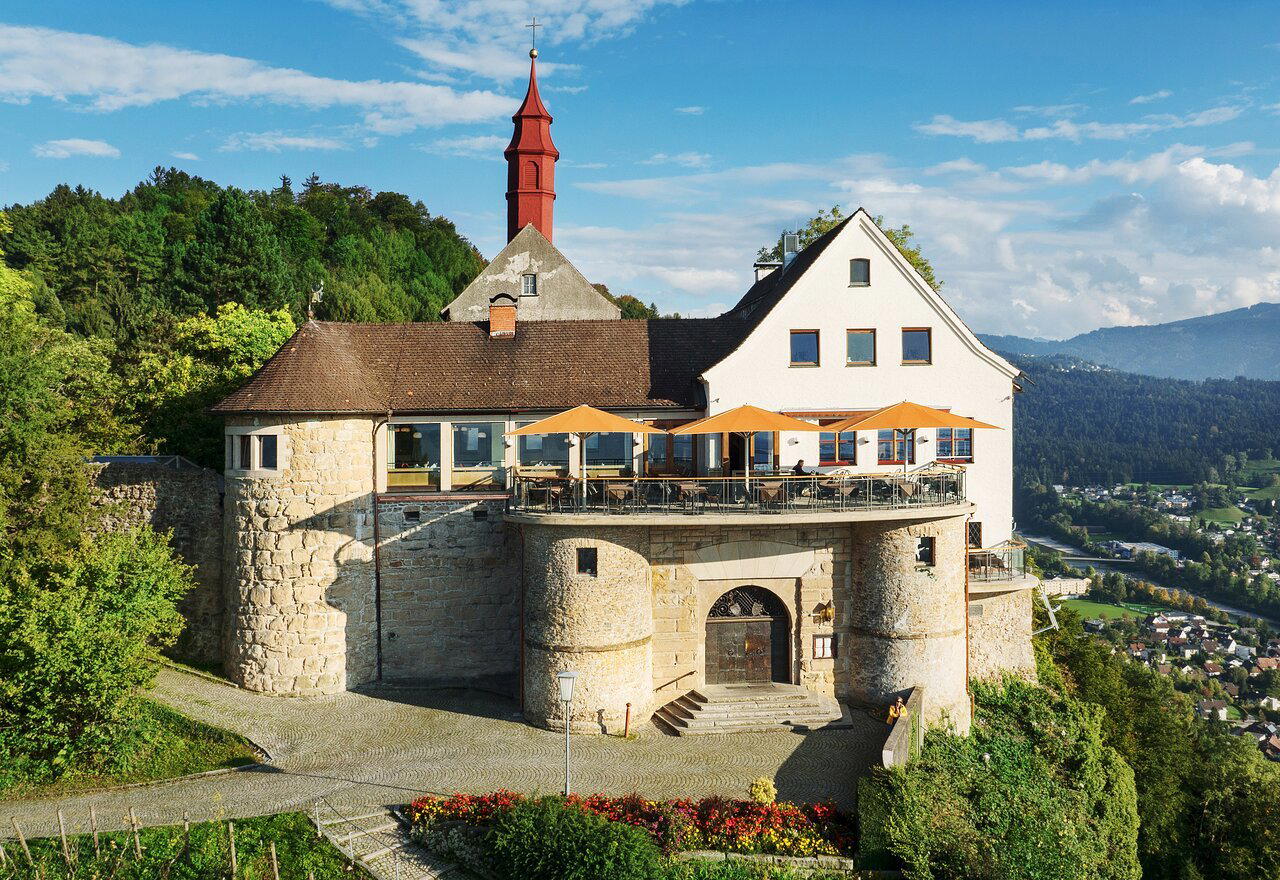
The Approach Sets the Pace
Castle restaurants in the German-speaking Alpine world operate by a logic that has little to do with urban dining. At Burgrestaurant Gebhardsberg, the road climbs above Bregenz through residential streets before the medieval fortification comes into view, its stone walls catching the late afternoon light off Lake Constance below. By the time a guest arrives at the entrance, the meal has already begun in a structural sense: the effort of getting there is part of the ritual, not a prelude to it. The physical context shapes how guests arrive, how quickly they settle, and how willing they are to commit to a longer meal.
Bregenz as a Dining City
Bregenz occupies an unusual position in Austria's restaurant scene. It is the capital of Vorarlberg and home to fewer than 30,000 permanent residents, yet it draws a disproportionately international audience each summer through the Bregenzer Festspiele, the open-air opera festival staged on a floating stage on the lake. That seasonal influx has historically shaped what restaurants can sustain: menus that read across languages, price points that reflect festival-week demand, and formats that accommodate guests who have travelled some distance and want an occasion, not just a meal. The city's dining options range from direct lakeside brasseries to more considered venues. Among the latter, Babenwohl im Hotel Schwärzler and Falstaff represent the more polished end of the in-town offer, while Buehnedrei and Der Speiseladen Werktags position themselves toward a more casual register. Burgrestaurant Gebhardsberg sits outside that urban cluster, defined less by its cuisine tier and more by its setting, which performs a specific function in the city's dining ecosystem. Local comparison venue Ilge offers another reference point for the mid-range local dining scene.
The Castle Dining Ritual in Austria
Across Austria, castle and refined-position restaurants follow a recognisable dining rhythm. Meals run longer than their urban equivalents, partly because guests have built time into the visit, partly because the view functions as a course in itself. Tables tend to be placed to face outward rather than inward, and service pacing reflects this: there is rarely pressure to clear and turn covers quickly. This model rewards guests who arrive without tight time constraints. The Austrian tradition of Gemütlichkeit, a concept of convivial unhurried ease, maps directly onto this format. A meal at a Burgrestaurant is understood locally as an event that unfolds over two hours or more.
Austria's broader dining culture offers a useful frame here. At the summit of the country's restaurant hierarchy, places like Steirereck im Stadtpark in Vienna and Landhaus Bacher in Mautern an der Donau have built international reputations on precisely this long-form ritual: meals constructed as sequences, service that reads the table, and spaces that make duration feel appropriate rather than excessive. Castle restaurants operate the same logic at a less rarefied price point, making the ritual accessible to a wider audience without abandoning its essential character.
What the Setting Demands of the Diner
Eating at a hilltop castle restaurant in Austria involves certain implicit agreements between venue and guest. The setting asks for commitment: you drive up, you stay a while, you eat and drink at a pace that suits the view. This is structurally different from dropping into a city-centre restaurant between other engagements. The format also tends to favour Austrian regional cooking over more internationally inflected menus, partly because the architectural context makes traditional food feel coherent and partly because the audience, which skews toward domestic visitors and festival-adjacent tourists, tends to want something that reads as authentically local. This is the same tension resolved differently across Western Austria's dining scene. At Stüva in Ischgl and Schwarzer Adler in Hall in Tirol, heritage settings anchor menus that move between tradition and technique. The question at any castle restaurant is how far the kitchen pushes against the setting's conservative pull.
At venues in comparable formats internationally, from the hilltop dining rooms of rural France to the country house restaurants of the English Midlands, particularly successful operations are those where the kitchen earns the setting rather than relying on it. The comparison is instructive: occasion dining depends on more than architecture.
Planning a Visit
Burgrestaurant Gebhardsberg is a restaurant serving traditional Austrian castle cuisine in Bregenz, Austria, at Gebhardsbergstraße 1, 6900 Bregenz. The restaurant sits above the city, making it most practical to reach by car, though the drive from the city centre is short. Timing a visit to coincide with late afternoon or early evening positions guests to catch the light shifting across Lake Constance and the hills of Germany and Switzerland on the far shore, a view that changes character considerably between seasons. Summer visits align naturally with the Bregenzer Festspiele calendar, when the city is at its most animated and demand for evening dining peaks. Booking ahead is advisable regardless of season given the castle's position as one of Bregenz's most recognisable dining addresses. For comparable destination-restaurant experiences across Austria's western regions, Restaurant 141 by Joachim Jaud in Mieming, Kräuterreich by Vitus Winkler in Sankt Veit im Pongau, and Döllerer in Golling an der Salzach each offer a different calibration of setting and culinary ambition. And for a reference point on what destination dining can mean at stronger examples from the international register, Le Bernardin in New York City demonstrates how occasion and craft can be aligned in an entirely different kind of room. Equally, Ois in Neufelden shows how Austrian regional cooking can anchor a dining destination even far from major tourist circuits.
Cuisine and Recognition
Comparable venues nearby, for context on price, style, and recognition.
| Venue | Cuisine | Price | Notes |
|---|---|---|---|
| Burgrestaurant GebhardsbergThis venue — the venue you are viewing | Traditional Austrian Castle Cuisine | $$ | Not listed |
| Buehnedrei | Modern Austrian | $$ | Platz der Wiener Symphoniker |
| Babenwohl im Hotel Schwärzler | Modern Austrian with International Classics | $$$ | Not listed |
| Milchpilz | Well-known Austrian Milk Kiosk | $ | Lake Constance promenade |
| Wirtshaus am See | Traditional Austrian Lakeside | $$ | Seepromenade |
| New York Bagel & Bowl | New York-Style Bagels & Bowls | $ | Bregenz |
Continue exploring
More in Bregenz
Restaurants in Bregenz
Browse all →
Bars in Bregenz
Browse all →

Hotels in Bregenz
Browse all →

At a Glance
- Romantic
- Scenic
- Rustic
- Classic
- Cozy
- Celebration
- Special Occasion
- Group Dining
- Terrace
- Historic Building
- Panoramic View
- Local Sourcing
- Waterfront
- Mountain
Current opening hours
- Monday
- Closed
- Tuesday
- 11:30 AM–5 PM
- Wednesday
- 1–10 PM
- Thursday
- 1–10 PM
- Friday
- 11:30 AM–10 PM
- Saturday
- 11:30 AM–10 PM
- Sunday
- 11:30 AM–10 PM
Hours can change for holidays and private events. Last verified .
Medieval castle atmosphere with romantic courtyard, vaulted cellar, and terrace dining in a fairy-tale setting.