Bro's Burger Kitchen occupies a central Liège address on Rue Pont d'Avroy, positioning itself within the city's busy casual dining corridor. The menu architecture follows the American-style smash-and-stack format that has reshaped European burger culture over the past decade, with a focus on build-your-own options and loaded combinations. For visitors moving between Liège's more formal dining rooms and its street-level eating scene, it offers a useful mid-register stop.
Pearl is the En Primeur Club membership app — saves, bookings, and concierge access live there. Same editors, same standards.
- Address
- Rue Pont d'Avroy 25, 4000 Liège, Belgium
- Phone
- +32478152951
- Website
- facebook.com
- Directions
- Get directions
 Saves & bookings on Pearl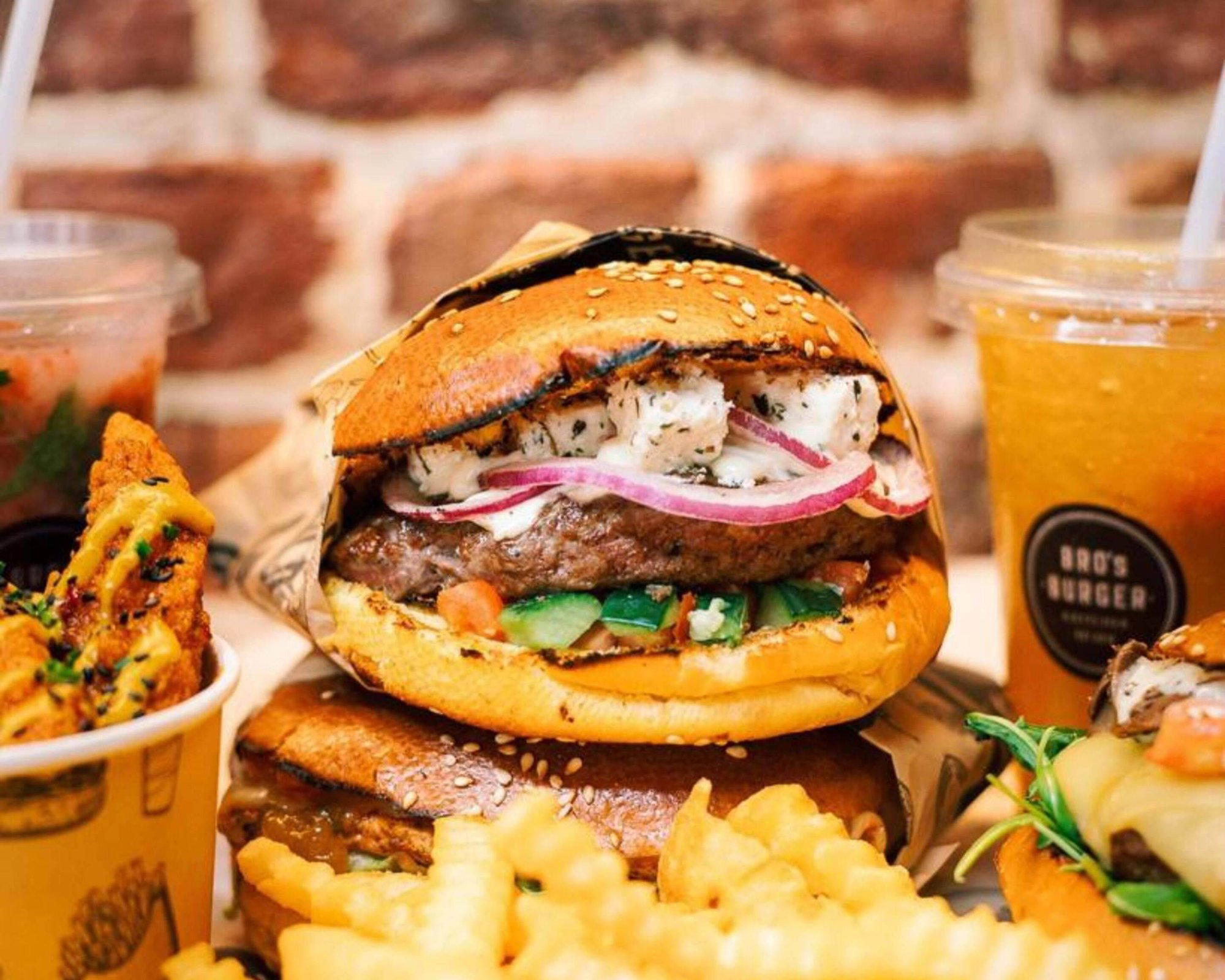
Where Liège's Casual Dining Corridor Meets Burger Culture
Rue Pont d'Avroy runs through one of Liège's most commercially active stretches, a pedestrian-friendly spine that connects the city's shopping district to the older quarters flanking the Meuse. The street draws foot traffic at most hours, and the dining options along it have shifted noticeably over the past decade toward accessible, format-driven concepts. Bro's Burger Kitchen, at number 25, sits inside that broader pattern: a casual counter-service or table-service burger operation trading on the same street-level energy that has made this corridor one of the city's more reliable spots for quick, satisfying eating without the formality of the white-tablecloth rooms a few blocks away.
Liège's restaurant scene operates across a clear range. At one end, the city's longer-established Italian addresses — Altro Maccheroni, Antipasti di Sophie, Asti, and Baci — anchor a mid-tier dining tradition rooted in regional comfort and familiar pasta-led menus. At the other, concept-driven rooms like Cabale push toward more considered cooking. The burger format occupies a different register entirely: lower price ceiling, higher throughput, and a menu logic built around customisation rather than the chef-dictated set-piece structure that defines most of the city's better-regarded tables.
The Menu Architecture: Customisation as the Core Proposition
The American-style burger concept that has spread through Belgian cities over the past fifteen years typically organises its menu around one of two philosophies. The first is the signature-first approach, where a small roster of named, pre-designed burgers defines the identity of the kitchen and the customer chooses from those constructs. The second is the build-your-own architecture, where a base protein, bun selection, cheese tier, and topping matrix give the customer meaningful control over the final plate. Both formats have found audiences in Belgian casual dining, though the latter tends to produce longer ticket times and more variable results, the kitchen's quality control challenge shifts from execution consistency to assembly accuracy.
What the burger format reveals about a kitchen's priorities is often clearest in the details that surround the main item: the quality of the frying medium for the side orders, the structural integrity of the bun relative to the patty weight, and whether the sauce programme is house-made or drawn from commercial supply. These are the markers that separate an operator with genuine kitchen investment from one running a licensing model on a thin margin. In a city where casual dining has expanded quickly to meet student and worker demand around the Liège university quarter and the central shopping zone, those distinctions matter to repeat visitors even if they're invisible to first-timers.
Belgium's fast-casual tier has been shaped significantly by the country's own deep frying culture, the friterie tradition runs through the national food identity in a way that makes the side-order portion of any burger operation a point of heightened expectation for local diners. A burger kitchen on Rue Pont d'Avroy is implicitly competing with the city's own friteries as much as with peer burger concepts, and that pressure tends to keep the frites component of any serious operation at a higher baseline than you'd find in comparable concepts in cities without Belgium's fried-potato heritage.
Placing Bro's in Liège's Wider Dining Range
For visitors using Liège as a base to reach the broader Belgian fine dining circuit, the city's casual register serves a practical function. Belgium's most-decorated kitchens are distributed across the country rather than concentrated in a single city: Hof van Cleve - Floris Van Der Veken in Kruishoutem, Boury in Roeselare, Zilte in Antwerp, and Willem Hiele in Oudenburg represent a tier of ambition and technical rigour that sits at the top of the national conversation. Further afield, Wallonia has its own contributors to that discussion, including d'Eugénie à Emilie in Baudour, while Flanders adds further depth through Vrijmoed in Gent, La Durée in Izegem, Cuchara in Lommel, and Ralf Berendsen in Neerharen. Brussels adds its own layer through addresses like Bozar Restaurant. None of that fine dining infrastructure has a direct bearing on a burger kitchen on Rue Pont d'Avroy, but it establishes why Liège's casual tier functions as it does: the city has a population of dining-aware visitors and residents who have calibrated expectations across a wide range of formats.
Within that context, the burger format in Liège functions as a pressure valve: after a long day of travel or a demanding tasting menu the previous evening, a well-executed burger and a cold Belgian lager on a busy pedestrian street has a particular utility that no amount of restaurant ambition can replicate. The question for any specific operator in this space is whether the execution matches the accessibility of the format, or whether the concept is trading primarily on convenience and foot traffic without the kitchen investment to back it.
For a broader survey of where Liège's dining options sit across price points and formats, the EP Club Liège restaurants guide maps the full range. Internationally, the gap between a casual burger counter and the formal end of the dining spectrum is illustrated by contrasting formats: Le Bernardin in New York City and Lazy Bear in San Francisco represent the kind of tightly controlled, chef-driven proposition that sits at the opposite structural end from a customisable burger operation, not a hierarchy of value, but a difference in what the menu architecture is designed to accomplish.
Getting There and Planning Your Visit
Rue Pont d'Avroy 25 sits within easy walking distance of Liège's central rail hub, Liège-Guillemins, which is served by Thalys and Eurostar connections as well as domestic Belgian rail. The address is in the commercial core, making it accessible on foot from most central hotels without requiring a taxi or tram. For visitors arriving by car, central Liège parking is available in several nearby structures, though the pedestrianised nature of parts of Rue Pont d'Avroy means drop-off rather than direct parking is typically the approach.
How Bro's Burger Kitchen Liège compares with similar nearby venues.
| Venue | Cuisine | Price |
|---|---|---|
| Caudalie | French Contemporary | €€€ |
| Enoteca | Italian | €€ |
Continue exploring
More in Liège
Restaurants in Liège
Browse all →
Bars in Liège
Browse all →
Hotels in Liège
Browse all →

At a Glance
- Lively
- Trendy
- Casual Hangout
- Late Night
- Beer Program
Current opening hours
- Monday
- 11:30 AM–12 AM
- Tuesday
- 11:30 AM–12 AM
- Wednesday
- 11:30 AM–12 AM
- Thursday
- 11:30 AM–12 AM
- Friday
- 11:30 AM–2 AM
- Saturday
- 11:30 AM–2 AM
- Sunday
- 11:30 AM–12 AM
Hours can change for holidays and private events. Last verified .
Casual and energetic fast-food atmosphere with efficient service and limited seating.
Know Before You Go
- Getting there
- Rue Pont d'Avroy 25, 4000 Liège, Belgium