Grand Café de la Gare occupies one of Liège's most architecturally loaded addresses, the Calatrava-designed Guillemins station, placing it in a different category from the city's neighbourhood bistros. Where Liège dining tends toward intimate rooms and Franco-Belgian tradition, this café operates at a civic scale, functioning as a crossroads for commuters, tourists, and residents in equal measure. Its position within Belgium's broader café culture makes it a useful reference point for understanding how transit hospitality has evolved in the country's smaller cities.
Pearl is the En Primeur Club membership app — saves, bookings, and concierge access live there. Same editors, same standards.
- Address
- Gare des Guillemins 20C, 4000 Liège, Belgium
- Phone
- +3242224359
- Website
- grandcafedelagare.be
- Directions
- Get directions
 Saves & bookings on Pearl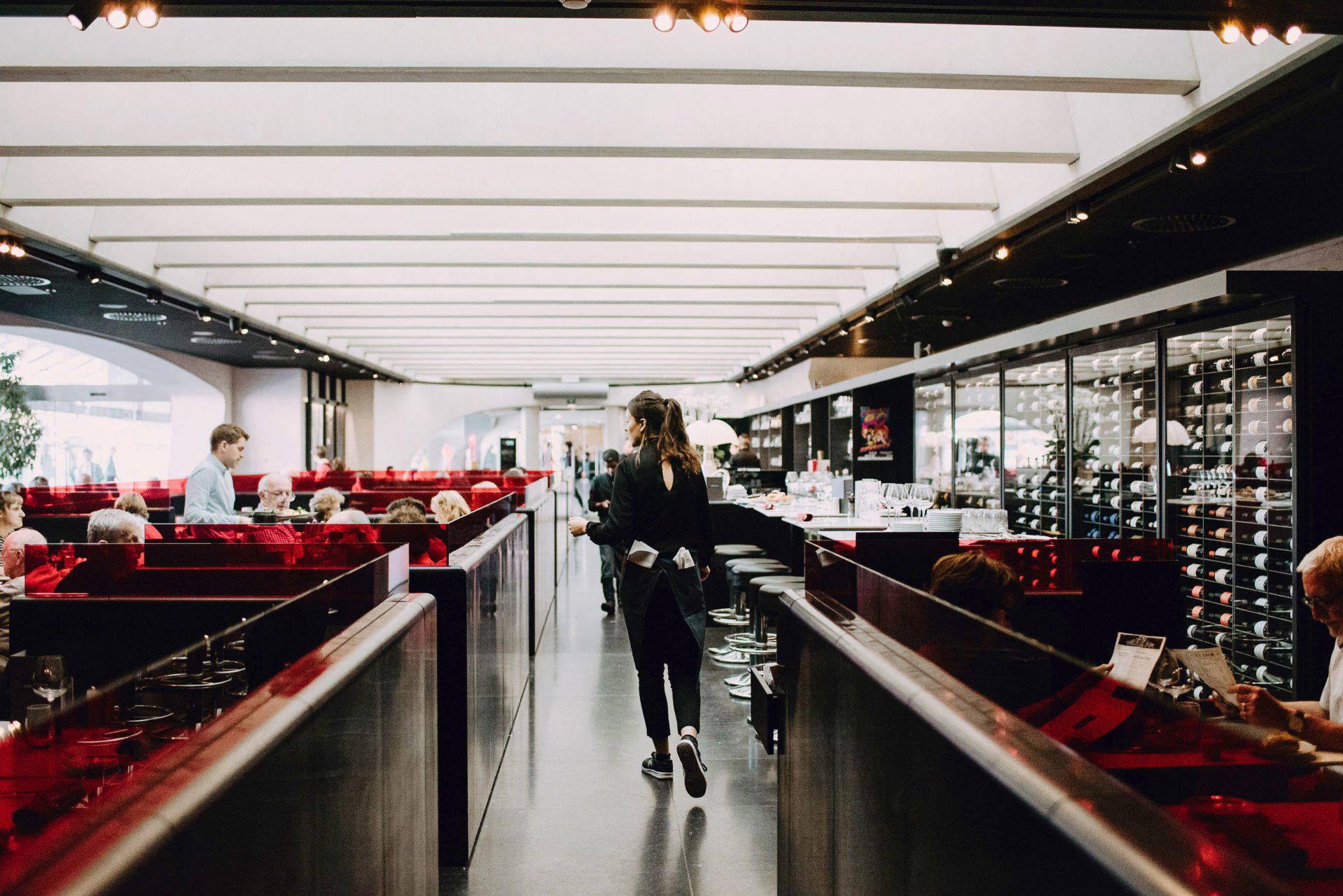
Where Architecture Sets the Terms
Santiago Calatrava's Gare de Guillemins is one of the more discussed pieces of contemporary infrastructure in Belgium: a sweeping white steel-and-glass canopy that turns the act of catching a train into something closer to moving through a public monument. Grand Café de la Gare operates directly within this space, at Gare des Guillemins 20C, and that address is the single most important piece of context for understanding what the venue is and what it is not. It is not a neighbourhood restaurant competing with Liège's intimate Franco-Belgian bistros on their own terms. It is a grand-format café anchored inside a civic building, and the architecture shapes everything from the scale of the room to the rhythm of its clientele.
In Belgium, the tradition of the grand café attached to a major railway station runs long. Brussels, Antwerp, and Ghent each have their versions, and the format typically functions at the intersection of transit convenience and civic hospitality. Liège's iteration at Guillemins sits within that lineage, though the station itself is newer and more architecturally singular than most of its Belgian counterparts. The café's position gives it a footfall pattern that few restaurants in the city can replicate: a constant mix of Thalys and Intercity passengers, day visitors arriving from Brussels or Amsterdam, and Liégeois using the station as a neighbourhood anchor. For comparison, the city's more specialised dining rooms, among them Héliport Brasserie for creative French cooking or ¡Toma! at the premium creative end, draw a more deliberate dining public who have chosen the room in advance.
The Station Café Format in a Sustainability Frame
Across European dining, the question of what a transit-linked café owes its environment has become more pointed over the past decade. High-volume locations attached to infrastructure generate significant waste: single-use packaging, short-cycle produce sourcing driven by throughput rather than seasonality, and energy loads from extended operating hours across large, glass-heavy spaces. Calatrava's Guillemins canopy is, by design, flooded with natural light, which reduces artificial lighting demands during daylight hours, a structural advantage that some station cafés in comparable positions have used to frame broader sustainability commitments.
Belgium's café and brasserie sector has been slower than its Flemish fine-dining counterpart to publish sourcing credentials. Restaurants like Willem Hiele in Oudenburg and L'air du temps in Liernu have set a high bar for terroir-driven, waste-conscious practice at the recognised end of Belgian dining. For a high-volume transit café, the comparison set is different, but the direction of travel in Belgian hospitality broadly favours sourcing transparency and reduced disposable packaging, and venues operating in major civic spaces face increasing expectation from a travelling public that has absorbed those norms elsewhere in Europe.
For context on how Belgium's decorated dining rooms have approached these questions, Hof van Cleve in Kruishoutem and Boury in Roeselare both operate within frameworks that prioritise regional sourcing and seasonal discipline, approaches that trickle through to the wider Belgian hospitality conversation over time.
Liège Dining and Where This Fits
Liège occupies a specific position in Belgian food culture. It is Wallonia's largest city, with a culinary identity rooted in Franco-Belgian tradition: boudin, gaufres de Liège, lapin à la liégeoise, dishes that carry regional specificity and have resisted the generic internationalism that flattens so many urban food scenes. The city's restaurant base reflects this: neighbourhood-scale rooms, Italian addresses like Al Piccolo Mondo, Altro Maccheroni, and Antipasti di Sophie serving a city with strong Italian community ties, and a mid-market brasserie layer that connects the city to its Walloon and French neighbours.
Grand Café de la Gare operates above all of that in the literal sense, within a landmark building, but it also functions at a different register: accessible, high-capacity, designed to serve people in transit as much as people who have made a destination choice. In that sense it is a complement to the city's restaurant scene rather than a direct competitor within it. A traveller arriving by train from Brussels or passing through from elsewhere in the Benelux region encounters it before they encounter the city proper. That positioning carries both an opportunity and a responsibility: the café functions as a first impression of Liège hospitality for a significant number of visitors.
Planning Your Visit
Grand Café de la Gare is reachable by train to Liège-Guillemins from Brussels in under an hour via Intercity or Thalys services, and the café's integration into the station building means there is effectively no travel time from platform to table. For visitors building a wider Belgian dining itinerary, the Guillemins connection places Liège within easy range of Antwerp's Zilte and the broader Flemish fine-dining corridor that extends through Bartholomeus in Heist, Castor in Beveren, De Jonkman in Sint-Kruis, and d'Eugénie à Emilie in Baudour. For a broader view of where this café sits within Liège's dining offer, see our full Liège restaurants guide.
Readers calibrating expectations should note that the grand café format, in Belgium as elsewhere in Western Europe, occupies a middle tier between the quick-service options found in most transit hubs and the destination dining rooms of the city centre. The format historically skews toward all-day service, a mid-range price point, and a menu designed for breadth rather than depth. Comparable transit-linked formats internationally, from the brasseries attached to Paris's major termini to the dining rooms within New York's Grand Central, including Le Bernardin in Midtown's broader orbit and Atomix representing the city's specialist counter end, show the full range of what transit-adjacent dining can mean. Liège's version is closer to the accessible-civic end of that spectrum, and that is not a criticism: it is the correct read of what the format is designed to do.
How Grand Café de la Gare Liège compares with similar nearby venues.
| Venue | Cuisine | Price |
|---|---|---|
| Riva | French | €€€ |
Continue exploring
More in Liège
Restaurants in Liège
Browse all →
Bars in Liège
Browse all →
Hotels in Liège
Browse all →

At a Glance
- Modern
- Classic
- Cozy
- Casual Hangout
- Historic Building
- Extensive Wine List
- Street Scene
Current opening hours
- Monday
- 8 AM–9 PM
- Tuesday
- 8 AM–9 PM
- Wednesday
- 8 AM–9 PM
- Thursday
- 8 AM–9 PM
- Friday
- 8 AM–9 PM
- Saturday
- 9 AM–9 PM
- Sunday
- 10 AM–9 PM
Hours can change for holidays and private events. Last verified .
Lumineux et moderne cadre sobre et épuré with convivial atmosphere.
Know Before You Go
- Getting there
- Gare des Guillemins 20C, 4000 Liège, Belgium