On a quiet stretch of Rue de l'Ourthe in Liège's Outremeuse district, Restaurant Les Saveurs de Bulgarie brings Bulgarian home cooking to a city whose restaurant scene skews heavily toward French and Italian traditions. The address alone signals something off the usual circuit — a deliberate detour from the mainstream, for those who know where to look.
Pearl is the En Primeur Club membership app — saves, bookings, and concierge access live there. Same editors, same standards.
- Address
- Rue de l'Ourthe 4, 4020 Liège, Belgium
- Phone
- +3243435720
- Website
- saveursbulgaria.wixsite.com
- Directions
- Get directions
 Saves & bookings on Pearl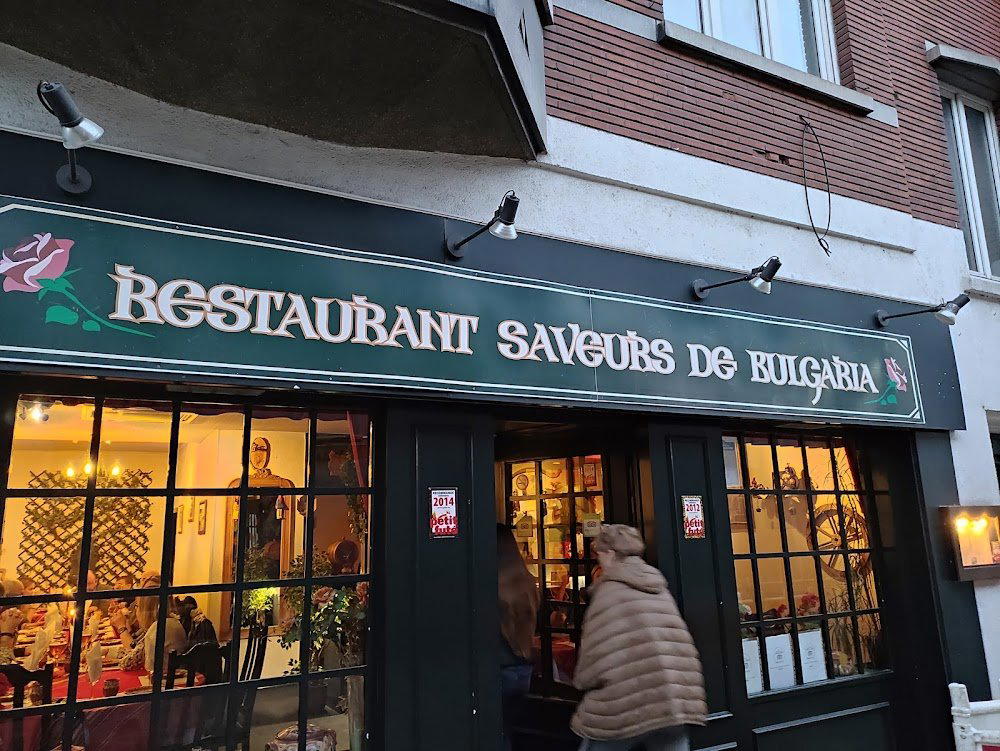
A Street in Outremeuse, a Kitchen From the Balkans
Outremeuse, the island district east of the Meuse, has long operated on its own terms. It produced Georges Simenon and still keeps the carnival spirit of the Fête du 15 Août alive with more intensity than anywhere else in Liège. The neighbourhood's eating habits follow a similar logic: less preoccupied with fashion, more committed to character. It is in this context that Restaurant Les Saveurs de Bulgarie, on Rue de l'Ourthe, makes sense. The address is not one that announces itself. The street is short and residential, the kind that takes a deliberate turn to find, rather than a passage you drift through on the way to somewhere else.
That physical remove matters because it shapes the type of room you find inside. Bulgarian restaurants operating outside their home country tend to function more like extensions of domestic hospitality than commercial dining operations — a dynamic that places them in a different register from the brasserie or the Italian trattoria, however accomplished those formats may be. Liège already has capable representations of both: Héliport Brasserie holds the creative French end of the market at the €€€ tier, while addresses like Al Piccolo Mondo, Altro Maccheroni, and Antipasti di Sophie cover Italian ground across different registers. Les Saveurs de Bulgarie occupies a different position entirely: it is not competing within those frameworks so much as operating beside them.
Bulgarian Cooking in a French-Leaning City
Belgian cities absorb migrant food cultures unevenly. Brussels, with its size and diplomatic population, accommodates a wider range. Liège is smaller and more provincial in the leading sense — it has strong culinary loyalties and a local food identity centred on boudin de Liège, sirop de Liège, and the cooking traditions of the Ardennes and Meuse valley. Into this context, a Bulgarian kitchen introduces a genuinely different set of references: dairy-forward salads, slow-cooked meat preparations, fermented vegetable traditions, and herb combinations that have little overlap with the dominant regional palate.
Bulgarian cuisine sits at the intersection of Balkan, Ottoman, and Central European influences. Dishes like banitsa (filo pastry filled with white cheese and egg), shopska salata (tomato, cucumber, and sirene cheese), and kavarma (slow-braised meat in clay pot) carry flavour logic that is both accessible and distinctly foreign to the Franco-Belgian mainstream. The cuisine relies heavily on quality dairy, Bulgarian white cheese is the local equivalent of feta in structural importance, and on produce-led simplicity that does not dress itself up in technique for its own sake.
In a city where the creative end of the dining spectrum is represented by places like ¡Toma! at the €€€€ tier, Les Saveurs de Bulgarie represents a different kind of value proposition: not technical ambition, but specificity of tradition. These are not interchangeable categories, and informed diners are increasingly able to distinguish between them.
What the Wine List Signals About a Diaspora Restaurant
One of the more telling indicators of a diaspora restaurant's seriousness is how it handles wine. At one end of the spectrum, a kitchen focused entirely on food authenticity treats wine as an afterthought, defaulting to generic house options that have no conversation with the food. At the other end, a restaurant that takes its regional identity seriously will look to its home country's wine production as part of the cultural statement the dining room is making.
Bulgaria has a wine history that predates its modern political borders. Thracian viticulture was already documented in antiquity, and contemporary Bulgarian wine has been undergoing a quiet but consistent revival since the early 2000s. Varieties like Mavrud, Melnik 55, and Rubin, all indigenous to Bulgaria, produce structured reds with a personality quite different from the French or Italian grapes that dominate most Belgian wine lists. Mavrud in particular, grown primarily around Plovdiv, yields tannic, dark-fruited wines that pair with the slow-cooked meat preparations central to Bulgarian cooking in a way that Bordeaux or Chianti simply cannot replicate.
But the editorial question is worth raising because it is the question that separates a restaurant functioning as a cultural document from one functioning as a feeding stop. Across Belgium's broader fine dining circuit, from Zilte in Antwerp to Boury in Roeselare to Hof van Cleve in Kruishoutem, wine list curation is treated as an extension of culinary identity, not a separate department. The same principle applies at smaller, more specialist addresses, where the decision to list even two or three Bulgarian producers would constitute a meaningful editorial statement about the kitchen's intent.
For comparison, consider how Georgian wine has reshaped the positioning of Georgian restaurants in cities like London and Paris over the past decade. Amber wines made with extended skin contact, produced in qvevri, are now a legitimate point of critical interest in those cities, and they have pulled Georgian cuisine into conversations it would not otherwise have entered. Bulgarian wine has not yet achieved that kind of cultural traction in Western Europe, but the conditions for it exist. A restaurant on Rue de l'Ourthe that chooses to list Mavrud or Melnik alongside its clay-pot preparations would be making a bet on that trajectory.
Liège as a Context for Specialist Dining
Belgium's fine dining reputation clusters around Brussels, Ghent, and the Flemish coast. The country's Michelin geography reflects this: addresses like Willem Hiele in Oudenburg, Bartholomeus in Heist, and De Jonkman in Sint-Kruis represent the Flemish end of the country's serious dining identity. Wallonia has its own thread, running through places like L'air du temps in Liernu and d'Eugénie à Emilie in Baudour. Liège sits within that Walloon current but operates with a degree of independence from it, shaped by its industrial history and its strong local identity.
For visitors building a Liège itinerary, this means the city rewards lateral thinking. The obvious plays, French bistro, Italian trattoria, are well covered. The more interesting moves sit at the edges: addresses that do something the city's mainstream does not. Les Saveurs de Bulgarie, by virtue of its cuisine category alone, occupies one of those edge positions. That does not guarantee quality, but it does guarantee distinctiveness of a kind that cannot be manufactured. You can find a competent steak-frites in a dozen places within walking distance. Bulgarian cooking in Liège is, structurally, a rarer proposition.
For those building a wider Belgian dining itinerary, our full Liège restaurants guide maps the city's options across formats and price points. And for the upper end of Belgian fine dining, the reference addresses remain Bozar Restaurant in Brussels and Castor in Beveren. Internationally, the structural question of how diaspora kitchens build authority in competitive dining cities is examined most clearly at addresses like Atomix in New York City and Le Bernardin, where the relationship between national culinary tradition and contemporary dining format has been worked out over decades.
Planning a Visit
Restaurant Les Saveurs de Bulgarie is located at Rue de l'Ourthe 4, 4020 Liège, in the Outremeuse district. The address is accessible on foot from the city centre in under fifteen minutes, crossing the Meuse via the Pont de Fragnée or Pont de Fétinne depending on your starting point. Given the specialist nature of the cuisine and the neighbourhood's residential character, confirming opening hours and table availability directly before visiting is advisable. No booking platform or website data is currently indexed for this address, which suggests the reservation process is handled directly with the restaurant.
How Restaurant Les Saveurs de Bulgarie Liège compares with similar nearby venues.
| Venue | Cuisine | Price |
|---|---|---|
| Sébastian | Farm to table | €€ |
Continue exploring
More in Liège
Restaurants in Liège
Browse all →
Bars in Liège
Browse all →
Hotels in Liège
Browse all →

At a Glance
- Cozy
- Rustic
- Intimate
- Family
- Group Dining
- Casual Hangout
- Private Dining
Current opening hours
- Monday
- Closed
- Tuesday
- 6:30–10 PM
- Wednesday
- Closed
- Thursday
- 6:30–10 PM
- Friday
- 6:30–11 PM
- Saturday
- 6:30–11 PM
- Sunday
- 6:30–10 PM
Hours can change for holidays and private events. Last verified .
Cozy and authentic Bulgarian atmosphere with typical decor creating a welcoming, home-like feel.
Know Before You Go
- Getting there
- Rue de l'Ourthe 4, 4020 Liège, Belgium