




2 Michelin Stars · La Liste Top Restaurants · Falstaff Restaurant - 95 Falstaff Points
Our verdict
A two-Michelin-star address in Lommel, Jan Tournier's Cuchara delivers menus of 12 or 18 courses built around vegetables, fruit, and spice, with La Liste awarding 90 points in 2025. The kitchen sits in Belgium's serious creative-European tier, drawing recognition from both Michelin and Opinionated About Dining. Booking opens on a narrow Wednesday and Friday lunch window alongside evening service.

Pearl is the En Primeur Club membership app, where members save venues, book tables and use the concierge.
The menu
What to order
- Pigeon leg with wood charcoal and basil oil
- Oyster in plankton butter
- Beef tartare with yuzu kosho
- Pan cristal with Australian truffle and caviar
A Two-Star Table in the Flemish Kempen
Belgium's fine-dining geography has always been more dispersed than its reputation suggests. While Brussels and Antwerp carry the most international name recognition, a significant share of the country's Michelin-starred restaurants operate in smaller Flemish towns, drawing guests who treat the drive as part of the occasion rather than an inconvenience. Lommel, a municipality in the Limburg province bordering the Netherlands, sits inside this pattern. Cuchara, at Lepelstraat 3, holds two Michelin stars and a 90-point score in La Liste's 2025 rankings, placing it among the more decorated kitchens operating outside Belgium's major urban centres. For context, that La Liste score dropped to 76 points in the 2026 edition, which reflects the guide's year-on-year recalibration methodology rather than any loss of Michelin recognition, which remained at two stars through both cycles.
The address puts Cuchara in a competitive tier that includes Boury in Roeselare and regional peers operating at the €€€€ price point with serious tasting-menu formats. Within Belgium's wider creative-European bracket, comparisons extend to Zilte in Antwerp and Hof van Cleve in Kruishoutem, though each operates with a distinct identity. What sets the Lommel context apart is the absence of a surrounding restaurant district. Guests arrive specifically for Cuchara, which concentrates the reservation dynamic in ways that city restaurants rarely experience.
The Menu Structure: Vegetables, Fruit, and Spice as Load-Bearing Elements
The tasting-menu format at this level in Belgium typically runs between ten and twenty courses, and Cuchara offers two lengths: 12 or 18 dishes. That range allows the kitchen to control pacing and ingredient range across different service durations, but the proportional emphasis stays consistent across both formats. La Liste's 2025 assessment noted that vegetables, fruit, and spices account for approximately half the meal.
This produce-forward orientation connects to a broader shift in how creative-European kitchens build menus. In Flanders and Wallonia alike, the most forward-looking addresses have progressively rebalanced their courses away from the classic progression of shellfish-fish-meat-cheese that structured haute cuisine through the 1980s and 1990s. Cuchara sits within that movement but with a particular focus on technique applied to plant and fruit materials: the La Liste commentary specifically references creams, jellies, and meringues as recurring textural formats. These preparations demand precision in emulsification and temperature control, and their presence across a 12 or 18-course sequence signals a kitchen that treats confectionery and pastry techniques as tools for savoury expression, not just dessert production.
That approach places finesse and balance at the structural level of the menu rather than as finishing notes. La Liste's language around "intensity" alongside "balance" is worth parsing: intensity without balance in a long menu produces fatigue; balance without intensity produces forgettable pleasantness. The two-star Michelin recognition, sustained across 2024 and 2025, suggests the kitchen has found a workable calibration between the two.
Ingredient Philosophy in a Regional Context
The Kempen region of Limburg, where Lommel sits, is not among Belgium's most celebrated agricultural territories in the way that, say, the Ardennes is for game or coastal West Flanders for North Sea produce. What the region does offer is agricultural diversity across short distances: sandy heathland soils in the immediate area give way to more varied terrain within easy sourcing range. Kitchens operating at this level in provincial Belgium typically build supply relationships with local producers over years, treating proximity as both a quality argument and a logistical one.
The emphasis on vegetables, fruit, and spice at Cuchara points to a sourcing strategy that prioritises what the region produces well across seasons rather than importing prestige ingredients to anchor every course. Spice use is particularly telling: incorporating spice at this density in a fine-dining format requires careful calibration against the delicate emulsified textures the kitchen favours. When it works, spice acts as an aromatic layer that extends the palate's engagement without disrupting the structural balance the menu aims for. This is not the kind of cooking that relies on a single celebrated ingredient to carry a dish. The architecture is built up from components that individually require less prestige and collectively require more skill.
For readers exploring Belgium's regional fine dining more broadly, L'Eau Vive in Arbre, La Durée in Izegem, and Ralf Berendsen in Neerharen each represent variants on the creative-European format operating outside the major Belgian cities. The broader European context for this cooking style includes addresses like Hiša Franko in Kobarid and Schloss Schauenstein in Fürstenau, both of which operate with similarly strong produce orientation in non-metropolitan settings.
Cuchara's standing in the Opinionated About Dining rankings shifted from a Classical recommendation in 2023 to European Leading Restaurant rankings in both 2024 (position 521) and 2025 (position 502). That trajectory, modest in absolute terms but consistent in direction, reflects a kitchen gaining ground in a critical framework that weights repeat visits and pan-European comparisons. OAD's methodology draws on a surveyed critic community rather than anonymous inspectors, which means ranking movement reflects accumulating critical consensus rather than a single inspection cycle.
The Michelin two-star designation carries its own signal. In Belgium, two-star restaurants represent a specific tier: technically serious, destination-worthy, but operating with a degree of personal expression that three-star addresses sometimes sacrifice for consistency orthodoxy. The country has produced a number of two-star kitchens that attract stronger critical followings than some of its three-star addresses, partly because the tasting-menu format at two-star level often allows more risk-taking. Cuchara's continued recognition from both Michelin and La Liste across multiple years suggests that risk is being managed well.
Chef Jan Tournier's name appears in La Liste's commentary with direct attribution for the menu's character, which is standard for restaurants operating at this scale where the chef and the kitchen are effectively synonymous. For Belgian fine dining with a more urban frame, Bozar Restaurant in Brussels and d'Eugénie à Emilie in Baudour represent different registers of the same broader creative-European conversation. Within Lommel itself, Cocotte offers a different entry point to the town's dining options.
Planning a Visit
Service at Cuchara runs on a tight schedule that reflects the controlled format of a multi-course tasting menu. The kitchen opens for lunch on Wednesday, Thursday, and Friday from noon to 1:30 pm, and for evening service Wednesday through Saturday with a 6:30 pm start and a 7:30 pm last entry on most nights (Wednesday evening extends to 11 pm). The restaurant is closed Sunday and Monday. This schedule gives guests four possible lunch slots and four evening windows per week, which is narrower than many comparable Belgian addresses at this price point and award level. The limited entry window, combined with the destination nature of the location, means advance planning is advisable. The address is Lepelstraat 3, 3920 Lommel. Lommel is accessible by car from Antwerp in under an hour and from Eindhoven in the Netherlands in approximately 40 minutes, making it a plausible cross-border destination for guests based in the southern Netherlands.
For further context on dining, accommodation, and leisure in the area, see our full Lommel restaurants guide, our full Lommel hotels guide, our full Lommel bars guide, our full Lommel wineries guide, and our full Lommel experiences guide.
Frequently asked questions
Where exactly is Cuchara?
Cuchara is located at Lepelstraat 3, 3920 Lommel, Belgium, Lommel.
What's Cuchara known for in terms of accolades?
Cuchara has received recognition including: La Liste Top Restaurants (2026): 76pts; With his delicious playful cuisine Jan Tournier scores. His menu consists of a series of 12 or 18 dishes full of finesse, balance and intensity, but always very tasty. Lots of creams, jellies and meri….
What do regulars order at Cuchara?
Cuchara operates exclusively on a set tasting-menu format with no à la carte option, so the choice is between the 12-course and 18-course menus. The longer format gives more room to Jan Tournier's ingredient-led approach, where vegetables, fruit, and spice account for roughly half the dishes across the sequence. La Liste reviewers specifically noted the finesse and intensity of the courses alongside recurring use of creams, jellies, and meringue as textural anchors.
What price level is Cuchara?
Pricing at Cuchara is listed as €€€€.
What are the opening hours for Cuchara?
Hours at Cuchara: Hours: Monday Closed Tuesday 6:30–7:30 pm Wednesday 12–1:30 pm, 6:30–11 pm Thursday 12–1:30 pm, 6:30–7:30 pm Friday 12–1:30 pm, 6:30–7:30 pm Saturday 6:30–7:30 pm Sunday Closed.
Who is the chef connected to Cuchara?
The chef associated with Cuchara is Jan Tournier.
Budget and Context
| Venue | Cuisine | Price | Awards | Notes |
|---|---|---|---|---|
| CucharaThis venue (the venue you are viewing) | Modern Creative Cuisine with Asian Influences | $200–300 | 2 Michelin Stars · La Liste Top Restaurants | Not listed |
| Boury | Creative French Fine Dining | $300–500 | 3 Michelin Stars · La Liste Top Restaurants | Modern Frlemish, Creative French |
| Comme chez Soi | French - Belgian, Classic Cuisine | Not listed | Michelin 1 Star | Not listed |
| Hertog Jan at Botanic | Modern Japanese Omakase Fine Dining | Not listed | 2 Michelin Stars · La Liste Top Restaurants | Modern Flemish, Creative |
| L'Eau Vive | Modern French Fine Dining | $150–200 | 2 Michelin Stars · La Liste Top Restaurants | French, Modern French |
| La Durée | Modern French Fine Dining | $150–200 | 2 Michelin Stars · La Liste Top Restaurants | French-Belgian, Creative |
Recognition history
Dated appearances from independent guides and award organizations, with the underlying list record or original source where available.
Michelin 2 Stars
Michelin
La Liste Top Restaurants
La Liste
Falstaff Restaurant - 95 Falstaff Points
Falstaff
Opinionated About Dining Top Restaurants in Europe Recommended
Opinionated About Dining
We're Smart World 2 Radishes
We're Smart World
Full recognition history (11 entries)
La Liste Top Restaurants
La Liste
Michelin 2 Stars
Michelin
Opinionated About Dining Top Restaurants in Europe Ranked #502
Opinionated About Dining
Michelin 2 Stars
Michelin
Opinionated About Dining Top Restaurants in Europe Ranked #521
Opinionated About Dining
Opinionated About Dining Classical in Europe Recommended
Opinionated About Dining
Continue exploring
More in Lommel
Restaurants in Lommel
All restaurants in Lommel →
Bars in Lommel
Browse all →
Hotels in Lommel
Browse all →
Wineries in Lommel
Browse all →

Cuchara
The wine
- Wine program
- Deep wine list
- Extensive wine list
- Sommelier-led
- Sake program
Details
- Elegant
- Intimate
- Modern
- Sophisticated
- Date Night
- Special Occasion
- Celebration
- Wine Cellar
- Design Destination
- Open Kitchen
- Extensive Wine List
- Sommelier Led
- Sake Program
- Local Sourcing
- Organic
- Garden
- Tasting Menu
- Set Menu
- Wine Pairing
- Sake
- Natural Wine
- Vegetarian Friendly
- Allergy Accommodating
Current opening hours
- Monday
- Closed
- Tuesday
- 6:30–7:30 PM
- Wednesday
- 12–1:30 PM, 6:30–11 PM
- Thursday
- 12–1:30 PM, 6:30–7:30 PM
- Friday
- 12–1:30 PM, 6:30–7:30 PM
- Saturday
- 6:30–7:30 PM
- Sunday
- Closed
Hours can change for holidays and private events. Hours as of .
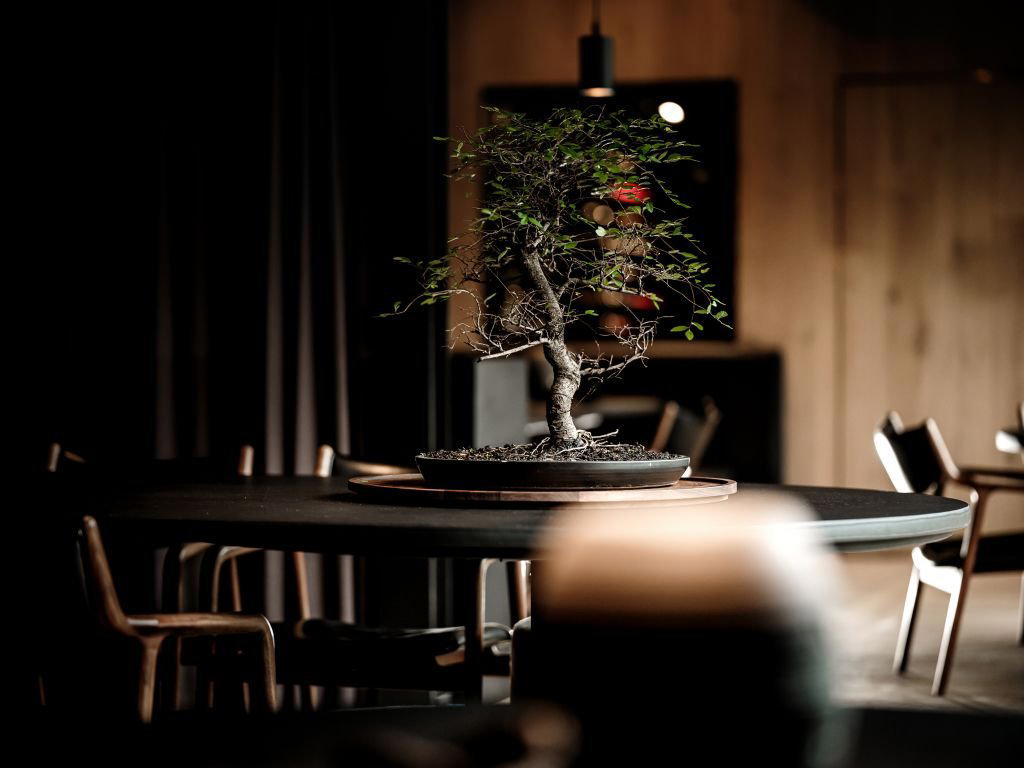
Dark, warm interior with black walls, design furniture, and intimate round tables creating a zen-like, cosy atmosphere with lounge music and natural light from garden views.