Our verdict
On the Chaussée de Tongres in Liège, Sodylow occupies a stretch of the city where neighbourhood dining carries more weight than destination marketing. The address places it in a residential corridor that rewards those who look beyond the centre, and the kitchen draws from a culinary tradition shaped by Wallonia's agricultural hinterland and the Meuse valley's cross-border larder.

Pearl is the En Primeur Club membership app, where members save venues, book tables and use the concierge.
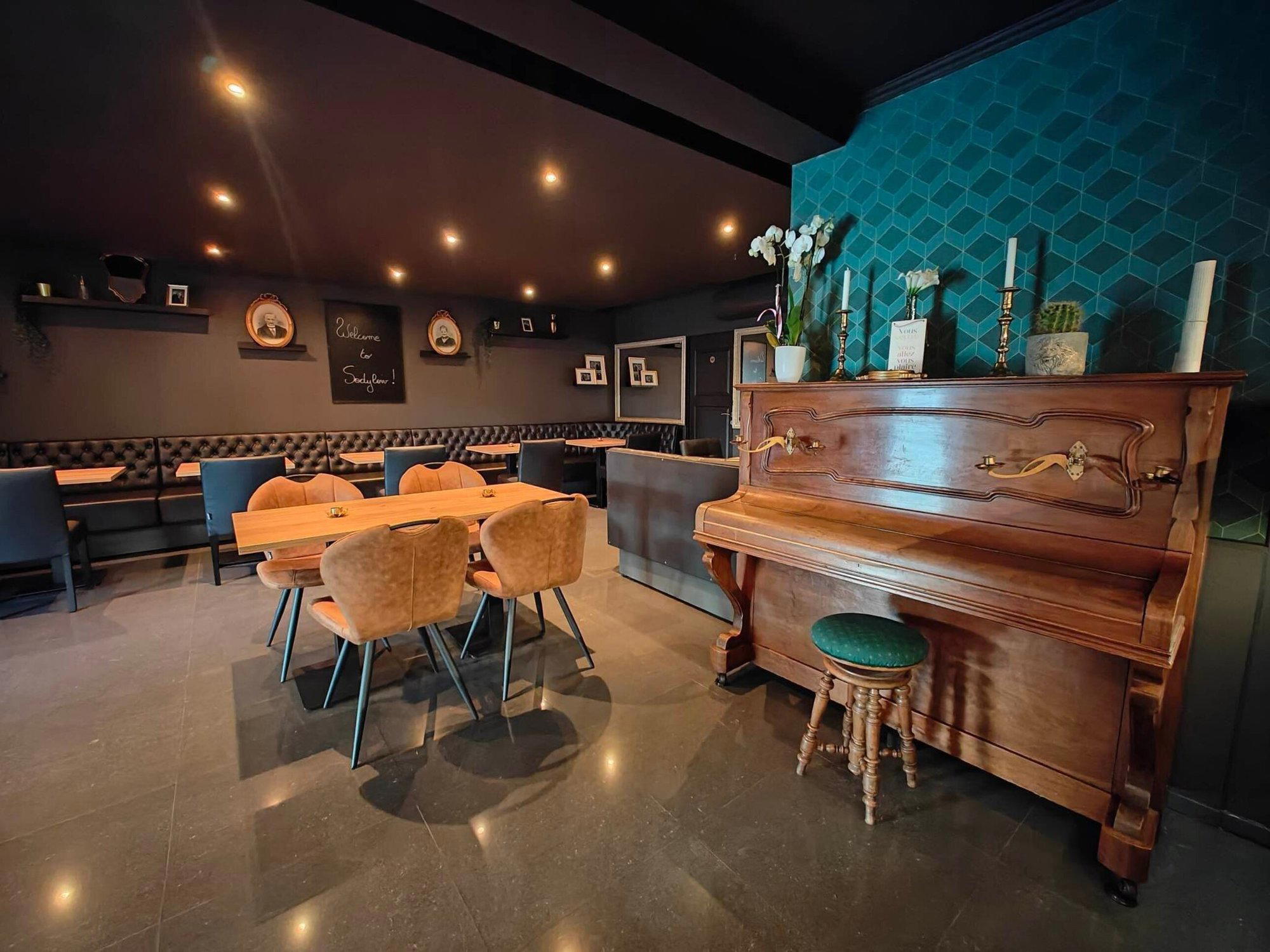
Chaussée de Tongres and the Outer-Ring Dining Shift
Liège's most closely watched dining addresses have, for years, concentrated around the Carré and the streets flanking Place du Marché. But a slower, less publicised redistribution has been underway along the city's arterial roads, where lower rents and residential foot traffic have allowed smaller operations to take root without the overhead that central locations demand. The Chaussée de Tongres corridor, running northeast from the city core, is part of that pattern. Sodylow, at number 614, sits in this outer-ring zone where the dining proposition tends to be more direct and less mediated by tourism economics.
This is not a trivial distinction. In Belgian cities of Liège's size, the geography of where a restaurant chooses to operate often tells you as much about its priorities as the menu does. Operations that anchor themselves in residential stretches tend to build their trade on repeat custom from the neighbourhood rather than on passing visitors, which pushes the kitchen toward consistency and value over occasion-driven theatre. It is the same logic that has shaped durable neighbourhood institutions across Wallonia and, further afield, in cities like Brussels, where neighbourhood operators often outlast their more celebrated central counterparts.
Wallonia's Larder: What the Region Puts on the Table
Understanding any Liège kitchen requires some accounting of what the region actually produces. Wallonia's agricultural output is substantial and varied: the Condroz plateau to the south of Liège supplies grain and livestock; the Herve plateau, immediately east of the city, is the source of Herve cheese, one of Belgium's most characterful raw-milk products; and the Meuse and Ourthe valleys channel seasonal produce, freshwater fish, and game into the city's market chain. The Liège area also has its own charcuterie tradition, with boudin de Liège and the city's distinctive version of boulets (meatballs in sauce) forming part of a culinary vocabulary that distinguishes the city from both Brussels and the Flemish north.
For kitchens positioned along routes like the Chaussée de Tongres, proximity to this supply chain matters. The outer-ring location keeps a restaurant closer to the rhythm of local producers and market circuits than an address in the tourist centre might. Whether a kitchen exploits that proximity through direct sourcing relationships or simply benefits from the regional distribution network, the ingredient base in this part of Belgium is substantively different from what a comparable operation would have access to in, say, central Brussels or a mid-tier address in northern France.
Belgium's broader fine dining tier, represented by addresses like Hof van Cleve in Kruishoutem, Boury in Roeselare, and Zilte in Antwerp, has built much of its international reputation on exactly this kind of regional ingredient specificity. Those operations source with precision and argue, often convincingly, that Belgian produce, particularly from Flanders and Wallonia's farming corridors, competes with any European larder. The same regional logic, applied at a neighbourhood scale in Liège, is what gives the city's less-publicised dining addresses their structural argument.
Liège's Mid-Tier: Where Sodylow Competes
Liège's restaurant scene operates across a clear spread of formats and price points. At the upper end of the local creative register, addresses like Héliport Brasserie (Creative French, €€€) and ¡Toma! (Creative, €€€€) have established Liège as a city capable of sustaining ambitious cooking with a cosmopolitan reference set. Further down the register, the Italian dining cohort, including Al Piccolo Mondo, Altro Maccheroni, and Antipasti di Sophie, fills a reliable neighbourhood-trattoria function across the city.
Sodylow's position on the Chaussée de Tongres suggests it operates in the space between destination dining and the trattoria tier: a neighbourhood restaurant with its own identity, likely drawing a local clientele who return on cadence rather than occasion. This is a competitive slot in any mid-size European city. The restaurant has to earn repeat visits on the strength of what it delivers consistently, not on the novelty of a single high-stakes meal. For the reader deciding between a central address and an outer-ring option, the outer-ring bet tends to pay off when the kitchen is confident in its sourcing and its regulars have already done the quality-testing.
For broader context on what Liège's dining scene offers across formats and price points, the full Liège restaurants guide maps the city's options with comparative depth.
Belgian Dining Beyond Liège: The Reference Set
Liège sits within a country whose restaurant culture punches above its geographical weight. Belgium's Michelin-starred cohort includes addresses that regularly appear in international critical conversation: Willem Hiele in Oudenburg, Bartholomeus in Heist, and Castor in Beveren each represent a strand of Belgian cooking that is technically serious and rooted in northern European ingredient logic. In Wallonia specifically, L'air du Temps in Liernu and d'Eugénie à Emilie in Baudour demonstrate that the French-speaking south of Belgium has its own distinct culinary ambition. Liège, as the region's largest city, has the population and the appetite to support a dining ecosystem that ranges from those reference points down to a functional neighbourhood address on a residential arterial.
The international comparison is also instructive. Restaurants like Le Bernardin in New York City and Atomix in New York City operate at a scale and media visibility that is categorically different from a Liège neighbourhood address, but the underlying argument, that sourcing integrity and consistent kitchen discipline matter more than occasion engineering, applies across tiers. Even Bozar Restaurant in Brussels and De Jonkman in Sint-Kruis make versions of that argument at their respective scales. Sodylow, whatever its precise format, operates within that same national conversation about what Belgian cooking looks like when it is honest about its ingredients and its audience.
Planning a Visit
Sodylow is located at Chaussée de Tongres 614, 4000 Liège, a northeast-facing arterial that connects the city centre to the Tongeren road. The address is accessible by tram and bus from central Liège, and the residential character of the surrounding street means parking is generally more available than in the city's central dining districts. The Chaussée de Tongres corridor is leading explored in the early evening, when the neighbourhood is active and the operational rhythm of the street's restaurants is in full effect. For those building a broader Liège itinerary, the outer-ring position makes Sodylow a natural complement to a central dinner earlier in a stay, or a practical first stop before moving into the city.
Frequently asked questions
What part of town is Sodylow in?
Sodylow is located at Chau. de Tongres 614, 4000 Liège, Belgium, Liège.
How does Sodylow fit into the wider Liège dining scene compared to addresses closer to the city centre?
Sodylow is on Chaussée de Tongres 614, well northeast of the Carré and Place du Marché belt where Liège's more scrutinised restaurants have historically concentrated. That positioning matters: outer-ring addresses in Belgian cities of this scale often serve a primarily local clientele, with fewer international visitors and correspondingly less pressure to conform to tourist-facing formats. No Michelin recognition or named awards are currently recorded for Sodylow.
What's the best way to book Sodylow?
What is Sodylow known for?
Sodylow is part of the quiet shift in Liège dining away from the central Carré district toward the outer arterials connecting the city to Tongeren. At Chaussée de Tongres 614, it occupies a position in the mid-tier of the local creative register, where neighbourhood regulars tend to outweigh destination traffic. Specific dishes or signatures are not yet documented.
Can Sodylow accommodate dietary restrictions?
Given the address on Chaussée de Tongres in Liège, contacting the venue directly before arrival is the practical step, particularly for strict requirements.
Is Sodylow worth it?
Without pricing data or award recognition on record, a direct cost-value verdict is premature. What can be said is that its location on Chaussée de Tongres 614 places it in a part of Liège that rewards the effort of leaving the centre, where rents are lower and kitchens tend to operate with less pressure to perform for tourist traffic.
Peers in This Market
Comparable venues nearby, for context on price, style, and recognition.
| Venue | Cuisine | Price | Notes |
|---|---|---|---|
| SodylowThis venue (the venue you are viewing) | Not listed | Not listed | Not listed |
| Le Barbecue de Jacky | American Low-and-Slow BBQ | $20–30 | Center |
| La Parra | Spanish Tapas & Wine Bar | $20–30 | Centre-Ville |
| Restaurant Les Saveurs de Bulgarie | Authentic Bulgarian | $30–50 | Centre |
| Grand Café de la Gare | Belgian Brasserie | $20–30 | Guillemins |
| Chez Silvano | Refined Italian Fine Dining | $50–100 | Le Carré |