On Rue de la Madeleine in central Liège, Asti brings an Italian-inflected dining sensibility to a city that has long supported a serious restaurant culture alongside its more famous brasserie tradition. The address places it within easy reach of the city's historic core, making it a natural choice for an unhurried evening meal. Liège's Italian dining options range from casual trattorias to more considered formats, and Asti occupies a middle tier worth knowing.
Pearl is the En Primeur Club membership app — saves, bookings, and concierge access live there. Same editors, same standards.
- Address
- Rue de la Madeleine 22, 4000 Liège, Belgium
- Phone
- +3242232989
- Website
- restoasti.be
- Directions
- Get directions
 Saves & bookings on Pearl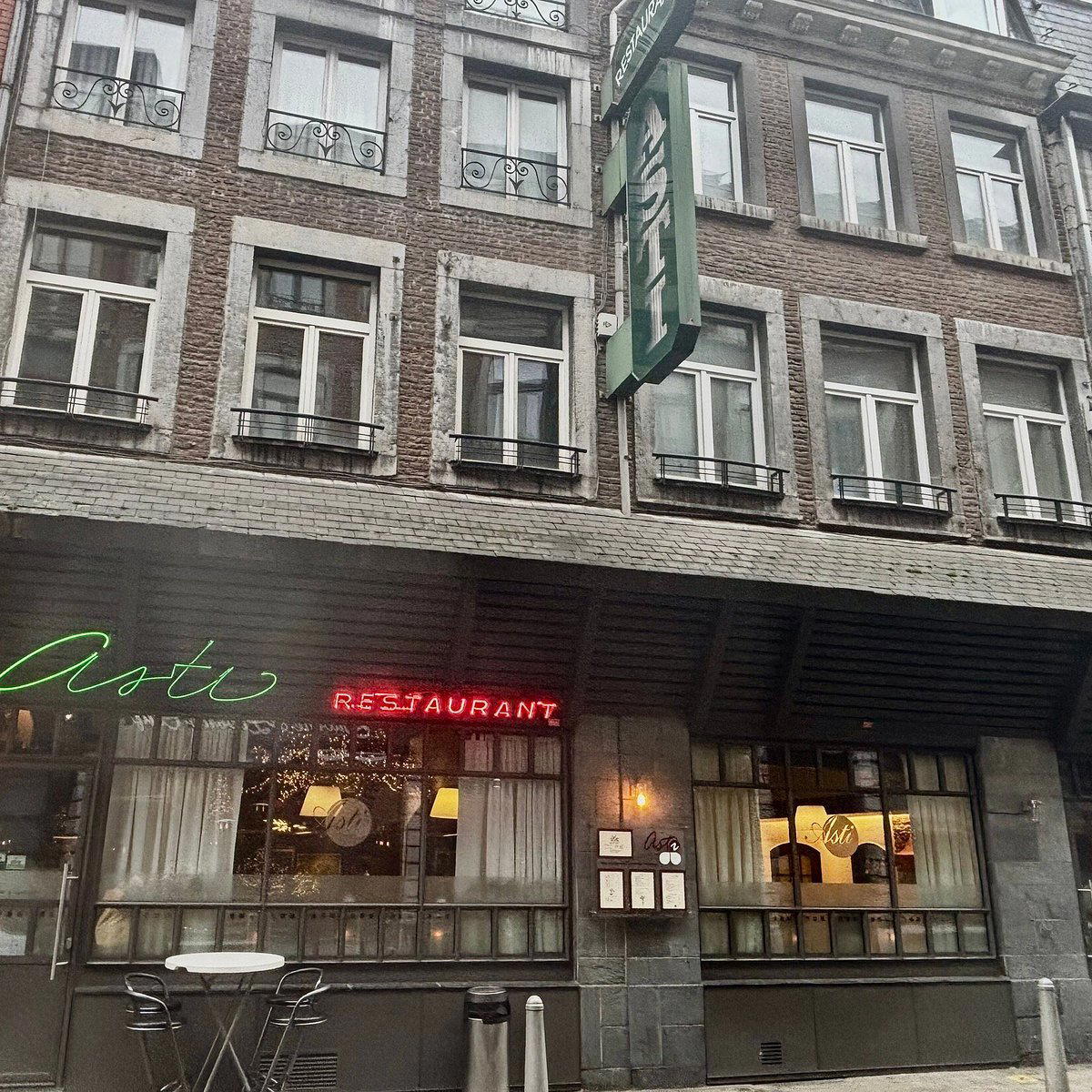
The Ritual of the Italian Table in Liège
There is a particular rhythm to Italian dining that resists acceleration. Courses arrive with deliberate spacing; the table is expected to stay. In Liège, a city whose restaurant culture has historically centred on the Belgian brasserie — steak-frites, moules, and generous pours of local beer — Italian dining has carved out its own space by leaning into exactly that unhurried pace. Asti, on Rue de la Madeleine in the city's historic centre, sits within this tradition. The address itself is instructive: Rue de la Madeleine runs close to the Féronstrée axis, one of Liège's older commercial corridors, in a part of the city where the buildings carry the weight of several centuries and the street-level activity shifts easily from daytime commerce to evening dining.
Where the Address Sits in Liège's Dining Geography
Liège's restaurant scene is less consolidated than Antwerp's or Brussels's, which means individual venues operate with more independence from the peer-pressure dynamics that shape densely competitive dining districts. The Italian segment of that scene is populated by a range of formats: quick pasta operations near the university quarter, family-run trattorias in residential pockets, and more composed addresses like Asti that occupy the middle ground between casual and formal. For comparison within the city's Italian offerings, Altro Maccheroni and Antipasti di Sophie represent adjacent reference points, each with a slightly different orientation toward the cuisine. Baci covers similar Italianate ground in the city. Asti's position on Rue de la Madeleine 22 gives it a central footprint that draws both neighbourhood regulars and visitors staying within the city's compact historic core.
The Pacing of a Meal Here
The Italian dining ritual, when observed properly, organises the evening around a sequence that has internal logic: something light to open the appetite, a pasta course that anchors the meal, a secondi that marks the evening's midpoint, and then the slow retreat through dessert and coffee. This structure is not merely ceremonial. It determines how long you stay, how much you drink, and what the bill looks like at the end. In cities where Italian restaurants have simplified this sequence for faster table turns, something essential is lost. The question worth asking of any Italian address in a mid-sized Belgian city is whether the kitchen holds to this structure or collapses it for operational convenience. The presence of a sit-down Italian format on a street like Rue de la Madeleine suggests an expectation of longer tables rather than quick covers.
For readers planning an evening, the practical note is direct: Liège's central dining addresses at this level tend to reward early contact. Booking ahead rather than walking in is the safer approach, particularly on Thursday through Saturday evenings when the city's restaurant traffic concentrates. Rue de la Madeleine is accessible on foot from the main train station in under fifteen minutes, and the surrounding streets have enough activity to make pre- or post-dinner movement easy.
Belgian Context and the Italian Presence
Belgium's relationship with Italian cuisine runs deeper than most northern European countries. The post-war migration of Italian workers to Belgium's mining and steel regions, particularly in Wallonia and the provinces around Liège, established Italian communities whose food culture became embedded in the local fabric over decades. This is not background trivia. It explains why Italian restaurants in Liège carry a different social weight than in cities where Italian dining arrived purely as a restaurant trend. The cuisine here has domestic roots, which means local diners approach it with familiarity and some expectation of authenticity. That community history raises the bar for what counts as credible Italian cooking in the region.
Against that backdrop, the Italian table in Liège is contested in a productive way. Visitors familiar with Belgian fine dining at the upper end, where addresses like Hof van Cleve in Kruishoutem, Zilte in Antwerp, or Boury in Roeselare define one version of what Belgian fine dining looks like, will find Liège's mid-range Italian segment operating in a different register. The comparison is not about quality hierarchy so much as format. Italian dining in this city is fundamentally social in structure, organised around the table as a gathering point rather than as a tasting format. That distinction matters when you're deciding how to spend an evening. For broader Belgian dining context, Bozar Restaurant in Brussels and Vrijmoed in Gent illustrate how Belgian kitchens at a different price point approach the evening meal with equal structural seriousness, just through a different culinary vocabulary.
What Shapes the Experience
For a venue like Asti, the determinants of a good evening are the ones common to Italian dining generally: whether the pasta is made in-house or sourced, whether the kitchen respects the internal logic of course sequencing, and whether the wine list engages seriously with Italian regions rather than defaulting to a handful of recognisable labels. Internationally, dining formats that have refined this Italian ritual most deliberately, from Le Bernardin in New York City at the formal end to the more communal-table approach of Lazy Bear in San Francisco, demonstrate how much format discipline shapes the experience independent of the specific menu. At a neighbourhood Italian in a mid-sized Belgian city, the same principle applies at a more accessible scale.
Liège's broader restaurant picture includes addresses worth knowing across different formats: Cabale and Bro's Burger Kitchen cover different ends of the city's dining range. For readers planning a more extended Belgian circuit, Ralf Berendsen in Neerharen, d'Eugénie à Emilie in Baudour, La Durée in Izegem, Cuchara in Lommel, and Willem Hiele in Oudenburg offer regional context that maps the country's serious dining geography. The full picture of where Asti fits within Liège's options is available in our full Liège restaurants guide.
Planning Your Visit
Asti is located at Rue de la Madeleine 22, 4000 Liège. For an evening at this kind of address, arriving with a booking rather than on spec is the sensible approach, and allowing at least two hours respects the pacing the Italian format requires.
Cuisine-First Comparison
| Venue | Cuisine |
|---|---|
| AstiThis venue — the venue you are viewing | This venue |
Continue exploring
More in Liège
Restaurants in Liège
Browse all →
Bars in Liège
Browse all →
Hotels in Liège
Browse all →

At a Glance
- Classic
- Romantic
- Cozy
- Family
- Date Night
- Casual Hangout
- Group Dining
- Standalone
Current opening hours
- Monday
- 12–2:30 PM, 6:30–10 PM
- Tuesday
- 12–2:30 PM, 6:30–10 PM
- Wednesday
- Closed
- Thursday
- Closed
- Friday
- 12–2:30 PM, 6:30–10 PM
- Saturday
- 12–2:30 PM, 6:30–10 PM
- Sunday
- 12–2:30 PM, 6:30–10 PM
Hours can change for holidays and private events. Last verified .
Warm, casual dining atmosphere with traditional Italian charm and family-friendly service.
Know Before You Go
- Getting there
- Rue de la Madeleine 22, 4000 Liège, Belgium