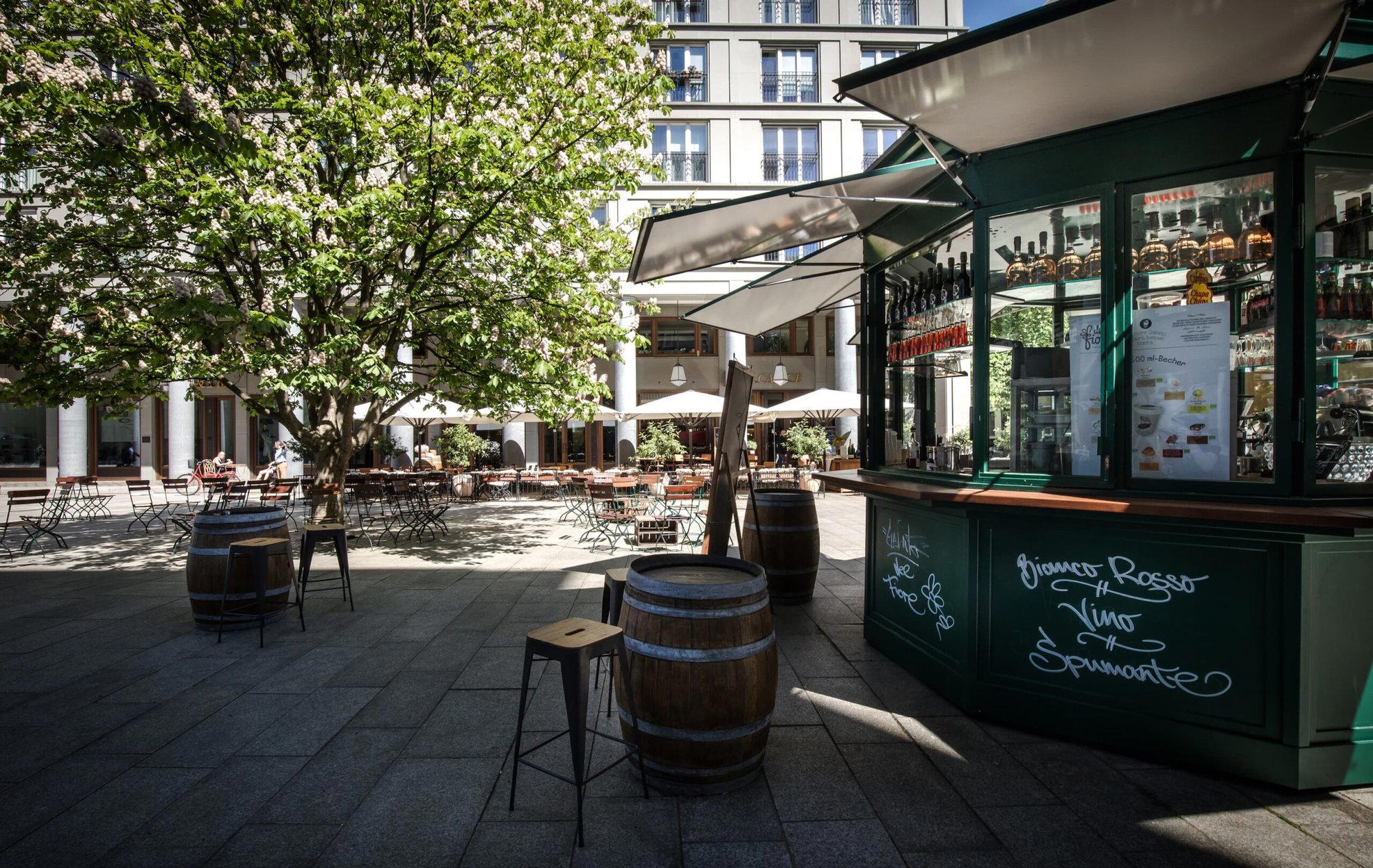
BRLO Charlottenburg serves Modern Brewery Gastropub fare with a beer program and organic sourcing; casual, lively pacing suits lunch or dinner.
Pearl is the En Primeur Club membership app — saves, bookings, and concierge access live there. Same editors, same standards.
- Address
- Giesebrechtstraße 15, 10629 Berlin, Germany
- Phone
- +493032506916
- Website
- brlo.de
- Directions
- Get directions
 Saves & bookings on Pearl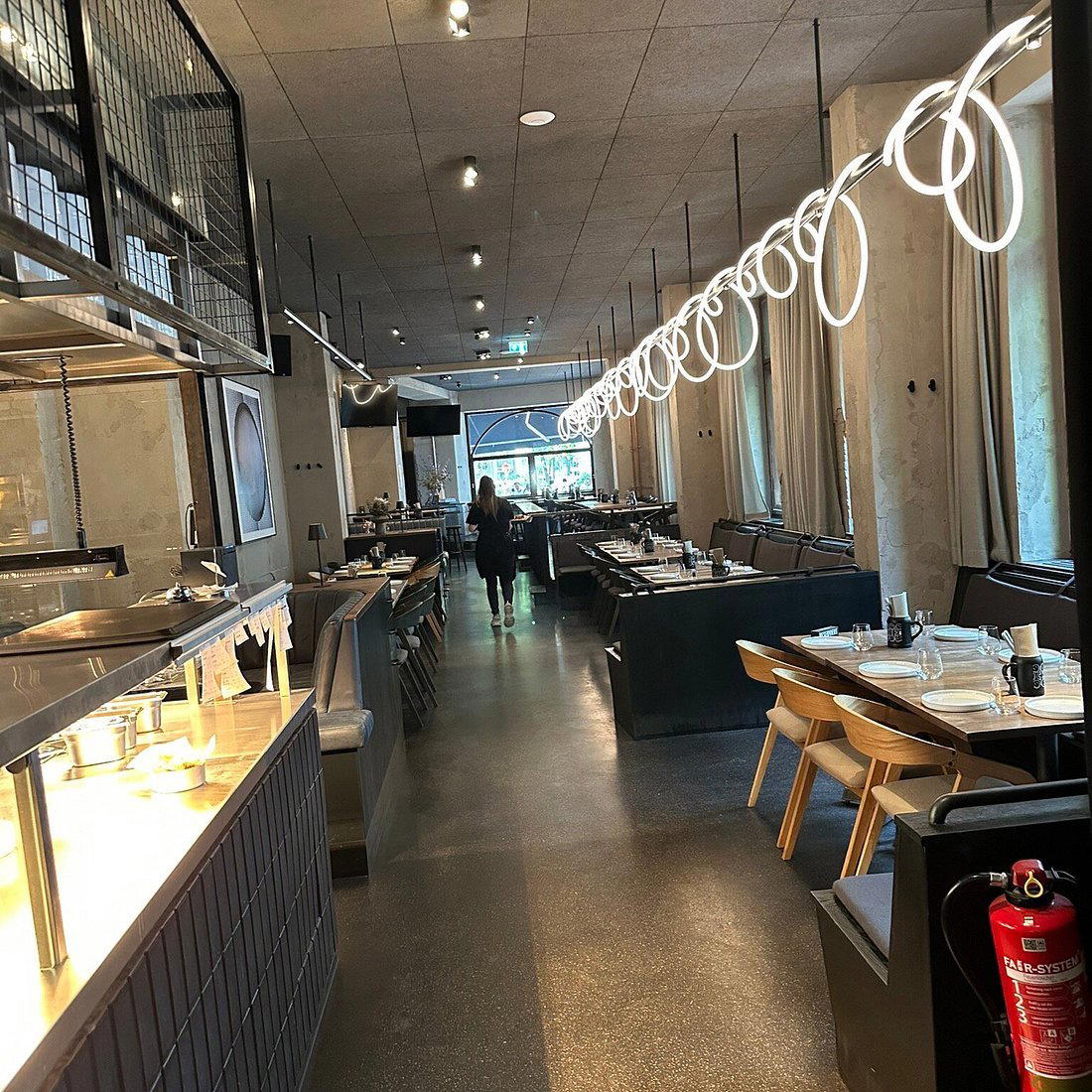
Charlottenburg's Craft Beer Pivot
West Berlin's dining identity has always sat at a remove from the louder creative energy of Mitte or Prenzlauer Berg. Charlottenburg moves at a different register: broader pavements, older money, a neighbourhood where the food offer has historically leaned toward established European formats rather than avant-garde experimentation. Into that context, BRLO Charlottenburg at Giesebrechtstraße 15 lands as a modern brewery gastropub in Berlin. The Berlin-born BRLO brewery built its reputation at its Gleisdreieck brewpub, where craft beer and creative kitchen work developed a following that sits comfortably between the city's serious dining scene and its more democratic drinking culture. The Charlottenburg outpost extends that positioning westward, bringing a food-and-beer pairing framework into a district that has not always embraced it.
The Room and the Opening Move
Berlin's craft beer dining rooms have generally divided into two models: the cavernous industrial hall that doubles as a social venue, and the more considered smaller space where the beer-and-food relationship is the explicit point. BRLO Charlottenburg reads closer to the latter. The address on Giesebrechtstraße sits within a residential stretch of the Charlottenburg grid, which means the approach is quieter than the Gleisdreieck site's urban park backdrop. That quieter context shifts the expectation: this is not an event venue or a place to absorb Berlin's social noise. The room frames a more deliberate kind of visit.
In the broader European context, the idea that beer deserves the same pairing architecture as wine has moved from fringe argument to accepted practice over the past decade. Cities including Copenhagen, Brussels, and London now have dining rooms where the progression of a meal is designed around fermentation character, bitterness, carbonation, and yeast profile rather than grape variety and tannin. Berlin has been slower to formalise that model at the table level, even as its craft beer production quality has risen sharply. BRLO, as a brewery, has been among the more deliberate local operators in building a kitchen program to match its brewing ambition.
Sequencing the Meal
One useful lens for understanding BRLO Charlottenburg is the tasting progression. In beer-pairing formats, the sequencing logic differs meaningfully from a wine-paired tasting menu. Where wine pairings typically move from lighter whites through to fuller reds and then dessert wines, beer progressions work with carbonation levels, roast character, and hop bitterness across a wider flavour range. A session lager or a Berliner Weisse-style beer operates differently as a palate opener than a Champagne or Chablis, and a dry-hopped IPA mid-meal does not behave like a Burgundy. The kitchen has to account for those differences in how it builds acidity, fat, and intensity through the courses.
This kind of meal asks more of the diner than a conventional tasting menu, because the pairing logic is less culturally familiar. For guests arriving from the city's Michelin tier, where wine pairing is the default frame, a beer-progression meal requires a degree of recalibration. Berlin's Michelin-starred addresses, including Rutz, Nobelhart & Schmutzig, and FACIL, all operate within wine-pairing conventions. CODA Dessert Dining is the city's most structurally experimental tasting format, building full menus around dessert logic. BRLO's contribution to that broader Berlin conversation is to argue that beer deserves the same architectural role that wine has in a multi-course progression.
The middle sections of a beer-paired meal are typically where the format proves itself. Lighter, refreshing early pours can feel intuitive. The challenge is sustaining coherence through heavier, more complex beers alongside savoury courses that have their own dominant flavours. German brewing tradition brings a wide palette to that challenge: Märzen, Dunkel, Rauchbier, and Bock styles each have different relationships with fat, smoke, sweetness, and salt. How a kitchen in this format handles those mid-meal pairings is the clearest indicator of whether the concept has been thought through at a technical level.
BRLO in the German Fine Dining Context
Germany's most decorated restaurant addresses are spread across the country rather than concentrated in one city. Schwarzwaldstube in Baiersbronn, Aqua in Wolfsburg, Vendôme in Bergisch Gladbach, and Victor's Fine Dining by Christian Bau in Perl represent the country's highest Michelin tier, all operating outside Berlin. Within the capital, Restaurant Tim Raue holds two stars and is one of the city's most internationally visible addresses. BRLO sits in a more casual price tier and does not compete in that bracket. It occupies a different position: a brewery-led dining concept that takes beer seriously as a pairing medium, priced for guests who want an engaged food-and-drink experience without the full apparatus of a fine dining room.
That positioning is increasingly common in Northern European cities. In Germany specifically, the craft beer movement produced a wave of taproom kitchens and brewery restaurants in the 2010s, most of which resolved into either casual gastropub formats or remained purely beer-focused with food as a secondary offer. The operators that sustained a serious kitchen program alongside brewing ambition are fewer in number. BRLO has been consistent in treating both sides of that equation as primary. Across Germany, other restaurants taking food-and-beverage pairing seriously in different registers include JAN in Munich, ES:SENZ in Grassau, Schanz in Piesport, Waldhotel Sonnora in Dreis, Restaurant Haerlin in Hamburg, and Bagatelle in Trier, though all of those operate within traditional wine-pairing frameworks.
Internationally, the beer-dining format has a more established precedent. Le Bernardin in New York City and Lazy Bear in San Francisco both demonstrate what a tightly sequenced tasting progression can achieve within their respective culinary languages. Neither is a beer-pairing concept, but both illustrate the standard a format-driven dining room is measured against: coherence across the arc, technical execution at each course, and a clear point of view that the guest can follow from first pour to last.
Know Before You Go
- Address: Giesebrechtstraße 15, 10629 Berlin, Germany
- Neighbourhood: Charlottenburg, West Berlin
- Price tier: Approximately $25 per person
Cost Snapshot
Comparable venues nearby, for context on price, style, and recognition.
| Venue | Cuisine | Price | Notes |
|---|---|---|---|
| BRLO CharlottenburgThis venue — the venue you are viewing | Charlottenburg, Modern Brewery Gastropub | $$ | Not listed |
| Biermeisterei | Mitte, German Brewery BBQ & Grill | $$ | Not listed |
| Zum Schusterjungen | Not listed | $$ | Prenzlauer Berg, Traditional Berlin German Gastropub |
| Schildkröte | Not listed | $$ | Charlottenburg, Traditional German Berliner Hausmannskost |
| Restauration 1840 | Mitte, Traditional German Cuisine | $$ | Not listed |
| Ratskeller Kopenick | Köpenick, Traditional German | $$ | Not listed |
Continue exploring
More in Berlin
Restaurants in Berlin
Browse all →
Bars in Berlin
Browse all →
Hotels in Berlin
Browse all →


At a Glance
- Modern
- Lively
- Trendy
- Casual Hangout
- After Work
- Open Kitchen
- Beer Program
- Organic
Current opening hours
- Monday
- Closed
- Tuesday
- 5 PM–2 AM
- Wednesday
- 5 PM–2 AM
- Thursday
- 5 PM–2 AM
- Friday
- 12 PM–2 AM
- Saturday
- 12 PM–2 AM
- Sunday
- 12 PM–12 AM
Hours can change for holidays and private events. Last verified .
Bustling and modern atmosphere with a focus on craft beer and reinterpreted brewery dishes in a large indoor space.