Our verdict
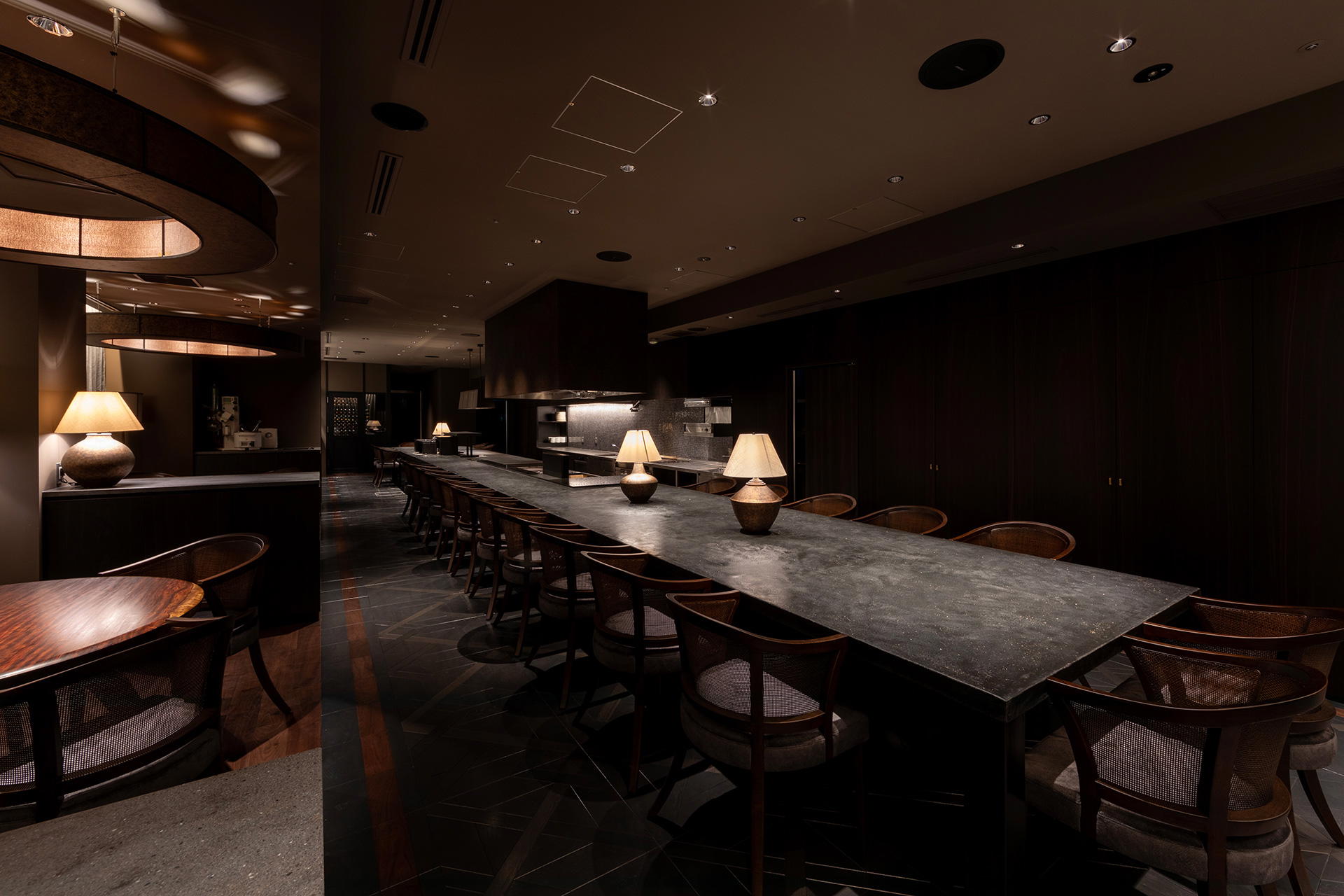
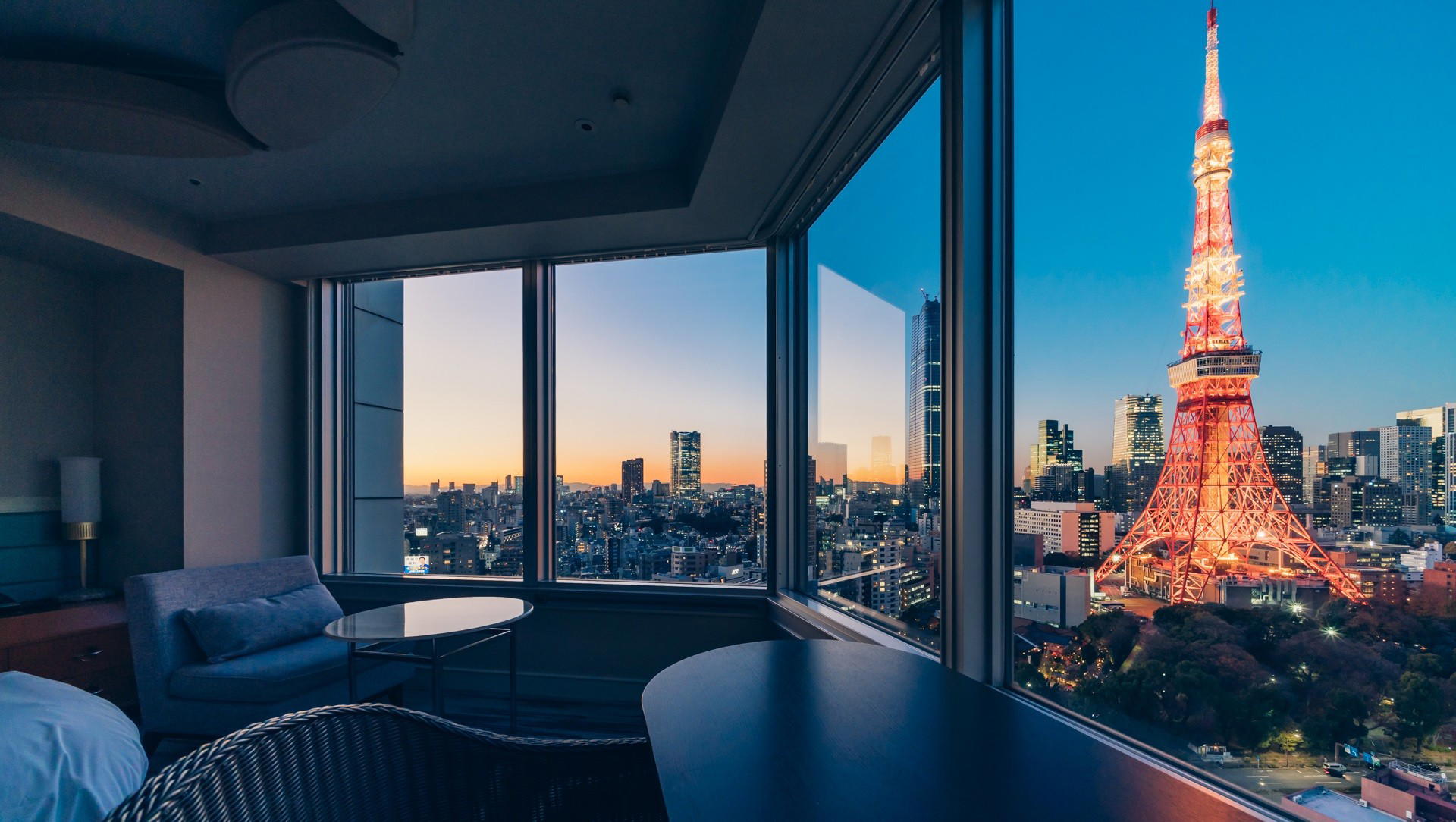
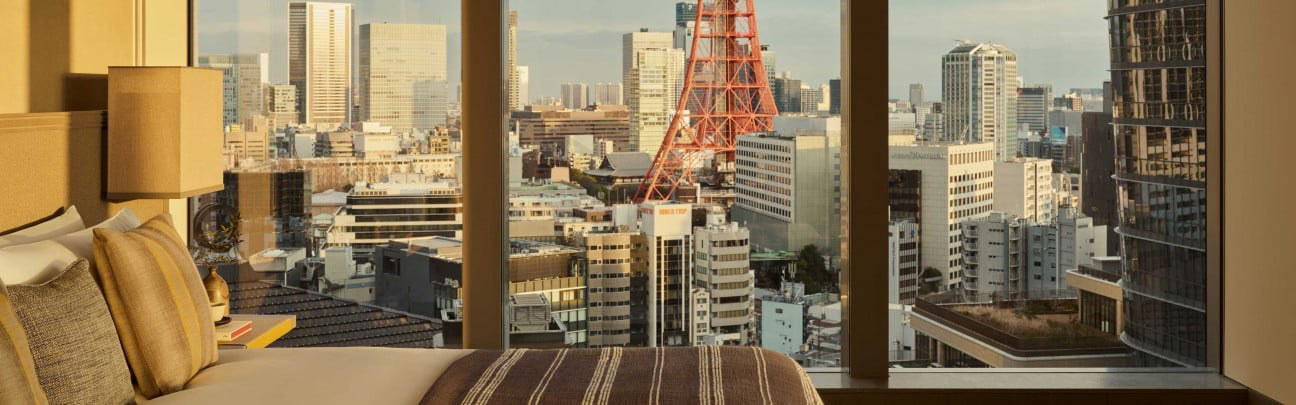
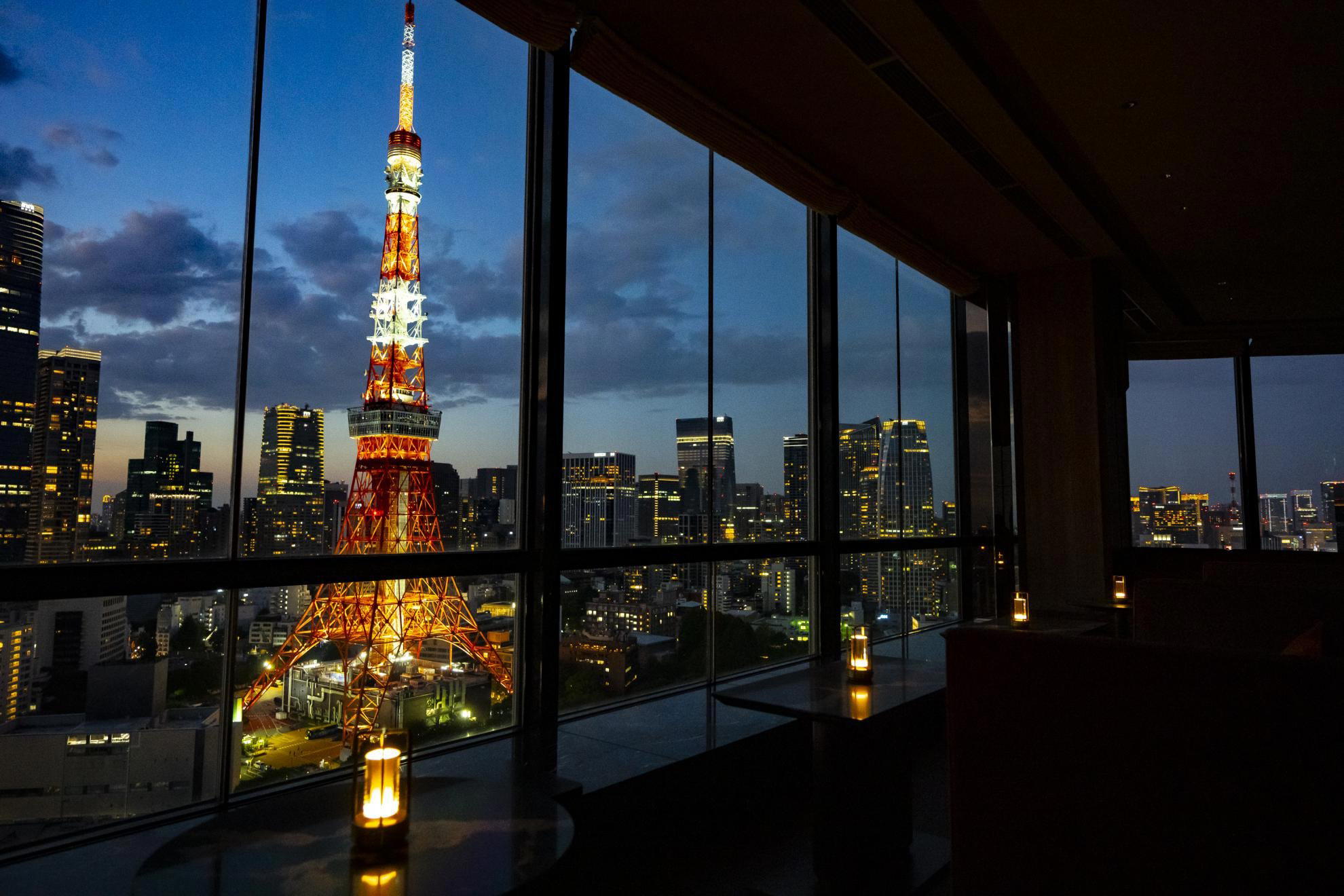
Brise Verte occupies the 22nd floor of Prince Park Tower Tokyo in Shibakoen, Minato City, with views across the treetops of Shiba Park toward Tokyo Tower. The restaurant's name, French for 'green breeze', signals a dining register that sits outside Japan's dominant kaiseki and omakase formats. For visitors tracing the city's French-influenced fine dining tier, it is a useful reference point alongside L'Effervescence and Sézanne.

Pearl is the En Primeur Club membership app, where members save venues, book tables and use the concierge.
The menu
What to order
- Kuroge Wagyu Chateaubriand
- Foie gras parfait
A Room with a Different Argument
Tokyo's premium restaurant map is disproportionately shaped by two traditions: the kaiseki counter, where the progression of a meal is structured around seasonal Japanese ingredients and centuries of codified technique, and the French fine dining room, which arrived in Japan in the postwar decades and has since developed its own distinct local dialect. Brise Verte, on the 22nd floor of Prince Park Tower Tokyo in Shibakoen, sits inside that second tradition. The name itself, French for 'green breeze', positions the restaurant in dialogue with European cooking, while the address, overlooking the wooded expanse of Shiba Park with Tokyo Tower rising to the north, gives it a physical argument that very few rooms in this city can make: elevation, greenery, and a landmark in the frame simultaneously.
That kind of setting has consequences for how a restaurant is read. In a city where subterranean counters and low-lit basements dominate the conversation around serious cooking, a room that announces itself through panoramic windows is making a different kind of claim. It is, in part, a claim about occasion, the kind of dinner that earns its price through the full experience of being somewhere, not only through what arrives on the plate.
Where Brise Verte Sits in Tokyo's French Tier
Tokyo's French-influenced fine dining has fragmented considerably over the past decade. The category now runs from tightly focused neo-bistro formats through to multi-course rooms with serious cellar programs and sommelier teams operating at a level comparable to Paris or Lyon. L'Effervescence in Nishi-Azabu represents one pole of that tier: an ingredient-led, Michelin-recognized room where the cooking leans heavily on Japanese producers while remaining structurally French. Sézanne, inside the Four Seasons at Marunouchi, represents another: a hotel dining room that has built a reputation strong enough to pull guests from the wider city rather than relying on in-house traffic. Crony in Minami-Aoyama occupies a more experimental position, blending French technique with influences that resist easy categorization.
That is neither an advantage nor a liability in isolation. Some of Tokyo's most consistently excellent wine programs have been built inside hotels precisely because the capital investment and storage infrastructure are already in place. The question, for any hotel dining room in this city, is whether the kitchen and the cellar are making arguments independent of the room's scenic assets.
The Wine Argument
French-inflected restaurants in Tokyo have historically used their wine lists as a primary trust signal. In a city where the broader dining culture places extraordinary value on precision and depth of knowledge, the sommelier role at serious French rooms carries weight that extends beyond simple service. The list at a room like this one is expected to function as a curated document, not a catalog of available bottles, but an editorial position on regions, producers, and vintages.
The French wine tradition that informs rooms like Brise Verte draws its credibility from a specific kind of rigor: allocation access to producers who do not distribute widely, cellar depth that allows for back-vintage representation, and a team capable of making recommendations that go beyond the obvious. Burgundy and Champagne remain the prestige anchors for Tokyo's French dining tier, but the more interesting lists have expanded their aperture, toward the Northern Rhône, toward grower Champagnes outside the major houses, toward Loire producers who have gained recognition among importers in the past decade. Whether Brise Verte's list reflects that kind of curation is something that becomes apparent only at the table.
For context on what a genuinely ambitious wine program looks like at this price tier globally, Le Bernardin in New York City and Lazy Bear in San Francisco both maintain programs where the cellar depth functions as a meaningful part of the dining proposition, not a supporting element.
The Broader Tokyo Dining Context
Shibakoen is not the neighborhood most international visitors associate with Tokyo's fine dining concentration. The heavier clustering sits in Minami-Aoyama, Ginza, and Nishi-Azabu, where the density of high-end restaurants creates the kind of competitive environment that tends to sharpen kitchens. A room situated in a quieter, more residential-adjacent district, adjacent to parkland, operates with a different clientele logic: it draws hotel guests, business diners from the surrounding Minato City office and embassy district, and occasion diners who specifically seek the view.
That context shapes what kind of cooking tends to succeed in these rooms. The approach that works in a Ginza counter, intense, compressed, requiring full attention, is not always the approach that works in a room where guests arrive for anniversaries and business entertaining. Whether that is a creative constraint or a creative opportunity depends entirely on how the kitchen chooses to use it.
Visitors to Tokyo with a serious interest in French-Japanese cooking should also consider RyuGin in Roppongi, where the kaiseki tradition has been reinterpreted through a modern technical lens, and Harutaka in Ginza, which operates at the other end of the formality spectrum with an omakase format that has attracted sustained international attention. For a broader map of the city's restaurants across formats and price tiers, the EP Club Tokyo restaurant guide covers the full range.
Japan Beyond Tokyo
Visitors using Tokyo as a base for wider travel through Japan will find that the country's regional dining scene has developed considerably. HAJIME in Osaka maintains a three-Michelin-star kitchen with a philosophy rooted in ecological thinking as much as technique. Gion Sasaki in Kyoto represents the kaiseki tradition at its most refined. akordu in Nara brings a European sensibility to a city better known for its temples than its restaurants. Further afield, Goh in Fukuoka, Abon in Ashiya, affetto akita in Akita, Aji Arai in Oita, Ajidocoro in Yubari District, Akakichi in Imabari, and aki nagao in Sapporo all represent Japan's depth of serious cooking outside the major metropolitan centers.
Know Before You Go
Know Before You Go
- Address: Prince Park Tower Tokyo, 22F, 4-8-1 Shibakoen, Minato City, Tokyo 105-0011
- Getting There: Onarimon Station (Toei Mita Line) is the closest metro access point; Shibakoen Station (Toei Mita Line) also provides a short walk through the park.
- Booking: Contact the hotel directly via the Prince Park Tower Tokyo reservations line; no independent website or booking platform is listed in available data.
- Timing: Views toward Tokyo Tower are particularly clear in winter months when atmospheric haze is lower; spring positions the park's zelkova trees at their densest green.
- Dress Code:
- Dietary Requirements: Communicate any allergies or restrictions directly with the hotel at time of reservation.
Frequently asked questions
Where is Brise Verte in Tokyo?
Brise Verte is located at Japan, 〒105-0011 Tokyo, Minato City, Shibakoen, 4 Chome−8−1 ザ・プリンスパークタワー東京 33F, Tokyo.
Is Brise Verte a good choice for French dining away from Tokyo's main fine dining districts?
Brise Verte's address in Shibakoen, Minato City places it outside the Ginza-to-Minami-Aoyama corridor where most internationally reviewed French tables in Tokyo are concentrated. For diners based near Tokyo Tower or the bayside areas, this makes it a geographically logical alternative to the standard fine dining circuit. The trade-off is less surrounding restaurant density, but the room is removed from the foot traffic those districts generate.
What do people recommend at Brise Verte?
Brise Verte operates within Tokyo's French-influenced fine dining tier, where the kitchen's focus tends toward seasonal, structured courses. Specific dish recommendations are best confirmed directly with the restaurant at time of booking, as the menu changes with the season. The Shibakoen address puts it slightly apart from the Ginza and Minami-Aoyama concentration, which regulars note gives the room a quieter register than comparable Tokyo addresses.
How hard is it to get a table at Brise Verte?
Brise Verte sits in Shibakoen, Minato City, a neighbourhood that draws a more local clientele than the heavily trafficked Ginza or Omotesando corridors. That positioning typically means less international competition for reservations, though availability at this tier of Tokyo French dining still warrants advance planning.
What do critics highlight about Brise Verte?
Published critical assessments of Brise Verte are not widely indexed, which is partly a function of its Shibakoen location, a district that receives less editorial coverage than Tokyo's primary fine dining clusters. Any documented awards or ratings should be confirmed with the venue directly.
How does Brise Verte handle allergies?
French fine dining kitchens at this tier in Tokyo routinely accommodate dietary requirements when notified at the time of reservation, particularly given the structured, pre-planned nature of tasting menus. Specific allergy protocols at Brise Verte are best confirmed by contacting the restaurant before booking.
Cuisine-First Comparison
| Venue | Cuisine | Price | Awards | Notes |
|---|---|---|---|---|
| Brise VerteThis venue (the venue you are viewing) | Contemporary French Fine Dining | $200–300 | Not listed | Not listed |
| Harutaka | Edo-Style Omakase Sushi | $200–300 | 3 Michelin Stars · World's 50 Best #76 | Sushi |
| L'Effervescence | Modern French with Japanese Influences | $200–300 | 3 Michelin Stars · World's 50 Best #69 | French |
| RyuGin | Modern Kaiseki | $500+ | 3 Michelin Stars · World's 50 Best #41 | Kaiseki, Japanese |
| Crony | Modern French with Japanese Influences | $150–200 | 2 Michelin Stars · World's 50 Best #34 | Innovative, French |
| Den | Modern Japanese Kaiseki | $150–200 | 2 Michelin Stars · World's 50 Best #91 | Innovative, Japanese |