Brasserie Hélène occupies a prominent address on Tauentzienstraße, positioning itself within Berlin's mid-to-upper dining tier where French brasserie tradition meets the city's appetite for European cooking done with precision. The address places it steps from KaDeWe and the western city centre, drawing a mix of hotel guests, shoppers, and deliberate diners. Confirm hours and booking directly before visiting.
Pearl is the En Primeur Club membership app — saves, bookings, and concierge access live there. Same editors, same standards.
- Address
- Tauentzienstraße 21-24, 10789 Berlin, Germany
- Phone
- +493021212101
- Website
- opentable.com
- Directions
- Get directions
 Saves & bookings on Pearl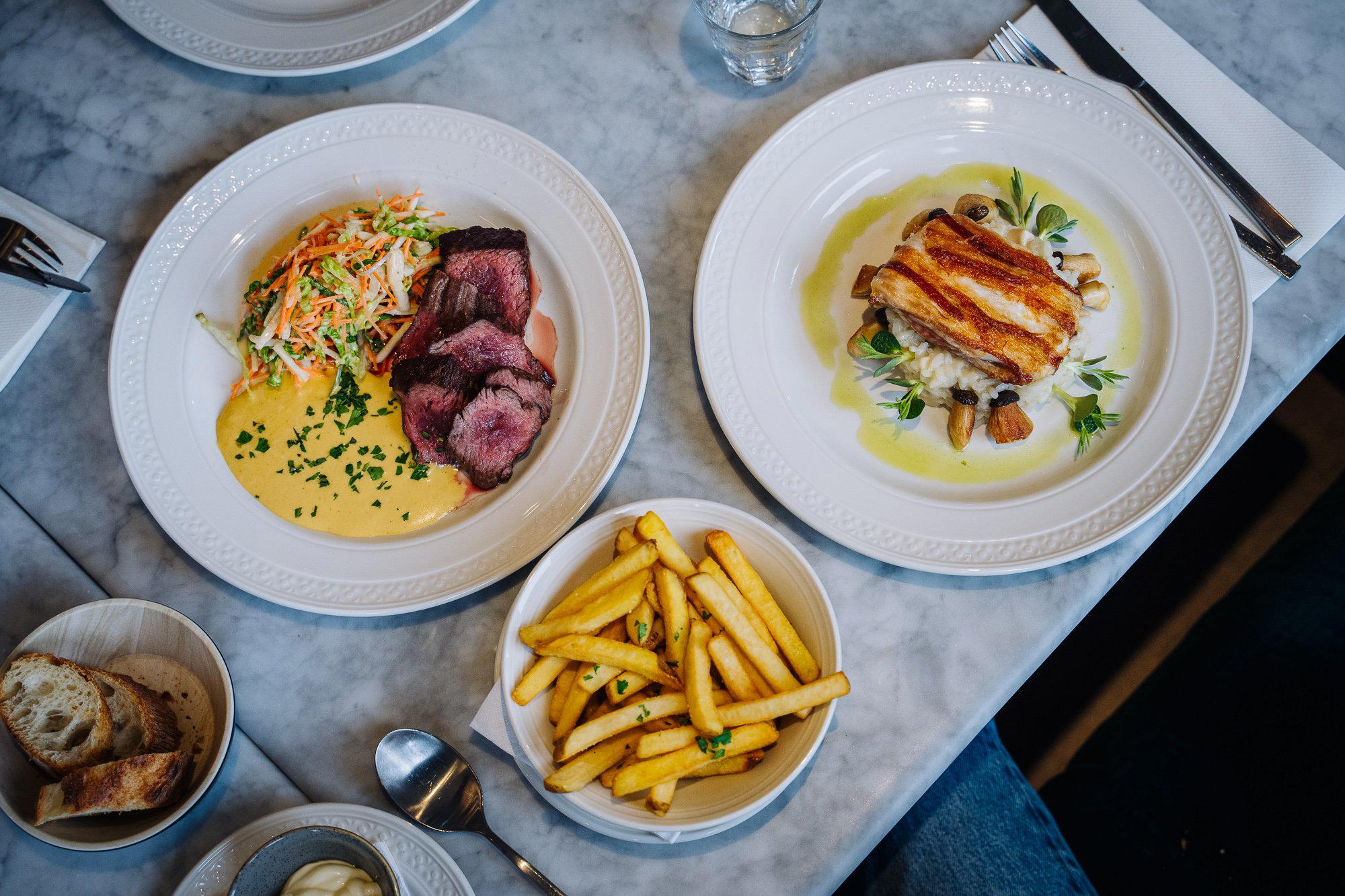
Where Kurfürstendamm Meets the Brasserie Floor
Brasserie Hélène is a Classic French Brasserie on Tauentzienstraße in Berlin, at Tauentzienstraße 21-24, 10789 Berlin, Germany. Tauentzienstraße is one of Berlin's most trafficked commercial corridors, a wide boulevard where the western city's retail density gives way, at intervals, to dining rooms that serve everyone from KaDeWe shoppers to conference delegates finishing early. Brasserie Hélène sits in that current, at number 21-24, in a stretch of the city that has historically supported mid-to-upper European dining rather than the tasting-menu-only format that defines much of Berlin's critical conversation. The name signals intent clearly: a French brasserie register, with the formality that implies, planted in a neighbourhood that rewards accessible polish over experimentation.
Berlin's serious dining scene has, over the past decade, concentrated in pockets further east and in design-led rooms with strong chef identities. Nobelhart & Schmutzig on Friedrichstraße operates at the ideological end of that spectrum, with a closed-kitchen philosophy and producer-first sourcing that generates considerable critical attention. Rutz in Mitte has built a Michelin-recognised program around modern European ideas. FACIL, set inside the Mandala Hotel, layers contemporary European cooking with a hotel-dining ease that appeals to a similar audience to Brasserie Hélène's western-city location. These are the rooms that dominate Berlin's award conversations. Brasserie Hélène positions itself differently: the brasserie format implies broader appeal, longer service windows, and a menu logic built around comfort and reliability rather than provocation.
The Brasserie Atmosphere in a German Context
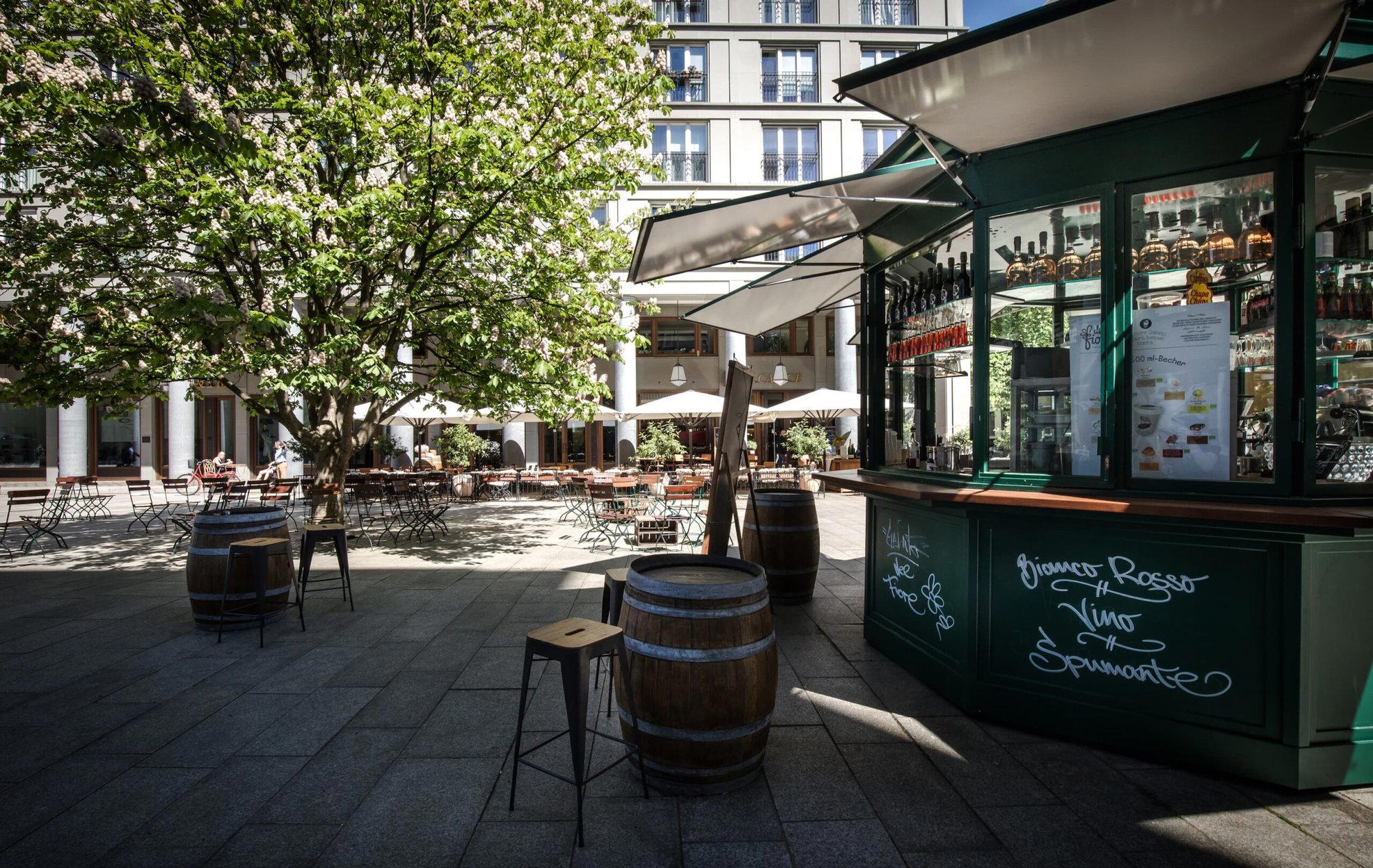
The French brasserie as a category carries a set of atmospheric expectations that travel reliably across borders. Warm light, preferably from pendant fittings set low enough to flatten the room into intimacy. A sense of purposeful noise: not the curated silence of a tasting-menu counter, but the low-frequency hum of tables turning, wine being poured, conversations running at full register. Banquette seating that allows the eye to read the room from a fixed point. These are the physical codes of the format, and they matter more than any single dish, because they establish the social contract between the room and its guests before a menu is placed.
In Berlin, that register is relatively rare at the higher end of the price scale. The city's premium rooms tend toward the architecturally spare or the design-forward: think glass, raw concrete, and the kind of minimalism that signals seriousness without warmth. A properly executed brasserie atmosphere, where the room itself is an argument for staying rather than a neutral backdrop to the cooking, occupies a specific niche. It attracts a different guest profile: one less interested in documenting the meal and more interested in the duration of the evening.
The Tauentzienstraße address reinforces this. The street connects to Wittenbergplatz and flows toward the western end of the Ku'damm, a part of the city that functions as commercial Berlin rather than creative Berlin. The guest who arrives here for dinner is often not the same guest hunting a reservation at CODA Dessert Dining or testing the boundaries of what Restaurant Tim Raue does with Chinese-inflected flavour. They want a room that works, food that is precisely what it appears to be, and a service rhythm that doesn't require decoding.
French Brasserie Cooking and What It Demands
The brasserie canon is not forgiving in the way that experimental cooking is. Experimental formats allow for failure reframed as intention. A brasserie does not. Steak frites, duck confit, onion soup, sole meunière: these are dishes measured against a global memory of what they should taste and feel like, calibrated by decades of eating in Lyon, Paris, and every European city that has absorbed the tradition. Execution is the only variable that matters.
Germany's broader fine dining circuit has produced kitchens that handle French classical technique with considerable authority. Schwarzwaldstube in Baiersbronn operates at three-Michelin-star level within a French-influenced register. Vendôme in Bergisch Gladbach and Waldhotel Sonnora in Dreis represent the serious end of classical French cooking in Germany, where precision and sourcing are non-negotiable. The brasserie tier sits below that altitude, but the craft requirement is not absent. A room calling itself a brasserie in a European capital is making a promise about consistency that a more loosely defined contemporary restaurant does not.
Across Germany, the restaurants that occupy the space between casual and fine dining, where price expectations are moderate and format is approachable, are under particular pressure. Guests in that tier compare across national borders now: the brasserie in Berlin competes, in the guest's mental model, with the brasserie in Paris, in Amsterdam, and in Hamburg. Restaurant Haerlin in Hamburg represents what the formal French-influenced room looks like at the summit of that register in Germany's other major northern city. The benchmark travels.
Placing Brasserie Hélène in Berlin's Western Dining Context
Berlin's western districts, the area running from Charlottenburg through Wilmersdorf and anchored by the Ku'damm corridor, have a dining character distinct from Mitte or Prenzlauer Berg. The rooms here tend toward established European formats rather than concept-driven openings. The guest demographic skews older and more internationally mixed, partly because the area's hotel density is high and its connection to the city's tourist infrastructure is direct. For a brasserie, that is a functional location advantage.
Compared to destinations like JAN in Munich or ES:SENZ in Grassau, which operate in more architecturally considered or destination-specific settings, a Tauentzienstraße address trades scenic remove for urban accessibility. That is a deliberate calibration. The international visitor staying in the western city hotels, or the Berlin resident who works in the commercial west, does not want to cross the city for dinner. A room that delivers reliable French brasserie cooking within walking distance of where they already are offers a different value proposition than the destination meal.
The broader circuit of serious German restaurants, from Victor's Fine Dining by christian bau in Perl to Schanz in Piesport and Bagatelle in Trier, illustrates how broadly the French classical tradition has embedded itself across German fine dining. Aqua in Wolfsburg operates at the formal end of that tradition. The brasserie format, including what the restaurant represents on Tauentzienstraße, is the accessible, higher-frequency version of that same culinary inheritance.
Know Before You Go
- Address: Tauentzienstraße 21-24, 10789 Berlin, Germany
- Nearest transport: Wittenbergplatz (U1, U2, U3) or Kurfürstendamm (U9), both within a short walk
- Price range: Not published; verify current pricing before visiting
Cuisine Lens
Comparable venues nearby, for context on price, style, and recognition.
| Venue | Cuisine | Price | Notes |
|---|---|---|---|
| Brasserie HélèneThis venue — the venue you are viewing | Classic French Brasserie | $$$$ | Not listed |
| MANON | Modern French Brasserie | $$$ | Charlottenburg |
| Jolie Bistrot | Modern French Bistro | $$$ | Prenzlauer Berg |
| Brasserie Le Paris | Classic French Brasserie | $$$ | Charlottenburg |
| Parc Fermé | Contemporary French Fine Dining | $$$$ | Moabit |
| Ushido | Japanese Yakiniku BBQ | $$$$ | Prenzlauer Berg |
Continue exploring
More in Berlin
Restaurants in Berlin
Browse all →
Bars in Berlin
Browse all →
Hotels in Berlin
Browse all →

At a Glance
- Elegant
- Sophisticated
- Classic
- Date Night
- Business Dinner
- Special Occasion
- Hotel Restaurant
- Extensive Wine List
- Street Scene
Current opening hours
- Monday
- 12–8 PM
- Tuesday
- 12–8 PM
- Wednesday
- 12–8 PM
- Thursday
- 12–8 PM
- Friday
- 12–8 PM
- Saturday
- 12–8 PM
- Sunday
- Closed
Hours can change for holidays and private events. Last verified .
Elegant with contemporary flair and calm atmosphere.