Boqueria Penn Quarter
Boqueria Penn Quarter brings the structure and energy of Spanish tapas culture to Washington D.C.'s Penn Quarter neighborhood, translating the logic of the bar-centered Iberian meal into a format that holds its own against the capital's expanding roster of share-plate dining. The menu reads as a study in tapas architecture, with cold plates, hot plates, and larger montaditos anchoring distinct moments in the meal.
Pearl is the En Primeur Club membership app — saves, bookings, and concierge access live there. Same editors, same standards.
- Address
- 777 9th St NW, Washington, DC 20001
- Phone
- +12025523268
- Website
- boqueriarestaurant.com
- Directions
- Get directions
 Saves & bookings on Pearl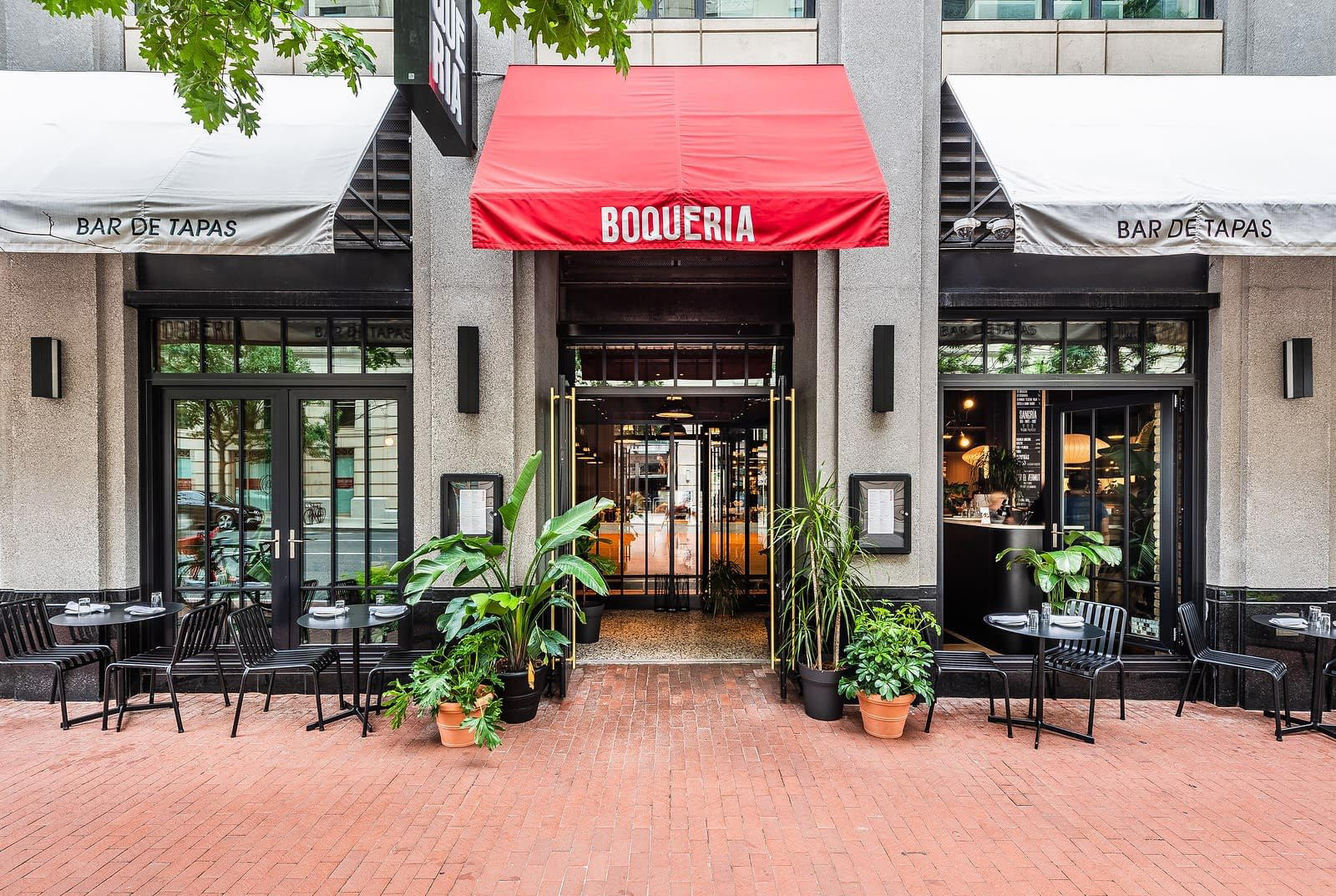
The Geometry of the Spanish Table in Penn Quarter
Penn Quarter occupies a particular position in Washington D.C.'s dining geography: close enough to the Capitol and downtown office corridors to draw a professional lunch crowd, and dense enough with theater-goers, residents, and tourists to sustain a wide register of formats. It is also the neighborhood where Spanish tapas culture has established one of its clearest D.C. footholds. The Boqueria name, borrowed loosely from Barcelona's famous market hall, signals a particular approach to hospitality before a guest sits down: the Spanish bar as social infrastructure, the small plate as the primary unit of eating, and the meal itself as a sequence of arrivals rather than a single arc from starter to main.
That framing matters because it sets Boqueria Penn Quarter apart from the broader share-plate trend that has defined American casual dining for the past decade. Many restaurants describe their menus as made for sharing, then deliver oversized portions that resist the format. The tapas tradition operates differently: the logic is that each plate is sized for a specific role in the meal, cold preparations arriving first to prime the palate, warm dishes building through the middle, and larger montaditos or raciones anchoring the later rounds. Whether the kitchen executes that sequence with full discipline is the question any serious diner should carry to the table.
How the Menu Is Built
The editorial interest of a tapas menu lies in its architecture. At Boqueria Penn Quarter, the menu organizes itself along lines that echo the structure of a traditional Spanish bar: pinchos and cold plates at one end, warm cooked dishes in the middle, and a selection of larger-format items for the table. This is a meaningful structural choice. A restaurant that abandons that hierarchy in favor of a flat, undifferentiated list of shareable plates is no longer operating inside the tapas tradition; it is simply doing small portions. The hierarchical approach demands that guests think about sequencing rather than simply ordering whatever appeals, which shifts the dining dynamic in ways that reward attention.
That same architecture is evident across Boqueria's multi-city presence, with locations in New York, Chicago, and beyond, each working from a similar menu logic while adapting to local market conditions. In D.C. the Penn Quarter location sits in a competitive frame that includes the capital's growing roster of Mediterranean-adjacent and Southern European restaurants. The share-plate segment here runs from accessible mid-tier operations through to more ambitious Spanish-influenced programs, and understanding where Boqueria sits in that range requires reading the menu carefully rather than relying on the name alone.
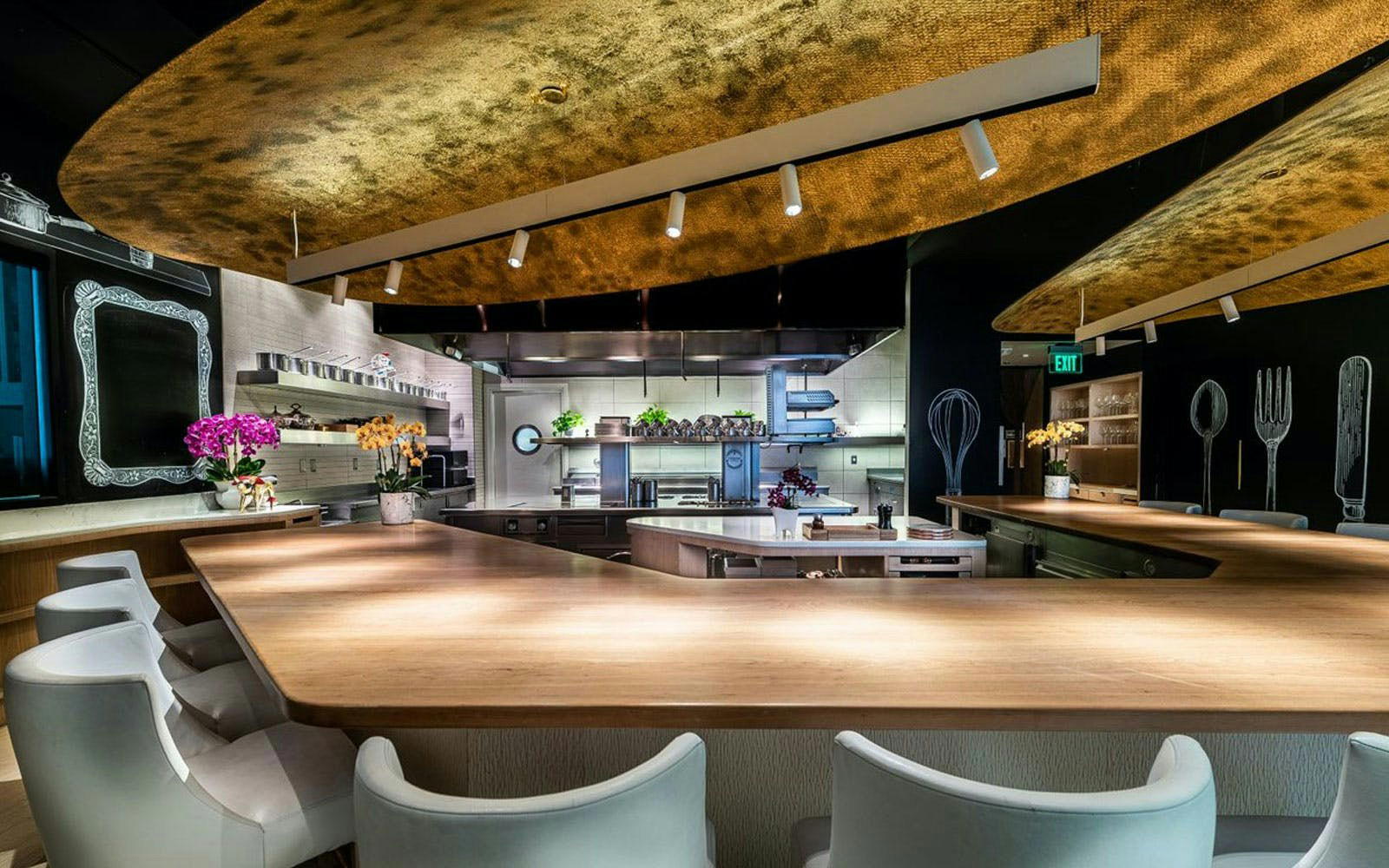
For context on what the broader D.C. dining scene offers at higher price points, Albi works the Eastern Mediterranean register at the $$$$ tier, while Causa brings Peruvian precision to a similar price bracket. At the contemporary American end, Oyster Oyster operates with a sustainability-forward New American program, and Jônt occupies the upper tier of modern French and contemporary tasting-menu dining in the city. For something that pushes further into technical territory, minibar by José Andrés remains the molecular reference point for the capital. Boqueria Penn Quarter operates at a different register from all of these: more accessible in format and price, more social in orientation, and more anchored to a specific culinary tradition than the broad contemporary category allows.
The Tapas Counter as Room
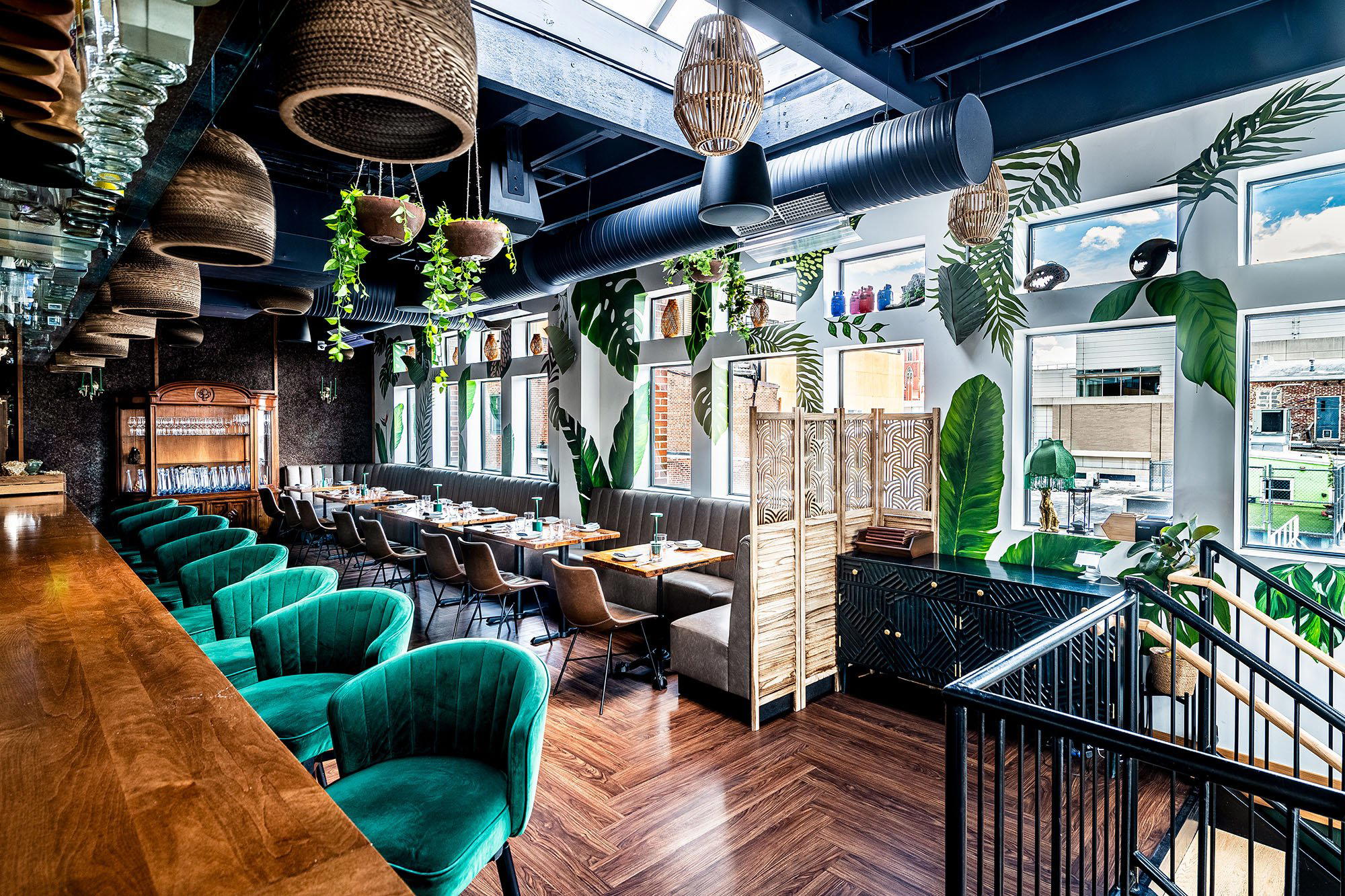
The physical arrangement of a good tapas room is inseparable from its function. The Spanish bar tradition assumes standing room, a long counter, and a constant rotation of small plates priced low enough to encourage spontaneous ordering. American tapas restaurants have almost universally adapted that model toward seated service, which changes the rhythm of the meal significantly. Boqueria's format sits in that adapted tradition: the setting references the energy of an Iberian bar without fully reproducing its economics or its informality. The result is a room that feels livelier than a conventional restaurant while remaining legible to guests who prefer the structure of a table and a waiter.
Penn Quarter rewards this kind of social format. The neighborhood fills on weekday evenings with a mixed crowd drawn from nearby offices, the Capital One Arena, and residential streets to the north and east. A tapas format that can absorb a party ordering in rounds, or a couple sharing four to six plates across ninety minutes, handles that variety better than a more rigidly structured menu would.
D.C. in a Broader National Frame
Washington D.C.'s dining scene has matured substantially over the past fifteen years, and its Spanish and Iberian representation now extends well beyond the novelty tier. Nationally, Spanish cuisine occupies a position in American fine and casual dining that continues to expand, driven partly by the visibility of Spanish chefs in international media and partly by the genuine adaptability of tapas culture to American social eating habits. For comparison, the tension between heritage European formats and American dining expectations plays out differently in cities like New York, San Francisco, and Chicago, where Spanish restaurants have had longer to establish themselves. See our coverage of Lazy Bear in San Francisco, Smyth in Chicago, and Le Bernardin in New York City for a sense of how other cities handle the intersection of European tradition and American dining culture at different price points.
Closer to D.C. The Inn at Little Washington remains the region's most formally ambitious dining destination, operating at a remove from the city that underscores how different the capital's in-town dining culture is from its rural surroundings. For those interested in tracing the full geography of serious American dining, The French Laundry in Napa, Providence in Los Angeles, Blue Hill at Stone Barns in Tarrytown, Addison in San Diego, Single Thread Farm in Healdsburg, Atomix in New York City, Emeril's in New Orleans, and Atelier Moessmer Norbert Niederkofler in Brunico illustrate the range of what serious culinary ambition looks like across different formats and national traditions. Boqueria Penn Quarter does not compete in that tier; it occupies a different and more accessible position, where the value is in accessibility to a specific culinary tradition rather than in pushing that tradition forward. For more on where Boqueria sits within the capital's full dining range, see our full Washington, D.C. restaurants guide.
Know Before You Go
- Address: 777 9th St NW, Washington, DC 20001
- Neighborhood: Penn Quarter, walkable from Gallery Place-Chinatown Metro station
- Format: Tapas and share plates; ordering in rounds is the intended approach
- Reservations: Recommended for evening service, particularly on days when Capital One Arena has events nearby
- Group size: The share-plate format works well for two to six guests; larger parties benefit from advance coordination on ordering rounds
- Timing: Weekday lunch tends to move at a faster pace than evening service; arrive early for quieter seating
How Boqueria Penn Quarter compares with similar nearby venues.
| Venue | Cuisine | Price |
|---|---|---|
| Seven Reasons | Latin American | $$$$ |
| Piccolina | Italian | Not listed |
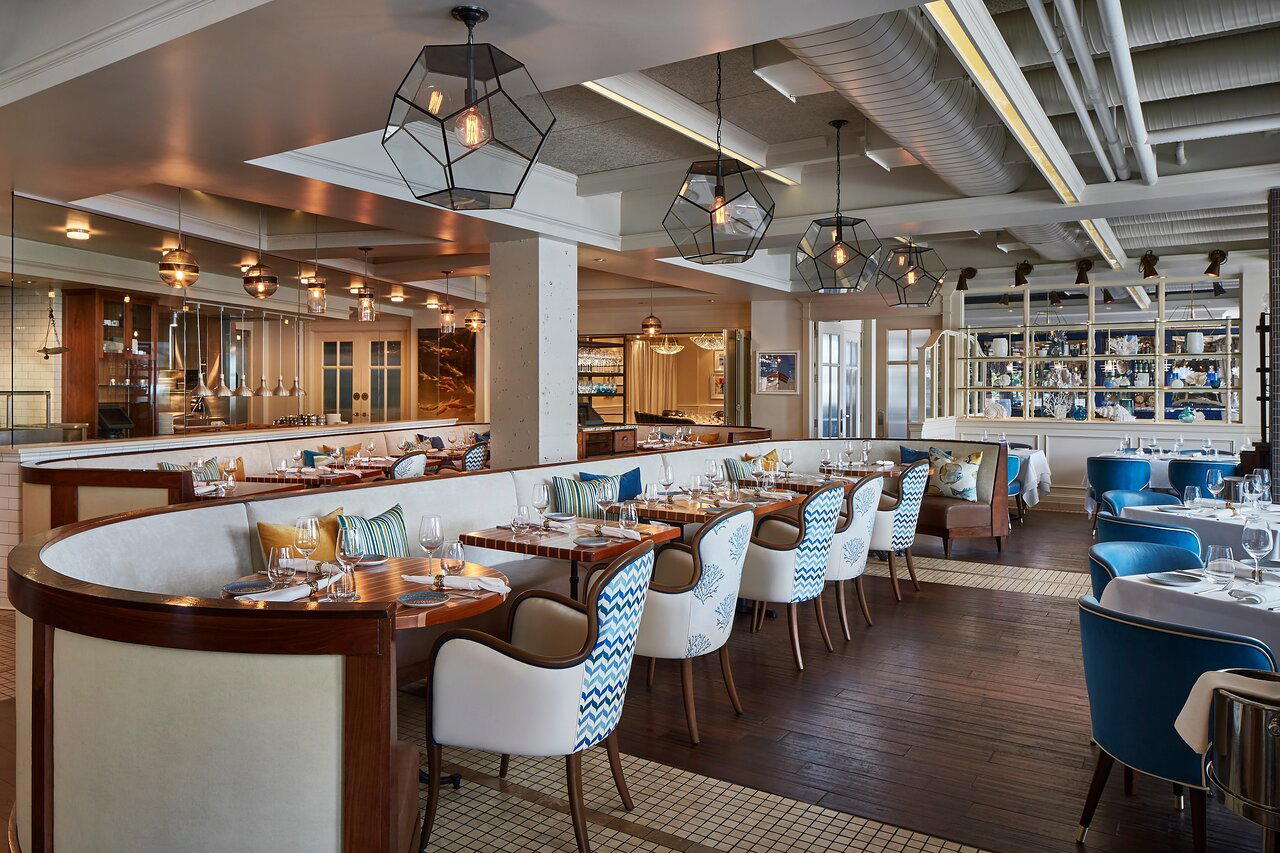
| Estuary | Seafood | $$$$ |
Continue exploring
More in Washington DC
Restaurants in Washington DC
Browse all →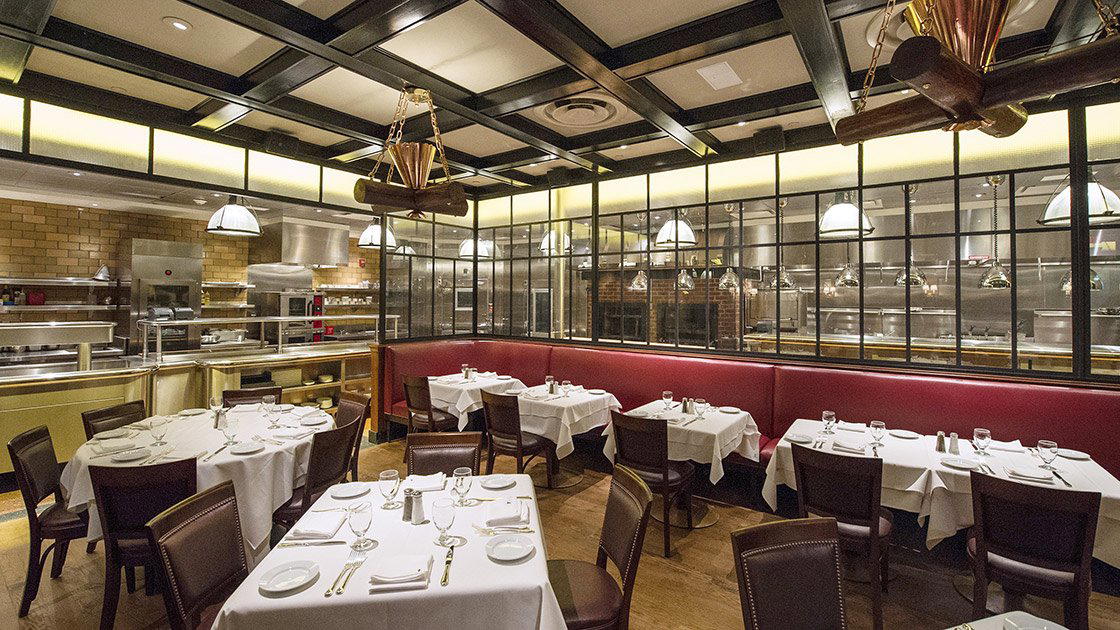
Bars in Washington DC
Browse all →
Hotels in Washington DC
Browse all →
At a Glance
- Lively
- Trendy
- Energetic
- Group Dining
- Date Night
- Brunch
- Happy Hour
- Open Kitchen
- Craft Cocktails
Current opening hours
- Monday
- 11 AM–10 PM
- Tuesday
- 11 AM–10 PM
- Wednesday
- 11 AM–10 PM
- Thursday
- 11 AM–10 PM
- Friday
- 11 AM–11 PM
- Saturday
- 11 AM–11 PM
- Sunday
- 11 AM–9 PM
Hours can change for holidays and private events. Last verified .
Lively and lively atmosphere with the hum of sangría glasses and bustling Spanish tapas bar energy, blending bold Catalan flavors with cosmopolitan flair in a contemporary space.