ÜberQuell occupies a former fish auction hall on the St. Pauli waterfront, positioning it at the intersection of Hamburg's working harbour past and its current craft beer culture. The brewery and restaurant operates where the Elbe sets the tempo, making it a reliable read on how the city drinks and eats in 2024. It belongs to a different register than Hamburg's fine-dining tier but earns its place through location and format.
Pearl is the En Primeur Club membership app — saves, bookings, and concierge access live there. Same editors, same standards.
- Address
- St. Pauli Fischmarkt 28-32, 20359 Hamburg, Germany
- Phone
- +4940334421260
- Website
- ueberquell.com
- Directions
- Get directions
 Saves & bookings on Pearl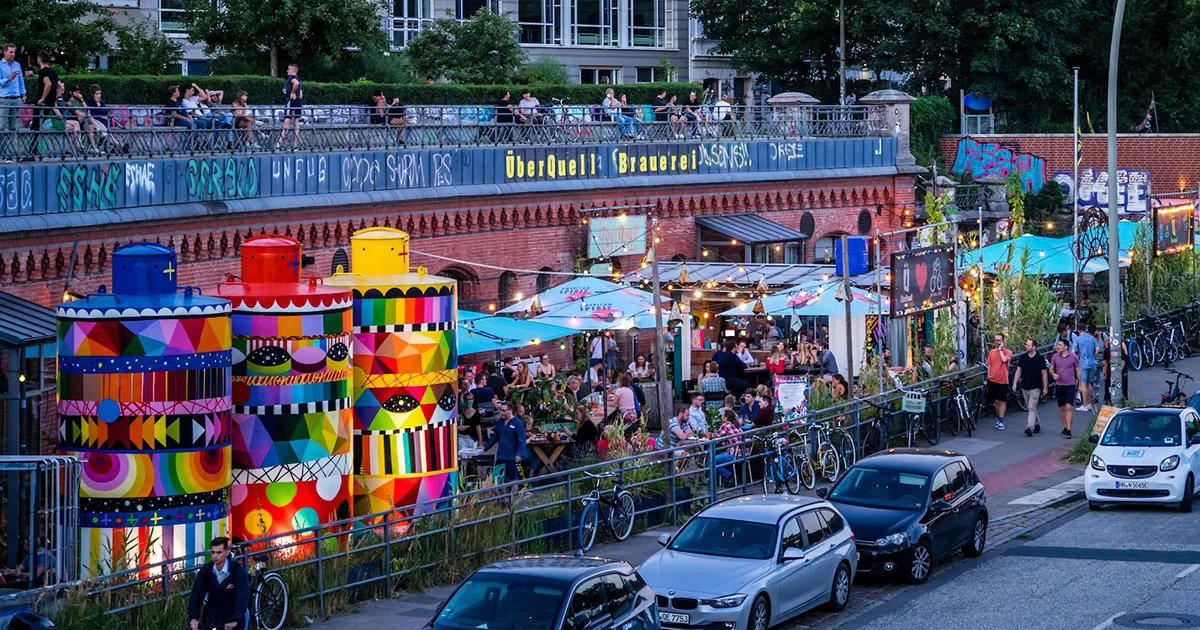
Where the Elbe Shapes the Room
The St. Pauli Fischmarkt has one of the more loaded addresses in Hamburg. For most of the twentieth century, it functioned as a genuine working quay: fish traders, early-morning auctions, the smell of the river cutting through everything. The waterfront strip at addresses 28–32 still carries that industrial weight in its bones, and ÜberQuell has built its entire proposition around that inheritance rather than papering over it. Arriving along the Elbe promenade on a grey Hamburg morning, the building reads more as a harbour structure than a hospitality venue, which is largely the point.
Hamburg's brewery scene has followed a pattern visible across northern European port cities: a long interlude of industrial consolidation, then a craft revival anchored not in gentrified neighbourhoods but in districts with authentic industrial character. The Fischmarkt location places ÜberQuell in direct conversation with that history. The Elbe is visible from the site, and the rhythm of river traffic — container ships, tourist ferries, pilot boats — provides a backdrop that no amount of interior design could replicate. This is waterfront hospitality in the functional sense, not the resort sense.
The St. Pauli Context
St. Pauli occupies a specific position in Hamburg's neighbourhood hierarchy. It sits immediately west of the Altstadt and south of the Reeperbahn, which gives it a double character: the entertainment district above, the working waterfront below. The Fischmarkt itself has operated in various forms since 1703, and Sunday morning market culture at this address predates most European food trends by several centuries. Venues that open at this location are implicitly in dialogue with that history, whether they intend to be or not.
The neighbourhood's dining and drinking scene has diversified significantly over the past decade. What was once a stretch defined almost entirely by late-night bars and tourist-facing fish restaurants now holds a wider range of formats, from serious coffee operations to the kind of brewery-restaurant hybrid that ÜberQuell represents. Hamburg's full restaurant scene spans everything from three-Michelin-star counters to neighbourhood bistros, but the waterfront strip at St. Pauli operates in its own register, shaped by its geography and its audience.
That audience is worth understanding. The Fischmarkt draws a different crowd than HafenCity to the east, where venues like The Table Kevin Fehling operate at the top of the city's fine-dining tier with tasting menus in the €€€€ bracket. The St. Pauli waterfront skews younger, more local, more interested in how the beer is made than in the provenance of the crockery. ÜberQuell sits comfortably in that context.
Brewery Culture as Editorial Lens
Germany's relationship with beer is well documented and occasionally overstated. The more interesting story in contemporary Hamburg is how craft brewing has separated itself from both the mass-market pilsner tradition and the nationalist nostalgia that sometimes attaches to Reinheitsgebot orthodoxy. A new cohort of Hamburg breweries has looked outward, to American IPAs, Belgian farmhouse traditions, Scandinavian minimalism, while remaining rooted in northern German drinking culture. ÜberQuell belongs to this cohort.
The brewery-restaurant format that ÜberQuell operates in has specific structural logic. Guests can observe production while eating, which changes the relationship between kitchen and floor. The beer is not just a beverage category on the menu but the organising principle of the whole experience. Food pairings in this format tend to move away from wine-pairing conventions and toward a different kind of matching: malt weight against fat, carbonation against salt, bitterness against sweetness. It is a different discipline, and venues that execute it well tend to draw a more engaged audience than those that treat the brewery as a decorative backdrop.
For reference, Hamburg's most decorated dining addresses, Restaurant Haerlin, 100/200 Kitchen, and bianc, operate in a different category entirely, with formal service structures and wine lists as the central beverage logic. Germany's broader fine-dining tier, represented by operations like Aqua in Wolfsburg, Schwarzwaldstube in Baiersbronn, and Vendôme in Bergisch Gladbach, pursues a different standard altogether. ÜberQuell is not in competition with any of them.
Planning a Visit
The St. Pauli Fischmarkt address is accessible on foot from the S-Bahn station at Reeperbahn (roughly a ten-minute walk along the waterfront) or from Landungsbrücken, which connects multiple U-Bahn and S-Bahn lines and places visitors directly on the Elbe promenade. Arriving by water taxi from HafenCity is also feasible and adds obvious coherence to a waterfront venue. Timing matters at this address: Sunday mornings carry the residual energy of the historic fish market, and weekend afternoons on the Elbe promenade tend to fill early when weather permits. Hamburg's maritime climate means the waterfront terrace, if any, has a shorter reliable season than inland venues, and the interior gains significance in the wetter months. Booking specifics, current hours, and price information are best confirmed directly with the venue before travel.
Visitors building a broader Hamburg itinerary around the waterfront might also note Lakeside for a contrasting waterside format in a different part of the city. Those extending into northern Germany or beyond have access to a range of serious dining options, from JAN in Munich to CODA Dessert Dining in Berlin and further afield to ES:SENZ in Grassau, Schanz in Piesport, Bagatelle in Trier, Waldhotel Sonnora in Dreis, and Victor's Fine Dining by Christian Bau in Perl. Internationally, the brewery-adjacent casual dining format that ÜberQuell represents finds equivalents in cities like New York, where venues such as Le Bernardin and Atomix occupy the opposite end of the formality spectrum, providing useful contrast for understanding how dining registers differ across markets.
How ÜberQuell Hamburg compares with similar nearby venues.
| Venue | Cuisine | Price |
|---|---|---|
| Salt & Silver - Lateinamerika | Latin American | €€€ |
Continue exploring
More in Hamburg
Restaurants in Hamburg
Browse all →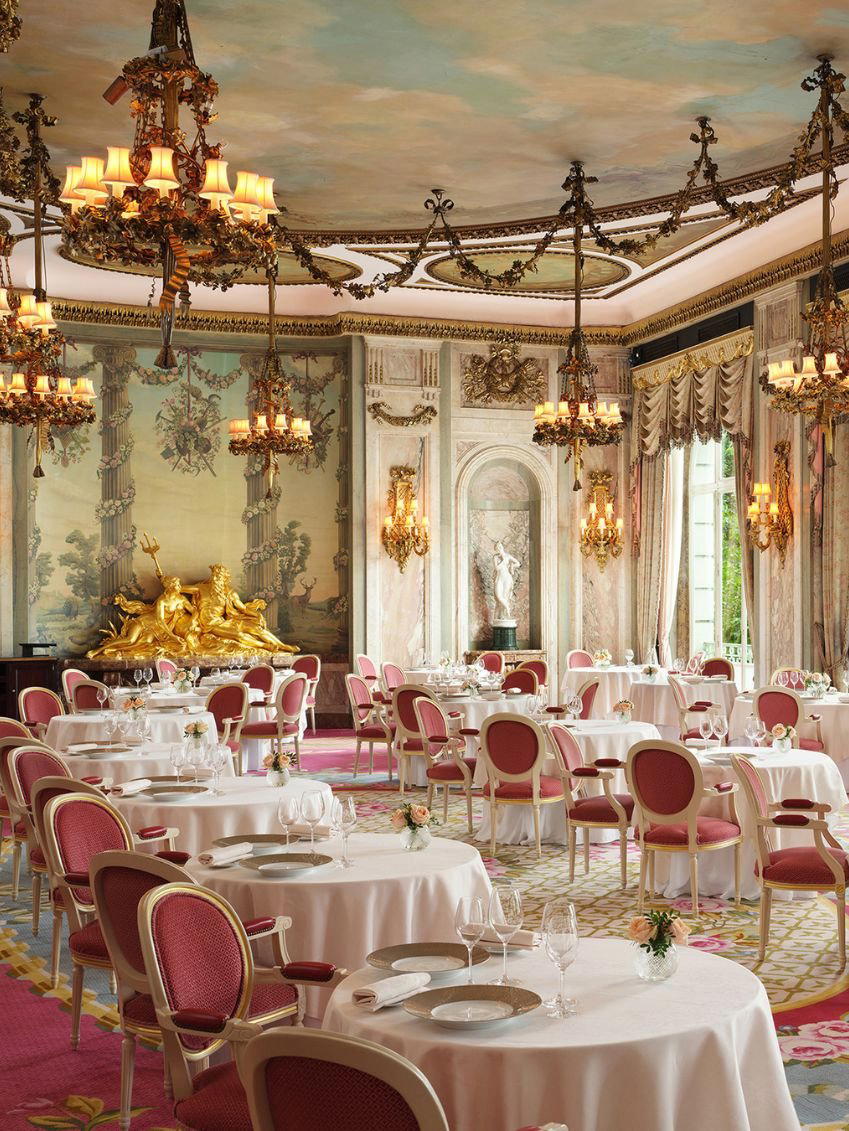
Bars in Hamburg
Browse all →
Hotels in Hamburg
Browse all →
Wineries in Hamburg
Browse all →
At a Glance
- Trendy
- Lively
- Modern
- Cozy
- Casual Hangout
- Group Dining
- After Work
- Open Kitchen
- Terrace
- Waterfront
- Beer Program
- Local Sourcing
- Waterfront
- Street Scene
Current opening hours
- Monday
- 5–11 PM
- Tuesday
- 5–11 PM
- Wednesday
- 5–11 PM
- Thursday
- 5–11 PM
- Friday
- 5 PM–12 AM
- Saturday
- 3 PM–12 AM
- Sunday
- 3–10 PM
Hours can change for holidays and private events. Last verified .
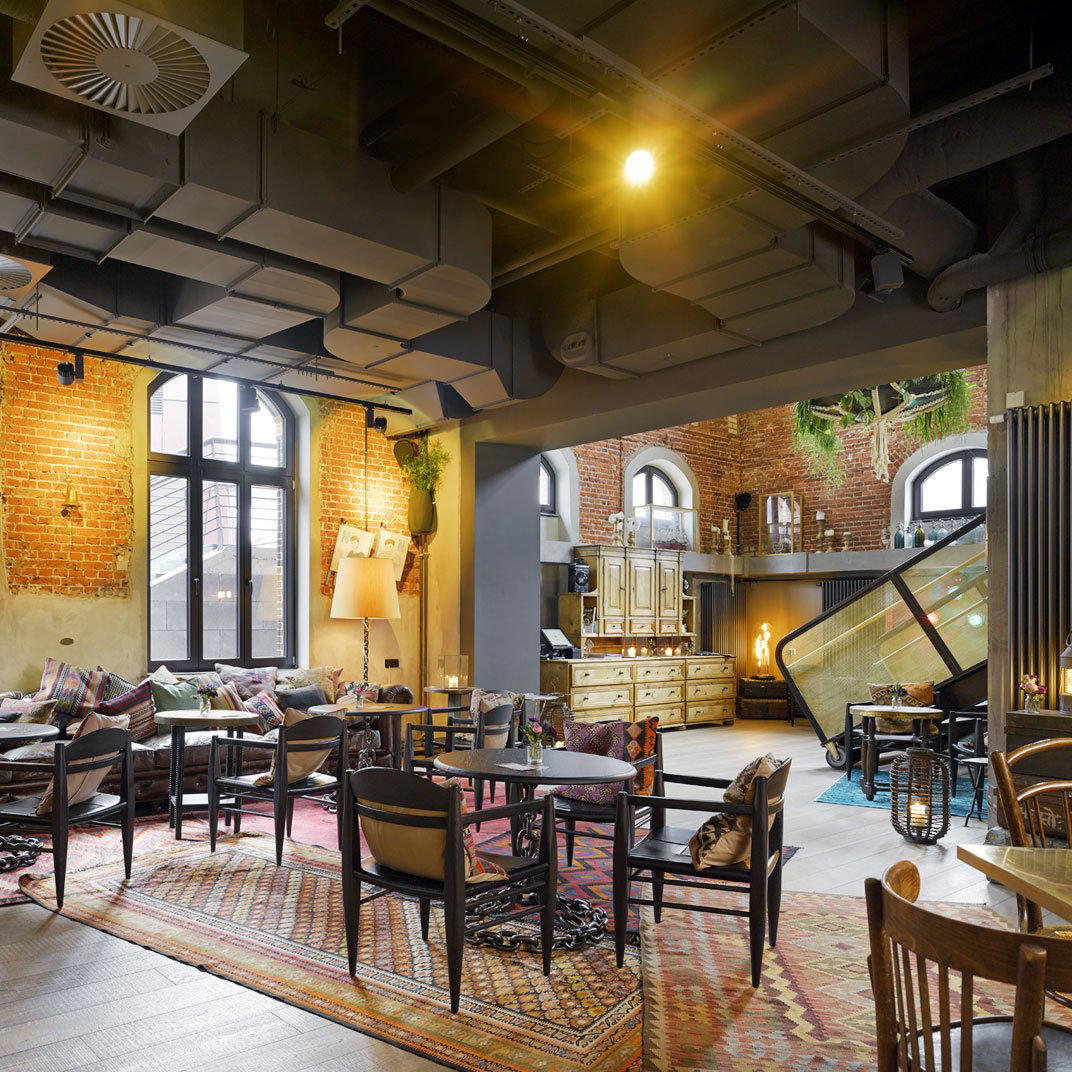
Hip, relaxed atmosphere with street art on walls, open kitchen views, and lively terrace overlooking the Elbe harbor.
Know Before You Go
- Getting there
- St. Pauli Fischmarkt 28-32, 20359 Hamburg, Germany