
Azabu10 occupies a quiet address in central Milan, positioning itself within the city's growing appetite for Japanese-influenced dining that sits apart from the Italian fine-dining mainstream. The address on Via San Glicerio places it at a deliberate remove from the Duomo-area concentration of Michelin-rated Italian kitchens, signalling a different kind of ambition for the city's increasingly international restaurant scene.
Pearl is the En Primeur Club membership app — saves, bookings, and concierge access live there. Same editors, same standards.
- Address
- Via S. Glicerio, 6, 20100 Milano MI, Italy
- Website
- azabu10byarcieri.com
- Directions
- Get directions
 Saves & bookings on Pearl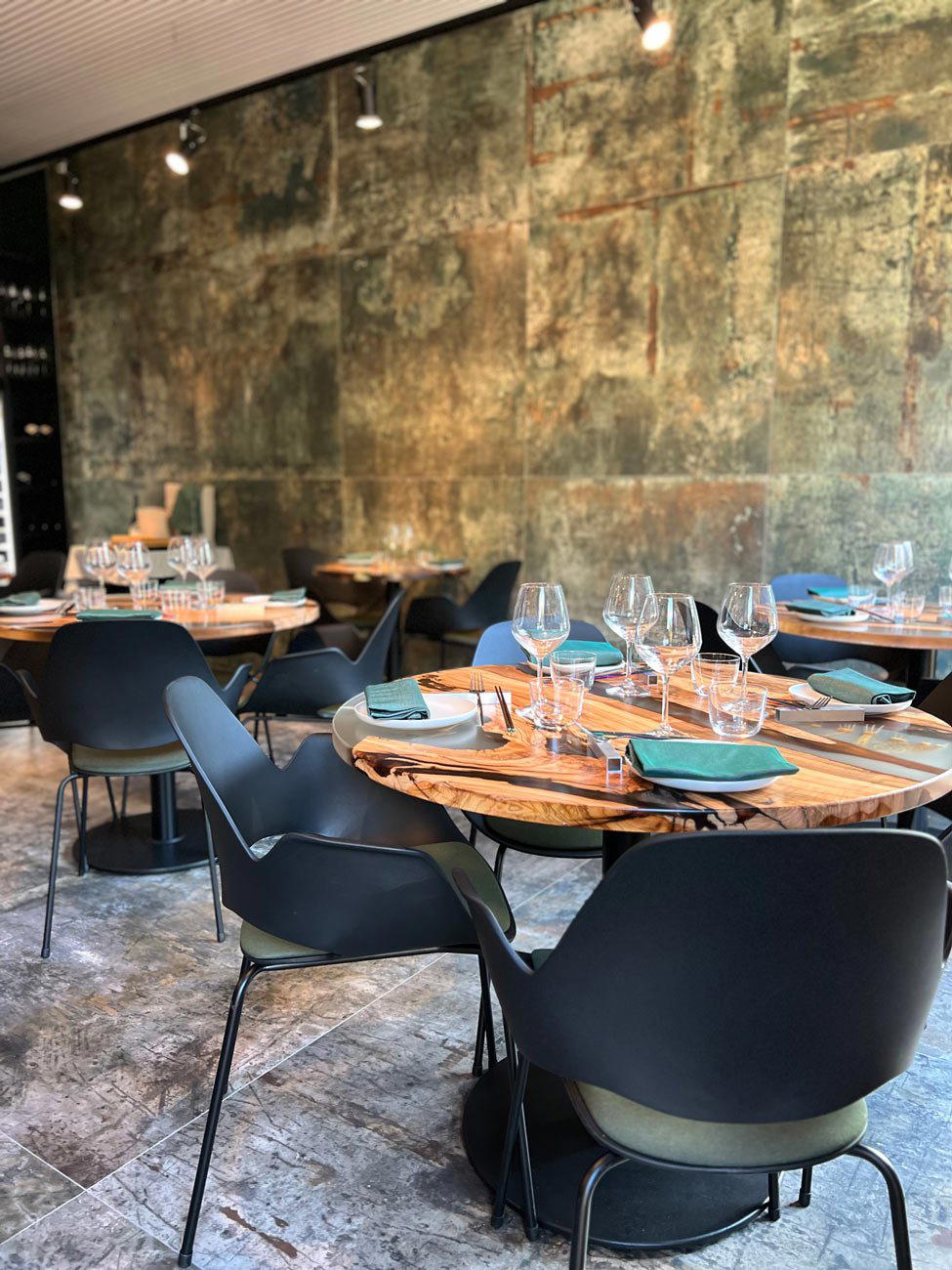
A Japanese Address in an Italian City
Milan's restaurant scene has spent the better part of two decades consolidating around a recognisable template: Italian fine dining, northern European technique, tasting menus built on regional produce. Azabu10 is a restaurant in Milan serving Modern Japanese Omakase at Via S. Glicerio, 6. The Michelin-starred tier, represented by kitchens like Enrico Bartolini, Cracco in Galleria, and Andrea Aprea, draws heavily on Lombardy's larder and the grammar of modern Italian cuisine. Against that backdrop, a Japanese-inflected address on Via San Glicerio reads as a deliberate departure, one that reflects a broader shift in how the city's diners now think about where their most considered evenings are spent.
Azabu10 sits at that departure point. The name itself signals its orientation: Azabu is one of Tokyo's most concentrated pockets of serious dining, a neighbourhood where kaiseki traditions and contemporary Japanese kitchens have long coexisted at high price points. Bringing that reference to Milan's Via San Glicerio, a street that keeps a lower profile than the Quadrilatero della Moda addresses where so much of the city's premium dining is anchored, is itself an editorial statement about where the interesting work in Milan's restaurant scene is now happening.
The Space and Its Intentions
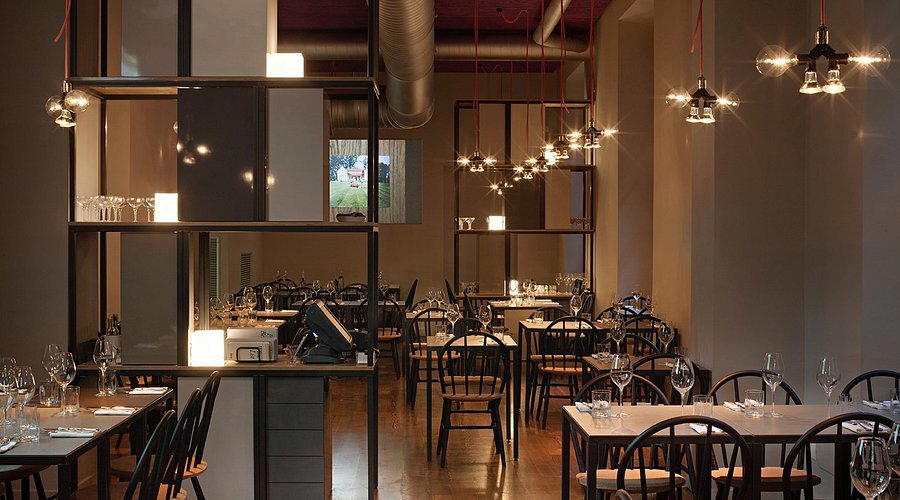
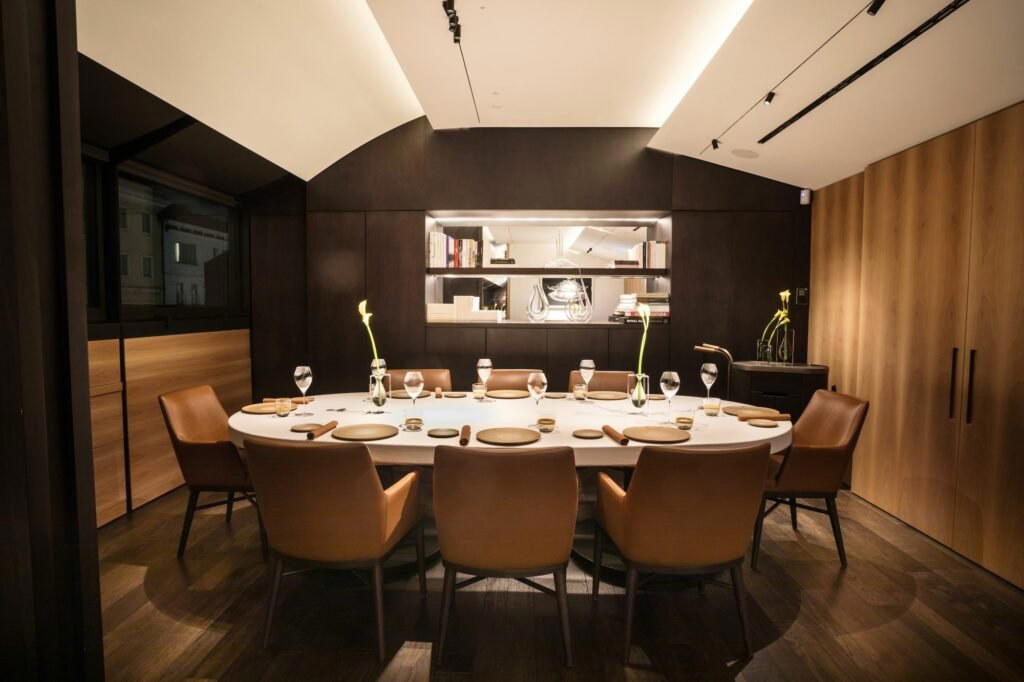
Approaching from the southern edge of the city centre, the address feels intentionally quiet. Milan's premium dining cluster runs northward through Brera and the fashion district; a restaurant choosing a site further south, at a residential remove, is already communicating something about its priorities. The physical environment at Via San Glicerio, 6 suggests a room that does not depend on passing trade or postcode prestige, which, in a city where so many fine-dining addresses compete for the same fashion-week visibility, is a considered position.
Japanese dining formats that transplant to European cities tend to fall into one of two modes. The first adapts to local expectations: longer service, wine-pairing frameworks borrowed from French tradition, menus reshaped around European protein hierarchies. The second holds its original format more intact, accepting that a smaller audience will seek it out on its own terms. Particularly durable Japanese restaurants in cities like London, Paris, and New York, those that build genuine reputations rather than riding early novelty, have generally operated in that second mode, treating the format as non-negotiable rather than as a starting point for hybridisation.
Evolution and Where It Sits Now
The evolution of Japanese dining in Italy follows a pattern familiar from other Western European capitals. Early-stage venues arrived as curiosity pieces, often serving generalised pan-Asian menus to audiences with little reference for the distinctions between regional Japanese traditions. The second wave introduced sushi counters and ramen houses at accessible price points. The current phase, visible in Milan as much as in Rome or Florence, involves a smaller number of addresses operating at premium tier, places where the kitchen's competence is not in question and the competition is as much with serious Italian fine dining as with other Japanese rooms.
Azabu10 appears to belong to this third phase. The name's Azabu reference places its ambitions firmly in the upper register of Japanese dining culture. Cities that have developed credible high-end Japanese dining scenes, London's Endo at the Rotunda, Paris's Kei, New York's Shoji, have generally done so by committing fully to format discipline rather than softening the proposition for local audiences. Whether Azabu10 holds to that discipline is the question that defines its current position in Milan's dining conversation.
For context on where Italian fine dining more broadly is travelling, Osteria Francescana in Modena, Piazza Duomo in Alba, and Le Calandre in Rubano represent the benchmark for how Italian kitchens have absorbed international technique while remaining rooted in regional identity. Particularly interesting Japanese addresses in Italy, by contrast, ask diners to make the reverse journey: to approach an imported tradition with some degree of prior engagement, rather than expecting the kitchen to meet them halfway.
Milan in the Wider Italian Dining Picture
Milan occupies a specific position within Italy's restaurant geography. The city's wealth, its fashion and design industries, and its international business traffic have produced a dining public more receptive to non-Italian fine dining than almost anywhere else in the country. Where Rome's premium restaurant scene remains anchored in Roman and central Italian tradition, and where kitchens like Dal Pescatore in Runate or Uliassi in Senigallia operate from deep regional specificity, Milan has space for a more pluralist premium dining culture.
That pluralism has limits. The city's fine-dining audience remains relatively conservative by London or New York standards; the Milanese restaurant mainstream gravitates toward Seta-style modern Italian or the creative Italian format represented by Verso Capitaneo, rather than toward imported formats. An address like Azabu10 is therefore working with a narrower base than a comparable Japanese room would command in London or Paris, but the audience that exists is likely to be both knowledgeable and committed. For serious Japanese dining in Italy more broadly, the comparative comparable set extends to kitchens that have found ways to operate ambitiously outside major capitals, in the way that Atelier Moessmer Norbert Niederkofler in Brunico and Reale in Castel di Sangro have built reputations independent of metropolitan traffic.
For those building a wider Italian itinerary, Quattro Passi in Marina del Cantone, Enoteca Pinchiorri in Florence, and Casa Perbellini 12 Apostoli in Verona each illustrate how different cities hold different expectations of what a serious dinner involves. Milan's particular expectation, international, design-conscious, format-aware, is what makes an address like Azabu10 legible here in a way it might not be elsewhere in Italy.
Planning a Visit
Via San Glicerio, 6 is reachable from the city centre in under fifteen minutes on foot from the Porta Romana area, or by metro from Missori. For the wider context of what Milan's serious dining scene offers across different price tiers and cuisine types,
Recognition, Side-by-Side
Comparable venues nearby, for context on price, style, and recognition.
| Venue | Cuisine | Price | Awards | Notes |
|---|---|---|---|---|
| Azabu10This venue — the venue you are viewing | Modern Japanese Omakase | $$$ | Not listed | Not listed |
| Ronin, milano | Multi-level Modern Japanese (Izakaya, Robata & Omakase) | $$$ | Not listed | Paolo Sarpi / Chinatown |
| Røst | Modern Italian Bistro with Nordic Influences | $$$ | Not listed | Buenos Aires - Porta Venezia - Porta Monforte |
| Ristorante Imbarco 10 Fish restaurant | Fresh Italian Seafood | $$$ | Not listed | Porta Garibaldi - Porta Nuova |
| Waby | Modern Japanese Sushi | $$$ | Michelin Plate | Porta Garibaldi - Porta Nuova |
| AI CHIOSTRI MILANO | Traditional Milanese Italian | $$$ | Not listed | Guastalla |
Recognition history
Dated appearances from independent guides and award organizations, with the underlying list record or original source where available.
Opinionated About Dining Newly Added European Restaurants
Opinionated About Dining
Opinionated About Dining Top Restaurants in Europe Recommended
Opinionated About Dining
Continue exploring
More in Milan
Restaurants in Milan
Browse all →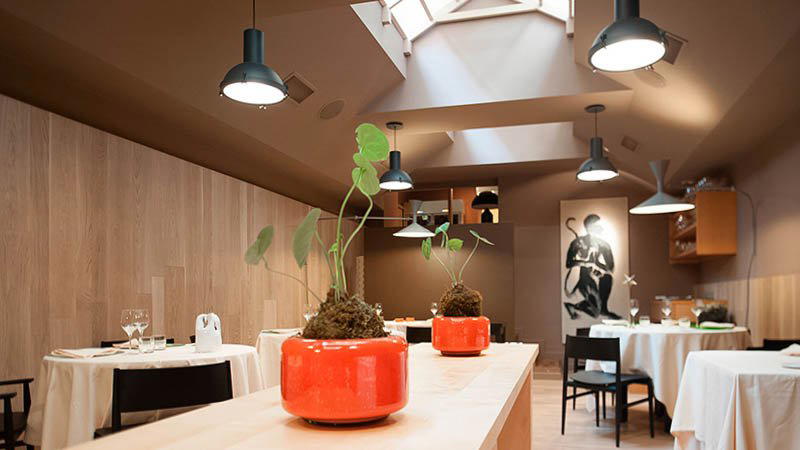
Hotels in Milan
Browse all →
Wineries in Milan
Browse all →
At a Glance
- Modern
- Intimate
- Minimalist
- Sophisticated
- Date Night
- Special Occasion
- Chefs Counter
- Open Kitchen
- Natural Wine
- Sake Program
- Local Sourcing
Current opening hours
- Monday
- 7–11 PM
- Tuesday
- 7–11 PM
- Wednesday
- 1–2 PM, 7–11 PM
- Thursday
- 1–2 PM, 7–11 PM
- Friday
- 1–2:15 PM, 7–11 PM
- Saturday
- 1–2 PM, 7–11 PM
- Sunday
- Closed
Hours can change for holidays and private events. Last verified .
Minimalist environment with sleek, intimate counters, relaxed yet elegant atmosphere, precise service by young staff, and occasional live music.