Avenida Peru sits in the San Blas-Canillejas district of Madrid, positioning itself as part of the city's growing interest in Latin American cuisine beyond the centre. The address places it outside the high-density creative dining corridor but within a neighbourhood with its own dining logic, where Peruvian cooking traditions — ceviche, causa, anticucho — meet a Madrid audience with genuine appetite for the form.
Pearl is the En Primeur Club membership app — saves, bookings, and concierge access live there. Same editors, same standards.
- Address
- C. de Telémaco, 8, San Blas-Canillejas, 28027 Madrid, Spain
- Phone
- +34643355198
- Website
- avenidaperurestaurant.com
- Directions
- Get directions
 Saves & bookings on Pearl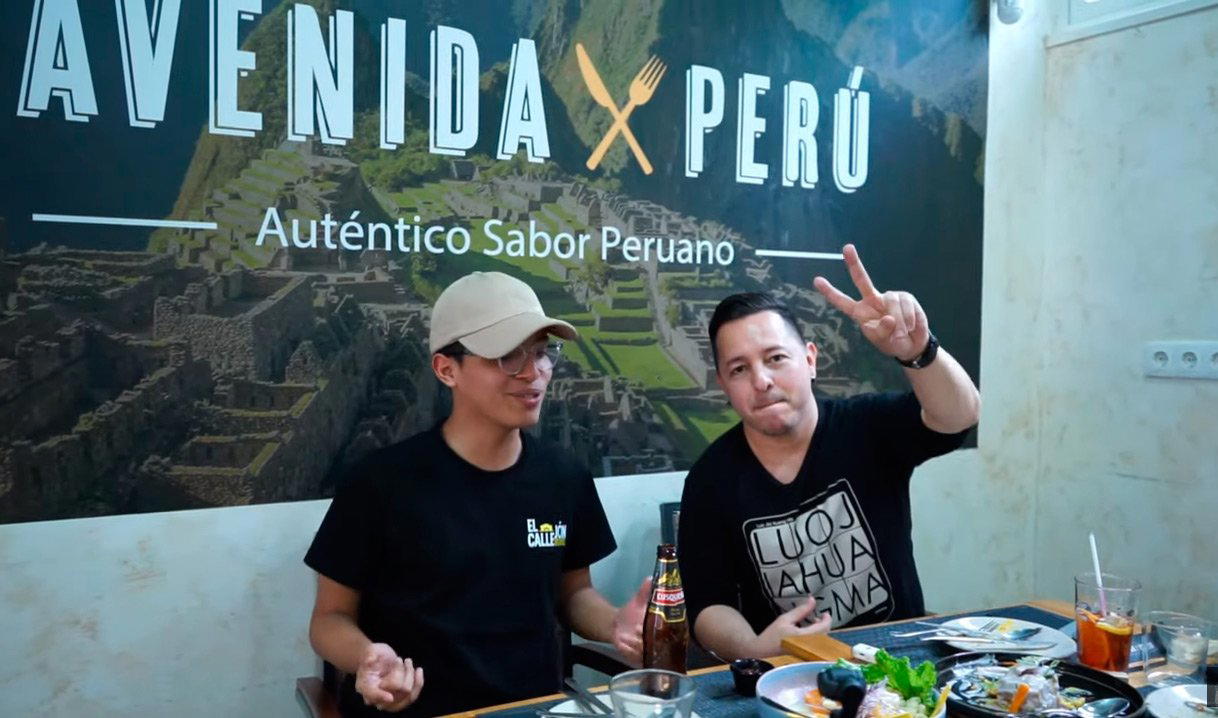
San Blas-Canillejas and the Eastern Dining Shift
Madrid's restaurant geography has traditionally concentrated prestige along a corridor running from Salamanca through Chueca and into the old city. The outer districts have operated on different terms: less scrutinised by critics, more embedded in local routine, and increasingly home to cuisines that find affordable space to operate at the register they require. San Blas-Canillejas, in the city's eastern reach, belongs to that pattern. The neighbourhood's dining offer is shaped less by destination tourism than by the communities that have settled there over the past two decades, including a substantial Latin American population that has made this part of Madrid one of the more credible addresses for cuisine from Peru, Ecuador, and Colombia.
Peruvian cooking has a particular foothold in this context that goes beyond population demographics. Lima has spent the last fifteen years building a reputation as one of the most technically and culturally significant food cities in the world, and that reputation has arrived in Madrid with some force. Venues like DiverXO have shown how Asian and Latin American flavour references can be absorbed into high-end creative cooking, but the outer districts tend to operate with more fidelity to the source — less reinterpretation, more direct transmission of the tradition itself.
The Peruvian Cooking Tradition in Madrid
Peruvian cuisine is one of the more structurally complex of the Latin American traditions to land in European cities. It is not a single cuisine but a layered one, shaped by Spanish colonial influence, significant waves of Chinese and Japanese immigration in the nineteenth and early twentieth centuries, and the biodiversity of a country that moves from Pacific coastline to high-altitude Andean plateau to Amazonian lowland. Each zone contributes a different pantry: the coast gives ceviche and its acidic, citrus-driven leche de tigre; the highlands bring potato varieties that European cuisines have never catalogued; the jungle adds ingredients that remain largely unknown outside Peru itself.
In Madrid, Peruvian restaurants tend to anchor their menus around the coastal tradition, which is the most immediately accessible entry point for a European palate. Ceviche — raw fish cured by the acidity of lime juice and sharpened with ají amarillo, has become sufficiently mainstream that it now appears on menus well outside the Peruvian category. But the version served in community-embedded restaurants in districts like San Blas-Canillejas tends to track more closely to the Lima street and market format than to the adapted versions found in tourist-facing dining. That distinction matters. It is the difference between a dish adjusted for perceived local taste and a dish made the way it is actually made at source.
The anticucho is the other reference point worth understanding. Originally a street food of Afro-Peruvian origin, beef heart marinated in ají panca and cumin and grilled over high heat, it sits in the category of preparations that carry cultural meaning far beyond their ingredient list. Its presence on a menu in Madrid signals something about the kitchen's ambitions and its relationship to the full range of Peruvian cooking, not just its most exportable elements. Madrid's broader creative dining scene, represented by venues including Coque, Deessa, DSTAgE, and Paco Roncero, largely operates within the tasting menu format and a Spanish creative idiom. The Peruvian tradition that appears in the outer districts operates on entirely different terms: shorter menus, shared-plate logic, and a relationship to the table that is social rather than ceremonial.
Where Avenida Peru Sits in This Context
Avenida Peru's address on Calle de Telémaco in San Blas-Canillejas places it squarely within this eastern district dynamic. The location is not an accident of economics alone. This part of the city has developed a genuine infrastructure of Latin American food, suppliers, networks, communities of knowledge, that makes it possible to source and cook with more fidelity to the originating tradition than is typically possible in the centre. Spain's broader dining culture has proven receptive to Peruvian cooking in ways that other European cities have been slower to develop, in part because of shared colonial-era food culture: the ají, the use of citrus as a curing agent, the centrality of the communal table. These are not foreign impositions on the Spanish palate but points of contact.
Madrid's position within Spain's wider restaurant hierarchy is worth noting for visitors calibrating expectations. The city shares the national stage with venues that have defined Spain's global culinary identity: El Celler de Can Roca in Girona, Mugaritz in Errenteria, Arzak in San Sebastián, Martin Berasategui in Lasarte-Oria, Azurmendi in Larrabetzu, Quique Dacosta in Dénia, Aponiente in El Puerto de Santa María, Ricard Camarena in València, Atrio in Cáceres, and Cocina Hermanos Torres in Barcelona. Against that backdrop, a neighbourhood Peruvian in San Blas-Canillejas is not competing for the same reader attention as a three-Michelin-star tasting experience. It occupies a different and entirely legitimate register: reliable, culturally grounded, and connected to a living culinary tradition. Internationally, comparable neighbourhood-embedded Peruvian cooking has earned serious critical attention in cities like New York, where Le Bernardin sits as the reference point for technically rigorous fish cookery, or San Francisco, where Lazy Bear represents the kind of committed community dining format that Peruvian venues in Madrid's outer districts echo in their own way. For the full picture of Madrid's dining offer across registers, our full Madrid restaurants guide maps the city's breadth.
Know Before You Go
Address: C. de Telémaco, 8, San Blas-Canillejas, 28027 Madrid, Spain
District: San Blas-Canillejas (eastern Madrid)
Getting there: The district is served by Metro lines connecting to the city centre; journey times from Sol or Gran Vía run approximately 20-25 minutes depending on line and transfers.
Pricing: Neighbourhood Peruvian restaurants in Madrid's outer districts typically operate in a mid-range register significantly below the €€€€ tier of the city's creative fine dining venues.
Booking: Booking method and advance requirement are not confirmed; contacting the venue directly is advisable for weekend visits.
Continue exploring
More in Madrid
Restaurants in Madrid
Browse all →
Bars in Madrid
Browse all →
Hotels in Madrid
Browse all →



At a Glance
- Lively
- Casual Hangout
Current opening hours
- Monday
- Closed
- Tuesday
- 1–4 PM, 8–11 PM
- Wednesday
- 1–4 PM, 8–11 PM
- Thursday
- 1–4 PM, 8–11 PM
- Friday
- 1–4 PM, 8–11 PM
- Saturday
- 1–4 PM, 8–11 PM
- Sunday
- 1–4:30 PM
Hours can change for holidays and private events. Last verified .
Casual atmosphere with table service and welcoming vibe.
Know Before You Go
- Getting there
- C. de Telémaco, 8, San Blas-Canillejas, 28027 Madrid, Spain