Astra St. Pauli sits on Nobistor, the street that marks the edge of Hamburg's most mythologized entertainment district. The address alone communicates something about the crowd, the hour, and the energy on offer. For visitors mapping Hamburg's dining and nightlife geography, this corner of St. Pauli tells its own story before you step inside.
Pearl is the En Primeur Club membership app — saves, bookings, and concierge access live there. Same editors, same standards.
- Address
- Nobistor 16, 22767 Hamburg, Germany
- Phone
- +494022861948
- Website
- astra-brauerei.de
- Directions
- Get directions
 Saves & bookings on Pearl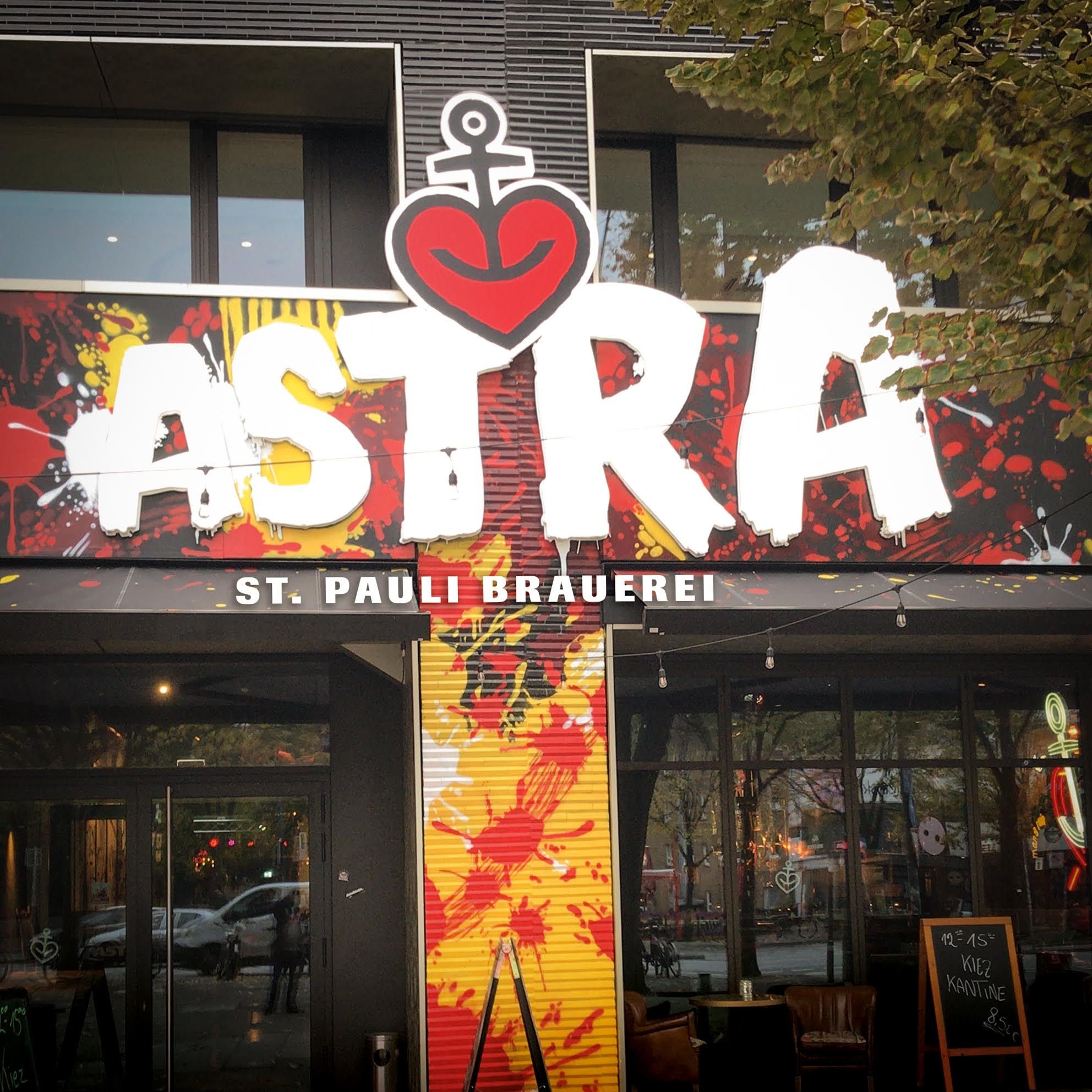
The Street That Sets the Tone
Hamburg's St. Pauli district has long operated on a different register from the city's Altstadt formality or HafenCity's polished waterfront ambition. Nobistor, the address Astra St. Pauli occupies at number 16, sits at the western mouth of the Reeperbahn corridor — the stretch of road that has defined Hamburg's after-dark identity for decades. Arriving here, you read the neighbourhood before you read the menu. The foot traffic is mixed in the way only a genuinely democratic entertainment district produces: students, shift workers, tourists with early flights, and regulars who know exactly which seat they want. The architecture is low-slung and functional rather than restored and curated. There are no valet lines or velvet ropes marking the perimeter.
That geographical context is the first piece of editorial information Astra St. Pauli provides. In a city where restaurants like Restaurant Haerlin (Creative French) and The Table Kevin Fehling anchor the formal fine-dining tier at a considerable remove from this kind of street energy, St. Pauli exists at a different coordinate on the map — one defined less by tasting menus and more by the rhythm of a neighbourhood that rarely sleeps before 4am.
St. Pauli's Place in Hamburg's Dining Geography
Hamburg's restaurant scene has sharpened considerably in recent years. The city now holds multiple Michelin-starred addresses, with creative kitchens like 100/200 Kitchen and Mediterranean-focused counters such as bianc representing the city's ambition at the upper end of the price range. Venues like Lakeside point toward a more classically German register within the same refined tier. This constellation of options makes Hamburg competitive with Munich and Berlin for serious dining, and the city's visitors increasingly plan meals with the same research logic they'd apply to Paris or Copenhagen.
St. Pauli, however, functions as a counterweight to that tendency. The district's hospitality identity was never built around destination dining in the formal sense. It was built around accessibility, volume, and a consistent willingness to serve people at hours when the rest of the city has stopped. That distinction matters when placing Astra St. Pauli in context: it belongs to a neighbourhood category defined by its relationship to the street rather than a curated culinary identity. The comparison set here is not the starred rooms of HafenCity or the Neustadt; it is the bars and informal kitchens that have made Nobistor and the surrounding blocks function as a genuine late-night infrastructure for an entire district.
For visitors building a Hamburg itinerary that extends beyond the formal dining circuit, and who want to understand the city's full hospitality range, St. Pauli provides a necessary counterpoint. Germany's broader fine-dining circuit stretches from addresses like Schwarzwaldstube in Baiersbronn and Aqua in Wolfsburg to urban kitchens like JAN in Munich and CODA Dessert Dining in Berlin. St. Pauli occupies none of that formal register, and that is precisely the point.
The Nobistor Address and What It Signals
Nobistor 16 is a specific postcode in Hamburg's social geography. The street connects the Reeperbahn to the quieter residential streets of Altona, acting as a transitional zone between the district's most concentrated nightlife and the more domestic character of the neighbourhoods behind it. Venues on this stretch tend to draw from both sides of that divide: the late-night crowd moving through St. Pauli's entertainment axis, and the residents of Altona and Ottensen who use the strip as a local resource at more conventional hours.
This dual catchment partly explains why the Astra name has local recognition in Hamburg distinct from the kind of media attention that attaches to the city's destination restaurants. The Astra brand itself is embedded in Hamburg's cultural fabric through its association with the local beer of the same name, a St. Pauli brewery staple whose anchor logo is as familiar in this district as any street sign. That association gives a venue carrying the name an immediate shorthand with a Hamburg audience that no amount of culinary PR could manufacture from scratch.
Planning Your Visit
Hamburg's St. Pauli operates on a later schedule than most of the city's formal dining addresses. Visitors arriving from a dinner at one of Hamburg's starred restaurants, whether from the classic formality of Vendôme in Bergisch Gladbach style rooms or the precision of addresses like Victor's Fine Dining by Christian Bau in Perl, will find St. Pauli most alive from mid-evening onward, peaking well past midnight on weekends. The U3 U-Bahn line runs to St. Pauli station, placing the Reeperbahn and Nobistor within easy reach from central Hamburg. Specific hours and booking details for Astra St. Pauli are best confirmed directly, as this type of venue operates on a schedule that can shift with the season and the day of the week.
For visitors building a full Hamburg programme, the city's dining range extends considerably wider than the formal tier. The full Hamburg restaurants guide maps the city's options across cuisine types and price points, providing a framework for sequencing a visit that takes in both the starred addresses and the neighbourhood infrastructure that gives a city like Hamburg its actual character at ground level. Comparable late-night and neighbourhood-anchored cultures exist in other German cities, Bagatelle in Trier and Schanz in Piesport show how regional German hospitality diversifies, though few German neighbourhoods carry quite the concentrated identity of St. Pauli.
Internationally, the model of an entertainment-district venue that earns its reputation through neighbourhood presence rather than critical recognition has parallels in places like Le Bernardin in New York City's Midtown context or the community-anchored format of Lazy Bear in San Francisco, though the register is different at every point on that comparison. What unites them is the idea that a venue's meaning is partly produced by the neighbourhood it inhabits, and that geography is a form of editorial statement in itself. At Nobistor 16, the statement is clear.
Further afield in Germany's fine dining circuit, addresses like Waldhotel Sonnora in Dreis and ES:SENZ in Grassau represent the rural retreat end of the spectrum, a useful contrast that underlines how much of a city's hospitality character is tied to density, street life, and the particular social contracts that form in places like St. Pauli.
How Astra St. Pauli Hamburg compares with similar nearby venues.
| Venue | Cuisine | Price |
|---|---|---|
| haebel | Modern Cuisine | €€€€ |
| XO Seafoodbar | Seafood | €€€ |
Continue exploring
More in Hamburg
Restaurants in Hamburg
Browse all →
Bars in Hamburg
Browse all →
Hotels in Hamburg
Browse all →
Wineries in Hamburg
Browse all →
At a Glance
- Lively
- Energetic
- Well Known
- Rustic
- Casual Hangout
- Group Dining
- After Work
- Late Night
- Live Music
- Open Kitchen
- Historic Building
- Beer Program
Current opening hours
- Monday
- Closed
- Tuesday
- 5 PM–12 AM
- Wednesday
- 5 PM–12 AM
- Thursday
- 5 PM–1 AM
- Friday
- 3 PM–2 AM
- Saturday
- 12 PM–3 AM
- Sunday
- Closed
Hours can change for holidays and private events. Last verified .
Know Before You Go
- Getting there
- Nobistor 16, 22767 Hamburg, Germany