
Operating since 1882 from a clifftop position above Lake Albano in Castel Gandolfo, Antico Ristorante Pagnanelli holds a Michelin Plate (2025),600 reviews. The menu draws on meat and fish preparations enriched by wild herbs from the Castelli Romani hills, while two separate wine lists and a rock-hewn cellar make this a credible occasion destination within Rome's wider dining orbit.
Pearl is the En Primeur Club membership app — saves, bookings, and concierge access live there. Same editors, same standards.
- Address
- Via Antonio Gramsci, 4, 00073 Castel Gandolfo RM, Italy
- Phone
- +39 06 936 0004
- Website
- pagnanelli.it
- Directions
- Get directions
 Saves & bookings on Pearl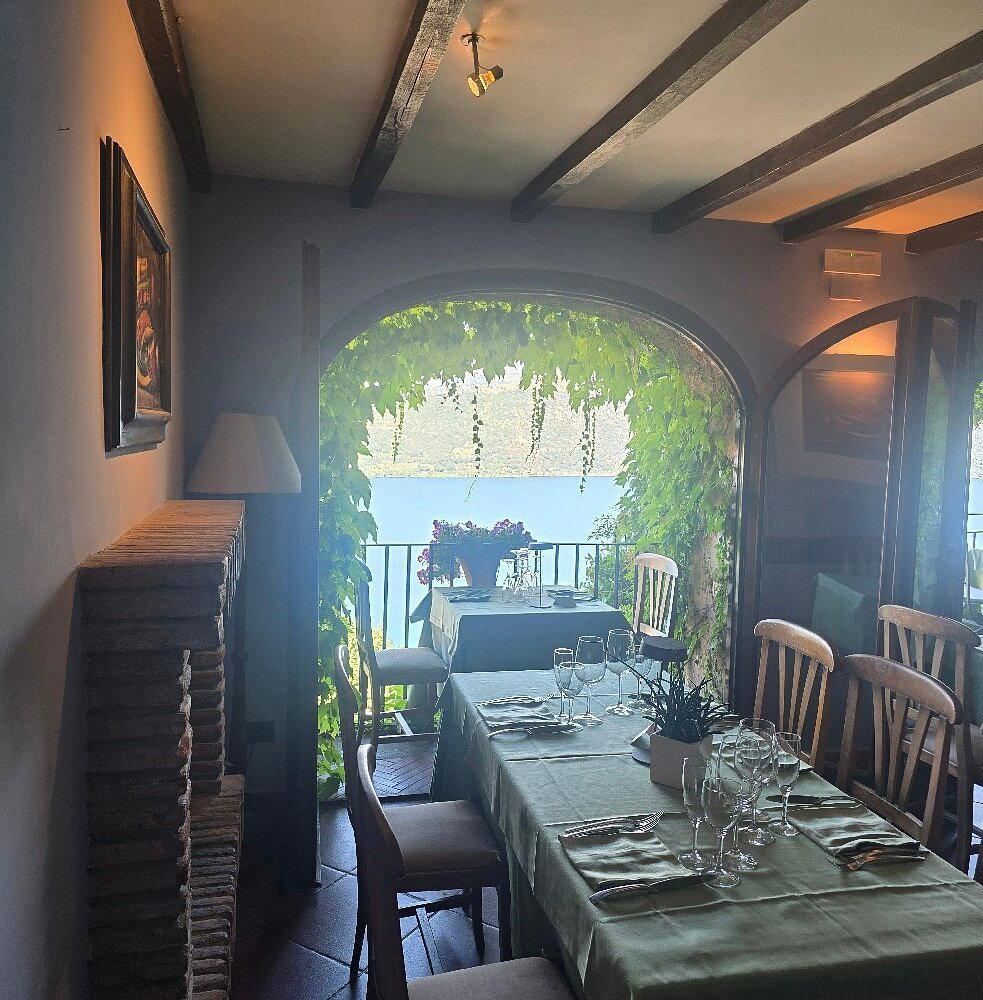
A Lake View That Sets the Stakes
The approach to Castel Gandolfo along the Via Appia already signals a different register from Rome's centro storico. The papal hill town sits roughly 25 kilometres southeast of the city, and as you reach the rim of the volcanic crater that holds Lake Albano, the elevation delivers a view that most Rome-area restaurants simply cannot match. Antico Ristorante Pagnanelli occupies that clifftop position on Via Antonio Gramsci, and the dining room's orientation toward the lake frames every table as a vantage point rather than just a seat. For occasions where the setting needs to carry as much weight as the food, this geography does meaningful work before a single dish arrives.
Italy has a specific category of restaurant that earns its place through accumulated continuity rather than through trend-chasing. Pagnanelli has been operating since 1882, placing it among a small cohort of Italian dining institutions that predate both world wars and the entire arc of modern gastronomy. That longevity sits alongside its 2025 Michelin Plate recognition,782 reviewers, a combination that signals consistency rather than flash. Compare that to the concentration of starred contemporary Italian rooms at the €€€€ tier in central Rome, including La Pergola at three Michelin stars or the creative programs at Enoteca La Torre and Acquolina, and Pagnanelli occupies a clearly different position: classic cuisine at the €€€ tier, outside the city proper, with a setting that premium urban rooms cannot replicate.
Classic Cuisine in the Castelli Romani Tradition
The Castelli Romani towns have long supplied Rome with food that reflects the volcanic soil and hill-farm produce of the Lazio interior. Wild herbs, freshwater fish from the lake, and meat from local grazing land form the backbone of the regional kitchen here, and Pagnanelli's menu works within that tradition rather than against it. Dishes combine meat and fish preparations with wild herbs, a format that rewards guests who understand what the landscape actually produces rather than those expecting Roman trattoria standbys. This is the kind of cooking that Italian dining institutions in their second or third generation tend toward: refinement of regional material rather than reinvention of it.
That approach places Pagnanelli in a different conversation from the creative Italian rooms that dominate Rome's contemporary fine dining press. Where kitchens like Paolo Teverini or Da Cesare engage with classical Roman and regional traditions in their own ways, Pagnanelli's specific context, the Alban Hills, the lake, more than a century of continuous service, gives it a reference point that is genuinely territorial. Across Italy's longer-running fine dining institutions, from Dal Pescatore in Runate to Enoteca Pinchiorri in Florence, the pattern holds: longevity tends to produce a certain confidence in the material, an absence of the anxiety that drives newer rooms toward novelty.
The Wine Program and the Cellars Beneath
Occasion dining in Italy has always hinged as much on what is in the glass as what is on the plate, and Pagnanelli's wine offer is one of the more distinctive aspects of its positioning. Two separate wine lists structure the selection, a format that implies sufficient depth to merit the division, likely separating accessible current-vintage drinking from a more serious cellar of aged and allocated bottles. The wine cellars are carved directly into the volcanic rock beneath the restaurant, a feature that is as functional as it is atmospheric: tufa and basalt maintain stable temperatures naturally, and the cave setting provides a physical memory of just how deep the establishment's roots go.
A small wine museum is also integrated into the cellar space, adding an archival dimension that is uncommon even among Italy's longer-standing restaurants. For guests whose occasion involves wine as a central element, an anniversary, a collector's dinner, a celebration where the bottle selection matters as much as the meal, this infrastructure places Pagnanelli in a specialist tier that most restaurants of comparable price cannot access. Among classic cuisine venues across Europe, the combination of rock cellars, dual wine lists, and institutional age creates a distinct profile. Maison Rostang in Paris and KOMU in Munich operate in comparable classic cuisine registers, though neither shares Pagnanelli's specific geographic and geological context.
Planning a Milestone Meal Here
The restaurant's position outside Rome's immediate city boundaries changes the planning logic for anyone travelling from the centre. Castel Gandolfo is reachable by regional train from Roma Termini, with the journey running around 30 to 40 minutes to Castel Gandolfo station, after which the town itself is a short uphill walk or taxi ride. Driving adds flexibility and allows guests to arrive at the lake rim with time to take in the view before sitting down, a worthwhile addition for occasions where the event begins before the meal does.
At the €€€ price tier, Pagnanelli sits below the leading bracket occupied by Rome's starred contemporary rooms, which typically run at €€€€. That pricing, combined with the Michelin Plate recognition and the volume of positive reviews, positions it as a considered choice for occasions where seriousness of setting and depth of wine program matter more than cutting-edge technique. Given its 143-year operating history and the seasonal demand generated by the lake setting and papal town tourism, booking well in advance is advisable, particularly for weekend lunches or dinners during the warmer months when the terrace and lake views draw the largest audiences.
A Lean Comparison
Comparable venues nearby, for context on price, style, and recognition.
| Venue | Cuisine | Price | Notes |
|---|---|---|---|
| Antico Ristorante PagnanelliThis venue — the venue you are viewing | Classic Cuisine | $$$ | Not listed |
| NUH Osteria Contemporanea | Tivoli, Modern Italian Osteria | $$$ | Not listed |
| Antica Pesa | Trastevere, Authentic Roman | $$$ | Not listed |
| Retrobottega | Campo Marzio, Modern Italian | $$$ | Not listed |
| Retrovino | Not listed | $$$ | Campo Marzio, Modern Italian Tasting Menu |
| Armando al Pantheon | Not listed | $$$ | San Eustachio, Traditional Roman Trattoria |
Recognition history
Dated appearances from independent guides and award organizations, with the underlying list record or original source where available.
Michelin Plate
Michelin
Michelin Plate
Michelin
Continue exploring
More in Rome
Restaurants in Rome
Browse all →
Bars in Rome
Browse all →
Hotels in Rome
Browse all →

At a Glance
- Elegant
- Romantic
- Classic
- Sophisticated
- Date Night
- Family
- Celebration
- Special Occasion
- Historic Building
- Wine Cellar
- Terrace
- Extensive Wine List
- Sommelier Led
- Waterfront
Current opening hours
- Monday
- 10 AM–12 AM
- Tuesday
- 10 AM–12 AM
- Wednesday
- 10 AM–12 AM
- Thursday
- 10 AM–12 AM
- Friday
- 10 AM–12 AM
- Saturday
- 10 AM–12 AM
- Sunday
- 10 AM–12 AM
Hours can change for holidays and private events. Last verified .
Refined and elegant atmosphere with enchanting lake views, warm lighting by the fireplace, and a welcoming historic setting.