
Michelin Plate
Our verdict
In the baroque centre of Acireale, Alloro holds a 2025 Michelin Plate for contemporary cooking that draws on Sicilian roots and international technique. Chef Salvo, trained alongside Giorgio Locatelli, offers both à la carte and two tasting formats across two intimate dining rooms, one with a direct view of the Basilica Collegiata bell tower.

Pearl is the En Primeur Club membership app, where members save venues, book tables and use the concierge.
The menu
What to order
- Olfattorio
- Tagliolino al tartufo
- Cod Messina-style
- Giochiamo a tris
A Baroque Address for Contemporary Sicilian Cooking
Acireale sits on the eastern flank of Sicily, a town of volcanic stone and ornate facades that most travellers pass through on the way to Taormina or Catania. That oversight works in the diner's favour. The city's restaurant scene operates without the premium that attaches to better-known Sicilian addresses, and within it, Alloro has earned a 2025 Michelin Plate, a recognition that places it in a tier of restaurants the guide considers worth a detour, without yet carrying the full starred weight of Italy's most decorated tables such as Osteria Francescana in Modena or Enoteca Pinchiorri in Florence. The two-room format, one dining room oriented toward the bell tower of the Basilica Collegiata dei Santi Apostoli Pietro e Paolo, the other more enclosed and intimate, sets a physical tone before a dish arrives. Baroque architecture visible through the window is not ambient decoration here; it is a geographic argument for why this corner of Sicily produces cooking with a certain density of reference.
What the Sicilian Pantry Makes Possible
Contemporary Italian cooking at the Michelin-recognised level increasingly depends on a clear answer to one question: where does the food come from, and what does that origin permit? Across Italy's decorated restaurants, the most coherent kitchens tend to be those where sourcing and technique are aligned rather than in tension. In eastern Sicily, that alignment is unusually direct. The Aeolian capers, the lemons from the slopes below Etna, the swordfish from the Strait of Messina, the almonds from Avola, these are ingredients with a specificity that survives translation into contemporary formats in a way that imported luxury produce sometimes does not. Chef Salvo's training alongside Giorgio Locatelli, one of the more rigorous advocates for Italian ingredient integrity working outside Italy, suggests a kitchen oriented toward material quality rather than technique as spectacle. Locatelli's lineage runs through a philosophy of letting sourced ingredients carry the compositional weight, a tendency visible in the broader Alloro approach to menu construction.
That approach plays out against a backdrop of Sicilian cooking that has historically leaned on sweet-sour contrasts, agrodolce as a structural principle rather than a flavouring, and on the layered influence of Arab, Norman, and Spanish kitchens that passed through the island between the ninth and sixteenth centuries. Contemporary Sicilian restaurants working in the €€€ tier, as Alloro does, typically face a choice between foregrounding that historical depth or treating it as background. Alloro's menu signals, dishes named "Ti Porto alle Bahamas" (I'll Take You to the Bahamas) and "Mai-Thai", suggest Chef Salvo is working in a register that acknowledges travel and external influence as part of the sourcing story, not just geography. The ingredients may be rooted in Sicily; the compositional logic absorbs what the chef encountered elsewhere.
Menu Format and the Tasting Architecture
Alloro runs both an à la carte menu and two tasting itineraries, a format common among Michelin-recognised restaurants in Italy's mid-tier price bracket. The dual structure allows for different modes of engagement: the tasting formats impose a sequence the kitchen has designed, while the à la carte allows guests to build their own arc. In practice, the tasting formats at this price point typically offer the sharper expression of a kitchen's editorial position, since they control pacing and contrast. The dish names in the public record point toward a kitchen comfortable with playful framing, the dessert described as "tiratisù" riffs on tiramisù with a self-aware lightness, which suggests the tasting sequence is unlikely to be formally austere. This positions Alloro differently from the heavier ceremonial register of Italy's three-starred rooms, such as Dal Pescatore in Runate or Le Calandre in Rubano, and closer in spirit to the kind of contemporary Italian cooking that treats the meal as a conversation rather than a performance.
Internationally, restaurants working in a similar register, contemporary technique applied to rooted sourcing, with a personal travel vocabulary embedded in the menu, include César in New York City and Jungsik in Seoul, both of which operate in a space where the chef's international formation is legible on the plate without displacing local material identity. The comparison is instructive: in each case, the kitchen's credibility depends on the sourcing being genuinely local even when the technique is globally informed.
Two Rooms, One View
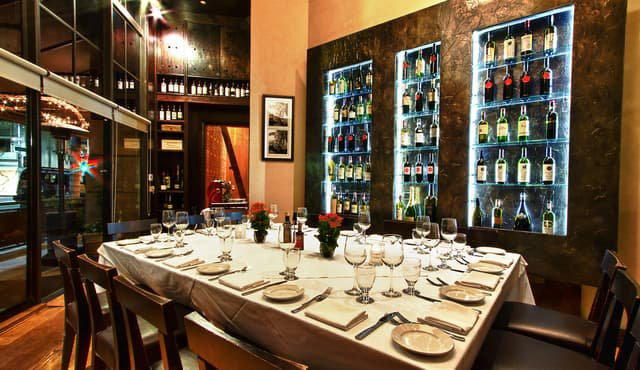
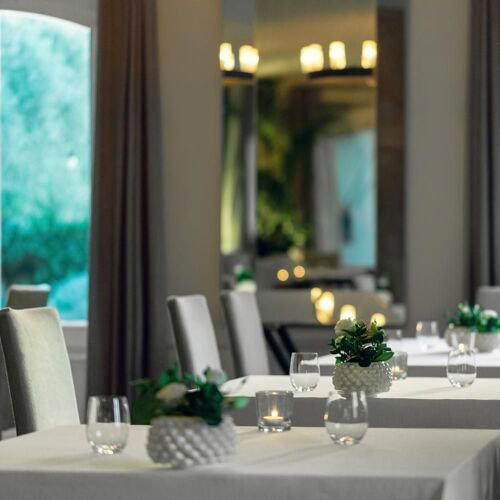
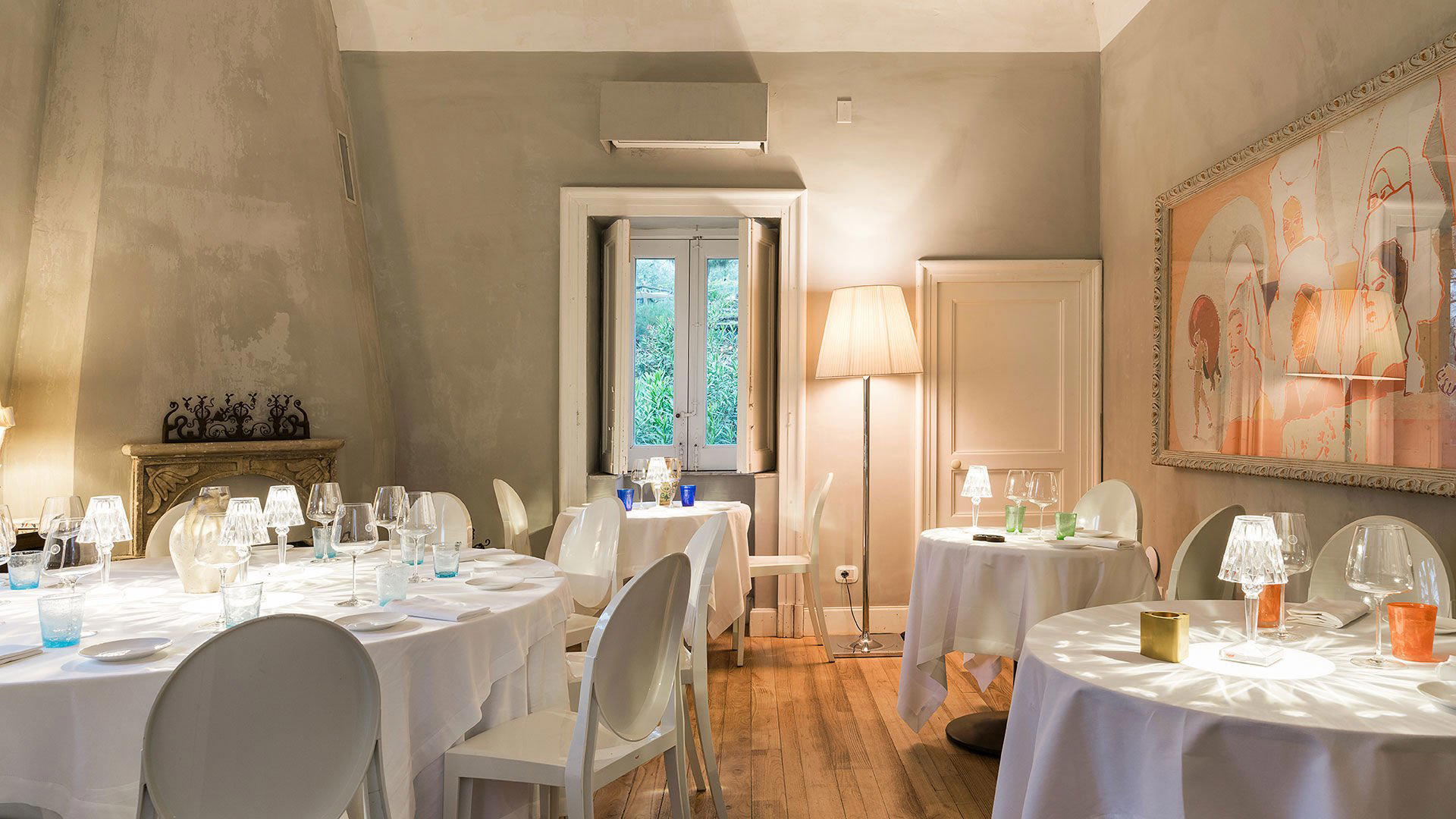
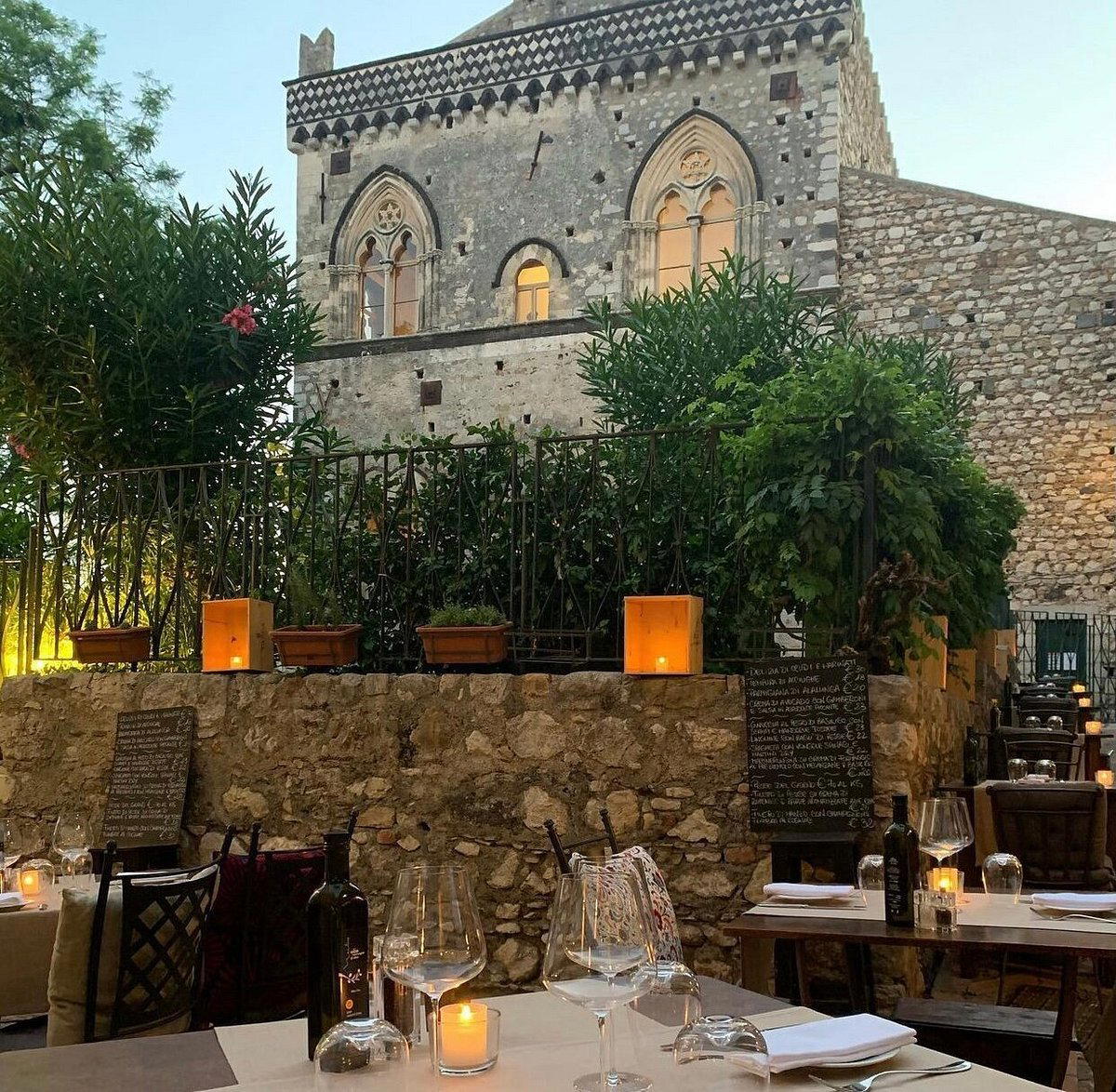
The physical division of Alloro into two dining rooms creates a practical choice for guests. The room facing the Basilica Collegiata bell tower provides a direct architectural connection to Acireale's baroque identity, the kind of view that earns its place on the table rather than simply framing it. The second room, described as more intimate, trades the view for enclosure, which at smaller tables and in quieter service tends to support longer meals and more concentrated conversation. Neither room is large: the two-room format across what is described as a small restaurant implies a seat count that keeps the kitchen manageable and the service personal.
Acireale in Context
For visitors building a serious eating itinerary around Sicily's eastern coast, Alloro's position in Acireale places it within range of Catania's broader dining and cultural infrastructure. The city itself warrants more than a transit stop: the baroque centre, built after the 1693 earthquake that levelled much of the Val di Noto, contains some of the densest concentration of late baroque civic architecture in southern Italy. Eating well here is part of reading the city rather than an alternative to it. For the full range of what Acireale offers, see our full Acireale restaurants guide, alongside our full Acireale bars guide, our full Acireale hotels guide, our full Acireale wineries guide, and our full Acireale experiences guide. For Sicilian-style pizza in the same city, Frumento Pizzeria sits at a different price point and register but draws on the same volcanic-soil grain tradition.
Among Italy's Michelin-recognised contemporary restaurants working outside the major city circuits, Alloro occupies a similar position to Quattro Passi in Marina del Cantone, Uliassi in Senigallia, and Reale in Castel di Sangro: each operates in a town that most visitors would not seek out independently, and each makes the case that the most grounded contemporary Italian cooking tends to happen away from the premium city addresses. The sourcing logic that sustains these kitchens, proximity to specific producers, seasonal constraints that larger urban restaurants can bypass through budget, is the same logic that gives Alloro's menu its material foundation. Acireale, in this reading, is not a compromise destination for serious eating. It is the condition that makes the cooking possible. For further comparison across Italy's decorated contemporary table, see also Piazza Duomo in Alba, Enrico Bartolini in Milan, and Atelier Moessmer Norbert Niederkofler in Brunico.
Planning Your Visit
Alloro is located at Via Lancaster, 28 in central Acireale, within walking distance of the main baroque piazzas. The price tier is €€€, placing it in a mid-to-upper band for the region and consistent with Michelin Plate recognition in southern Italy. Both à la carte and tasting formats are available.
Frequently asked questions
Does Alloro work for a family meal?
Alloro is designed around a considered, intimate dining experience at the €€€ price point, with two small rooms and a 2025 Michelin Plate recognition. The tasting itineraries and destination-style dishes signal a pace and format better suited to adult dining than a casual family outing. Those seeking a shared celebration meal with older family members would find it appropriate; parents with young children would likely find the setting constraining.
What kind of setting is Alloro?
Alloro occupies two small dining rooms at Via Lancaster, 28 in Acireale's baroque centre. One room looks directly onto the bell tower of the Basilica Collegiata dei Santi Apostoli Pietro e Paolo; the other is more enclosed and intimate. The overall atmosphere is contemporary and cozy, operating at the €€€ price tier with a 2025 Michelin Plate.
What awards or recognition does Alloro have?
Alloro has received recognition including: In the baroque heart of the city, this small restaurant – comprising two dining rooms, one overlooking the bell tower of the Basilica Collegiata dei Santi Apostoli Pietro e Paolo, the other more intimate – welcomes guests with a contemporar….
What dish is Alloro famous for?
The dishes most publicly associated with Alloro are "Ti Porto alle Bahamas" and "Mai-Thai," both reflecting Chef Salvo's international travels and training alongside Giorgio Locatelli. The menu closes with "tiratisù," a playful riff on tiramisù that signals the kitchen's willingness to treat dessert as punctuation rather than formality.
Is Alloro more mid-range or high-end?
Pricing at Alloro is listed as €€€.
Quick Comparison
| Venue | Cuisine | Price | Awards | Notes |
|---|---|---|---|---|
| AlloroThis venue (the venue you are viewing) | Modern Sicilian Fine Dining | $50–100 | Michelin Plate | Not listed |
| Atelier Moessmer Norbert Niederkofler | Modern Alpine Fine Dining | $300–500 | 3 Michelin Stars · World's 50 Best #20 | Italian, Creative |
| Dal Pescatore | Classic Italian Fine Dining | $200–300 | 3 Michelin Stars · World's 50 Best #38 | Italian, Italian Contemporary |
| Enoteca Pinchiorri | Contemporary Italian Fine Dining | $200–300 | 3 Michelin Stars · World's 50 Best #32 | Italian - French, Italian Contemporary |
| Enrico Bartolini | Modern Italian Fine Dining | $300–500 | 3 Michelin Stars · World's 50 Best #85 | Creative |
| Osteria Francescana | Avant-Garde Italian Contemporary | $300–500 | 3 Michelin Stars · World's 50 Best #1 | Progressive Italian, Creative |
Recognition history
Dated appearances from independent guides and award organizations, with the underlying list record or original source where available.
Michelin Plate
Michelin
Full recognition history (2 entries)
Michelin Plate
Michelin
Continue exploring
More in Acireale
Restaurants in Acireale
All restaurants in Acireale →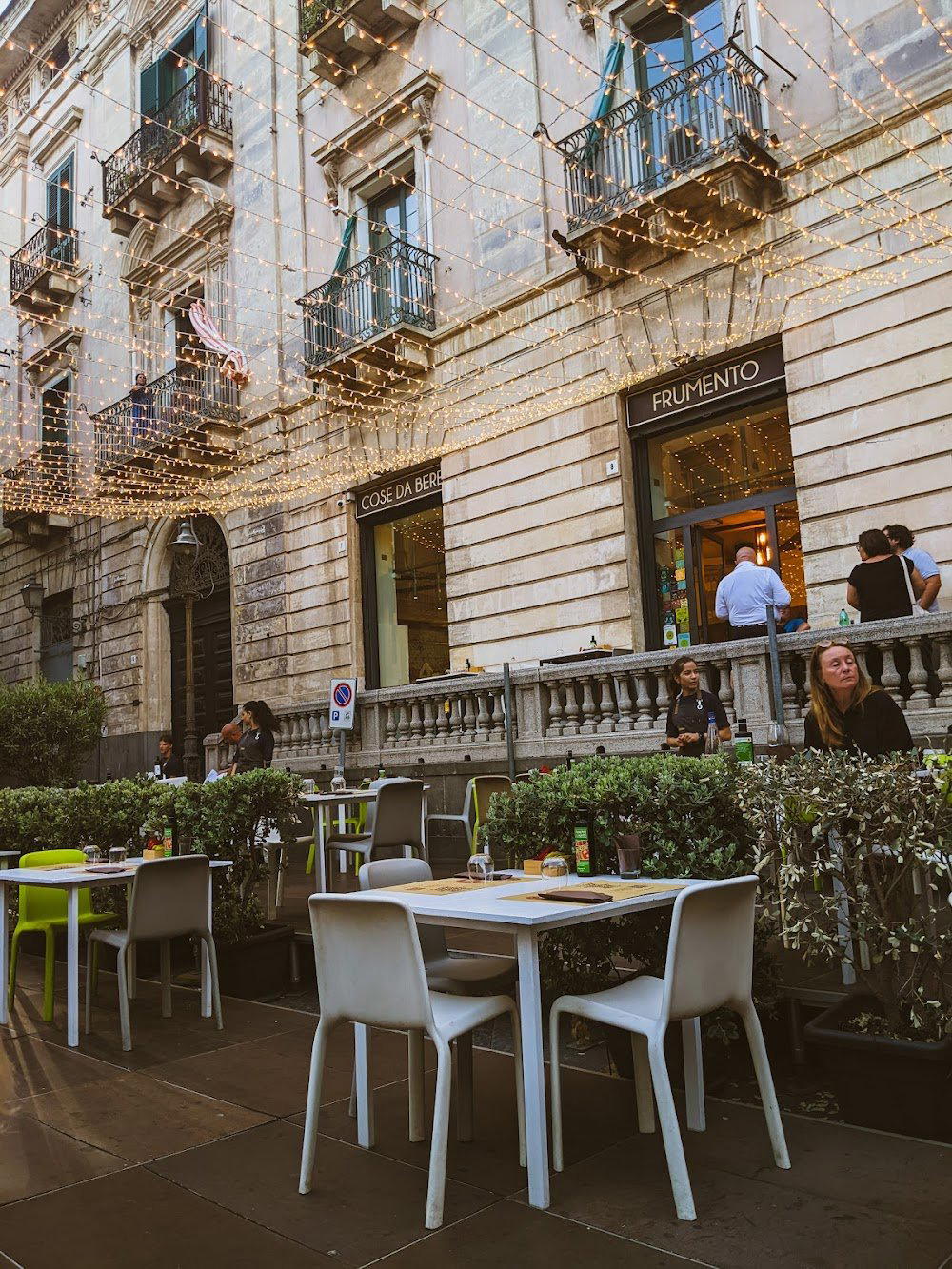
Bars in Acireale
Browse all →


Details
- Elegant
- Sophisticated
- Romantic
- Modern
- Date Night
- Special Occasion
- Celebration
- Group Dining
- Open Kitchen
- Standalone
- Historic Building
- Design Destination
- Craft Cocktails
- Sommelier Led
- Local Sourcing
- Street Scene
- Tasting Menu
- A La Carte
- Craft Cocktails
- Wine
- Vegetarian Friendly
- Gluten Free Options
- Allergy Accommodating
Current opening hours
- Monday
- Closed
- Tuesday
- 7 PM–12 AM
- Wednesday
- 7 PM–12 AM
- Thursday
- 7 PM–12 AM
- Friday
- 7 PM–12 AM
- Saturday
- 7 PM–12 AM
- Sunday
- 12–3 PM
Hours can change for holidays and private events. Hours as of .
Refined and sophisticated with elegant furnishings and attention to detail; intimate dining rooms with views of the Basilica Collegiata bell tower; modern yet warm atmosphere.