Monaci delle Terre Nere





1 Michelin Key · La Liste Top Hotels · Mr & Mrs Smith Seal of Approval
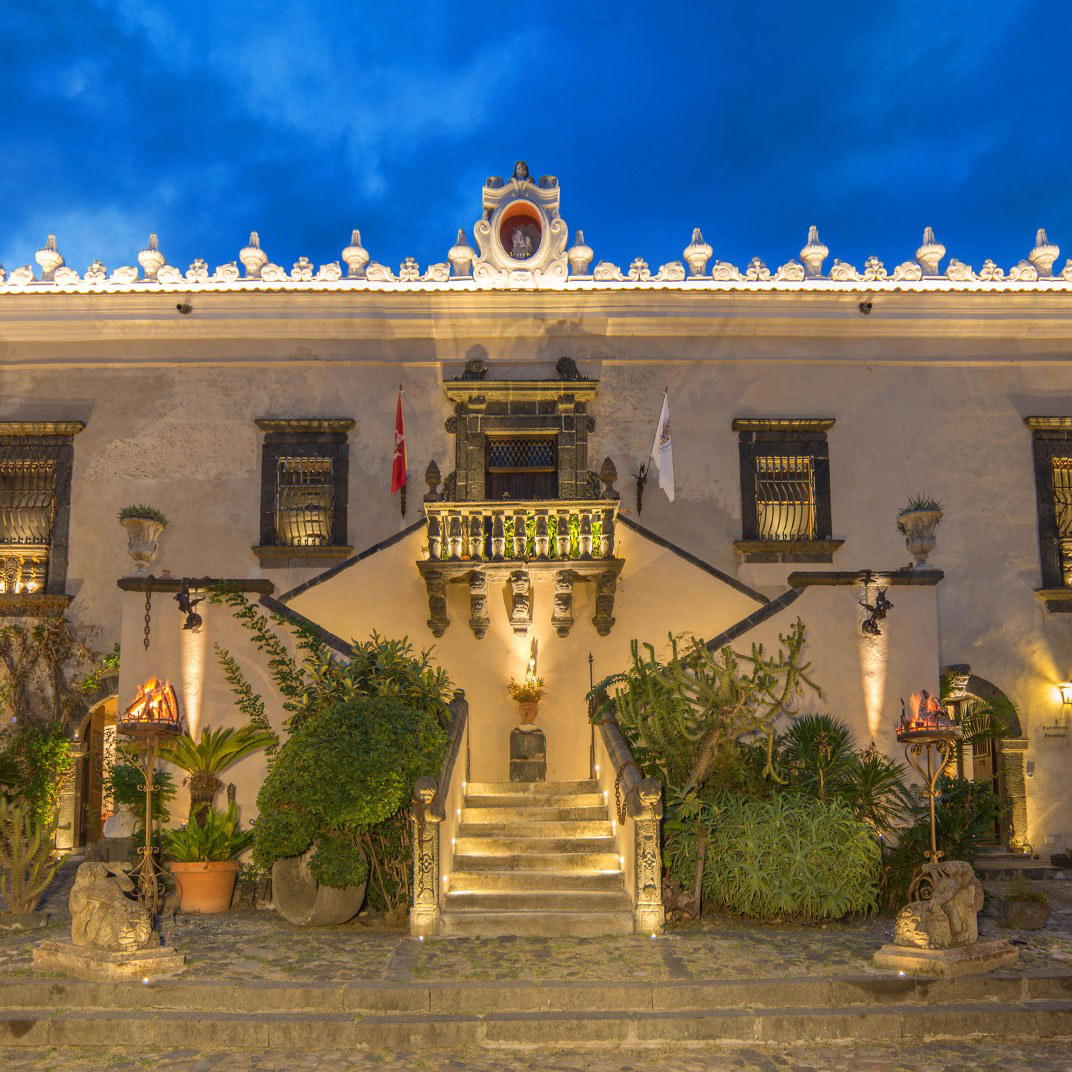
On the volcanic lower slopes of Mount Etna, Monaci delle Terre Nere occupies an 18th-century Augustinian estate at 500 metres altitude, now a 27-room Relais & Châteaux property awarded a Michelin Key in 2024 and 91 points in La Liste Top Hotels 2026. The estate produces its own wine, farms organically, and places guests at the edge of Europe's largest volcano with views toward the sea.

Pearl is the En Primeur Club membership app, where members save venues, book tables and use the concierge.
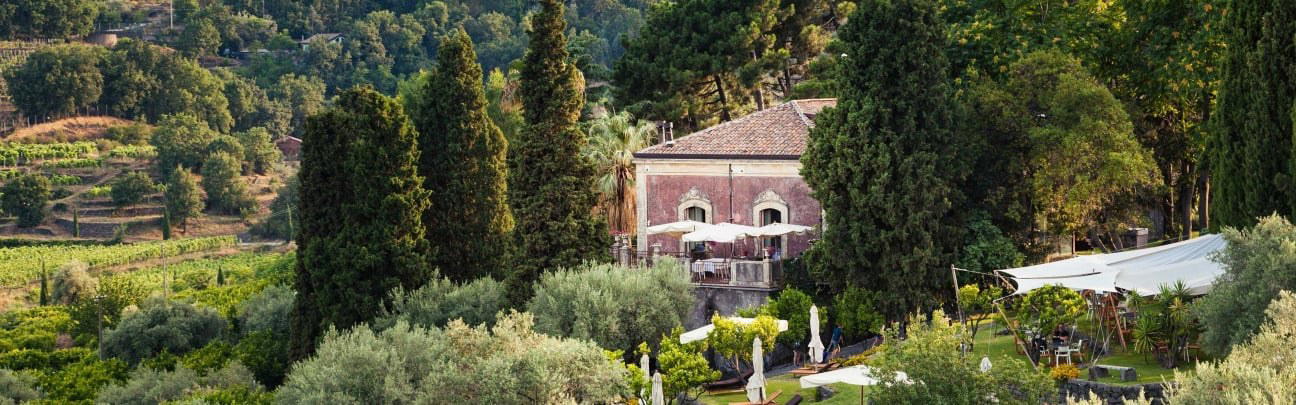
Where Volcanic Terrain Shapes the Architecture
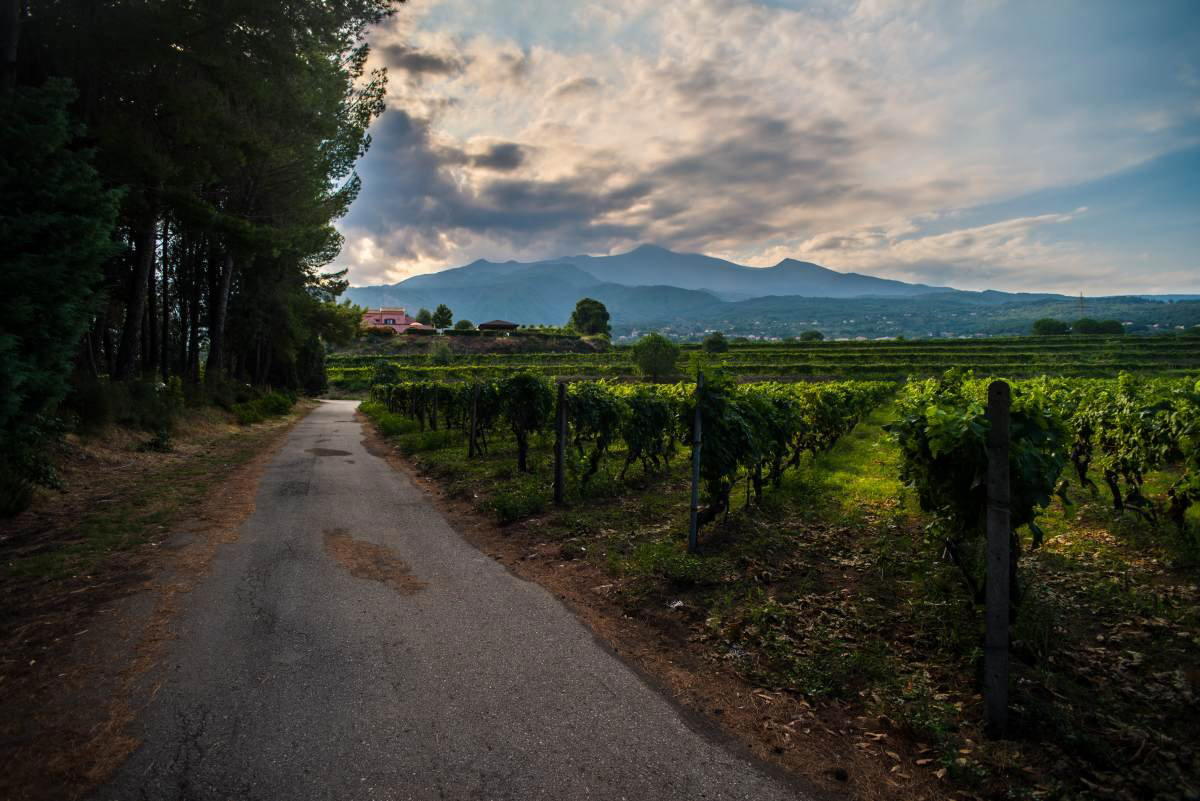
The approach to Monaci delle Terre Nere tells you something important about how Sicilian estate hospitality differs from its mainland Italian counterparts. There are no manicured box hedges or architectural set pieces composed for arrival photographs. What you find instead is lava stone, the black basalt that gives the property its name, erupted and cooled over centuries into walls, pathways, and terracing that appear to have grown from the hillside rather than been constructed on it. At 500 metres above sea level on the southern flank of Mount Etna, the estate sits within Etna's National Park boundary, and the landscape surrounding it is both the spectacle and the structural logic of the entire property.
This is the defining characteristic of a particular tier of Italian agriturismi and wine estates that have converted historic rural buildings into serious hospitality properties. Unlike the Tuscan model, where conversion often involves softening the architecture into something palatably rustic, the Etna approach at its most considered keeps the geology visible. The terre nere, literally the black earth, is present underfoot, in the walls, and in the vineyards. Properties in this category are not fighting against their surroundings; the surroundings are the point.
The Building as Argument
Monaci delle Terre Nere occupies an estate originally associated with Augustinian monks from Valverde in the 17th century, with the current villa structure dating from the 18th century. The restoration philosophy that guided the property's transformation kept the patina of weathered stone intact rather than smoothing it away, which places it in a different aesthetic category from, say, the forensically restored stone of Castello di Reschio in Lisciano Niccone or the controlled grandeur of Four Seasons Hotel Firenze. The rough-edged quality here is not a design failure or a budget compromise; it is the argument the property is making about authenticity.
The interiors move through the tension between monastic austerity and contemporary comfort with varying degrees of success across the accommodation categories. Standard rooms carry a quieter register, where the architecture does more of the work. The suites push harder in both directions simultaneously: rougher stone, heavier textiles, more deliberate contrasts between original fabric and contemporary furnishing. The two freestanding private villas, set at a distance from the main building, offer the most complete version of this sensibility, combining two-room footprints with the spatial separation that allows the surrounding vineyard and volcanic terrain to function as an extension of the accommodation rather than a backdrop to it.
The 27-room count is the relevant number for understanding what kind of operation this is. Properties in this bracket, across Italy and beyond, make a deliberate choice to keep capacity low enough that the agricultural and natural context remains legible rather than being overwhelmed by the volume of guests. For comparison, Borgo San Felice Resort in Castelnuovo Berardenga operates at a larger scale within a Chianti Classico estate model, while Casa Maria Luigia in Modena takes the intimate house-hotel format further still. Monaci delle Terre Nere sits between those poles.
The Locanda Nerello Restaurant and the Estate Kitchen
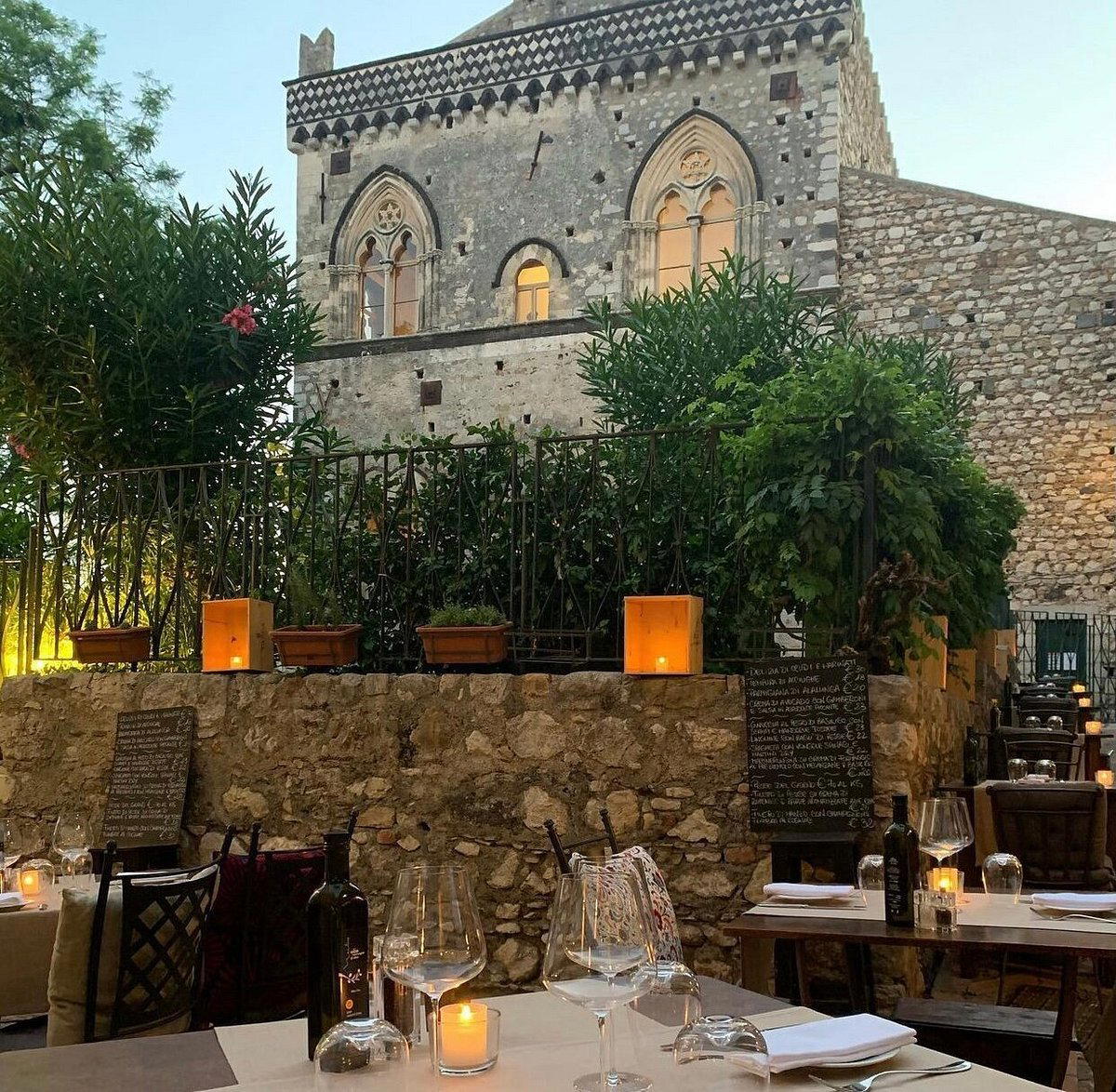
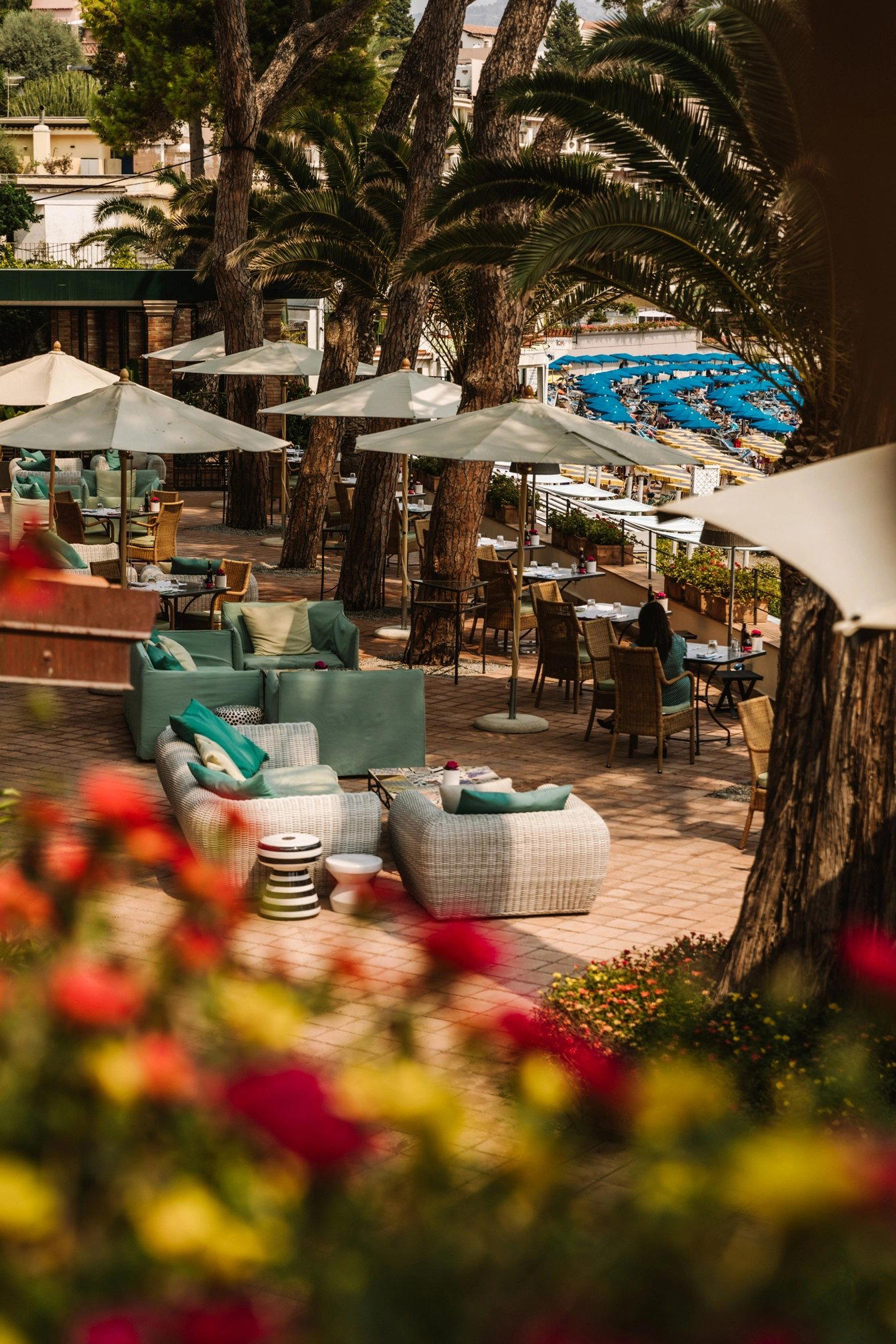
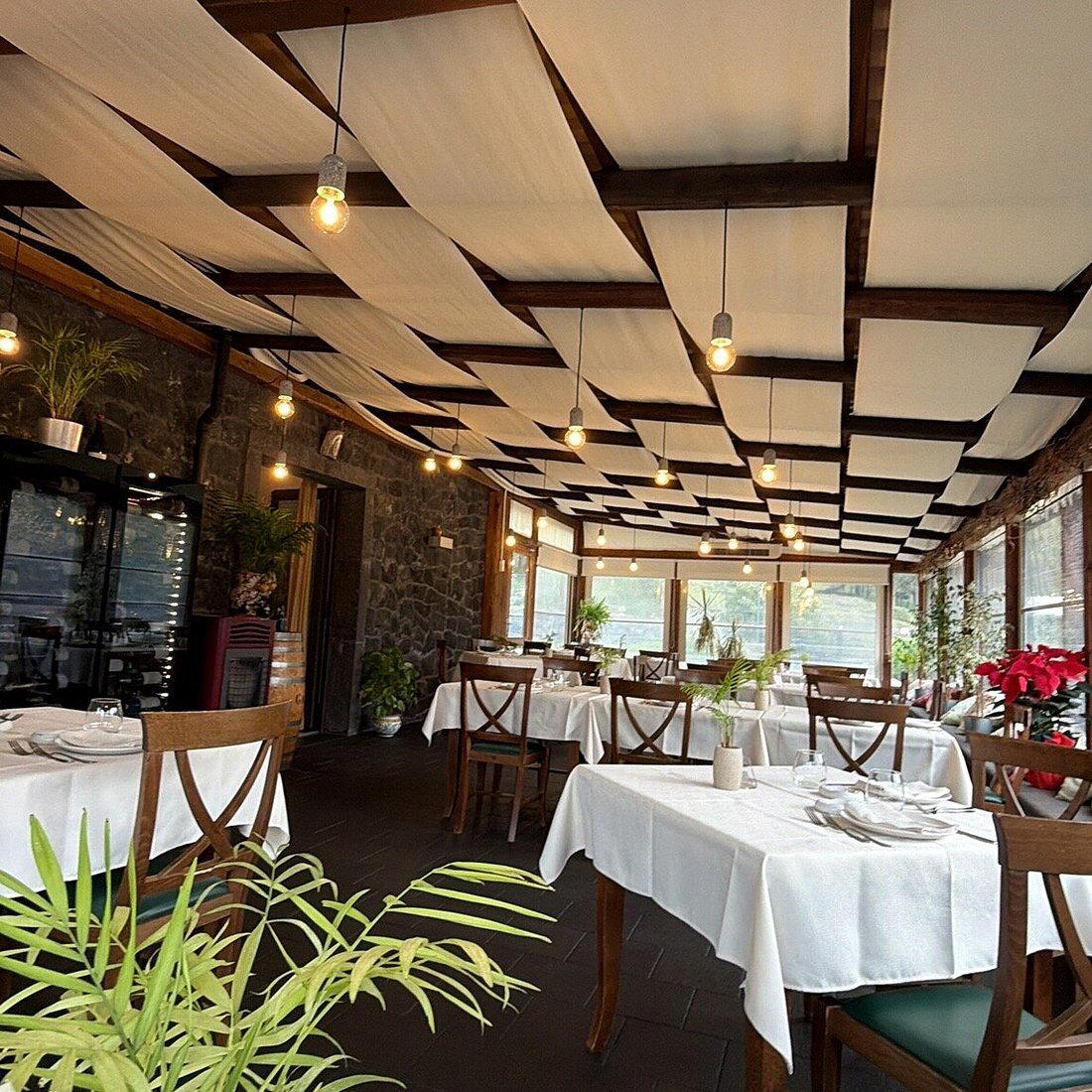
Locanda Nerello, the on-site restaurant, operates on the logic of the estate's own agricultural production. The volcanic soil on Etna's slopes is among the most mineral-rich in Europe, and the farm that supplies the kitchen reflects that fertility. The terrace dining room positions the meal within the view of the volcano and the distant sea, which is a deliberate spatial decision rather than a decorative one. The Michelin Key awarded in 2024 places Locanda Nerello in a growing category of hotel restaurants that inspectors now assess as standalone hospitality experiences rather than amenities supplementary to the rooms.
The estate also produces its own wine, which connects Monaci delle Terre Nere to the broader Etna DOC story, one of the most discussed wine appellations in Italy over the past fifteen years. Nerello Mascalese, the dominant red grape of the appellation, produces wines with a combination of altitude, volcanic minerality, and acidity that has drawn comparisons to Burgundy and generated significant critical attention. Etna wine tastings are available at the property, and the context of drinking estate wine at altitude while looking at the volcano that produced the soil removes any abstraction from those tasting comparisons. For guests exploring the wider Italian estate wine format, Rosewood Castiglion Del Bosco in Montalcino offers the closest structural parallel in Tuscany, though the volcanic register of Etna produces an entirely different guest experience.
Awards and Competitive Positioning
The property carries a Relais & Châteaux membership, a Michelin Key (2024), and 91 points from La Liste Leading Hotels in 2026. These three signals together position Monaci delle Terre Nere within the upper bracket of Italian estate hospitality, a tier that also includes properties like Borgo Egnazia in Savelletri di Fasano and Il Pellicano in Porto Ercole, though the Etna setting creates a distinct guest proposition that those Adriatic and Tyrrhenian coastal properties do not share.
Rates start from US$790 per night, with a two-night minimum stay required, rising to three nights during peak periods. That minimum-stay policy is standard across Relais & Châteaux estate properties in this category and reflects the travel logic of the location: Zafferana Etnea is not a stopping point on a broader itinerary; it is the itinerary. See our full Zafferana Etnea restaurants guide for the broader dining context around the volcano.
Getting There and Planning the Stay
Catania Fontanarossa Airport is the practical arrival point for the Etna region, with the estate roughly 25 kilometres from the terminal. The address on Via Monaci places the property within Zafferana Etnea, a small hill town on Etna's southeastern slope. The property can be contacted directly at monaci@relaischateaux.com or +39 095 7083638, and the full website at monacidelleterrenere.it carries booking availability. Given the minimum-stay requirement and the relatively limited 27-room capacity, advance planning is advisable, particularly for summer and early autumn, when Etna hiking season and harvest periods overlap.
Cooking classes and Ayurvedic massage are available on-site, which positions the property within the experiential hospitality model where the estate provides enough structured activity that guests need not leave to fill three days. That internal sufficiency is a design choice as much as an amenity decision: it keeps the guest relationship with the volcanic terrain continuous rather than fragmenting it with external excursions.
For guests building a wider Italian itinerary around this category of property, useful reference points include Corte della Maestà in Civita di Bagnoregio, Castelfalfi in Tuscany, and Castel Fragsburg in Merano for the historic estate format in different regional registers. Those considering the coastal Italian alternative might compare Borgo Santandrea on the Amalfi Coast, Il San Pietro di Positano, or Bellevue Syrene 1820 in Sorrento, though the volcanic interior experience Monaci delle Terre Nere delivers has no direct coastal equivalent. For those extending the trip internationally, Aman Venice, Portrait Milano, and Bulgari Hotel Roma represent the urban Italian luxury tier that sits in a different category entirely.
At-a-Glance Comparison
Comparable venues nearby, for context on price, style, and recognition.
| Venue | Cuisine | Price | Awards | Notes |
|---|---|---|---|---|
| Monaci delle Terre NereThis venue (the venue you are viewing) | Restored 18th-century masseria transformed into a luxury countryside retreat | $200–300 | 1 Michelin Key · La Liste Top Hotels | Not listed |
| Palazzo Avino | Historic luxury palazzo with antique furnishings and modern comforts | $750–1,000 | 1 Michelin Key · Star Wine List | Ravello |
| Hotel Signum | Aeolian country house with modern refinements | $200–300 | 1 Michelin Key · Mr & Mrs Smith Seal of Approval | Malfa |
| Mezzatorre Hotel & Thermal Spa | Historic watchtower resort set in Mediterranean maquis with private cove. | Not listed | 1 Michelin Key · La Liste Top Hotels | Forio |
| Capri Tiberio Palace | Contemporary retro-Mediterranean luxury boutique hotel blending 1950s-60s Italian cinema aesthetics with modern design sensibility. | $500–750 | 1 Michelin Key · La Liste Top Hotels | Capri Town |
| Art Hotel Villa Fiorella | Contemporary art-centric boutique on a hilltop with panoramic Mediterranean views | $300–500 | 1 Michelin Key | Massa Lubrense |
Recognition history
Dated appearances from independent guides and award organizations, with the underlying list record or original source where available.
Michelin 1 Key
Michelin
La Liste Top Hotels
La Liste
Mr & Mrs Smith Seal of Approval
Mr & Mrs Smith
Relais Chateaux Award
Relais Chateaux
Virtuoso Luxury Hotel Partner
Virtuoso
Full recognition history (8 entries)
Michelin 1 Key
Michelin
Relais Chateaux Award
Relais Chateaux
Michelin 1 Key
Michelin
Continue exploring
More in Zafferana Etnea
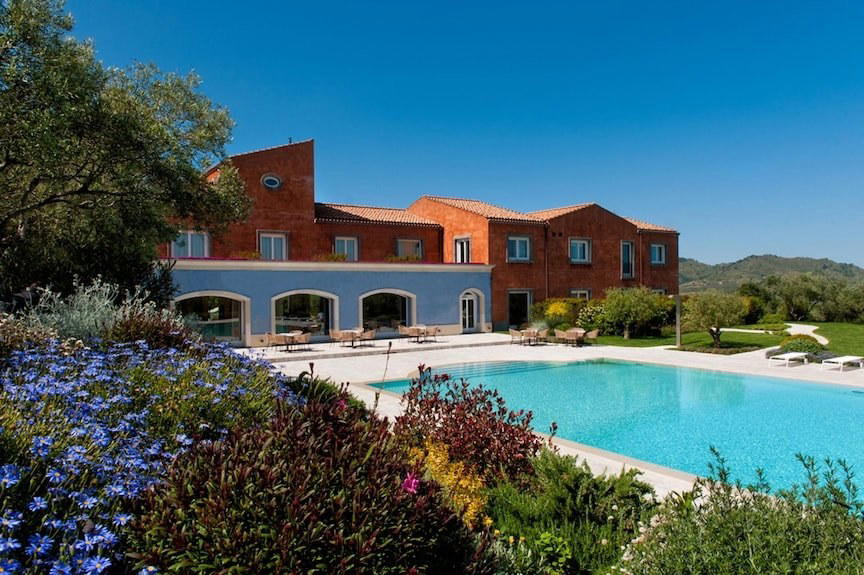
Hotels in Zafferana Etnea
All hotels in Zafferana Etnea →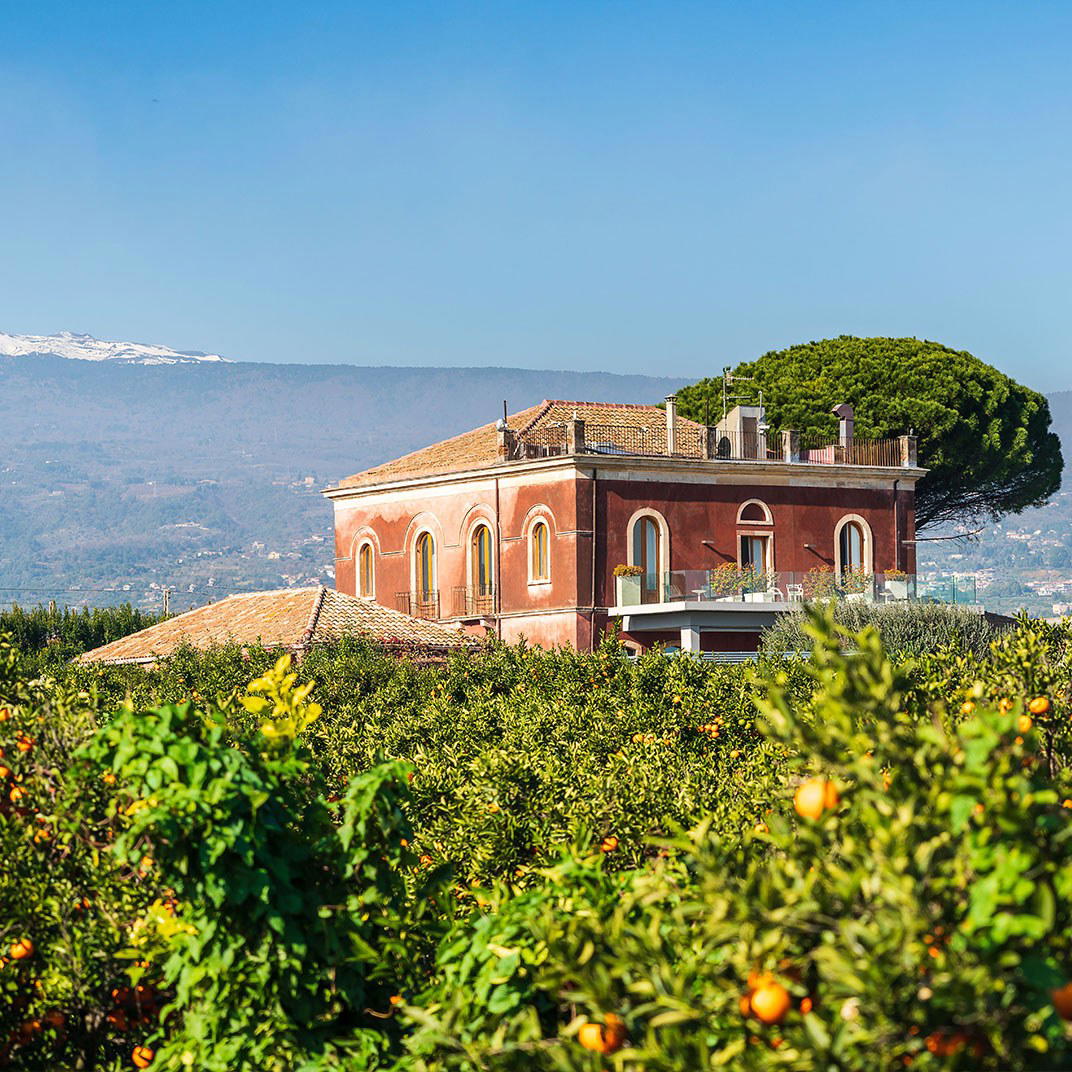
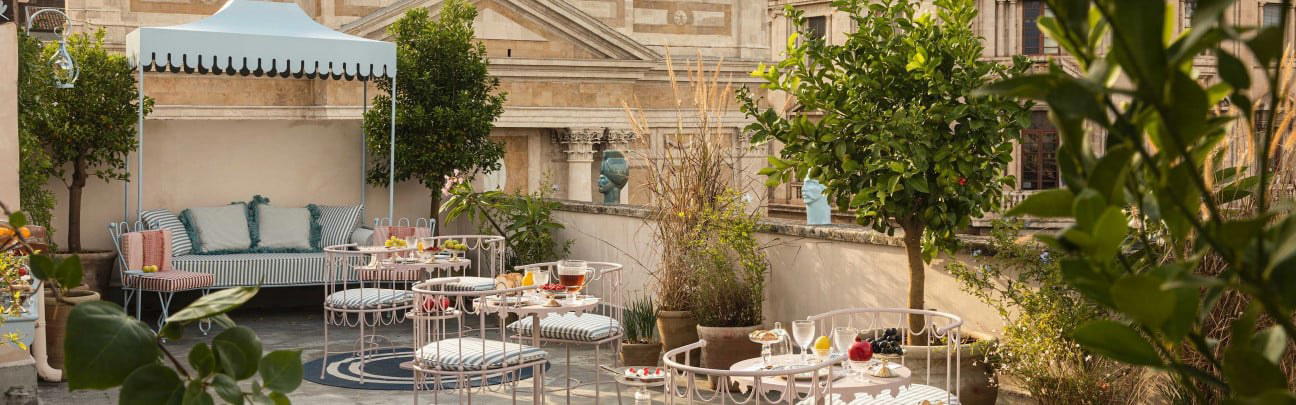
Bars in Zafferana Etnea
Browse all →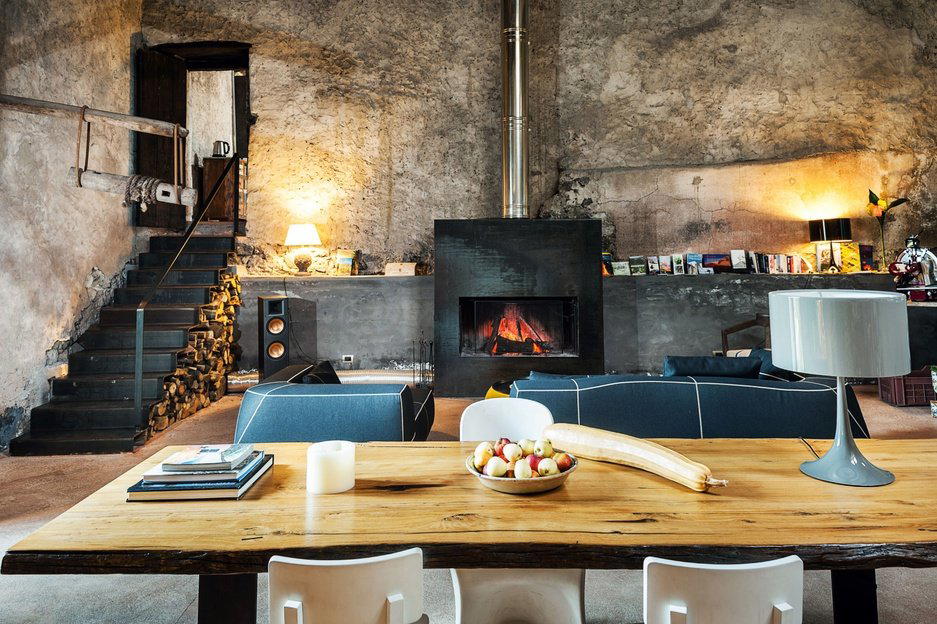


Details
- Romantic
- Scenic
- Rustic
- Cozy
- Elegant
- Romantic Getaway
- Honeymoon
- Weekend Escape
- Panoramic View
- Terrace
- Garden
- Pool
- Spa
- Wi Fi
- Restaurant
- Bicycle Rental
- Mountain
- Vineyard
Peaceful and relaxing atmosphere immersed in nature among olive groves, citrus trees, and vineyards, with elegant 18th-century interiors featuring beautiful frescoes, warm fireplaces, and sublime breakfasts under pine trees.