Our verdict
Alabao Restaurante occupies a corner of Chamberí, one of Madrid's most self-possessed residential districts, where the dining scene runs on neighbourhood loyalty rather than tourist traffic. The address places it within walking distance of the city's quieter professional class, a crowd that tends to reward consistency over spectacle. For visitors arriving from the capital's headline restaurant circuit, Alabao offers a shift in register that Madrid's broader dining map quietly depends on.

Pearl is the En Primeur Club membership app, where members save venues, book tables and use the concierge.
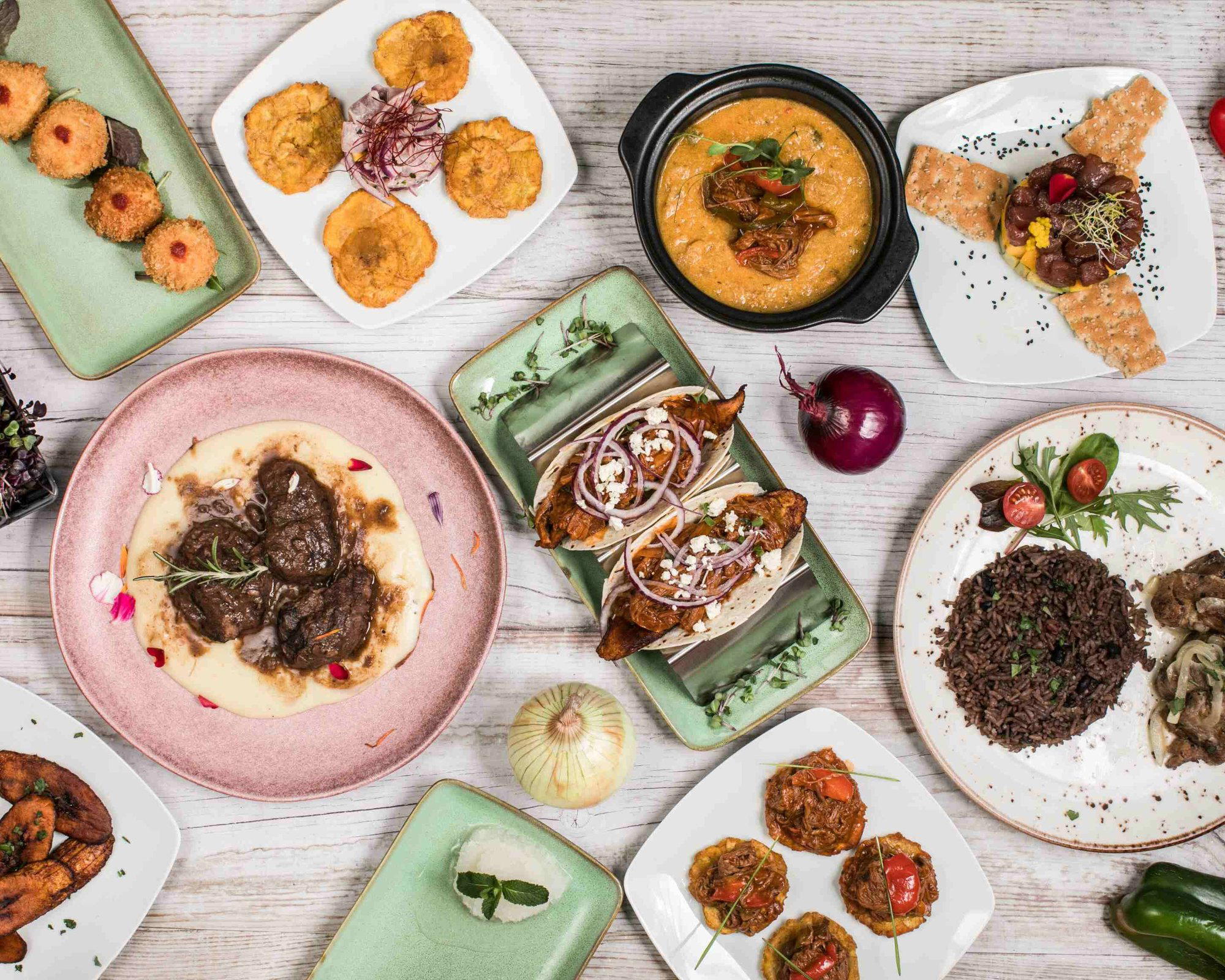
Chamberí and the Case for Neighbourhood Dining in Madrid
Madrid's restaurant conversation tends to orbit the same coordinates: the three-Michelin-star theatrics of DiverXO, the tasting-menu ambition of Coque, the hotel-anchored modern Spanish of Deessa. These are the rooms that generate column inches. But the city's actual dining character lives further out from that centre, in the barrios where restaurants answer to a local clientele rather than a global one. Chamberí is among the clearest examples of that Madrid. Bounded by Alonso Martínez to the east and Moncloa to the west, it is one of the capital's more affluent and self-contained residential districts, the kind of neighbourhood where the same tables fill on a Tuesday as on a Saturday, because the people eating there live within ten minutes on foot.
Alabao Restaurante sits on Calle de Fernández de los Ríos, a street that runs through the heart of that fabric. The address is not a destination in the way that Paco Roncero or DSTAgE are destinations, meaning you do not cross the city to reach it as an event in itself. You arrive because you are already in Chamberí, or because someone who lives there sent you. That distinction matters more than it might first appear.
What Spanish Neighbourhood Restaurants Actually Represent
To understand what a place like Alabao represents, it helps to understand what Spanish neighbourhood restaurants do culturally that their high-profile counterparts cannot. Spain's most celebrated cooking, whether that is Mugaritz in the Basque hills or El Celler de Can Roca in Girona, has always drawn its legitimacy from an underlying culture of everyday serious eating. The tasting menu and the avant-garde technique are products of a country where a weekday lunch is a two-hour social commitment and where food is understood as a form of civic participation. Neighbourhood restaurants are where that daily contract plays out. They are not lesser versions of the Michelin tier; they are the substrate that makes the Michelin tier possible.
In Madrid specifically, the neighbourhood restaurant tradition carries particular weight. The city lacks the geographic cooking identity that defines, say, the Basque Country or Catalonia. What it has instead is an accumulated cosmopolitanism: centuries of internal migration that brought regional Spanish cuisines into the capital and layered them on top of each other. A Chamberí restaurant in 2025 might draw on Castilian roasting traditions, Andalusian technique, Cantabrian seafood sourcing, or any combination of the above, because the people who live in Chamberí have ancestral connections to all of those places. That layered inheritance is one of the things that makes Madrid harder to characterise than San Sebastián or Barcelona, and also what makes it richer to explore across its residential quarters.
The Chamberí Dining Register
Within Chamberí's restaurant ecology, the dominant register is confident and unfussy. This is not a neighbourhood that chases trend cycles quickly; it tends to reward restaurants that develop a point of view and maintain it over years. That is a harder discipline in some respects, because nothing covers for a dish that misses.
For comparison, the higher end of Madrid's creative scene, venues like Coque with its multi-room progression, or international analogues like Le Bernardin in New York or Lazy Bear in San Francisco, operate with a format that is fundamentally about controlled experience delivery at a premium price point. The neighbourhood restaurant operates under the opposite logic: the price must justify itself daily, the format has to accommodate the full range of local occasions, and the relationship between kitchen and regular customer does most of the work that a tasting menu's structure does elsewhere.
Spain's Broader Restaurant Geography as Context
Madrid's neighbourhood scene makes most sense when placed against Spain's wider restaurant geography. The country's highest-profile kitchens are often outside its largest city: Quique Dacosta operates from the coast of Alicante, Arzak from a house in San Sebastián that has never moved in decades of operation, Azurmendi from a hillside in the Basque Country, Martin Berasategui from Lasarte-Oria. Aponiente in El Puerto de Santa María and Ricard Camarena in Valencia and Cocina Hermanos Torres in Barcelona all anchor their cooking in strong regional identities. Atrio in Cáceres draws on Extremaduran produce at the furthest edge of the Spanish interior. Madrid, as the capital, absorbs and redistributes all of these traditions without being fully owned by any of them. Its neighbourhood restaurants are where that redistribution lands most naturally.
Planning a Visit to Chamberí
Calle de Fernández de los Ríos is accessible from several metro lines serving Chamberí, with Quevedo and Canal stations both within practical walking distance. The neighbourhood is compact enough to combine a meal at Alabao with an exploration of the surrounding streets, which hold a mix of traditional tabernas, wine bars, and the occasional market stall that rounds out the picture of how the area eats across different formats and price points. For visitors building a Madrid itinerary around the capital's full range of dining, our full Madrid restaurants guide maps the city across neighbourhoods and price tiers with the same editorial framework applied here.
Frequently asked questions
What's the must-try dish at Alabao Restaurante?
In the context of Madrid's neighbourhood restaurant tradition, which draws on Castilian, Andalusian, and Cantabrian cooking threads depending on the kitchen's background, the most reliable approach is to ask the room what is freshest on arrival. Spanish neighbourhood kitchens in the Chamberí tier tend to rotate based on market supply rather than fixed menus, so guidance from the staff will reflect the actual cooking better than any fixed recommendation. For the full range of Madrid's creative restaurants, see venues like DSTAgE where tasting menus provide a more structured entry point.
Is Alabao Restaurante reservation-only?
In Chamberí's dining culture, where restaurants rely heavily on a regular local clientele, walk-in availability varies significantly by day and season. The safest approach in a neighbourhood of this density is to contact the restaurant directly before visiting, particularly for weekend evenings when Chamberí's residential population competes with visitors who have discovered the area. Madrid's top-tier creative restaurants, from Coque to Deessa, operate on advance booking windows of weeks to months; a neighbourhood room like Alabao likely operates on a shorter, more flexible cycle.
What's the signature at Alabao Restaurante?
What the address and neighbourhood context suggest is a kitchen operating in the tradition of Madrid's serious but unpretentious neighbourhood dining, where the signature is more often a style of sourcing or a consistent level of cooking discipline than a single dish. For restaurants with fully documented creative signatures, DiverXO and Paco Roncero represent the Madrid end of that spectrum.
How does Alabao fit into Chamberí's dining scene compared to the rest of Madrid?
Chamberí functions as one of Madrid's most stable neighbourhood dining districts, where restaurants are measured against a loyal local clientele rather than tourist or press traffic. Alabao's address on Calle de Fernández de los Ríos places it within that circuit, away from the highly publicised creative tasting rooms that define Madrid's international reputation. For visitors wanting to experience how the capital actually eats outside its headline venues, the Chamberí tier, which includes restaurants across a range of Spanish culinary traditions, offers a different and complementary read on the city's food culture. Our Madrid restaurants guide provides the full picture across all districts and price points.
A compact comparison to help you place this venue among nearby peers.
| Venue | Cuisine | Price | Awards | Notes |
|---|---|---|---|---|
| Alabao RestauranteThis venue (the venue you are viewing) | Cuban Caribbean | $30–50 | Not listed | Not listed |
| DiverXO | Avant-Garde Spanish Tasting Menu | $300–500 | 3 Michelin Stars · World's 50 Best #9 | Progressive - Asian, Creative |
| Coque | Modern Spanish Fine Dining | $300–500 | 2 Michelin Stars · La Liste Top Restaurants | Spanish, Creative |
| Deessa | Modern Valencian Fine Dining | $150–200 | 2 Michelin Stars · La Liste Top Restaurants | Modern Spanish, Creative |
| Paco Roncero | Avant-Garde Spanish Fine Dining | $150–200 | 2 Michelin Stars · La Liste Top Restaurants | Creative |
| Smoked Room | Modern Japanese Fire Omakase | $200–300 | 2 Michelin Stars · La Liste Top Restaurants | Progressive Asador, Contemporary |
Continue exploring
More in Madrid
Restaurants in Madrid
All restaurants in Madrid →
Bars in Madrid
All bars in Madrid →

Details
- Lively
- Cozy
- Casual Hangout
- Family
- Standalone
- A La Carte
Current opening hours
- Monday
- Closed
- Tuesday
- Closed
- Wednesday
- 1 PM–12 AM
- Thursday
- 1 PM–12 AM
- Friday
- 1 PM–12 AM
- Saturday
- 1 PM–12 AM
- Sunday
- 1–5 PM
Hours can change for holidays and private events. Hours as of .
Nice and welcoming atmosphere with great energy.