




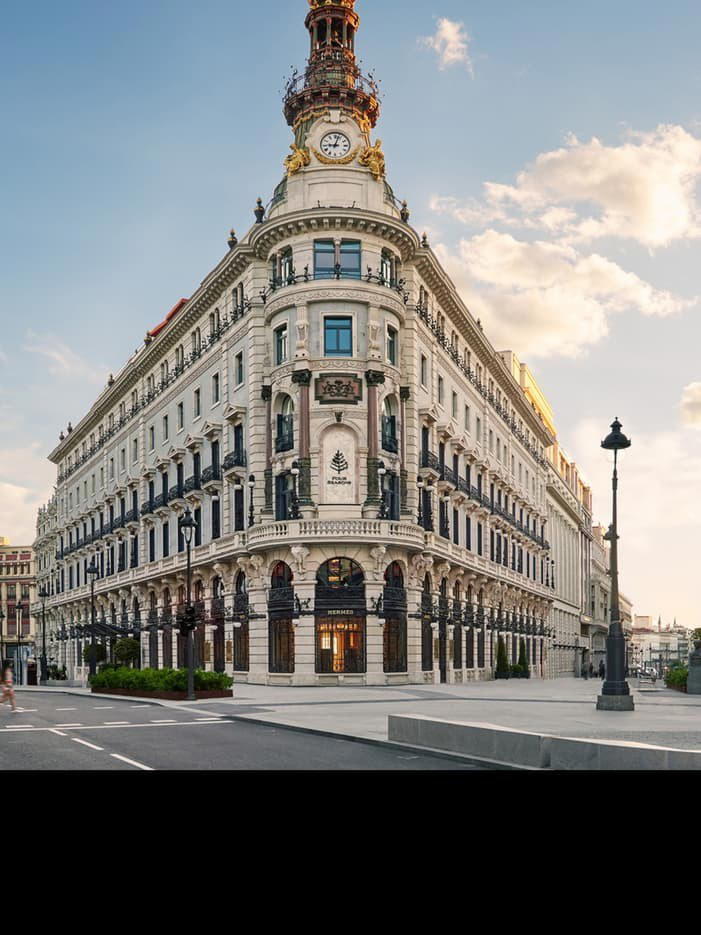
Open since 1912, The Palace occupies a landmark position on Plaza de las Cortes, within the UNESCO-accredited cultural corridor linking the Prado, Reina Sofía, and Thyssen. Its 470 renovated rooms draw on Belle Époque architecture shaped by designer Rosa Violán, while La Cúpula's stained-glass dome remains one of Madrid's most recognisable dining rooms. The hotel sits at the centre of how the city's grand hotel tier has evolved across more than a century.
Pearl is the En Primeur Club membership app — saves, bookings, and concierge access live there. Same editors, same standards.
- Address
- Plaza de las Cortes, 7
- Phone
- +34 913 60 76 67
- Website
- marriott.com
- Directions
- Get directions
 Saves & bookings on Pearl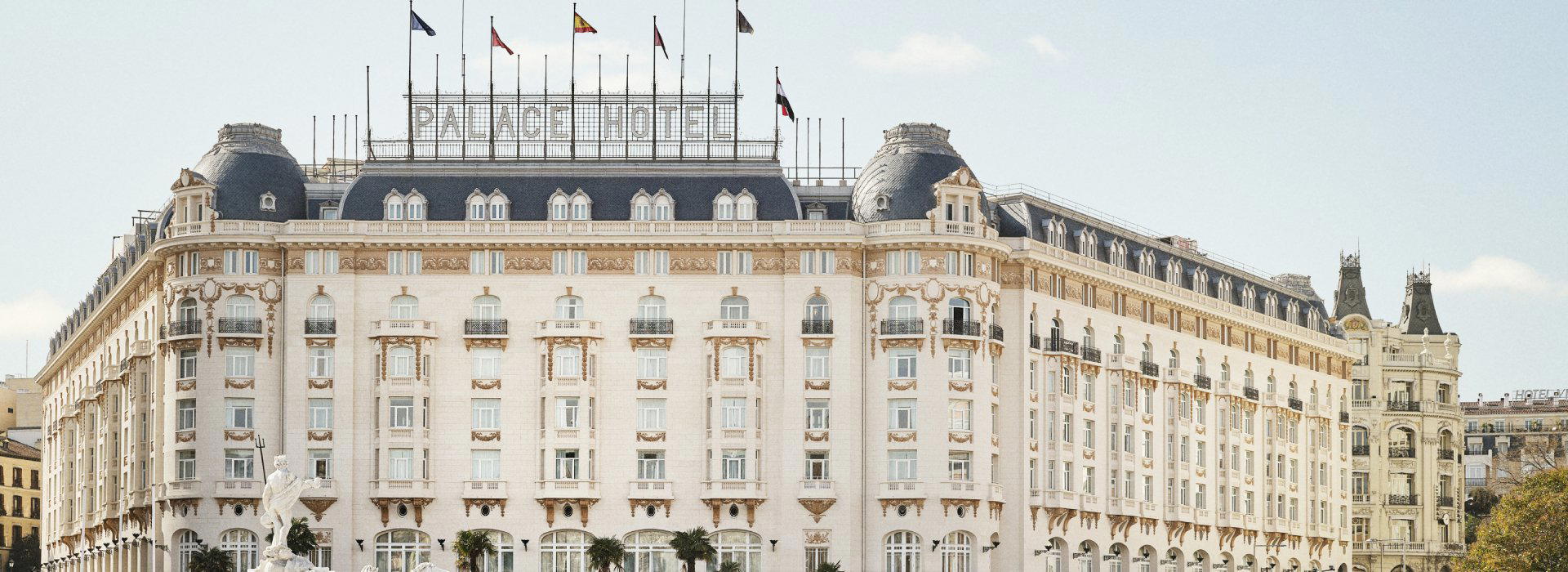
Arriving at Plaza de las Cortes
There is a particular quality of light on Plaza de las Cortes in late afternoon, when the sun drops behind the Cortes building and the stone facades of the surrounding grand hotels catch the last hour of warmth. The Palace occupies the eastern edge of that square with the kind of presence that only a century of continuous operation can produce: not aggressive or monumental, but settled, as if the building has long since stopped trying to impress and simply expects to be understood. Walking through the entrance from the plaza, the shift from Madrid's street-level energy to the hotel's interior registers immediately in the scale of the lobby and the proportional weight of the architecture.
The hotel opened in 1912, and its position within the area now recognised by UNESCO as a cultural corridor running between the Prado, the Reina Sofía, and the Thyssen-Bornemisza places it in genuinely rare company. Few hotels in Europe sit this close to three institutions of that standing, and the proximity is not incidental to how the property positions itself. Guests arriving for museum-intensive itineraries can reach the Prado on foot in under five minutes. That logistical convenience, for a certain kind of traveller, is worth as much as any room amenity.
What a Century of Renovation Looks Like
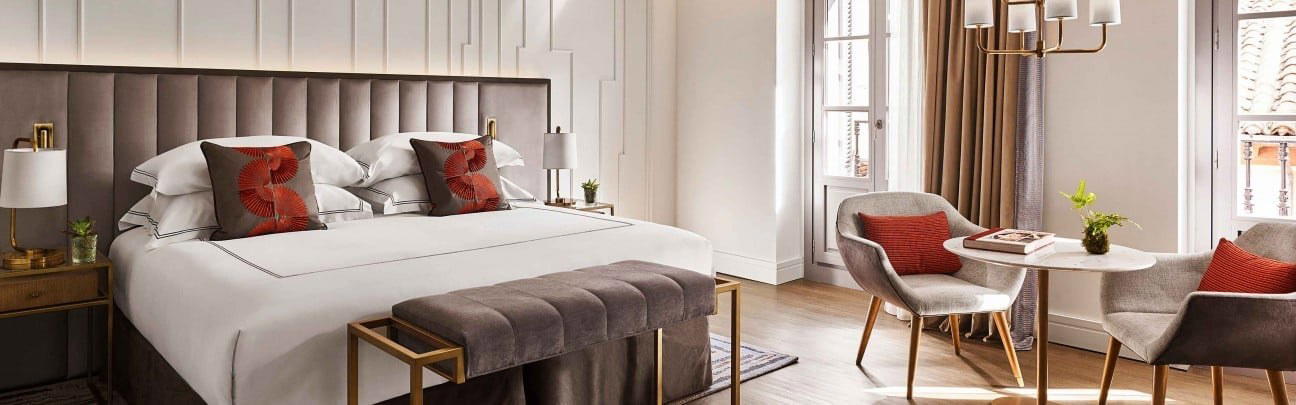
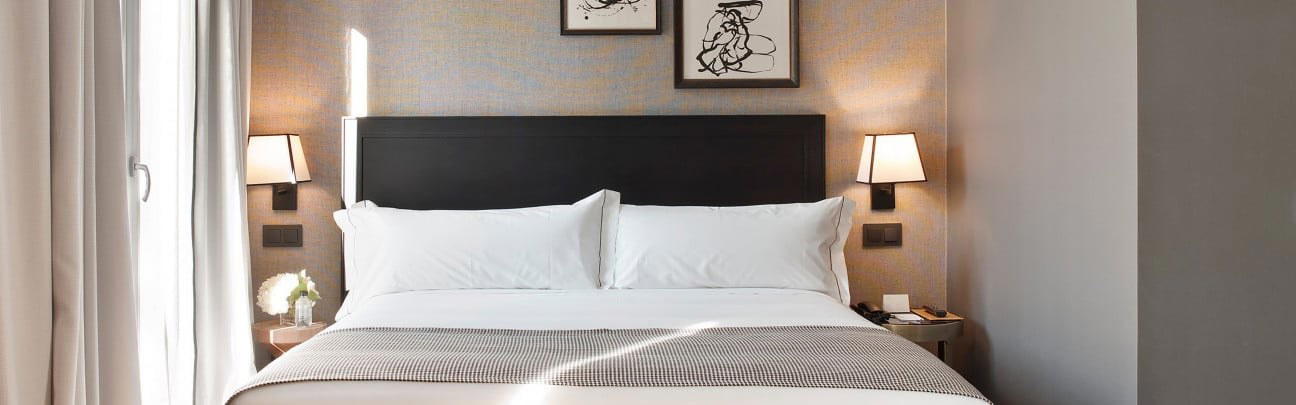
Madrid's grand hotel tier has divided, over the past decade, between properties that have undergone complete reinvention and those that have pursued careful renovation within their original envelope. The Palace belongs to the second category. All 470 rooms and suites across six floors were fully renovated under the direction of designer Rosa Violán, whose approach drew from the Belle Époque period in which the hotel was conceived. The palette runs warm and the hand-painted artworks reference specific Madrid landmarks, including El Retiro Park, which sits roughly a kilometre to the east.
The decision to work within the original architecture rather than against it has practical consequences. Room layouts are generous by the standards of European city hotels because the building was designed at a time when spatial generosity was a baseline expectation, not a premium add-on. That original architecture sets a floor that more recently built competitors cannot replicate. Among Madrid's comparable grand hotel properties, including the Mandarin Oriental Ritz, Madrid and the Four Seasons Hotel Madrid, the Palace sits in a comparable set defined by historical footprint and address prestige as much as by contemporary amenity provision.
For guests considering the wider Madrid luxury market, the Rosewood Villa Magna offers a more contemporary residential tone in Salamanca, while Gran Meliá Palacio de los Duques and Gran Hotel Inglés occupy distinct positions in the character-hotel segment. The Palace's differentiator is not modernity but accumulated institutional weight, the kind that produces a particular social expectation when you walk in.
La Cúpula and the Social Architecture of the Hotel
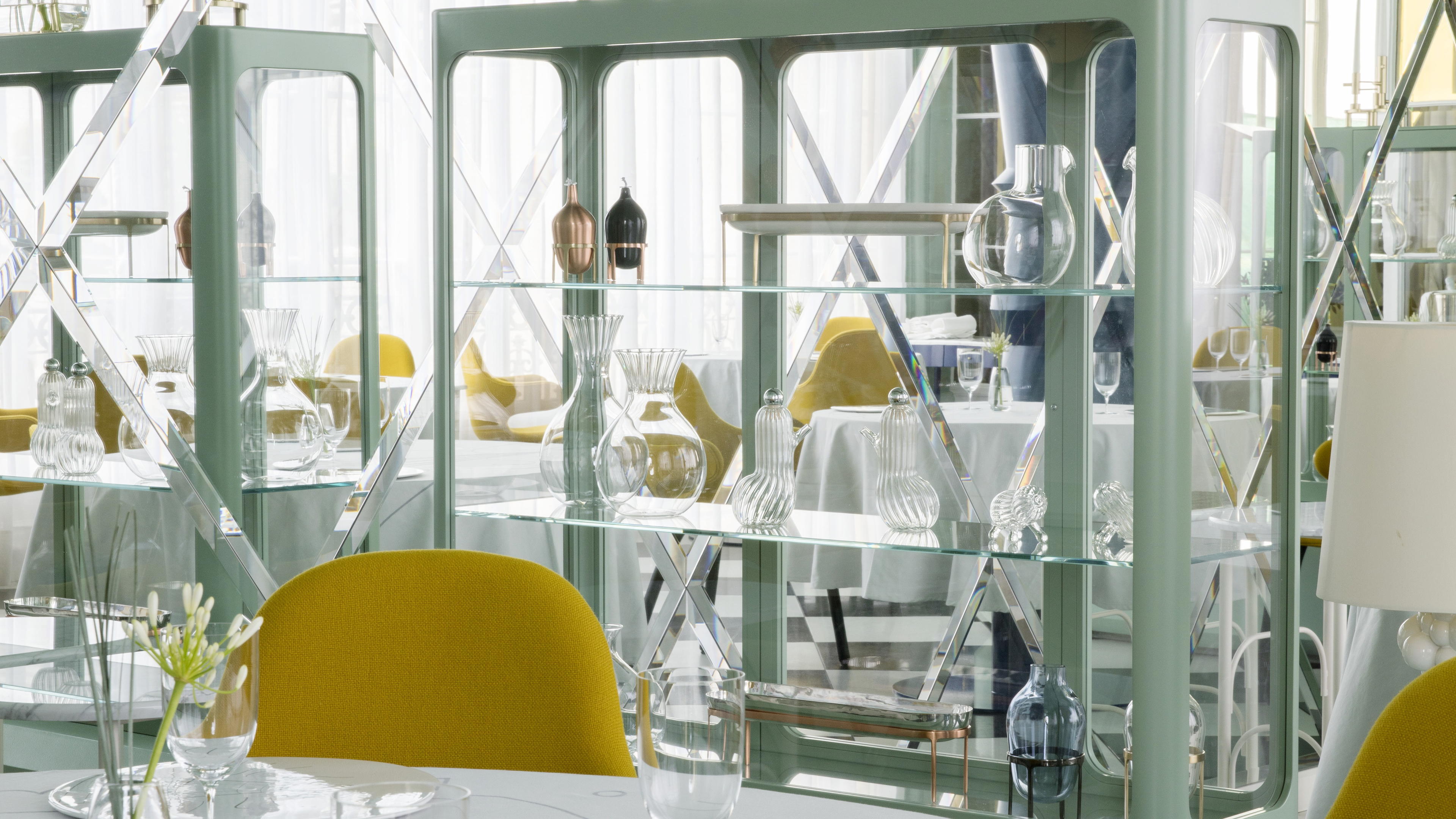
The stained-glass dome above La Cúpula Restaurant and Bar is the room that defines the hotel's social identity. Grand hotel dining rooms of this type, where the architecture does the primary work of establishing occasion, function differently from chef-driven restaurant spaces. The dome, which spans the central atrium of the building, has operated as a gathering point for Madrid's political and cultural high society throughout the hotel's history. It functions throughout the day, from morning through to late evening, which means it captures the hotel's full social range rather than existing only as a formal dinner destination.
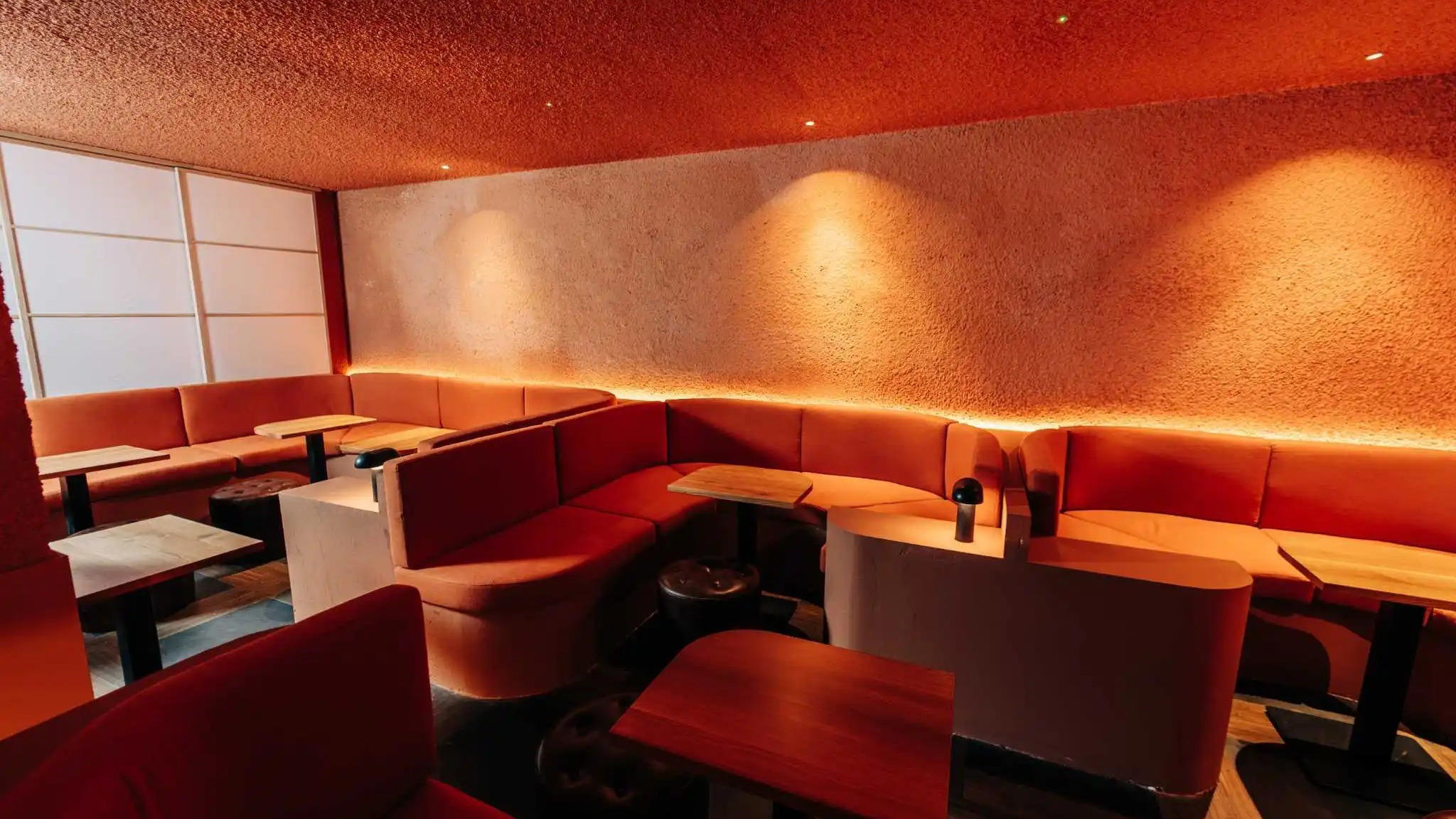
The 27 Club operates in the evening as the hotel's cocktail-focused space, positioned for guests and visitors who want a bar with a distinct identity rather than a generalist hotel lounge. The name and format signal a deliberate effort to give the cocktail program its own cultural reference point, separate from the dining room's inherited prestige.
This split between a high-profile all-day dining room and a more focused evening bar reflects a pattern visible across Madrid's leading hotel tier. Properties with strong social histories tend to operate their food and beverage spaces as semi-public destinations rather than pure hotel amenities, and the Palace's approach to both La Cúpula and the 27 Club fits that model. For guests staying at properties like Hotel Unico Madrid or CoolRooms Palacio de Atocha, a visit to La Cúpula for afternoon drinks registers as a destination in itself.
Planning Your Stay: Timing, Booking, and What to Expect
The UNESCO-corridor location means the hotel works as a base for cultural itineraries with an efficiency that properties in Salamanca or along the Paseo de la Castellana cannot match. If the Prado, the Reina Sofía, and the Thyssen are the primary draws, staying on Plaza de las Cortes removes all transit friction. Within Madrid itself, Hotel Rector offers a smaller-scale alternative for those who prefer boutique formats.
The hotel offers a 24-hour fitness area with natural light, and the spa menu covers body, facial, and beauty services bookable on request. Guests for whom spa depth is a primary criterion might weigh options like Mas de Torrent Hotel and Spa in Torrent or Cap Rocat in Cala Blava for different itinerary structures.
Comparable Options
Comparable venues nearby, for context on price, style, and recognition.
| Venue | Cuisine | Price | Notes |
|---|---|---|---|
| The Palace, a Luxury Collection Hotel, MadridThis venue — the venue you are viewing | Historic palace reimagined as a contemporary luxury hotel, honoring 20th-century Spanish heritage with modern amenities and bespoke design elements. | $$$$ | Not listed |
| Hotel Villa Real 5* | Classic five-star heritage hotel blending traditional elegance with modern comfort in Madrid's cultural heart. | $$$$ | Barrio de las Letras |
| Thompson Madrid, by Hyatt | Lifestyle luxury hotel with residential-inspired design | $$$$ | Lavapies |
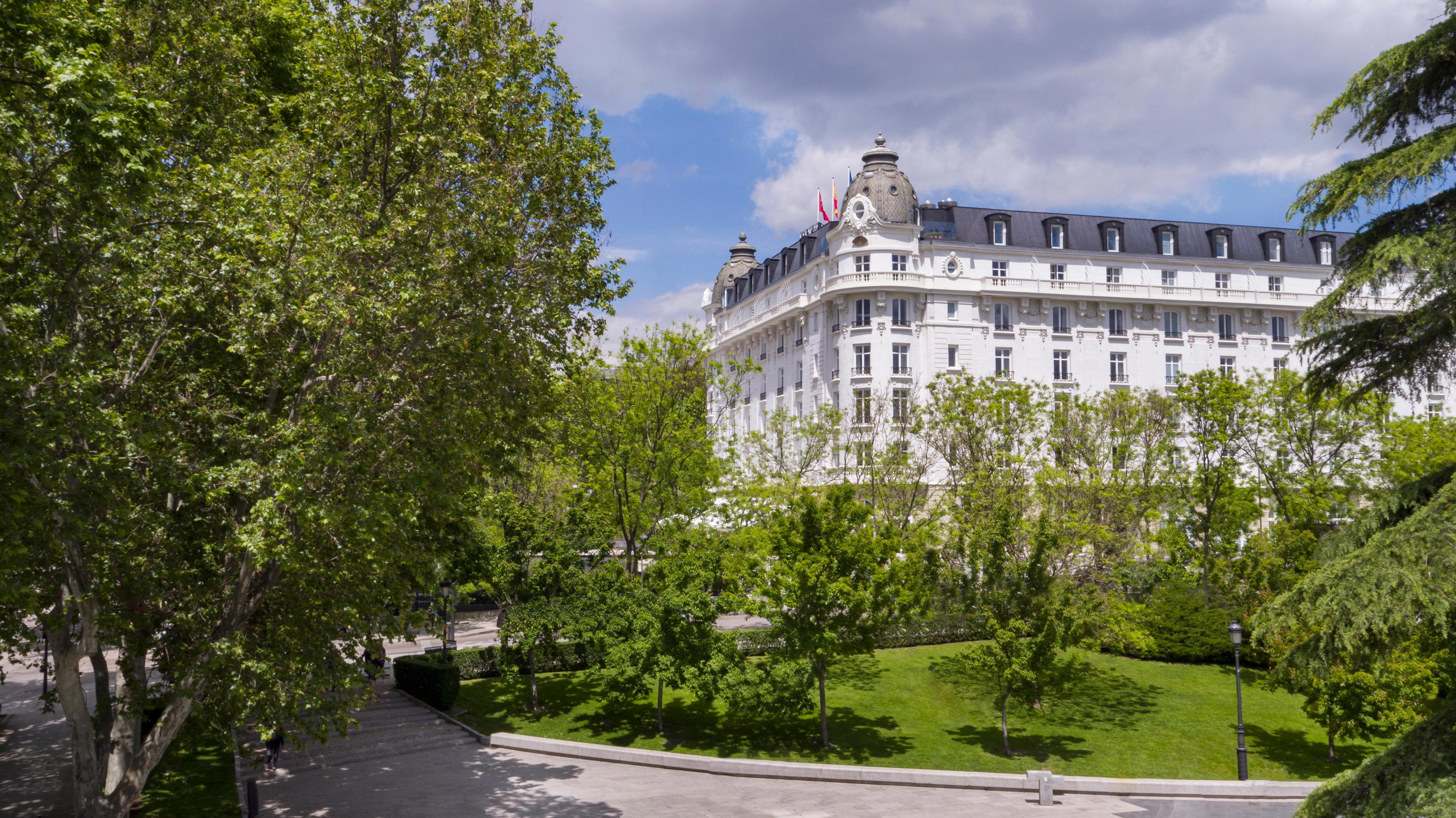
| InterContinental Madrid | Historic luxury urban retreat | $$$$ | Almagro |
| Metrópolis Madrid | Contemporary luxury design hotel | $$$$ | Gran Vía |
| UMusic Hotel Madrid | Music and culture-infused luxury in a historic landmark. | $$$$ | Centro |
Recognition history
Dated appearances from independent guides and award organizations, with the underlying list record or original source where available.
Conde Nast Hot List Hotels
Conde Nast
Esquire Best New Hotels
Esquire
Fodor's Most Incredible Hotels in the World
Fodor's
Virtuoso Luxury Hotel Partner
Virtuoso
Michelin 1 Key
Michelin
Michelin 1 Key
Michelin
Continue exploring
More in Madrid
Hotels in Madrid
Browse all →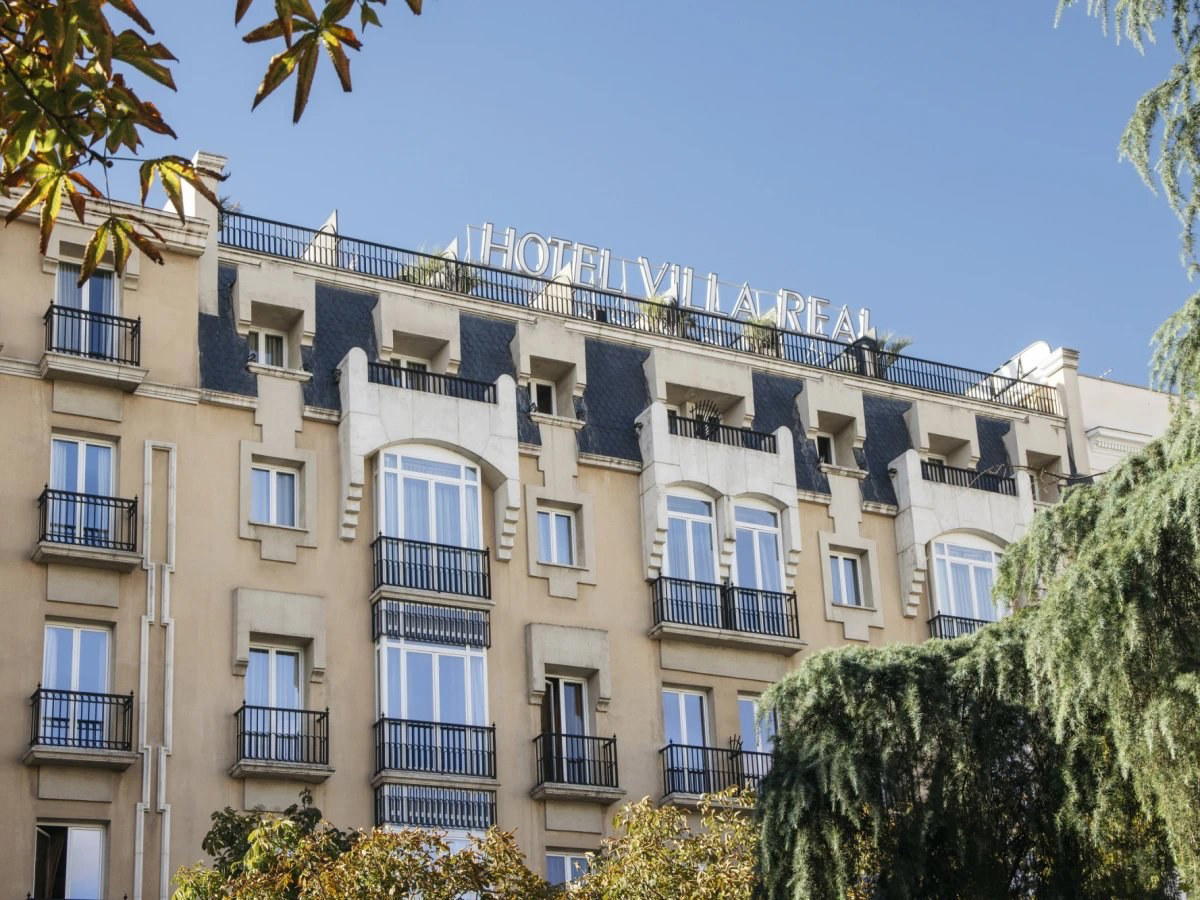
Bars in Madrid
Browse all →
Restaurants in Madrid
Browse all →

At a Glance
- Elegant
- Sophisticated
- Well Known
- Classic
- Romantic Getaway
- Business Trip
- Celebration
- Anniversary
- Weekend Escape
- Historic Building
- Panoramic View
- Destination Spa
- Terrace
- Garden
- Private Dining
- Wi Fi
- Fitness Center
- Spa
- Room Service
- Concierge
- Business Center
- Valet Parking
- Restaurant
- Bar
- Street Scene
- Garden
- Wi Fi
- Fitness Center
- Spa
- Room Service
- Concierge
- Business Center
- Valet Parking
- Restaurant
- Bar
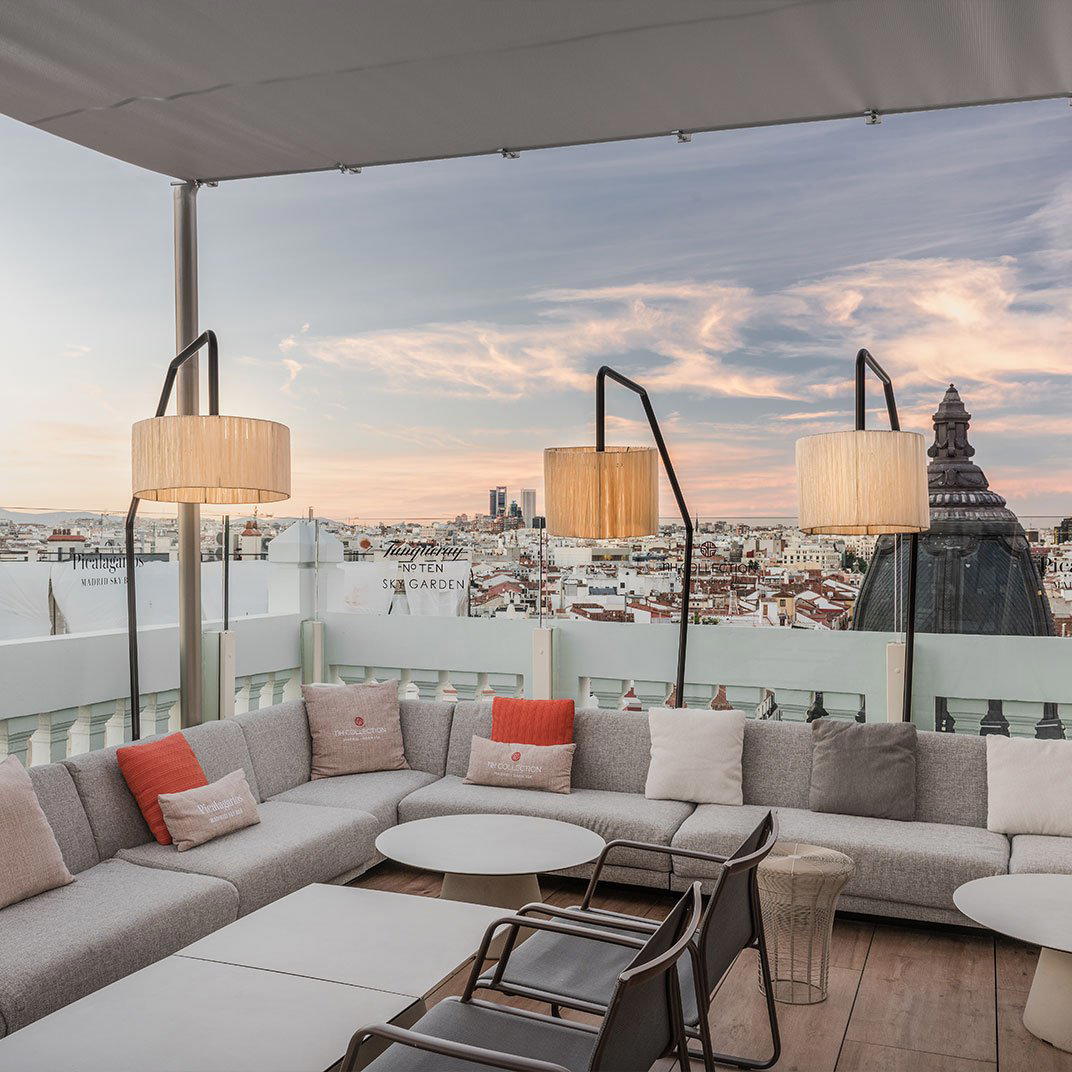
Grand, light-filled public spaces with ornate chandeliers and marble accents; guest rooms feature sleek parquet floors, custom furnishings, and botanical-themed design elements creating a refined yet welcoming atmosphere.