Akira occupies a measured position in Cologne's dining scene, operating from Hildeboldplatz in the city's central west. The address places it within reach of a neighbourhood that has gradually consolidated around serious, ingredient-led cooking over the past decade. For those tracing Cologne's shift toward more considered, produce-driven formats, Akira is a relevant point on that map.
Pearl is the En Primeur Club membership app — saves, bookings, and concierge access live there. Same editors, same standards.
- Address
- Hildeboldpl. 1A, 50672 Köln, Germany
- Phone
- +4922133766667
- Website
- akira-jp.de
- Directions
- Get directions
 Saves & bookings on Pearl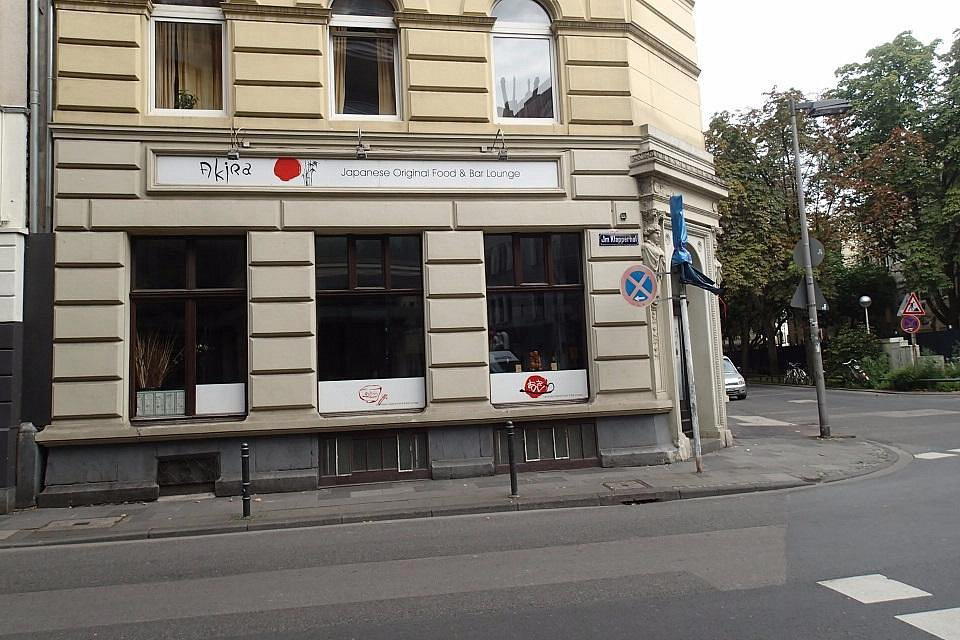
Hildeboldplatz and the Ingredient Question
Cologne's dining scene has spent the better part of a decade reorganising itself around a single competitive pressure: where does the food actually come from? The city's most discussed restaurants, among them Ox & Klee and maiBeck, have staked their reputations on supply chains that are visible enough to discuss at the table. That shift has made sourcing a credibility marker, not merely a selling point, across the city's mid-to-upper tier. Akira, an authentic Japanese sushi and bento restaurant at Hildeboldpl. 1A in Cologne, sits within that broader conversation.
The address itself carries contextual weight. Hildeboldplatz occupies a quieter pocket of the Neustadt-Nord district, away from the Rhine-side tourist density but close enough to the Belgisches Viertel to draw from the neighbourhood's appetite for considered, less performative dining. Restaurants in this part of Cologne tend to compete on precision and restraint rather than volume or spectacle, and the area's dining character has become more defined as venues like La Société have consolidated that reputation.
The Sourcing Frame: Why Provenance Matters in This City
Germany's approach to ingredient provenance has never been uniform. In the Rhine region, the proximity to Dutch market gardens, Eifel pasturelands, and the productive river valleys of the Moselle and Ahr creates a supply geography that more ambitious kitchens have learned to read deliberately. The question, for any restaurant operating in Cologne at a level above casual, is whether that geography appears in the cooking or simply in the margin notes of a menu.
Produce-led restaurants in this tier, comparable in positioning to La Cuisine Rademacher and Le Moissonnier Bistro, tend to anchor their sourcing decisions in seasonal discipline. That means menus shift not because a chef has a creative impulse, but because the supply genuinely changes. Autumn in the Rhineland brings game, root vegetables, and fungi from the Eifel highlands. Spring opens access to river herbs and early brassicas from smaller farms in the region. Restaurants that track those rhythms closely build a different relationship with their suppliers than those operating from consolidated wholesale channels.
For diners visiting in the autumn or winter months, ingredient-led kitchens in Cologne's central districts tend to operate at their most focused. The compressed seasonal window forces editorial decisions about what appears on the plate, and those decisions are where a kitchen's actual priorities become legible.
Where Akira Sits in the Cologne Tier
Cologne's serious dining options now span a wide bracket. At the upper end, the city's connection to the broader German fine dining circuit is anchored by proximity to venues like Vendôme in Bergisch Gladbach, one of Germany's most decorated addresses, accessible within thirty minutes of the city centre. Within Cologne itself, the €€€€ tier is occupied by a cluster of modern cuisine restaurants with strong editorial recognition. Akira operates at Hildeboldplatz, and it reads more usefully as part of the neighbourhood's ingredient-conscious mid-tier than as a direct competitor to the city's Michelin-tracked houses.
That positioning matters for how you approach a booking. Germany's fine dining circuit, which runs from Schwarzwaldstube in Baiersbronn to Aqua in Wolfsburg and across to Restaurant Haerlin in Hamburg, operates on a different rhythm than the neighbourhood-level restaurants that define a city's daily dining character. Akira belongs to the latter category: a local address with a specific neighbourhood identity rather than a destination restaurant drawing international traffic.
Compared with Munich or Hamburg, Cologne's fine dining identity has historically been quieter and less export-oriented. The city's strength is in a density of serious mid-level restaurants rather than a concentration of starred destinations. That makes Cologne more interesting for sustained exploration than for a single destination meal. JAN in Munich or CODA Dessert Dining in Berlin draw international audiences specifically for their formats; Cologne's strongest restaurants reward repeat visits from people who already know the city.
The Belgisches Viertel adjacency is relevant here. The neighbourhood has developed a restaurant culture built around regulars rather than tourists, and Hildeboldplatz sits at the edge of that orbit. Restaurants in this area tend to be more conversational in format, fewer theatrical elements, more direct service, and the cooking reflects that register. For international visitors, that's a different proposition than the more architecturally ambitious venues you'd find around the Rheinauhafen waterfront.
Akira's address at Hildeboldpl. 1A places it within walking distance of the Friesenplatz U-Bahn station, making it accessible from central Cologne without requiring a taxi. The Neustadt-Nord district is compact enough that a meal here can connect naturally with drinks in the Belgisches Viertel before or after. Confirm reservation availability directly with the venue before building an itinerary around it. Autumn and winter visits align with the seasonal sourcing rhythms that tend to define ingredient-led kitchens in this region most clearly.
For those mapping Cologne's wider dining options alongside Akira, the city's comparable mid-to-upper tier addresses include the modern cuisine programs at Ox & Klee and La Société, the French-influenced cooking at Le Moissonnier Bistro, and the more destination-oriented programs at ES:SENZ in Grassau, Schanz in Piesport, Waldhotel Sonnora in Dreis, and Victor's Fine Dining by Christian Bau in Perl for those willing to travel within the broader region. Internationally, the sourcing-led approach that defines this end of the market has strong parallels at Le Bernardin in New York City and Lazy Bear in San Francisco, where provenance and seasonal constraint operate as primary creative frameworks rather than incidental menu notes.
Nearby-ish Comparables
Comparable venues nearby, for context on price, style, and recognition.
| Venue | Cuisine | Price | Notes |
|---|---|---|---|
| AkiraThis venue — the venue you are viewing | Authentic Japanese Sushi & Bento | $$ | Not listed |
| Nobiko | Vegan Japanese Udon Noodle Bar | $$ | Kalk |
| Tanoshii | Japanese Sushi with Vietnamese Fusion | $$$ | Neustadt/Nord |
| Takumi Chicken & Vegan Ramen | Chicken & Vegan Ramen | $$ | Neustadt/Nord |
| Shima Bistro | Creative Japanese Fusion | $$ | Neustadt/Nord |
| Kleine Glocke | Traditional German Gastropub | $$ | Altstadt/Nord |
Continue exploring
More in Cologne
Restaurants in Cologne
Browse all →
Bars in Cologne
Browse all →

Hotels in Cologne
Browse all →

At a Glance
- Cozy
- Intimate
- Date Night
- Casual Hangout
- Standalone
- Sake Program
Current opening hours
- Monday
- Closed
- Tuesday
- 12–2 PM, 6–10 PM
- Wednesday
- 12–2 PM, 6–10 PM
- Thursday
- 12–2 PM, 6–10 PM
- Friday
- 12–2 PM, 6–10 PM
- Saturday
- 6–10 PM
- Sunday
- Closed
Hours can change for holidays and private events. Last verified .
Small, tidy, and cozy with simple interior, focusing on food rather than lavish decor; friendly and efficient service creates a welcoming neighborhood feel.