Our verdict
A View That Earns Its Position On the 25th floor of the Shibuya Excel Hotel Tokyu, the city arranges itself into a grid of light and density that few dining rooms in Tokyo can rival from this particular angle. Shibuya below operates at its familiar intensity: the crossing, the retail towers, the commuter currents. Up here, the register is different. The elevation creates a separation that sets a particular kind of expectation before anything arrives at the table. In a city where rooftop and high-floor dining has multiplied across the past decade, the positioning of a French-named venue inside a major hotel marks a specific tier of Tokyo hospitality, one where the room is part of the offering as much as what comes out of the kitchen. A bientôt sits within that stratum. The address, Dogenzaka 1-12-2 in Shibuya, places it in one of Tokyo's most commercially dense districts, yet the 25th-floor setting insulates it from the street-level noise entirely. That contrast is characteristic of how Tokyo's hotel dining has evolved: the city outside is the spectacle; the dining room is the controlled counterpoint. Where Shibuya's Dining Sits in Tokyo's Broader Map Tokyo's French dining scene has consolidated around a handful of distinct registers. At the highest tier sit multi-Michelin-starred rooms like Sézanne and L'Effervescence, where ingredient provenance is treated with near-academic rigour and menus are rebuilt seasonally around what specific producers are delivering. Below that, but operating with serious kitchen discipline, are venues like Crony, where French technique meets a more informal format. Hotel-anchored French dining occupies its own sub-category: the room and the view carry structural weight, and the kitchen operates within a broader hospitality context rather than as a standalone destination. Shibuya specifically has never been Tokyo's primary address for serious destination dining the way Ginza or Minami-Aoyama have. It is a district defined by volume and commercial energy, which means the restaurants that operate at a premium level there tend to separate themselves through format rather than neighbourhood cachet. Height, privacy, and the hotel infrastructure become the differentiating variables. That is the logic A bientôt works within. For reference, Tokyo's kaiseki and premium Japanese traditions are documented across the city at venues like RyuGin and Harutaka, where ingredient sourcing from specific Japanese producers and seasons is the structural spine of the menu. French-leaning hotel dining pursues a parallel logic: provenance matters, but the framing is European technique applied to a Tokyo context. Our full Tokyo restaurants guide maps both traditions across the city's dining districts. The Sourcing Logic Behind Tokyo's French Hotel Kitchens The editorial angle worth examining here is what ingredient sourcing actually means inside Tokyo's French hotel dining category. The city's leading French rooms have spent the past fifteen years developing direct relationships with Japanese producers, a pattern that accelerated as local farms began adapting output to fine-dining specifications. Wagyu from specific prefectures, seasonal vegetables from Hokkaido growers, Pacific seafood tracked to specific fishing ports: these have become the raw materials that distinguish Tokyo's premium French kitchens from their counterparts in Paris or London, where local sourcing means something geographically different. Hotel dining rooms in this tier benefit from procurement infrastructure that independent restaurants sometimes cannot match. A major hotel group's purchasing relationships can reach producers that small kitchens lack the volume to access. Whether that advantage translates directly into the sourcing depth seen at dedicated destination kitchens depends on the specific program each kitchen runs. What is consistent across the category is that Tokyo's French hotel dining has moved decisively away from imported-everything French classicism toward hybrid sourcing models where the Japanese provenance of core ingredients is treated as a quality signal rather than a compromise. This mirrors patterns visible across Japan's premium dining circuit. HAJIME in Osaka and Gion Sasaki in Kyoto have each built their identities around specific relationships with Japanese producers. Regional venues like Tsukumo in Nara, Goh in Fukuoka, and Aji Arai in Oita have built reputations precisely because their sourcing is tied to local and hyper-regional supply chains that Tokyo kitchens cannot replicate. Even in less-trafficked markets, venues like Aotsuka Shokudo in Hokkaido, Chinese Sen in Miyazaki, SORAE in Takamatsu, a noted venue in Kanazawa, and Enowa Yufuin in Yufu demonstrate that Japan's sourcing culture reaches well beyond the metropolitan core. Internationally, the sourcing-first model is equally visible at institutions like Le Bernardin in New York and Lazy Bear in San Francisco, where ingredient origin is the foundational editorial of the menu. Planning a Visit A bientôt is located within the Shibuya Excel Hotel Tokyu, with the hotel directly connected to Shibuya Station, making access from most points in central Tokyo direct. The 25th-floor position means that timing around dusk captures the transition from daylight to the city's illuminated grid, which is the visual peak of any high-floor dining experience in a district as dense as Shibuya. Dress code expectations at 25th-floor hotel dining in Tokyo typically align with smart casual as a baseline, though the specific policy here should be confirmed at booking. Frequently Asked Questions Is A bientôt a family-friendly restaurant?The 25th-floor hotel setting and French-inflected format suggest an adult-oriented dining context typical of Shibuya's premium hotel dining tier. Families with older children comfortable in a composed, quieter room may find it suitable, but this is not a venue designed around family-format dining.What is the vibe at A bientôt?High-floor hotel dining in Shibuya operates at a remove from the district's commercial intensity below. The 25th-floor position within the Excel Hotel Tokyu creates an environment where the view is a structural element of the experience, and the tone aligns with the composed, service-led registers common to Tokyo's hotel French dining category.What dish is A bientôt famous for? In the French hotel dining category in Tokyo, seasonal menus tied to Japanese ingredient cycles are the norm rather than fixed signature items, meaning the menu is likely to shift with what producers are delivering across each season. For confirmed dish information, contacting the venue directly or checking current hotel programming is recommended.Do they take walk-ins at A bientôt?Walk-in availability at premium hotel dining venues in Shibuya varies considerably by day and service period. Given the 25th-floor hotel context, walk-in seating may be possible during quieter periods, but the format and setting suggest reservations are the more reliable approach. Booking through the Shibuya Excel Hotel Tokyu directly is the most dependable route.What makes A bientôt worth seeking out?Within Shibuya's dining options, the combination of high-floor positioning, French-format dining, and hotel-infrastructure sourcing access places A bientôt in a niche that the district's street-level restaurants cannot replicate. The view from the 25th floor across one of Tokyo's most kinetic intersections is a genuine differentiator in a city where rooftop dining has become increasingly competitive. For confirmed credential and kitchen details, verifying current information with the hotel is recommended.How does A bientôt compare to other French fine dining options in Tokyo?Tokyo's French dining circuit spans from standalone destination kitchens with accumulated Michelin recognition to hotel-anchored rooms where the setting and service infrastructure carry significant weight. A bientôt sits in the latter category, operating from within a major Shibuya hotel at a floor level that gives it a visual and atmospheric position most independent French rooms in the city cannot replicate. Diners prioritising kitchen pedigree and award-verified sourcing programs may look to venues like L'Effervescence or Sézanne; those for whom the full room experience, including view and hotel service, is the primary variable will find A bientôt addresses a specific gap in Shibuya's offering.

Pearl is the En Primeur Club membership app, where members save venues, book tables and use the concierge.
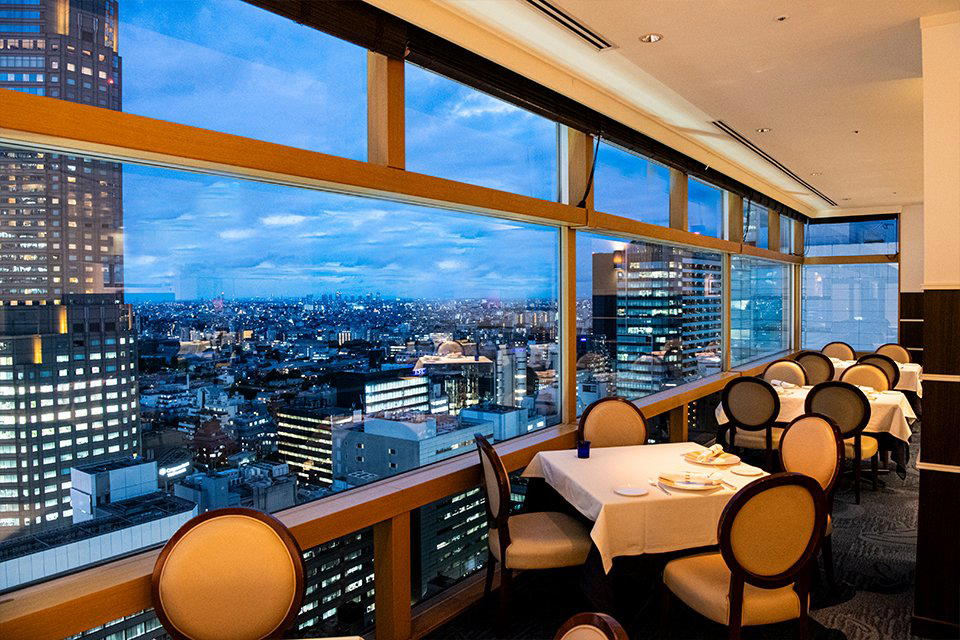
A View That Earns Its Position
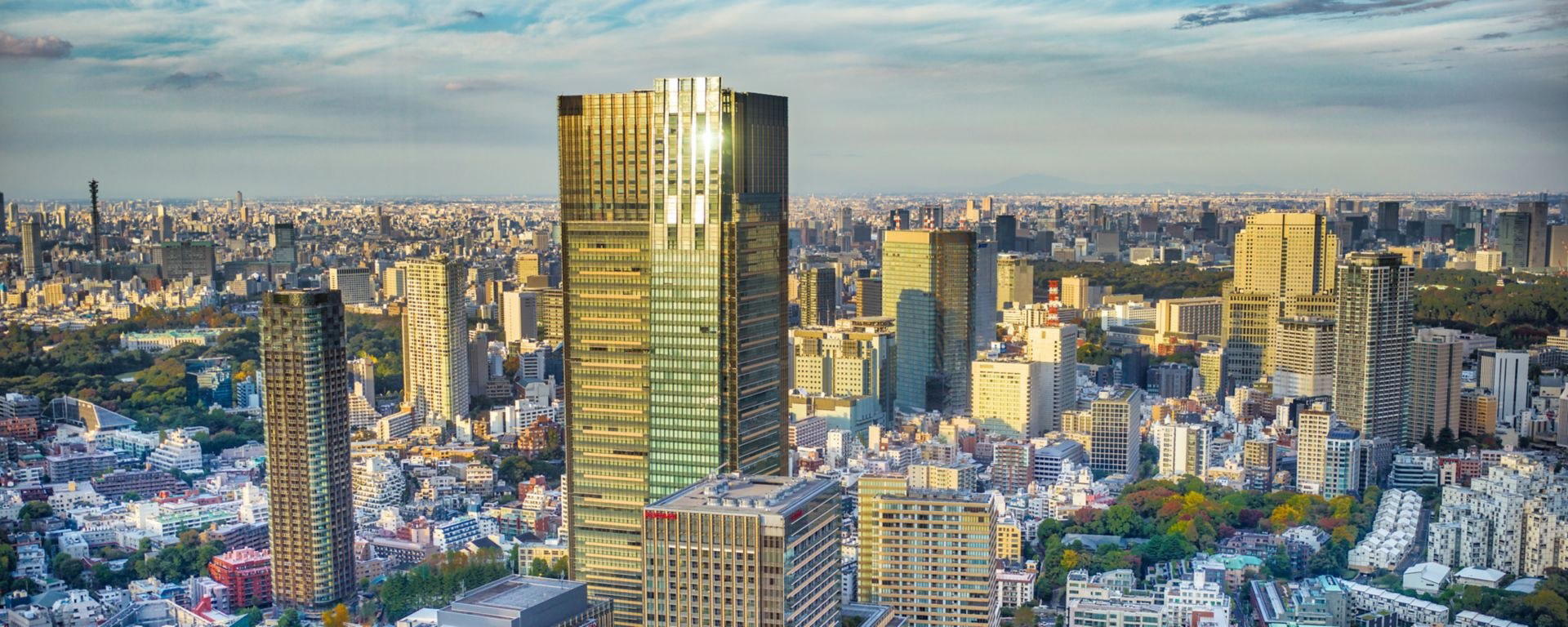
On the 25th floor of the Shibuya Excel Hotel Tokyu, the city arranges itself into a grid of light and density that few dining rooms in Tokyo can rival from this particular angle. Shibuya below operates at its familiar intensity: the crossing, the retail towers, the commuter currents. Up here, the register is different. The elevation creates a separation that sets a particular kind of expectation before anything arrives at the table. In a city where rooftop and high-floor dining has multiplied across the past decade, the positioning of a French-named venue inside a major hotel marks a specific tier of Tokyo hospitality, one where the room is part of the offering as much as what comes out of the kitchen.
A bientôt sits within that stratum. The address, Dogenzaka 1-12-2 in Shibuya, places it in one of Tokyo's most commercially dense districts, yet the 25th-floor setting insulates it from the street-level noise entirely. That contrast is characteristic of how Tokyo's hotel dining has evolved: the city outside is the spectacle; the dining room is the controlled counterpoint.
Where Shibuya's Dining Sits in Tokyo's Broader Map
Tokyo's French dining scene has consolidated around a handful of distinct registers. At the highest tier sit multi-Michelin-starred rooms like Sézanne and L'Effervescence, where ingredient provenance is treated with near-academic rigour and menus are rebuilt seasonally around what specific producers are delivering. Below that, but operating with serious kitchen discipline, are venues like Crony, where French technique meets a more informal format. Hotel-anchored French dining occupies its own sub-category: the room and the view carry structural weight, and the kitchen operates within a broader hospitality context rather than as a standalone destination.
Shibuya specifically has never been Tokyo's primary address for serious destination dining the way Ginza or Minami-Aoyama have. It is a district defined by volume and commercial energy, which means the restaurants that operate at a premium level there tend to separate themselves through format rather than neighbourhood cachet. Height, privacy, and the hotel infrastructure become the differentiating variables. That is the logic A bientôt works within.
For reference, Tokyo's kaiseki and premium Japanese traditions are documented across the city at venues like RyuGin and Harutaka, where ingredient sourcing from specific Japanese producers and seasons is the structural spine of the menu. French-leaning hotel dining pursues a parallel logic: provenance matters, but the framing is European technique applied to a Tokyo context. Our full Tokyo restaurants guide maps both traditions across the city's dining districts.
The Sourcing Logic Behind Tokyo's French Hotel Kitchens
The editorial angle worth examining here is what ingredient sourcing actually means inside Tokyo's French hotel dining category. The city's leading French rooms have spent the past fifteen years developing direct relationships with Japanese producers, a pattern that accelerated as local farms began adapting output to fine-dining specifications. Wagyu from specific prefectures, seasonal vegetables from Hokkaido growers, Pacific seafood tracked to specific fishing ports: these have become the raw materials that distinguish Tokyo's premium French kitchens from their counterparts in Paris or London, where local sourcing means something geographically different.
Hotel dining rooms in this tier benefit from procurement infrastructure that independent restaurants sometimes cannot match. A major hotel group's purchasing relationships can reach producers that small kitchens lack the volume to access. Whether that advantage translates directly into the sourcing depth seen at dedicated destination kitchens depends on the specific program each kitchen runs. What is consistent across the category is that Tokyo's French hotel dining has moved decisively away from imported-everything French classicism toward hybrid sourcing models where the Japanese provenance of core ingredients is treated as a quality signal rather than a compromise.
This mirrors patterns visible across Japan's premium dining circuit. HAJIME in Osaka and Gion Sasaki in Kyoto have each built their identities around specific relationships with Japanese producers. Regional venues like Tsukumo in Nara, Goh in Fukuoka, and Aji Arai in Oita have built reputations precisely because their sourcing is tied to local and hyper-regional supply chains that Tokyo kitchens cannot replicate. Even in less-trafficked markets, venues like Aotsuka Shokudo in Hokkaido, Chinese Sen in Miyazaki, SORAE in Takamatsu, a noted venue in Kanazawa, and Enowa Yufuin in Yufu demonstrate that Japan's sourcing culture reaches well beyond the metropolitan core. Internationally, the sourcing-first model is equally visible at institutions like Le Bernardin in New York and Lazy Bear in San Francisco, where ingredient origin is the foundational editorial of the menu.
Planning a Visit
A bientôt is located within the Shibuya Excel Hotel Tokyu, with the hotel directly connected to Shibuya Station, making access from most points in central Tokyo direct. The 25th-floor position means that timing around dusk captures the transition from daylight to the city's illuminated grid, which is the visual peak of any high-floor dining experience in a district as dense as Shibuya. Dress code expectations at 25th-floor hotel dining in Tokyo typically align with smart casual as a baseline, though the specific policy here should be confirmed at booking.
Frequently asked questions
Is A bientôt a family-friendly restaurant?
What is the vibe at A bientôt?
What dish is A bientôt famous for?
Do they take walk-ins at A bientôt?
What makes A bientôt worth seeking out?
How does A bientôt compare to other French fine dining options in Tokyo?
Continue exploring
More in Tokyo
Restaurants in Tokyo
All restaurants in Tokyo →
Bars in Tokyo
All bars in Tokyo →
Details
- Elegant
- Sophisticated
- Scenic
- Date Night
- Special Occasion
- Business Dinner
- Rooftop
- Panoramic View
- Hotel Restaurant
- Private Dining
- Extensive Wine List
- Sommelier Led
- Skyline
- Prix Fixe
- A La Carte
- Allergy Accommodating
Current opening hours
- Monday
- 6:30 AM–9:30 PM
- Tuesday
- 6:30 AM–9:30 PM
- Wednesday
- 6:30 AM–9:30 PM
- Thursday
- 6:30 AM–9:30 PM
- Friday
- 6:30 AM–9:30 PM
- Saturday
- 7:30 AM–9:30 PM
- Sunday
- 7:30 AM–9:30 PM
Hours can change for holidays and private events. Hours as of .
Sky-high dining away from city hustle with glittering night views and elegant seasonal French ambiance.