태조감자국
태조감자국 in Seoul's Seongbuk district serves the kind of pork bone soup that Seoul grew up on: deeply mineral, long-simmered, and built for cold nights. The Sungshin Women's University branch on Bomun-ro 34-gil draws a neighbourhood crowd that has little interest in fine-dining theatrics. It is the sort of place that earns loyalty through consistency, not novelty.
Pearl is the En Primeur Club membership app — saves, bookings, and concierge access live there. Same editors, same standards.
- Address
- 보문로34길 43 (성신여대점), 동선동, 성북구, 서울특별시, 02845
- Directions
- Get directions
 Saves & bookings on Pearl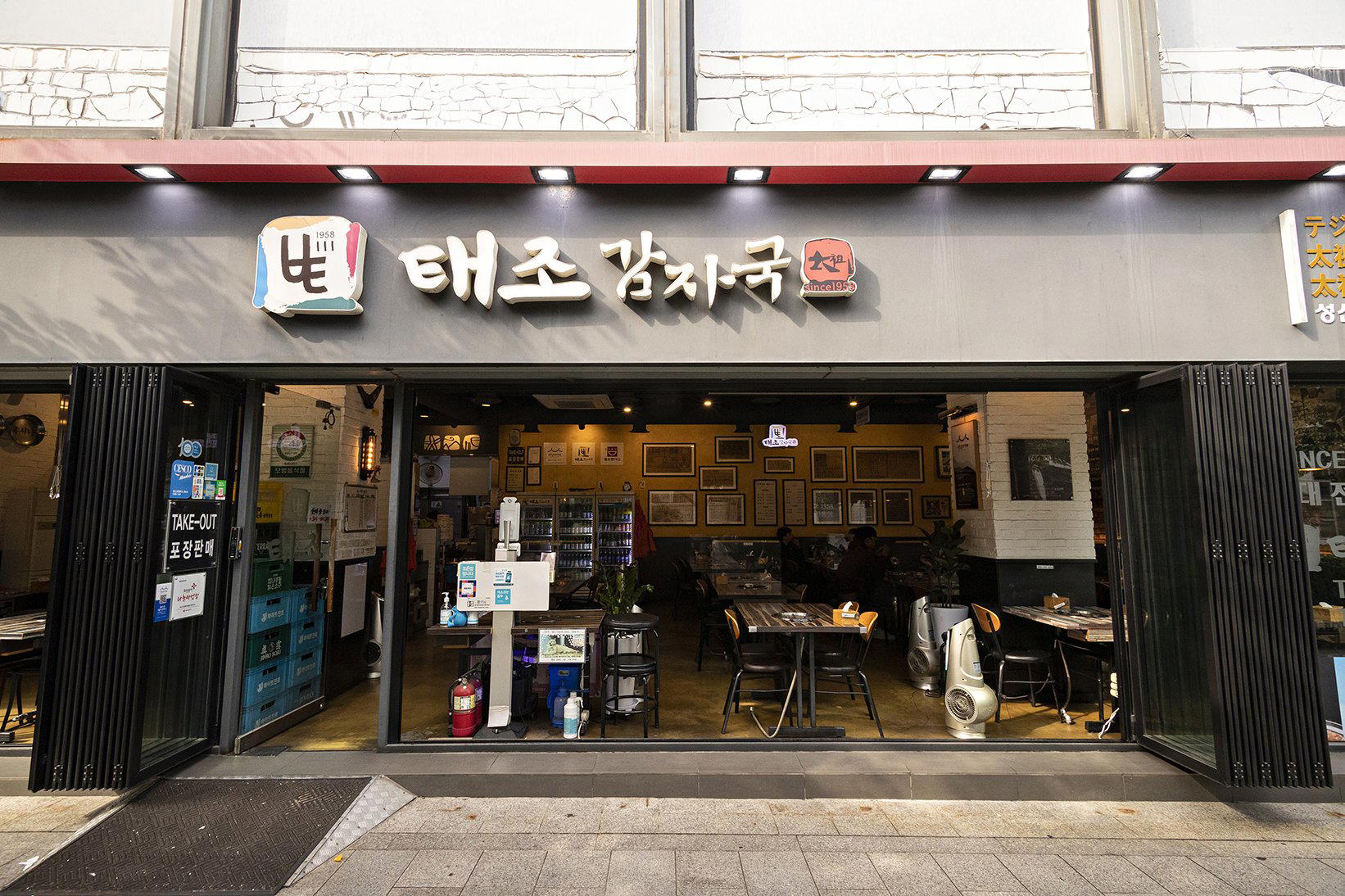
Where Seoul's Broth Culture Runs Deepest
The streets around Sungshin Women's University have a different tempo from the polished restaurant corridors of Gangnam or the trend-chasing energy of Itaewon. Seongbuk-gu is a residential district of long-standing teahouses, neighbourhood pojangmacha, and restaurants that have fed the same families for decades. On Bomun-ro 34-gil, 태조감자국 occupies that quiet register: a place that exists because the soup is good, not because anyone designed an experience around it.
Gamjatang, the pork spine and potato stew at the centre of this kitchen, is one of Seoul's most honest dishes. It belongs to a tradition of long-simmered broth cookery that runs through Korean food culture at every price level, from the clear doenjang-brightened soups of home kitchens to the concentrated seolleongtang served at old-school Jongno specialists. Gamjatang sits in a spicier, more assertive register: the broth draws its body from pork neck bones cooked for hours, picks up heat from gochugaru, and balances depth with the starchy weight of potato. The perilla leaves added late in cooking cut through the fat and pull the bowl toward something almost herbal. For visitors who have spent time at the finer end of Seoul dining — at Mingles, Jungsik, or Kwonsooksoo — a bowl of properly made gamjatang is a useful recalibration. The technique is different but the seriousness of flavour is not.
The Arc of the Meal
A meal at 태조감자국 does not follow the multi-course grammar of Seoul's contemporary dining rooms. There is no progression of amuse-bouche to pre-dessert, no sommelier threading through the table. What there is, however, is a different kind of sequencing, one governed by the way Korean communal eating actually works.
The table arrives set before the main pot does. Banchan, the small side dishes that anchor every Korean shared meal, land first: kimchi at varying stages of fermentation, seasoned spinach or bean sprouts, perhaps a dish of braised anchovies or pickled radish. These are not garnish. They function as palate context, establishing the sour-salty-fermented register against which the hot, fatty soup will read. Eating banchan first, then working into the broth, is its own kind of progression, one that Korean diners perform without thinking about it and that rewards slower attention from those unfamiliar with the rhythm.
The gamjatang itself arrives in a stone or heavy pot, still at a rolling simmer. The correct move is to let it settle slightly, then work through the bones with the long Korean spoon, pulling meat from the spine in pieces. Rice arrives separately, as it almost always does in this tradition; it is not mixed into the soup but eaten alongside it, alternating bites, so that neither element dominates. Doenjang jjigae, soybean paste stew, follows a similar logic at the dozens of similar specialist houses across the city, and Gyeongju Wonjo Kongguk applies the same banchan-first framing to its bean-based soups in a different regional register.
Meal ends simply. There is no dessert course in the Western sense. A cold barley tea or sikhye, the sweet rice drink common at casual Korean restaurants, closes the table. It is an anti-climactic finish by the standards of a tasting menu, and that is precisely the point: the bowl was the event.
Seongbuk-gu in the Wider Seoul Dining Picture
Seoul's dining geography tends to resolve into a small number of well-mapped districts. Gangnam holds the concentration of Michelin-starred rooms and high-end Korean contemporary cooking; Mapo and Hongdae attract younger chefs experimenting with format; Jongno anchors the traditional Korean food heritage that venues like alla prima and Soigné reference even as they depart from it. Seongbuk-gu sits outside these circuits. Its dining identity is residential and functional: the restaurants here exist for people who live nearby, not for people who have planned an evening around a destination address.
That positioning is worth noting because it shapes what 태조감자국 is and is not. It is not a destination in the sense that a Michelin-starred room is a destination. It is the kind of place that rewards visitors who want to eat the way Seoul residents actually eat on an ordinary Tuesday, rather than how the city's fine-dining industry performs Seoul for outside audiences. Comparable logic applies to Mori in Busan or the street-level pork specialists at 88돼지 in Jeju, spots that operate outside the award-recognition framework but carry real authority in their local register.
For context on how Korean broth cookery compares across regional formats, the soybean-based specialisms at Doosoogobang in Suwon and the grilled pork traditions at Black Pork BBQ in Seogwipo map the wider spectrum. Seoul's galbi tradition finds its own serious expression at Gobojeong Galbi in Suwon. Our full Seoul restaurants guide covers the breadth of options across price and format.
For those tracking Korean dining internationally, the ambition at Atomix in New York City or the technical reach of Le Bernardin represents how Korean culinary confidence has translated into a global fine-dining context. 태조감자국 operates in an entirely different register, but both draw on the same cultural conviction that a well-made broth is a complete argument.
What Distinguishes This Branch
태조감자국 is a multi-location operation, which is common for established Korean casual specialists that have built a following around a repeatable dish. The Sungshin Women's University branch on Bomun-ro 34-gil serves a student-and-resident crowd and operates in a neighbourhood that has not been significantly reshaped by gentrification. That matters: the pricing and format remain calibrated to local demand rather than tourist premium. Visitors passing through Seongbuk-gu for the district's bookshops, hiking access to Bugaksan, or the historic Changuimun Gate area will find this a practical and honest lunch or dinner option. The Hwangnam Bread tradition in Gyeongju and the Badang Lounge in Jeju occupy similarly local-first positions in their respective cities, each serving a community rather than a touring itinerary. The Dining Room in Busan and Hinode in Seogwipo offer comparison points for how informal Korean dining formats perform in port and resort cities.
Know Before You Go
- Address: 보문로34길 43, 동선동, 성북구, 서울특별시 02845 (Sungshin Women's University branch)
- Nearest subway: Sungshin Women's University Station (Line 4), short walk
- Phone / Website: Not publicly listed, walk-in recommended
- Hours: Not confirmed, check locally on arrival
- Price: Not confirmed, consistent with neighbourhood casual pricing
- Reservations: Walk-in format standard for this category
- Leading timing: Lunch service avoids the dinner rush common at popular neighbourhood soup houses
Comparable Spots, Quickly
Comparable venues nearby, for context on price, style, and recognition.
| Venue | Cuisine | Price | Notes |
|---|---|---|---|
| 태조감자국This venue — the venue you are viewing | Traditional Korean Gamjatang | $$ | Not listed |
| BBQ Yul | Premium Aged Pork Korean BBQ | $$ | 서초동 |
| Miro Sikdang | Modern Korean Pub Classics | $$ | 연남동 |
| Seoseo Myeongdong Galbi | Standing Korean Galbi BBQ | $$ | Myeongdong |
| Eunjujeong (은주정) | Traditional Korean Kimchi Jjigae | $$ | Jung-gu |
| 118-5 Banpo-dong | Korean All-You-Can-Eat Buffet | $$$ | 반포본동 |
Continue exploring
More in Seoul
Restaurants in Seoul
Browse all →
At a Glance
- Classic
- Cozy
- Group Dining
- Casual Hangout
- Late Night
- Standalone
- Beer Program
- Local Sourcing
Know Before You Go
- Getting there
- 보문로34길 43 (성신여대점), 동선동, 성북구, 서울특별시, 02845