
Tabelog 100 #66
Our verdict
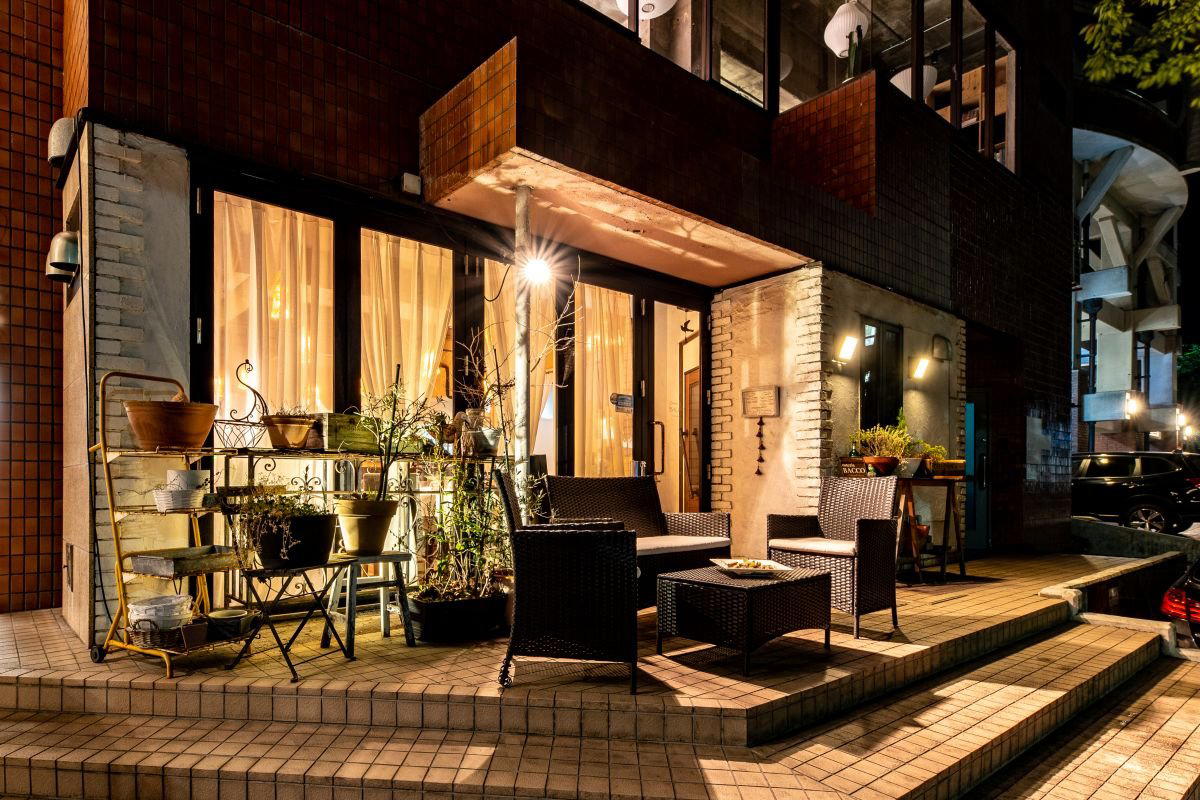
Osteria Bacco occupies an address in Niigata's Chuo Ward that feels deliberately removed from the city's better-known dining circuits. The setting, a house known as Ijinike House on Nishiohatacho, frames an Italian-inflected experience in a neighbourhood where Western-style dining carries a particular historical weight. It sits in a category of Niigata restaurants that rewards knowing where to look.

Pearl is the En Primeur Club membership app, where members save venues, book tables and use the concierge.
A Different Register of Western Dining in Niigata
Niigata's relationship with Western cuisine is older and more considered than most visitors expect. The city's port history brought European influence earlier than many inland prefectures, and that legacy runs through a dining culture that has long absorbed foreign techniques without treating them as novelties. Osteria Bacco, addressed at 591-1 Nishiohatacho in Chuo Ward, sits inside a building called Ijinike House, a name that translates loosely to "foreigners' pond house", and the address alone signals something about the layered cultural context this restaurant operates within.
Italian osteria as a format sits between the casual trattoria and the more formal ristorante. In Japan, the category has evolved into something distinct: a hybrid where seasonal Japanese produce meets Italian structural logic, and where the warmth of the osteria tradition softens what might otherwise read as fine dining. Niigata is particularly well-suited to this format. The prefecture produces some of Japan's most respected rice, seafood from the Sea of Japan, and a winter vegetable culture that Italian cooking, with its own strong traditions around legumes and roots, absorbs naturally.
The Ijinike House Setting
Approach Osteria Bacco and the building itself does the first work of orientation. Ijinike House carries the weight of its name, a structure with historical associations to the foreign presence in Niigata, now repurposed as a dining address. In a city where the contrast between older merchant-era architecture and contemporary development is felt particularly sharply in Chuo Ward, a venue inside a named historic house communicates something specific about ambience before a single dish arrives.
The osteria format traditionally prizes the sense of being received rather than served, the idea that the room has a domestic logic rather than a service-industry one. Inside a building with the character of Ijinike House, that framing has a physical basis. The atmosphere that osteria culture reaches for through décor and informality is here partly delivered by the structure itself. In the wider context of Japanese Italian dining, where the genre spans everything from fast-casual pasta chains to highly technical tasting-menu restaurants, a setting with genuine architectural character occupies a narrower, more considered tier.
Where Bacco Sits in Niigata's Western Dining Picture
Niigata's Western-style dining has developed along two parallel tracks. One runs through French technique, represented by places like Restaurant UOZEN, which applies classical French rigour to local Niigata ingredients. The other, smaller track, is Italian-inflected, where the cuisine's emphasis on ingredient quality and regional specificity maps well onto a prefecture that takes both seriously. Osteria Bacco operates on that second track.
For broader context across Japan's Italian dining scene, the format has produced some of the country's most closely watched restaurants. Venues like HAJIME in Osaka represent the technical extreme of Japanese European cooking, while the osteria tier, by definition less formal, concerns itself with a different kind of precision: the quality of ingredients, the restraint of preparation, and the hospitality of the room. In regional cities like Niigata, that restraint is often more apparent than in the capital, partly because the local produce justifies it.
Within Niigata specifically, the dining scene rewards cross-category comparison. The raw fish tradition is deep enough to have produced dedicated specialists like Kyodaizushi, and the ramen culture is serious enough to have spawned recognisable names like Menya Agosuke. Against that backdrop, an Italian osteria in a historic building is a deliberate counterpoint, a choice for a slower, more wine-centred evening in a city better known for its Japanese culinary heritage. Venues like Mûrir and KOKAJIYA map adjacent territory in Niigata's more refined dining tier.
For visitors building an itinerary across Japan's regional dining, comparison points emerge naturally. akordu in Nara and Goh in Fukuoka represent the kind of European-meets-Japanese precision that has taken hold in mid-sized Japanese cities, each placing local ingredients at the centre of a European structural framework. Gion Sasaki in Kyoto and Harutaka in Tokyo show how the approach plays at the highest formal register. Osteria Bacco operates several degrees warmer and less formal than those rooms, which is precisely the point of the osteria category.
Seasonal Timing and What It Means Here
Niigata's seasonal rhythm is pronounced in ways that matter to an Italian kitchen. Winter brings the Sea of Japan's cold-water seafood to peak condition, snow crab, yellowtail, and various shellfish that respond well to the restrained treatments an osteria format favours. Spring and summer open up the prefecture's vegetable culture. Autumn delivers mushrooms and the rice harvest that defines Niigata's national food identity. An osteria that takes its seasonal obligations seriously has considerable raw material to work with across the calendar, though winter and early spring represent the period when Niigata's marine produce is at its most compelling. Visitors planning around the dining rather than other activities should factor that in.
Getting to Nishiohatacho from central Niigata is manageable by taxi or on foot depending on your starting point in Chuo Ward, though the specific character of the Ijinike House address means confirming directions in advance is practical. For those building a wider Niigata dining itinerary, the full Niigata restaurants guide provides the broader map.
Beyond Niigata, regional Japanese dining worth benchmarking against includes a kaiseki address in Nanao, a Sapporo counterpart, a Takashima venue, and a restaurant in nearby Nishikawa Machi. For a global calibration point on the Italian side of fine dining, Le Bernardin in New York and Atomix in New York illustrate how the European-influenced tasting-menu format performs at its most precise international register. Birdland in Sakai rounds out the comparative picture for Japanese restaurants working within a European culinary frame.
Planning a Visit
Osteria Bacco's address at 591-1 Nishiohatacho places it in Chuo Ward, Niigata's central administrative district, within a building that carries the Ijinike House name. Specific booking information, hours, and pricing are best confirmed directly with the venue before visiting, as details for smaller osteria-format restaurants in regional Japan can change seasonally. The format and setting suggest this is not a walk-in-optimised address; arriving with a reservation is the sensible approach for any formal dinner here.
Frequently asked questions
How do I find オステリア バッコ?
オステリア バッコ is located at Japan, 〒951-8104 Niigata, Chuo Ward, Nishiohatacho, 591-1 異人池ハウス, Niigata.
How does オステリア バッコ fit into Niigata's Western dining scene compared to French-leaning restaurants?
Niigata's Western-style dining has developed along two distinct tracks: French technique on one side and Italian osteria informality on the other. Osteria Bacco, located in the Ijinike House in Chuo Ward, sits firmly in the Italian register, a more casual, produce-driven approach than the white-tablecloth French establishments the city also supports. For diners choosing between the two traditions, Bacco represents the neighbourhood-scale, convivial end of Niigata's European dining spectrum.
What's the best thing to order at オステリア バッコ?
Without a current published menu, specific dish recommendations require checking directly with the restaurant. What the Chuo Ward setting and osteria format do suggest is a kitchen oriented toward seasonal produce and Sea of Japan seafood, Niigata's cold-water catch peaks through winter, which tends to shape what Italian-style kitchens here lean into hardest. Visit in season and ask the staff what arrived that week.
Do they take walk-ins at オステリア バッコ?
Osteria Bacco is located inside Ijinike House at 591-1 Nishiohatacho, a building with its own identity and draw, which can concentrate demand. Calling ahead or arriving early in a dinner service is the safer approach until a reservation contact is confirmed publicly.
What's the defining dish or idea at オステリア バッコ?
The osteria format itself is the clearest signal: this is Italian dining calibrated to neighbourhood scale rather than formal occasion, positioned within a Western-dining scene that Niigata has been building since its port-city years brought European influence into the city's food culture. Ijinike House anchors that history physically. The kitchen operates inside that frame rather than against it.
Can オステリア バッコ handle vegetarian requests?
Italian osteria kitchens typically carry pasta and vegetable courses that translate well to meat-free requests, but in a Niigata context where seasonal seafood drives much of the sourcing, it is worth raising dietary requirements at the time of booking. Check the venue's official channels for the latest details.
Comparable Spots
Comparable venues nearby, for context on price, style, and recognition.
| Venue | Cuisine | Price | Awards | Notes |
|---|---|---|---|---|
| オステリア バッコThis venue (the venue you are viewing) | Seasonal Italian Osteria | $50–100 | Tabelog 100 #66 | Not listed |
| Kappou Choukichi | Seasonal Wild Duck Kappo (Japanese) | $100–150 | Tabelog 100 #10 | Nishikan-ku |
| 兄弟寿し | Niigata-style Omakase Sushi | Not listed | Tabelog Silver #66 | 古町 |
| 割烹渡辺 | Edomae Sushi | $100–150 | Tabelog 100 #27 | Chuo-ku |
| Shukouya Ikkou | Niigata izakaya & sake bar | $50–100 | Tabelog 100 #86 | Chuo Ward, Niigata City |
| Yakiniku Hatchi | Japanese Yakiniku BBQ | $30–50 | Tabelog 100 #70 | Furumachi |
Recognition history
Dated appearances from independent guides and award organizations, with the underlying list record or original source where available.
Tabelog 100 #66 · No. 66
Tabelog · Tabelog 100 - Italian - EAST - 2025
Continue exploring
More in Niigata
Restaurants in Niigata
All restaurants in Niigata →
Hotels in Niigata
All hotels in Niigata →
Details
- Rustic
- Cozy
- Intimate
- Elegant
- Date Night
- Special Occasion
- Historic Building
- Sake Program
- Local Sourcing
- A La Carte
- Set Menu
Current opening hours
- Monday
- 12–1:30 PM, 6–9 PM
- Tuesday
- Closed
- Wednesday
- Closed
- Thursday
- 12–1:30 PM, 6–9 PM
- Friday
- 12–1:30 PM, 6–9 PM
- Saturday
- 12–1:30 PM, 6–9 PM
- Sunday
- 12–1:30 PM, 6–9 PM
Hours can change for holidays and private events. Hours as of .
Cozy and rustic atmosphere in a historic house with intimate seating.