
We're Smart World 3 Radishes
Our verdict
Set among rice paddies on the Itoigawa coast where the Japan Alps meet the Sea of Japan, Mûrir places vegetables and local land-and-sea produce at the centre of its menu. Chef Watanabe Mitsunori's approach is product-led and deliberately spare, letting the surrounding terrain do the argumentative work. For travellers willing to leave Niigata city, the drive alone reframes expectations of what regional Japanese cooking can be.

Pearl is the En Primeur Club membership app — saves, bookings, and concierge access live there. Same editors, same standards.
- Address
- 79-1 Higashiumi, Itoigawa, Niigata 941-0021, Japan
- Phone
- +81 80-2679-4399
- Hours
- Mon 6–9:30 PMTue–Wed ClosedThu–Fri 6–9:30 PMSat–Sun 12–2:30 PM, 6–9:30 PM
- Website
- murirniigata.com
- Directions
- Get directions
- Booking
- Book on TableCheck
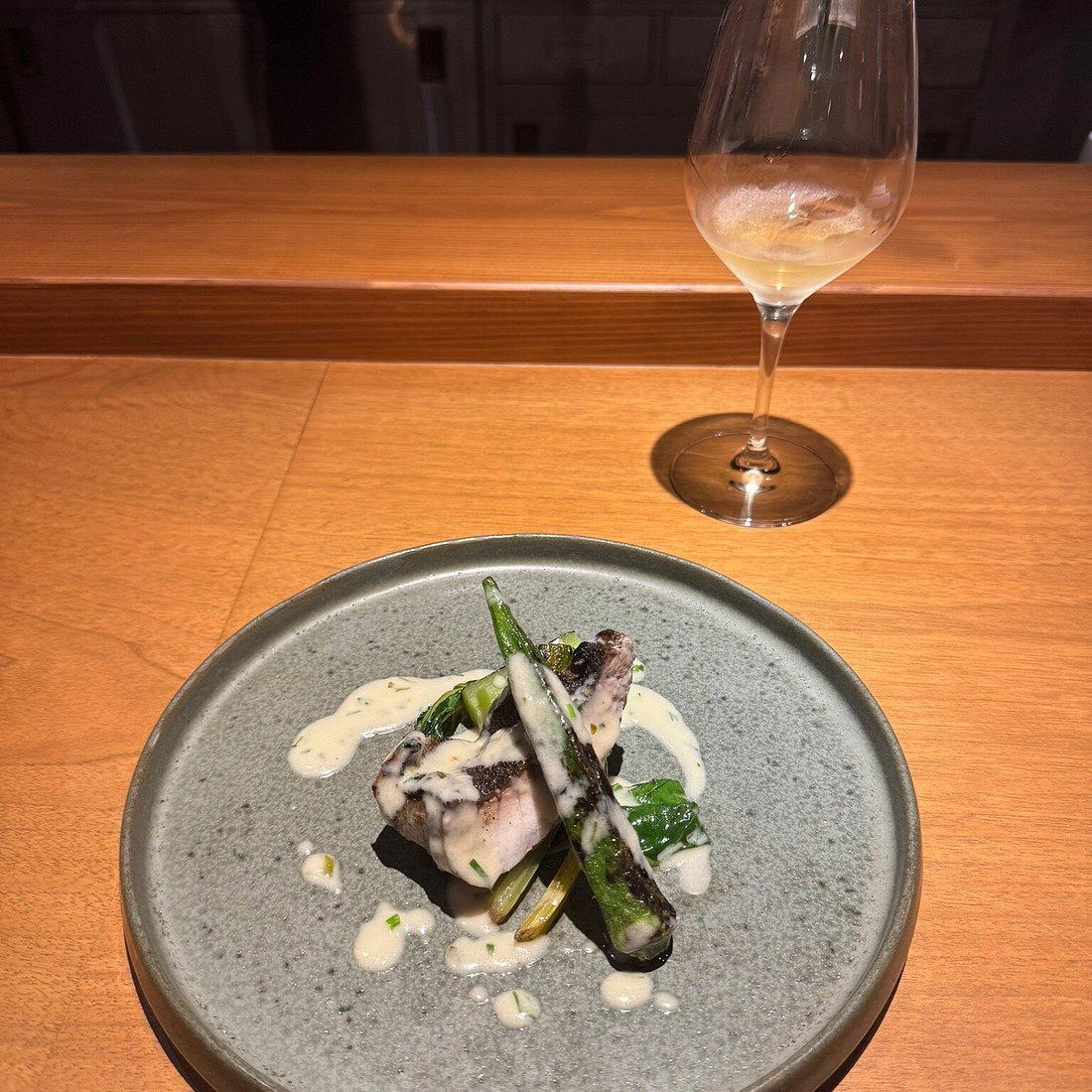
Where the Rice Paddies Meet the Sea of Japan
There is a particular quality of light on the Itoigawa coast in Niigata prefecture, somewhere between the bulk of the Japan Alps behind you and the grey-green expanse of the Sea of Japan in front. The drive out from Niigata city along the coastal highway passes through some of the country's most productive agricultural terrain: paddies that feed a prefecture already synonymous with Japan's finest short-grain rice, punctuated by fishing harbours still running on pre-dawn timetables. Arriving at Mûrir, at 79-1 Higashiumi in Itoigawa, the building sits inside that frame rather than apart from it. The surrounding paddies are not decoration — they are the sourcing context for what arrives on the plate.
This corner of Niigata sits at an unusual geographic intersection. The Japan Alps create a weather barrier that traps moisture and moderates temperature along the coastal strip, producing conditions that suit both mountain vegetables and cold-water seafood. That dual larder is a recurring theme in Niigata's more serious kitchens, but few restaurants are physically positioned to make the argument as directly as Mûrir does. The sea and the cultivated land are visible from the same vantage point, and that proximity is not accidental.
A Product-First Logic in a Region Built for It
Niigata's culinary identity has long been tied to its primary ingredients rather than to a fixed cooking tradition. The prefecture produces rice varieties of national standing, cold-water seafood including snow crab and yellowtail, and mountain vegetables that differ by altitude and season. The question that separates interesting regional kitchens from ordinary ones is what a chef does with that inheritance: whether the cooking gets out of the way of the produce, or uses the produce as raw material for something more architecturally ambitious.
At Mûrir, the orientation is explicit. Chef Watanabe Mitsunori's menu places vegetables in a starring role, which in this region carries more weight than it might elsewhere. Niigata's vegetable culture is specific: edamame strains grown here differ from those cultivated further south; root vegetables from the foothills carry a minerality linked to the volcanic soil profile of the Alps' lower slopes. A product-led approach in this setting is less a philosophical position than a practical acknowledgement that the ingredients are doing something worth noticing. The cooking's restraint serves the sourcing.
This positions Mûrir within a distinct cohort of Japanese restaurants that have moved away from the cuisine-category model — kaiseki, French, sushi, toward a more terrain-responsive format where the menu follows what is growing or being landed rather than adhering to a fixed template. Comparable moves have been made at akordu in Nara, where a European framework is similarly bent toward local Yamato produce, and at Bleston Court Yukawatan in Nagano, where mountain-region sourcing drives a French-influenced menu. The appetite for place-led cooking outside Japan's major cities has grown considerably over the past decade, and restaurants like Mûrir are where that appetite is being taken seriously at the regional level.
The Itoigawa Setting as Culinary Argument
Itoigawa is a small city by Japanese standards, positioned at the northern end of the Fossa Magna, the geological rift that divides the Japanese archipelago. This is jade country, historically significant terrain, and the combination of mineral-rich water sources and coastal microclimate produces growing conditions that are genuinely different from those found in Niigata city's immediate hinterland. Restaurants that source locally within Itoigawa are drawing from a distinct sub-region, not simply from the broader Niigata prefecture supply chain.
That specificity matters when assessing what product-led cooking actually means at Mûrir. The sea aromas and land aromas that characterise the site are not background atmosphere, they describe the range of raw materials the kitchen is working with. A restaurant physically surrounded by paddies and facing the sea, with mountains at its back, is making a sourcing argument by its location alone. The menu, described as pure and simple, appears to support rather than complicate that argument.
For context on how Niigata city's more established dining rooms handle local produce, Sanaburi and Shintaku both work within Japanese culinary traditions that foreground seasonal and regional ingredients. The sushi tradition in the prefecture, represented by venues like Kyodaizushi, takes a different angle on the same cold-water seafood supply. Restaurant UOZEN applies a French lens to the region's larder. Each represents a different theory about what Niigata's ingredients are for. Mûrir's theory, working from Itoigawa rather than the city, is the most geographically committed of these positions.
Seasonal Logic and What Changes
A product-first menu in a location with four pronounced seasons means the table experience in February differs substantially from the one in August. Itoigawa's winters bring cold, clear air off the sea and the particular vegetables that mountain-adjacent cold-climate growing produces, dense, slow-grown roots and brassicas. Spring arrivals from the slopes include mountain vegetables (sansai) that are a Niigata specialty. Summer brings the edamame for which the prefecture is known across Japan. Autumn produces mushrooms and the beginning of the cold-water seafood season. A kitchen that holds to the logic of serving what surrounds it will produce a radically different menu across these four windows, which is part of the argument for multiple visits over a calendar year rather than a single definitive experience.
Those travelling from beyond Niigata's borders who want to map this approach against comparable regional-produce-led restaurants elsewhere in Japan might cross-reference Goh in Fukuoka or Gion Sasaki in Kyoto, both of which engage with strong regional supply chains within distinct culinary frameworks. For a reference point further up the formality scale, Harutaka in Tokyo demonstrates how rigorous sourcing operates at the top of the Japanese restaurant market. Mûrir operates in a different register, accessible terrain rather than capital-city formality, but the underlying commitment to ingredient provenance belongs to the same conversation.
Planning a Visit
Mûrir sits in Itoigawa, which is leading reached by Shinkansen from Niigata city (approximately one hour on the Hokuriku Shinkansen to Itoigawa Station) or by car along Route 8 following the coast. The restaurant's address at 79-1 Higashiumi places it on the coastal side of the city, in agricultural land rather than the town centre, which means arriving by car or taxi is the practical choice for most visitors. Given the absence of published booking details, contacting the restaurant directly or working through a concierge service familiar with the Niigata region is advisable. Those planning a broader trip across Niigata's dining scene should consult our full Niigata restaurants guide, with additional coverage across hotels, bars, wineries, and experiences available through the EP Club platform. Visiting in summer or autumn captures two of the region's most productive growing windows, though the logic of the menu means there is no genuinely off-season here.
For broader international reference on what ingredient-led cooking looks like at its most technically accomplished, Le Bernardin in New York City and HAJIME in Osaka both demonstrate how product discipline operates at the highest formal tier, even if the scale and register differ considerably from what Mûrir represents. Emeril's in New Orleans offers a contrasting model, regional produce filtered through a more maximalist culinary personality. The comparison clarifies what is distinctive about Mûrir's approach: restraint in the service of terroir, in a location that makes the sourcing argument as legibly as anywhere in Japan.
Frequently asked questions
Where exactly is Mûrir?
Mûrir is located at 79-1 Higashiumi, Itoigawa, Niigata 941-0021, Japan, Niigata.
Has Mûrir won any awards?
Mûrir has received recognition including: Mûrir is in the middle of rice paddies overlooking the sea and mountains. The ideal place for Chef Watanabe Mitsunori to unfold sight into a natural chef. The mix of sea and land aromas brings out a special feeling: energy! Whatever the sea….
What's the best thing to order at Mûrir?
Mûrir is built around a product-first philosophy where vegetables take a starring role rather than a supporting one, so the vegetable courses are the clearest expression of what Chef Watanabe Mitsunori is doing. The kitchen draws on sea and land ingredients from the Itoigawa area, which means the answer shifts with the season. Visiting in summer or autumn puts you at the table when the regional produce is at its broadest range.
Do they take walk-ins at Mûrir?
No booking contact or walk-in policy is currently published for Mûrir. Given the restaurant's remote position in the rice paddies outside Itoigawa city and its small-scale format, arriving without a reservation is a significant risk. Reaching out through any available channel well in advance of your visit is advisable, particularly if you are travelling from Niigata city or further afield.
What's the signature at Mûrir?
The defining move at Mûrir is placing vegetables at the centre of the plate in a region better known for its rice and seafood. Chef Watanabe's stated philosophy is pure, simple cuisine with the product as the focal point, which in practice means the menu resists the kind of technique-led complexity common in French-influenced Japanese kitchens. The Itoigawa setting, overlooking the Sea of Japan with the Japan Alps behind, functions as part of that argument: the geography of the place is also the sourcing logic.
Is Mûrir allergy-friendly?
No specific allergy or dietary accommodation policy is documented for Mûrir. Because the menu is product-led and changes with the season, the kitchen's flexibility likely depends on what is available at the time of your visit. Contacting the restaurant directly before booking is the only reliable way to confirm what can be accommodated.
How far is Mûrir from Itoigawa Station, and how do you get there?
Mûrir's address is 79-1 Higashiumi, Itoigawa, placing it on the coastal edge of the city near the rice paddies that front the Sea of Japan. Itoigawa Station is served by the Hokuriku Shinkansen, approximately one hour from Niigata city. The restaurant's position outside the town centre, surrounded by farmland, means a taxi from the station is the practical option rather than walking.
In Context: Similar Options
Comparable venues nearby, for context on price, style, and recognition.
| Venue | Cuisine | Price | Awards | Notes |
|---|---|---|---|---|
| MûrirThis venue — the venue you are viewing | Modern Japanese-French Fusion | Not listed | We're Smart World 3 Radishes | Not listed |
| French Teppan Seikou An | French Teppanyaki / French Steakhouse | $100–150 | Tabelog 100 #48 | Bandai |
| Sushi Yasu | Traditional Edo‑style Sushi | $30–50 | Tabelog 100 #48 | Chuo Ward |
| レストラン イソ | Local Niigata French Fine Dining | $100–150 | Tabelog 100 #95 | Chuo Ward |
| Kappou Choukichi | Seasonal Wild Duck Kappo (Japanese) | $100–150 | Tabelog 100 #10 | Nishikan-ku |
| オステリア バッコ | Seasonal Italian Osteria | $50–100 | Tabelog 100 #66 | Chuo Ward |
Recognition history
Dated appearances from independent guides and award organizations, with the underlying list record or original source where available.
We're Smart World 3 Radishes
We're Smart World
Continue exploring
More in Niigata
Restaurants in Niigata
Browse all →
Hotels in Niigata
Browse all →

Wineries in Niigata
Browse all →
Details
- Elegant
- Intimate
- Modern
- Date Night
- Special Occasion
- Standalone
- Sake Program
- Local Sourcing
Current opening hours
- Monday
- 6–9:30 PM
- Tuesday
- Closed
- Wednesday
- Closed
- Thursday
- 6–9:30 PM
- Friday
- 6–9:30 PM
- Saturday
- 12–2:30 PM, 6–9:30 PM
- Sunday
- 12–2:30 PM, 6–9:30 PM
Hours can change for holidays and private events. Last verified .
Elegant yet understated atmosphere.