Our verdict
日本橋ゆかり has operated in Nihonbashi, one of Tokyo's oldest commercial districts, carrying forward a tradition of Japanese cuisine in a neighbourhood where culinary heritage and financial history sit side by side. The restaurant occupies a position within Tokyo's mid-to-upper tier of traditional Japanese dining, drawing guests who seek craft and continuity over spectacle. Advance booking is advisable, particularly for weekend sittings.

Pearl is the En Primeur Club membership app, where members save venues, book tables and use the concierge.
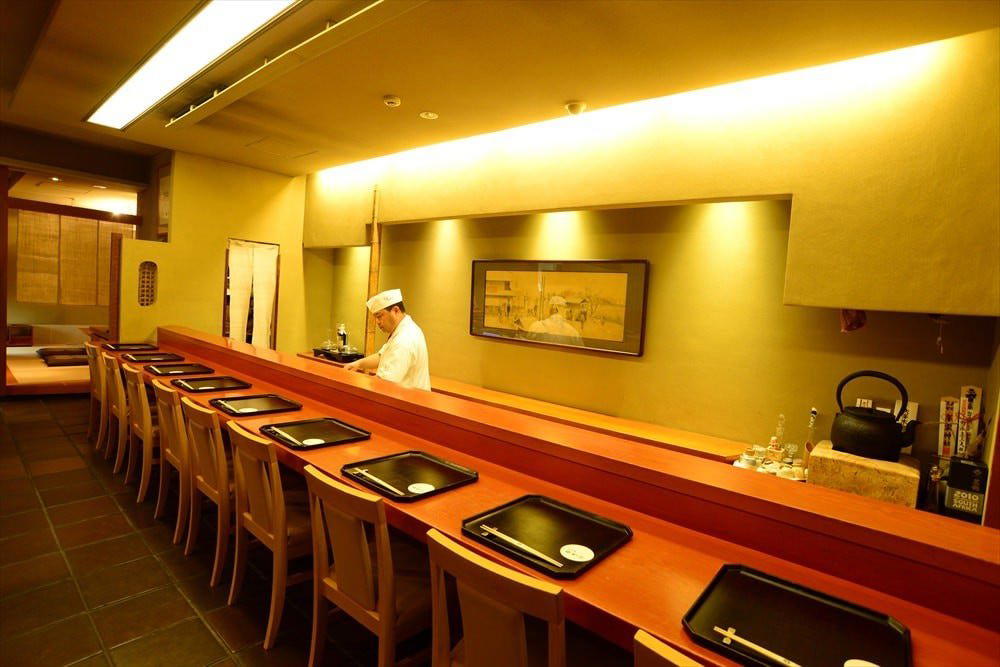
The menu
What to order
- Yukari bento
- Tai kabuto nitsuke
- Yukari wind maguro don
Nihonbashi and the Weight of a Culinary Address
Few Tokyo neighbourhoods carry as much layered history as Nihonbashi. The district, which gave Japan its original kilometre-zero marker for national road measurement in the Edo period, has long been associated with commerce, craft, and a particular kind of disciplined civic pride. It is not Ginza's flash or Shibuya's volume; it is a neighbourhood where longevity is the primary credential, and where restaurants that survive generations do so because the local clientele, old-money merchants, financial district regulars, and institution-loyal families, demand consistency above novelty. 日本橋ゆかり sits inside that tradition, at an address in Chuo City's Nihonbashi quarter that places it among businesses with multi-generational roots in one of Tokyo's most demanding culinary environments.
That context matters when assessing the restaurant's position in the broader Tokyo scene. The capital's premium Japanese dining tier has fragmented considerably over the past two decades. On one side, Michelin-starred kaiseki counters like RyuGin have pushed seasonal tasting formats toward international recognition and price points that rival leading French tables. On the other, neighbourhood restaurants rooted in specific regional Japanese traditions have held their ground by serving a local clientele that values craft without spectacle. 日本橋ゆかり occupies territory closer to the latter category, a restaurant whose authority derives from its address history and its alignment with the culinary values of the district it serves.
Where Indigenous Ingredients Meet Refined Japanese Technique
The intersection of local product and refined method is where traditional Japanese restaurants in districts like Nihonbashi have always operated, even before that framing became fashionable. Japan's culinary infrastructure, its direct relationships between kitchen and producer, its centuries-old vegetable cultivation traditions, its network of regional fish markets feeding into the Toyosu wholesale system, provides a depth of ingredient sourcing that French-technique restaurants in cities like New York actively try to approximate. Venues such as Le Bernardin and Atomix in New York City have built international reputations partly by referencing Japanese ingredient discipline; here in Nihonbashi, that discipline is not a reference point, it is the foundation.
Traditional Japanese cuisine in this register typically draws on seasonal produce sourced through long-standing supplier relationships, fish delivered according to the rhythms of the Japanese fishing calendar, and preparation methods that emphasise restraint in intervention. The skill lies in knowing when not to act: when a dashi needs only time, when a piece of fish needs nothing but temperature and precision. This approach contrasts sharply with the imported-technique frameworks that define much of Tokyo's contemporary French dining tier, restaurants like L'Effervescence and Sézanne, which deploy European classical training against Japanese seasonal produce. At 日本橋ゆかり, the logic runs the other direction: the technique is native, and the ingredients are the story.
Across Japan's broader restaurant geography, this native-technique model produces some of the country's most coherent dining experiences. Gion Sasaki in Kyoto operates within a similar framework, grounding kaiseki tradition in the seasonal logic of the Kamo River basin. Goh in Fukuoka draws on Kyushu's distinct seafood and agricultural identity. In Nara, akordu takes a different position, applying European technique to regional Yamato ingredients, a model closer to what Tokyo's French-Japanese crossover houses practise. 日本橋ゆかり's orientation is more conservative in the leading sense: it is not trying to translate; it is transmitting.
Within Tokyo, the relevant peer comparison for 日本橋ゆかり is not the high-volume sushi counter or the kaiseki tasting room chasing international press. These restaurants, and there are a meaningful number of them in Nihonbashi, Kyobashi, and Kayabacho, compete primarily on consistency, ingredient quality, and the kind of accumulated trust that takes decades to build.
That trust is harder to earn and harder to replicate than a Michelin star. A star can be awarded in a restaurant's second year of operation. A multi-generational customer base in a neighbourhood like Nihonbashi takes something considerably longer to develop, and it tends to make the restaurant more resistant to the shifting fashions that rotate through Tokyo's dining media cycle. The same logic applies to Japanese restaurants in regional settings: 一本木 名川制 in Nanao and 羽後屋 in Nishikawa Machi carry authority through deep local roots that no amount of press coverage can manufacture from scratch.
For visitors arriving from outside Japan, Tokyo's more internationally profiled restaurants, Crony in the innovative French register, or HAJIME in Osaka for a sense of how far the kaiseki-adjacent format has travelled, offer cleaner points of entry with English-language menus and staff accustomed to overseas guests. 日本橋ゆかり is a more specific proposition: a restaurant that rewards guests who arrive with some familiarity with traditional Japanese dining formats and an interest in what a long-standing neighbourhood restaurant in one of Tokyo's oldest commercial districts actually looks and feels like.
Getting There and Planning Your Visit
The restaurant is located at 3 Chome-2-14 Nihonbashi, Chuo City, Tokyo 103-0027. Nihonbashi is well-served by Tokyo Metro, with Nihombashi Station on the Ginza and Tozai lines providing the most direct access; the area is also within walking distance of Tokyo Station's eastern exits, making it easy to combine with arrivals or departures. The district's dense grid of streets is direct to walk once you are in it, and the restaurant's address places it in the commercial core rather than any residential back-street.
For broader context on Tokyo's dining scene across all formats and price tiers, our full Tokyo restaurants guide covers the city's major categories in detail. Those planning multi-city itineraries can also cross-reference regional Japanese dining at venues including 大地の宴 in Sapporo, 湖畔荘 in Takashima, and Birdland in Sakai and Bistro Ange in Toyohashi for contrast across formats and regions.
Quick Reference: 3 Chome-2-14 Nihonbashi, Chuo City, Tokyo 103-0027. Nearest station: Nihombashi (Ginza/Tozai lines). Booking recommended, particularly for weekends and public holidays.
Frequently asked questions
Where do I go for 日本橋ゆかり?
日本橋ゆかり is located at 3 Chome-2-14 Nihonbashi, Chuo City, Tokyo 103-0027, Japan, Tokyo.
What style of Japanese cuisine does 日本橋ゆかり specialise in, and how does it fit within Tokyo's broader dining scene?
日本橋ゆかり operates within the washoku tradition, the category of classical Japanese cuisine that has defined the Nihonbashi district for generations. The restaurant's address in Chuo City places it among Tokyo's older, more institutionally rooted dining quarters, distinct from the high-concept kaiseki rooms targeting international press or the omakase counters of Ginza.
What's the must-try dish at 日本橋ゆかり?
The restaurant's menu is grounded in washoku tradition, the style of cooking that defines Nihonbashi's historic dining culture. Specific signature dishes are best confirmed directly with the restaurant ahead of your visit, as seasonal product drives the menu in this district. Any course anchored to the restaurant's home address in Nihonbashi, Tokyo's original kilometre-zero, is worth taking seriously on its own terms.
Should I book 日本橋ゆかり in advance?
Yes. Restaurants of this standing in Nihonbashi, Chuo City operate on reservation-based dining, and walk-in availability at the 3 Chome-2-14 address is not guaranteed. Booking ahead by at least two to three weeks is advisable, particularly for weekend or evening seatings. check the venue's official channels to confirm current availability and any omakase or course requirements.
Booking and Cost Snapshot
Comparable venues nearby, for context on price, style, and recognition.
| Venue | Cuisine | Price | Awards | Notes |
|---|---|---|---|---|
| 日本橋ゆかりThis venue (the venue you are viewing) | Traditional Kaiseki Kappo | $150–200 | Not listed | Not listed |
| Mon cher ton ton (六本木 モンシェルトントン) | Kobe Beef Teppanyaki | Not listed | Tabelog 100 #69 | Roppongi, Teppanyaki with Kobe Beef |
| 日本料理 明寂 | Modern Minimalist Kaiseki | $300–500 | 3 Michelin Stars · World's 50 Best #33 | Nishi-Azabu, Modern seasonal kaiseki (Japanese fine dining) |
| くろぎ | Tokyo Kappo Kaiseki | $300–500 | Not listed | Hamamatsucho, Tokyo Kappo Kaiseki |
| Sushi Ishijima | Edomae Sushi Omakase | $50–100 | Not listed | Chūō, Edomae Sushi Omakase |
| 月花 MoonFlower Sagaya Ginza, Art by teamLab | Seasonal Japanese Omakase with Saga Beef | $200–300 | Not listed | Chūō, Seasonal Japanese Omakase with Saga Beef |