
Tabelog 100 #88
Our verdict
ナクレ brings contemporary French fine dining to Sendai’s Ichibancho, with formal, quiet service, an extended pace, and a sommelier-led wine list for lunch or dinner.

Pearl is the En Primeur Club membership app, where members save venues, book tables and use the concierge.
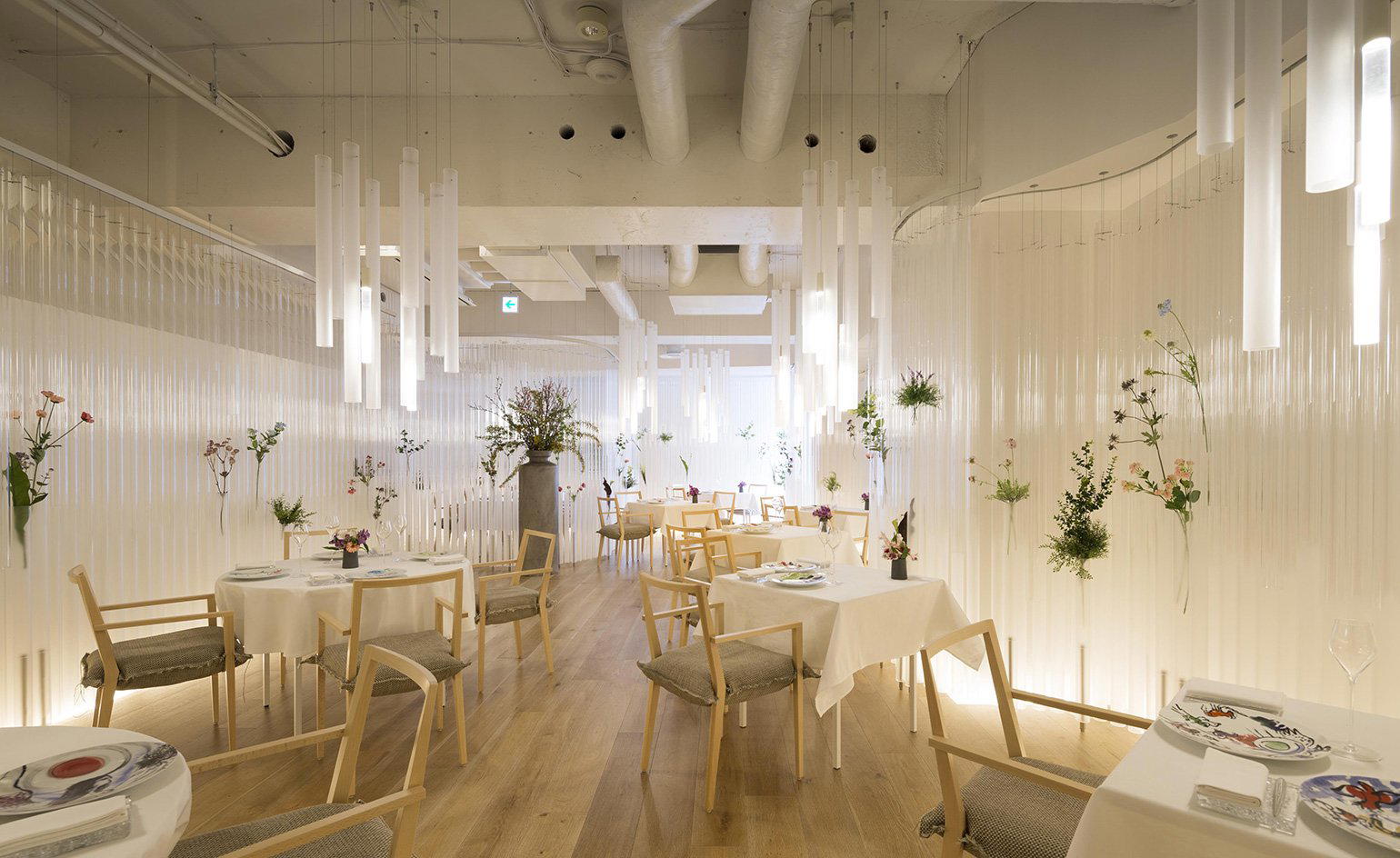
A Fourth-Floor Address in Sendai's Commercial Core
Sendai's Ichibancho district runs through the city's central shopping corridor like a spine, and the Fujisaki First Tower building at 3 Chome-1-1 sits squarely within its commercial gravity. Reaching the fourth floor by lift, the approach to ナクレ carries that particular urban-Japanese quality where a building lobby gives almost no signal of what waits above. This pattern, common across Tohoku's mid-size cities, concentrates restaurant ambition in upper-floor spaces removed from street-level foot traffic, creating rooms that operate on reservation logic rather than walk-in impulse.
Sendai occupies an interesting position in Japan's regional dining conversation. It is large enough to sustain serious restaurants across multiple cuisines and price brackets, yet compact enough that its restaurant community functions more like a self-referential local network than the anonymised churn of Tokyo. The city has a documented pride in its agricultural and coastal produce, from Miyagi's oysters and sasa-kamaboko to Sendai beef, and the better kitchens here tend to treat those materials as primary rather than decorative. For a broader survey of where ナクレ fits within the city's range, the our full Sendai restaurants guide maps the scene across categories and price points.
Menu Architecture as Editorial Statement
In Japan, the structure of a menu is rarely neutral. Whether a kitchen chooses to express itself through kaiseki sequencing, a la carte breadth, or tasting-format omakase tells you as much about the restaurant's competitive positioning as the dishes themselves. At the more formal end of Sendai's dining spectrum, kitchens often default to set-menu logic that reflects the kaiseki tradition, building progression through temperature, texture, and season rather than leaving composition to the diner. At the casual-to-mid tier, a la carte formats with strong local ingredient framing have become increasingly common, allowing guests to move laterally through the menu rather than following a prescribed arc.
Where ナクレ positions itself within this architecture is relevant to understanding the kind of evening it offers. The Ichibancho address and the tower-building context suggest a room oriented toward business dining and occasion meals rather than casual neighbourhood repetition, which in the Sendai market typically correlates with set-menu structures at mid-to-upper price points. What can be said is that the surrounding competitive environment in this part of Sendai rewards restaurants that give clear structure to the meal: diners arriving for a fourth-floor tower restaurant in Ichibancho generally arrive with expectations shaped by occasion rather than spontaneity.
Across Tohoku's more serious kitchens, the trend of the past decade has moved toward shorter menus with deeper material sourcing rather than long a la carte lists that dilute kitchen focus. Peers elsewhere in the region demonstrate this: 一本木 石川 in Nanao and 湖邸庵 in Takashima both reflect a regional Japanese preference for restrained menu scope paired with ingredient precision. In Sendai itself, KUROMORI and Hiro-zushi each occupy defined format identities, while the yakitori specialist Sumiyaki Okagesan operates at the JPY 15,000-19,999 per-person tier with the kind of single-focus menu discipline that signals serious intent. At the other end of the price range, IL PIZZAIOLO shows that Sendai's dining breadth extends to Italian formats with a different structural logic entirely.
The Regional Context That Shapes Any Sendai Kitchen
Tohoku's culinary identity has historically been undercommunicated relative to the region's actual ingredient quality. Miyagi Prefecture in particular produces some of the country's most consistent seafood: Matsushima Bay oysters, Pacific saury from Kesennuma, and the prefecture's branded agricultural lines all give local kitchens material that would command premium positioning in Tokyo or Osaka. The post-2011 recovery period accelerated Sendai's restaurant investment as part of a broader regional recalibration, and the decade since has seen mid-tier and upper-tier dining consolidate around a clearer sense of place-based identity.
Nationally, the reference points for this kind of regional French or European-influenced Japanese cooking at higher price tiers are well-established. HAJIME in Osaka operates at the extreme upper bracket of this tradition. Gion Sasaki in Kyoto and Harutaka in Tokyo define the kaiseki and sushi poles of formal Japanese dining. More experimentally, akordu in Nara demonstrates how European technique applied to Japanese regional produce can generate a distinct positioning. Goh in Fukuoka represents the kind of Japanese-contemporary format that has influenced how regional cities beyond Tokyo frame ambition. Internationally, rooms like Le Bernardin in New York City and Atomix in New York City illustrate the global tier against which serious tasting-menu restaurants measure format discipline and ingredient-led storytelling. And Birdland in Sakai alongside 廣羽屋 in Nishikawa Machi and 北海道乃 in Sapporo reflect the regional Japanese restaurant ambition that Sendai's better kitchens increasingly reference.
Planning a Visit
ナクレ is located at Fujisaki First Tower, 4F, 3 Chome-1-1 Ichibancho, Aoba Ward, Sendai, Miyagi, Japan. The Ichibancho address is walkable from both Sendai Station and the city's underground arcades, making the location practical to reach without a taxi for most central hotel guests. Upper-floor restaurants in this commercial district tend to operate by reservation rather than walk-in, and occasion-oriented rooms in Sendai's mid-to-upper tier typically fill faster on weekends and around local holidays.
Frequently asked questions
What is the atmosphere like at ナクレ?
ナクレ sits on the fourth floor of Fujisaki First Tower at 3 Chome-1-1 Ichibancho, Sendai's central commercial corridor. Upper-floor positioning in this type of Sendai building typically separates a dining room from street-level foot traffic, lending a quieter, more contained setting than ground-floor venues in the same district. The Ichibancho address places it within walking distance of Sendai Station, so the room draws both city residents and arriving travellers.
How do I find ナクレ?
ナクレ is located at Japan, 〒980-0811 Miyagi, Sendai, Aoba Ward, Ichibancho, 3 Chome−1−1 藤崎ファーストタワ 館4F, Sendai.
Is ナクレ suitable for a special occasion dinner in Sendai?
The fourth-floor location within Fujisaki First Tower in Ichibancho places ナクレ in the tier of Sendai restaurants that operate above street level and away from casual pedestrian trade, a format that in this city tends to align with occasion dining rather than everyday meals. Aoba Ward's commercial core is well-connected by public transit, making the address accessible for both local residents marking an event and visitors arriving via Sendai Station.
What's the must-try dish at ナクレ?
What the Sendai and Miyagi Prefecture context does support is that kitchens in this region have access to strong local seafood from the Sanriku coast and agricultural produce from the Tohoku interior. Confirming the current menu directly with the restaurant before visiting is the most reliable approach.
Accolades, Compared
Comparable venues nearby, for context on price, style, and recognition.
| Venue | Cuisine | Price | Awards | Notes |
|---|---|---|---|---|
| ナクレThis venue (the venue you are viewing) | Contemporary French Fine Dining | $150–200 | Tabelog 100 #88 | Not listed |
| Sendai Gyuu to Wafuu Private rooms Suteiki Kojiro | A5 Sendai Beef Teppanyaki in Private Rooms | $100–150 | Tabelog 100 #59 | Kokubuncho / Bansui-dori area, Aoba Ward |
| Koban Zushi | Traditional Edomae Sushi | $100–150 | Tabelog 100 #86 | Ichibancho |
| バーム | Modern Basque Wood-Fire Grilling | $100–150 | Not listed | 木町 |
| Sumibi Yakiniku Gura Sendai asaichi ekimae ten | Japanese Yakiniku BBQ | $30–50 | Tabelog 100 #12 | Aoba-ku |
| LE BAR KAWAGOE | Cocktail & Whisky Bar | $30–50 | Tabelog 100 #20 | Kokubuncho |
Recognition history
Dated appearances from independent guides and award organizations, with the underlying list record or original source where available.
Tabelog 100 #88 · No. 88
Tabelog · Tabelog 100 - French - EAST - 2025
Continue exploring
More in Sendai
Restaurants in Sendai
All restaurants in Sendai →
Hotels in Sendai
Browse all →
Wineries in Sendai
All wineries in Sendai →
Details
- Elegant
- Intimate
- Sophisticated
- Quiet
- Date Night
- Special Occasion
- Celebration
- Open Kitchen
- Private Dining
- Extensive Wine List
- Sommelier Led
- Tasting Menu
- Prix Fixe
- Wine Pairing
- Champagne
- Allergy Accommodating
Current opening hours
- Monday
- 12–3 PM, 6–10 PM
- Tuesday
- 12–3 PM, 6–10 PM
- Wednesday
- Closed
- Thursday
- 12–3 PM, 6–10 PM
- Friday
- 12–3 PM, 6–10 PM
- Saturday
- 12–3 PM, 6–10 PM
- Sunday
- 12–3 PM, 6–10 PM
Hours can change for holidays and private events. Hours as of .
Calm and refined atmosphere in the heart of Sendai, with formal yet inviting service and artistic food presentation that creates a sophisticated dining experience.