
Tabelog Bronze #212
Our verdict
A ten-seat counter restaurant in Sendai's Taihaku Ward, KUROMORI has earned Tabelog Bronze Awards in 2024, 2025, and 2026, alongside three consecutive selections for the Tabelog Chinese EAST Top 100. The kitchen works a course format rooted in Chinese cuisine with Miyagi ingredients, operating Tuesday through Saturday with dinner courses starting at 18:45 and Friday and Saturday lunch from 12:00.

Pearl is the En Primeur Club membership app, where members save venues, book tables and use the concierge.
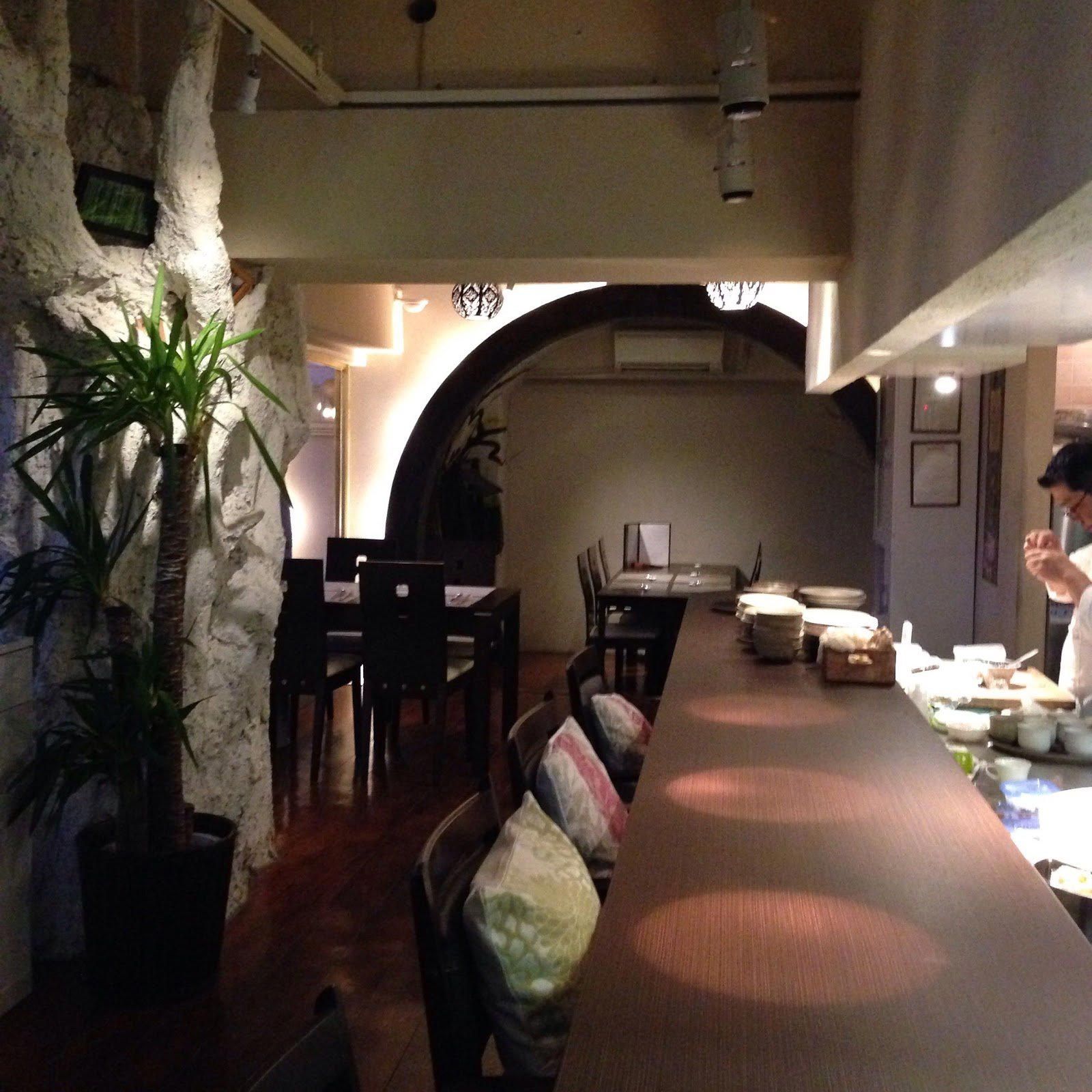
The address alone signals intent. Mukaiyama in Taihaku Ward sits south of central Sendai, removed from the cluster of izakayas and ramen counters that crowd the city's station precincts. Arriving here, the setting reads less like a restaurant district and more like a residential neighbourhood that happens to contain something serious, a house restaurant, in the Tabelog classification, with three parking spaces reserved in order of booking. The physical remove is not incidental. Counter restaurants of this type often choose distance deliberately, relying on reputation rather than foot traffic to fill ten seats.
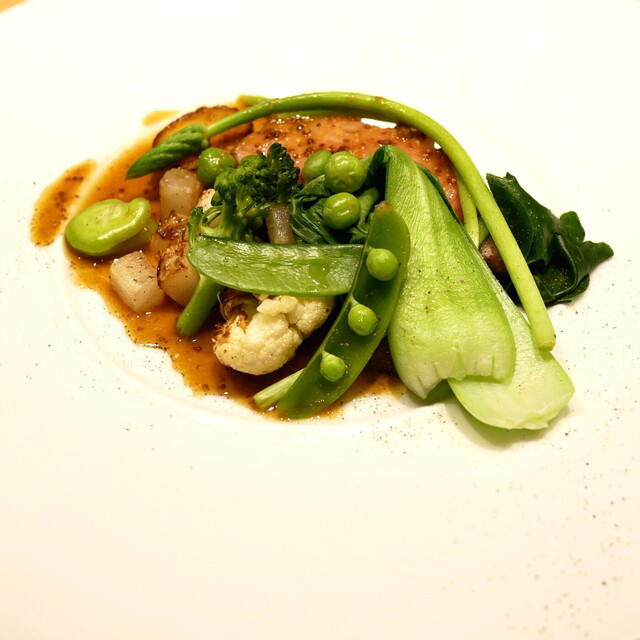
Those ten seats are all counter seats, arranged in a format that has become the defining structure of Japan's most considered small restaurants. The counter positions the kitchen as theatre and the chef as host, collapsing the distance between preparation and dining in a way that larger rooms cannot replicate. At this scale, the course is not simply a sequence of dishes, it is a sustained conversation between what Miyagi's land and sea produce and the culinary tradition the kitchen draws on.
Chinese Cuisine in a Japanese Regional Context
Japan's relationship with Chinese cooking is long and adaptive. Chinese culinary influence arrived on the archipelago through trade ports, Nagasaki, Yokohama, Kobe, and over centuries, Japan developed its own interpretations: ramen, gyoza, and the elaborately regional Chinese restaurant cultures of Yokohama's Chinatown or Osaka's Shinchi. What emerged from those ports was neither purely Chinese nor straightforwardly Japanese, but a hybrid tradition that Japanese diners have come to regard as a culinary category of its own. See, for context, how a venue like 1000 in Yokohama operates within that port-city lineage.
Sendai sits outside that Chinatown tradition. It is a regional capital, the largest city in Tohoku, with a food culture built primarily around its own exceptional seafood and agricultural produce: Pacific oysters, Sendai miso, Miyagi wagyu, sea urchin from the Sanriku coast. A Chinese course restaurant in this context does something different from its urban counterparts. It asks what Chinese technique can do with ingredients that were never part of the original culinary vocabulary, not as cultural appropriation but as the same logic of adaptation that produced Cantonese cooking in diaspora cities worldwide.
KUROMORI's Tabelog description frames it precisely this way: Chinese cuisine that can only be found in Miyagi. That framing is meaningful. It positions the restaurant not as a satellite of a metropolitan Chinese dining scene but as a regional proposition, one whose identity is grounded in place as much as in technique. This is the same editorial logic that distinguishes ambitious regional cooking across Japan, whether in kaiseki at Gion Sasaki in Kyoto, French-influenced work at akordu in Nara, or the Fukuoka-rooted approach at Goh in Fukuoka.
A Track Record That Places It in a Competitive Tier
Japan's restaurant award ecosystem rewards consistency. A single Tabelog Bronze is notable; three consecutive Bronze Awards, 2024, 2025, and 2026, alongside three separate selections for the Tabelog Chinese EAST Top 100 (2021, 2023, 2024) represents a sustained position inside a peer group that Tabelog's algorithm and user base have validated repeatedly. The restaurant holds a Tabelog score of 4.15, which places it within the upper range of the platform's bronze tier.
For context: Tabelog's scoring scale is notoriously compressed at the leading end. A score above 4.0 typically signals a restaurant that has accumulated hundreds of substantive reviews trending positive. The platform's regional Top 100 lists are further filtered by cuisine category, meaning that KUROMORI's Chinese EAST Top 100 selections reflect competitive ranking within a specific culinary subset across eastern Japan, not simply a broad popularity metric. That regional specificity matters when assessing where this restaurant sits relative to its actual competitive set, which runs from small Chinese counter restaurants in Sendai to the broader field of award-recognised Chinese cooking across the Tohoku and Kanto regions.
The restaurant opened in November 2019, which means its award track record began accumulating almost immediately after launch and has held through a period that included significant disruption to Japan's hospitality sector. Continuity of recognition across that period implies operational stability and a consistent kitchen output rather than an early burst of novelty attention.
Comparable restaurants operating in the course-menu format at equivalent or higher price tiers, HAJIME in Osaka, Harutaka in Tokyo, sit in major urban markets with the full infrastructure of international food media attention. KUROMORI's recognition has been built almost entirely through Japanese platform data and regional dining culture, which in some ways makes the accumulation more durable: it reflects repeat local engagement rather than tourism-driven spikes.
Format, Price, and What to Expect
The course structure runs at dinner from 18:45, Tuesday through Saturday. Friday and Saturday add a lunch seating from 12:00. The kitchen is closed on Mondays, Sundays, and public holidays. Tabelog's listed budget sits at JPY 15,000 to 19,999 for dinner and JPY 10,000 to 14,999 for lunch, though review-based spending data suggests actual dinner spend may run higher for some diners. At this price point, KUROMORI occupies a clear tier: above Sendai's everyday Chinese restaurant market, below the multi-course kaiseki or omakase price ceiling common to the highest-ranked Tokyo and Osaka counters.
Payment accepts major credit cards including VISA, Mastercard, JCB, American Express, and Diners Club. Electronic money and QR code payments are not accepted, which is worth noting for visitors who rely on IC card or PayPay infrastructure. There is no private dining room, but private use of the full venue is available for groups of up to 20 people. Parking for three cars is available in order of reservation.
For diners travelling to Sendai specifically to eat here, the logistical picture is direct. The Mukaiyama address is accessible from central Sendai by city bus (Mukaiyama 2-chome stop, approximately three minutes walk) or from Atago Bashi. Planning an overnight stay or a broader Sendai trip is worth doing: the city's dining range has grown in recent years, and combining a counter dinner at KUROMORI with a meal at a place like Sumiyaki Okagesan for grilled chicken, or IL PIZZAIOLO for a counterpoint in Italian, makes for a visit with genuine breadth.
Sendai's broader hospitality picture, hotels, bars, and beyond, is covered in our Sendai hotels guide, Sendai bars guide, Sendai wineries guide, and Sendai experiences guide, alongside the full Sendai restaurants guide.
For those building a broader Japan itinerary around counter dining, the comparison set extends well beyond Tohoku: 6 in Okinawa, Abon in Ashiya, and affetto akita in Akita each represent the same logic of serious cooking operating at regional rather than metropolitan scale. Internationally, the course-menu counter model finds its most discussed parallels at restaurants like Le Bernardin in New York City and Atomix in New York City, though the cultural and price context differs sharply from a ten-seat Chinese counter in Sendai's Taihaku Ward.
Planning Notes
KUROMORI is non-smoking throughout. Children in third grade of elementary school or older are welcome when they can participate in the course under the same conditions as adults, though some events and private bookings carry separate conditions. The location is classified as offering a beautiful view and night view, consistent with its hillside residential setting in Mukaiyama.
Frequently asked questions
Is KUROMORI suitable for children?
Children in third grade of elementary school or older are welcome, provided they can sit through and participate in the counter course under the same conditions as adults. Younger children and infants are not accommodated, and the policy excludes certain events and private bookings. Given the 10-seat counter format and course-only structure, this is a considered environment rather than a casual family outing.
How would you describe the vibe at KUROMORI?
KUROMORI operates as a house restaurant in a residential part of Taihaku-ku, away from central Sendai's dining corridors. The space is a 10-seat counter with no private rooms, which means the room is intimate and the pace is set by the course rather than the diner. Tabelog lists it for its night view and as a location with a beautiful view, suggesting the setting adds something beyond the plate.
Has KUROMORI won any awards?
KUROMORI has received recognition including:
What do people recommend at KUROMORI?
What Tabelog reviewers have consistently rewarded is the use of Miyagi local ingredients within a Chinese framework, the restaurant earned Tabelog Bronze consecutively in 2024, 2025, and 2026, and has been selected for the Tabelog Chinese EAST Top 100 in 2021, 2023, and 2024. The course itself, rather than any single item, is the focus.
What are the opening hours for KUROMORI?
Hours at KUROMORI: ■Business hours[Fri & Sat]Course starts at 12:00[Tue - Sat]Course starts at 18:45■Closed onMondays, Sundays, and Public Holidays.
Budget Reality Check
Comparable venues nearby, for context on price, style, and recognition.
| Venue | Cuisine | Price | Awards | Notes |
|---|---|---|---|---|
| KUROMORIThis venue (the venue you are viewing) | Fine Dining Chinese | $150–200 | Tabelog Bronze #212 | Not listed |
| Sushi Enami | High-end Omakase Sushi Counter | $150–200 | Tabelog 100 #95 | Kokubuncho, Aoba-ku, High-end Omakase Sushi Counter |
| 松石 | Modern Chinese with Miyagi Ingredients | $50–100 | Tabelog Bronze #263 | Sendai, Traditional Japanese Kaiseki |
| Matsuzakaya | Premium Teppanyaki with Matsusaka Beef | $50–100 | Not listed | Kokubuncho, Aoba-ku, Premium Teppanyaki with Matsusaka Beef |
| Wabisuke | Traditional Sendai Izakaya with Seri Nabe | $30–50 | Tabelog 100 #100 | Aoba Ward, Traditional Sendai Izakaya with Seri Nabe |
| BAR arcenciel | Classic Japanese cocktail bar | $30–50 | Tabelog 100 #61 | Kokubuncho / Aoba-ku, Classic Japanese cocktail bar |
Recognition history
Dated appearances from independent guides and award organizations, with the underlying list record or original source where available.
Tabelog Bronze #212
Tabelog
Full recognition history (2 entries)
Tabelog Bronze
Tabelog
Continue exploring
More in Sendai
Restaurants in Sendai
All restaurants in Sendai →
Hotels in Sendai
Browse all →

Wineries in Sendai
All wineries in Sendai →
Details
- Elegant
- Sophisticated
- Intimate
- Special Occasion
- Date Night
- Business Dinner
- Chefs Counter
- Sake Program
- Local Sourcing
- Sustainable Seafood
- Tasting Menu
Stylish and relaxing space with excellent ambiance as noted in reviews.