Our verdict
In Namba's basement dining corridor, Wagyu Sukiyaki Kyoto Ryokuzan Namba Branch 2 focuses on a single, demanding tradition: sukiyaki built around Kyoto-sourced wagyu. The format is unhurried, the beef the organizing principle of the meal. For anyone planning around Osaka's premium beef category, this Chuo Ward address requires advance thought on timing and availability.

Pearl is the En Primeur Club membership app — saves, bookings, and concierge access live there. Same editors, same standards.
- Address
- Japan, 〒542-0076 Osaka, Chuo Ward, Namba, 3 Chome−8−22 なんば三丁目Hビル B1階
- Phone
- +81666848502
- Hours
- Daily 11:30 AM–11 PM
- Website
- site.locaop.jp
- Directions
- Get directions
- Booking
- Book on the venue's website
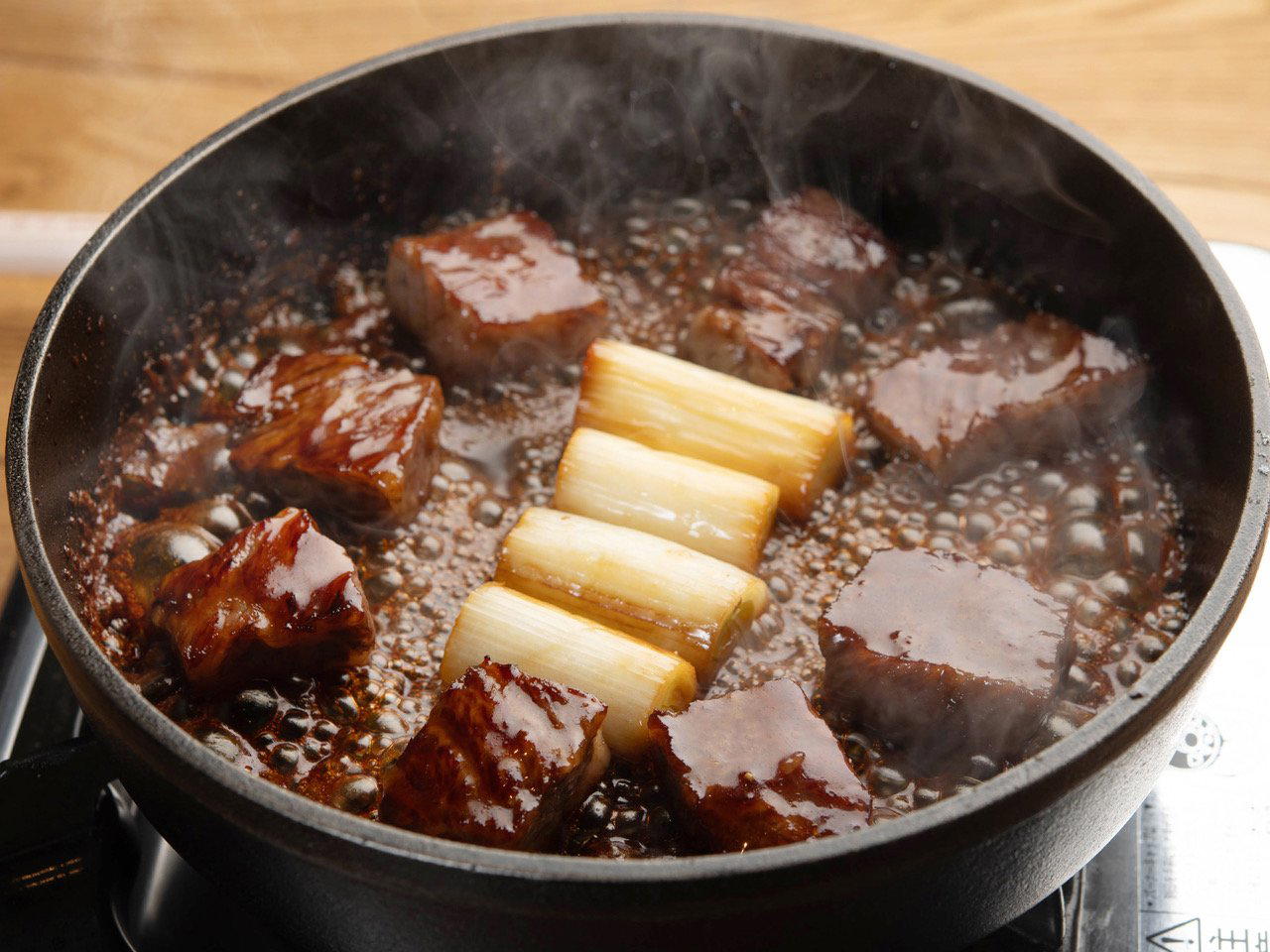
Basement Beef in Namba: The Sukiyaki Tradition and Where This Address Fits
Namba's dining floor plan runs in layers. Street-level covers the tourist circuit; one floor down, things get more specific. The B1 address at 3 Chome-8-22 Namba, Chuo Ward places 和牛すき焼き 京都力山 難波2号店 inside that lower tier, where Osaka's more category-committed restaurants tend to operate. The building is the kind of venue-within-a-venue arrangement common to dense urban dining districts across Japan, where a single structure might house four or five distinct culinary formats across its floors. Descending to this particular basement is a deliberate act, which is exactly the point: you're not stumbling in.
Sukiyaki as a format has a longer and more contentious history than its current comfort-food reputation suggests. It emerged during the Meiji era as Japan began integrating beef into a diet that had largely avoided it for centuries, and the hot pot format, with its mix of soy, mirin, and sugar, was partly a way to make the flavour of beef legible to a population encountering it seriously for the first time. Today, the tradition splits broadly into two regional schools. Tokyo-style sukiyaki tends toward a pre-mixed warishita sauce added to the pan at the start. Kansai-style, the tradition operative in Osaka and Kyoto, seasons directly into the pan, layering sugar and soy without premixing. The difference is subtle in description and significant in result. This restaurant's Kyoto lineage is named in the brand itself, placing it squarely in the Kansai school.
The Wagyu Premise: What Kyoto-Sourced Beef Means in Practice
Wagyu sourcing is increasingly the point of differentiation in Japan's premium beef dining category, and Kyoto-sourced cattle carry specific regional characteristics worth understanding before booking. Kyoto beef, sometimes categorized under Tajima-gyu bloodlines raised under Kyoto Prefecture protocols, tends toward finer marbling patterns compared to the aggressive fat distribution associated with some Kobe or Matsusaka cattle. That matters considerably in sukiyaki, where the beef spends time in a hot, sweet liquid that amplifies fat content. A cut with finer marbling cooks through the sauce differently than heavily marbled alternatives, and the eating pace of sukiyaki, slice by slice, allows the beef's character to read clearly across the course of a meal.
The restaurant's name announces the ingredient before anything else, which is the clearest possible signal about where the operation's priorities sit. In Osaka's broader beef dining category, which runs from yakiniku chains in Dotonbori to premium kaiseki contexts incorporating A5 wagyu as a single course, a restaurant that structures its entire format around sukiyaki is making a narrower and more committed argument. For visitors mapping Osaka's protein-forward dining tier alongside destinations like Aka to Shiro or the French-technique precision of Calendrier, this address represents a different register entirely: ingredient-led, format-specific, and Japanese in its organizing logic.
Planning Around the Address: What the Booking Picture Looks Like
The editorial angle is necessarily practical, because the information available about it points toward a planning-dependent experience rather than a drop-in one. The restaurant operates as a branch venue, identified explicitly as 難波2号店 (Namba Branch 2), which indicates an established operation with enough demand to justify a second Namba location. Multi-location expansion in Japan's specialty dining sector generally follows proven demand rather than aggressive growth strategy; a second branch implies the first location was at capacity consistently enough to make expansion rational. That, combined with the sukiyaki format's inherent pace, suggests a dining room that fills and turns on its own rhythm rather than accommodating spontaneous arrivals efficiently.
Practically, visitors to this part of Osaka should approach the booking question the same way they would approach any basement-level specialty restaurant in the Namba corridor: assume some form of advance arrangement is preferable, particularly on weekend evenings when Chuo Ward foot traffic in the Dotonbori and Namba walking zones peaks. The address sits within walking distance of the Namba station cluster, which feeds from both the Midosuji subway line and Kintetsu rail, making access direct from most of central Osaka. Transit is the logical approach; the Namba area's parking options are limited and expensive relative to the subway's frequency and reach.
For visitors structuring a multi-day Osaka itinerary that includes higher-end Japanese dining, the sukiyaki format here pairs logically in sequence with kaiseki-style precision elsewhere in the city. Osaka's kaiseki tier, represented by restaurants like Ajikitcho Bunbuan and Ajihei Sonezaki, operates at a different formal register than a sukiyaki specialist, making them complementary rather than redundant across a stay. Those pursuing the broader Kansai dining arc might also extend to Gion Sasaki in Kyoto, where the kaiseki tradition operates in its most formalized regional context. Across the rest of Japan, the comparison set for format-committed specialty beef dining includes operators like the multi-Michelin-starred HAJIME in Osaka at one end of the formality spectrum and tightly focused protein specialists in other cities at the other.
Positioning in Osaka's Chuo Ward Dining Grid
Chuo Ward contains Osaka's most commercially active dining density, and within it, Namba functions as something close to the city's primary tourist-facing food corridor. That creates a specific challenge for specialty restaurants operating in the area: the neighbourhood's foot traffic skews toward broad accessibility, which makes category-committed basement restaurants like this one less visible to casual visitors and more legible to those who arrive knowing what they're after. That self-selection mechanism operates in the venue's favour, filtering the dining room toward guests who have deliberately sought out sukiyaki rather than those evaluating options in the moment.
The Kansai region's beef dining culture is old enough and distinct enough to sustain multiple specialist formats across the corridor from Osaka through to Kyoto and Nara. Visitors who want to understand the full range would do well to cross-reference destinations like akordu in Nara for a European-inflected contrast, or look to the wagyu-forward programming increasingly present at specialist addresses in Fukuoka, such as Goh in Fukuoka. Further afield, the technical precision that governs premium Japanese beef cuts in New York contexts, visible in places like Atomix in New York City, shows how far the ingredient's reputation travels when detached from its traditional formats. The sukiyaki specialist in Namba operates in the opposite direction: format-locked, ingredient-centred, and specifically Kansai in its reference points.
For the full scope of Osaka's dining options across registers and categories, the full Osaka Shi restaurants guide maps the city's offering from street-level to multi-course. Within the city's premium tier, additional points of reference include the French-Japanese precision of Az.
Frequently asked questions
Where do I go for 和牛すき焼き 京都力山 難波2号店?
和牛すき焼き 京都力山 難波2号店 is located at Japan, 〒542-0076 Osaka, Chuo Ward, Namba, 3 Chome−8−22 なんば三丁目Hビル B1階, Osaka Shi.
Where exactly is 和牛すき焼き 京都力山 難波2号店 located within Namba, and is it easy to find?
The restaurant occupies the basement floor (B1) of なんば三丁目Hビル at 3 Chome-8-22, Namba, Chuo Ward, Osaka. Basement entries on this block can be easy to miss at street level, so looking for the building name rather than a ground-floor shopfront is the practical approach. The address places it within Namba's densest dining grid, meaning surrounding foot traffic is high but the entrance itself is low-profile.
What dish is 和牛すき焼き 京都力山 難波2号店 famous for?
The venue's name states its focus directly: wagyu sukiyaki using Kyoto-sourced beef. Sukiyaki is a Japanese hot-pot preparation where thinly sliced beef is simmered in a shallow iron pan with soy, mirin, and sugar, then dipped in raw egg. The Kyoto provenance of the cattle is the differentiator here, placing this address in a sourcing-specific category within Namba's competitive beef dining scene.
Do they take walk-ins at 和牛すき焼き 京都力山 難波2号店?
The venue sits at a B1 address in a named building at 3 Chome-8-22, Namba, Chuo Ward — a format and location that typically runs to capacity on weekends and public holidays. Arriving without a booking on a busy Namba evening carries real risk of a wait or a full house.
How It Stacks Up
Comparable venues nearby, for context on price, style, and recognition.
| Venue | Cuisine | Price | Awards | Notes |
|---|---|---|---|---|
| 和牛すき焼き 京都力山 難波2号店This venue — the venue you are viewing | Wagyu Sukiyaki | $100–150 | Not listed | Not listed |
| 靱本町がく | Modern Kappo | $150–200 | Michelin Plate · Star Wine List | Nishi |
| Hanagatami | Michelin-Starred Japanese Tempura & Kaiseki | $150–200 | Michelin Plate | Kita |
| Kobe Beef WANOMIYA Dotonbori Main Store | Teppanyaki Kobe Beef | Not listed | Not listed | Chūō |
| 太庵 | Traditional Japanese Kaiseki Omakase | $150–200 | 3 Michelin Stars · La Liste Top Restaurants | Chūō |
| 和旬たい喜 | Modern Kaiseki Omakase | $200–300 | Michelin Plate | Kita |
Continue exploring
More in Osaka
Restaurants in Osaka
Browse all →




Bars in Osaka
Browse all →


Hotels in Osaka
Browse all →




Wineries in Osaka
Browse all →
Details
- Elegant
- Sophisticated
- Special Occasion
- Date Night
- Business Dinner
- Sake Program
- Set Menu
- Sake Program
Current opening hours
- Monday
- 11:30 AM–11 PM
- Tuesday
- 11:30 AM–11 PM
- Wednesday
- 11:30 AM–11 PM
- Thursday
- 11:30 AM–11 PM
- Friday
- 11:30 AM–11 PM
- Saturday
- 11:30 AM–11 PM
- Sunday
- 11:30 AM–11 PM
Hours can change for holidays and private events. Last verified .
Elegant atmosphere focused on high-quality sukiyaki dining with an emphasis on premium beef quality.