Our verdict
In the Taromaru Nishimachi district of Toyama, 寿司栄 華やぎ operates within a sushi tradition shaped by one of Japan's most celebrated seafood prefectures. The Sea of Japan coastline delivers ingredients that define the counter experience here, placing this address within a regional sushi conversation that extends well beyond the city. For travelers already familiar with high-level omakase in Tokyo or Kyoto, Toyama's version offers a distinct regional inflection worth understanding on its own terms.

Pearl is the En Primeur Club membership app — saves, bookings, and concierge access live there. Same editors, same standards.
- Address
- 2 Chome-7-1 Taromaru Nishimachi, Toyama, 939-8271, Japan
- Phone
- +81764117717
- Hours
- Mon–Tue 12–2:30 PM, 6–9:30 PMWed ClosedThu–Sun 12–2:30 PM, 6–9:30 PM
- Website
- susiei.com
- Directions
- Get directions
- Booking
- Book on TableCheck
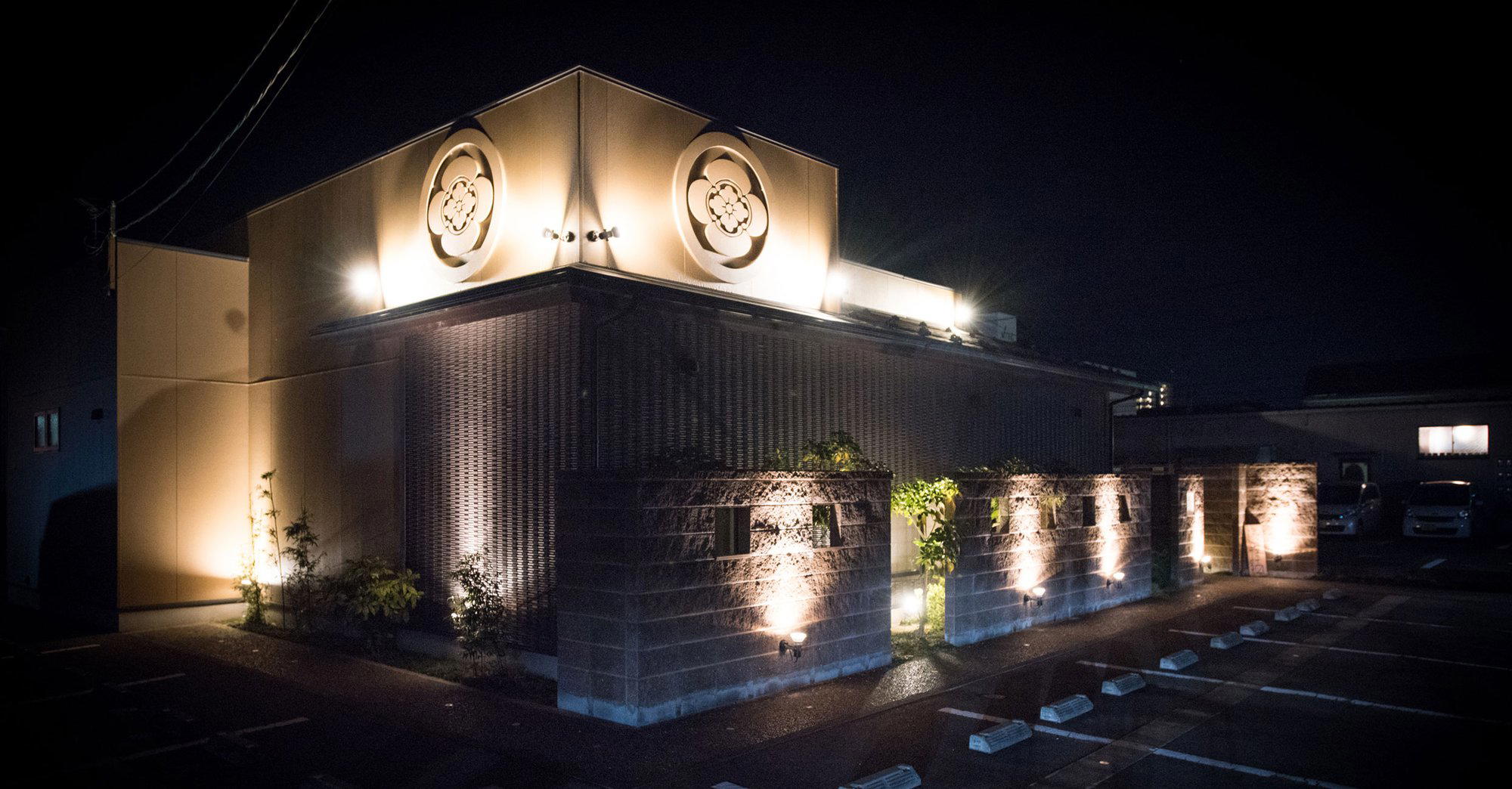
Where Toyama's Seafood Identity Meets the Sushi Counter
Toyama Prefecture sits at the edge of one of Japan's most productive stretches of the Sea of Japan, a body of water that drops to unusual depths close to shore and delivers cold-water species that rarely appear on sushi counters further east. That geography shapes what lands on the rice at counters across the city, and 寿司栄 華やぎ, located in the Taromaru Nishimachi district at the western edge of Toyama city, operates within this regional logic. The address itself — residential in character, removed from the tourist corridors that thread through central Japan — signals the kind of sushi that exists primarily for people who already know where they are going.
The relationship between Toyama and its fish is not incidental. Buri (yellowtail), shiro ebi (white shrimp), and hotaru ika (firefly squid) are prefecture-level markers that appear on menus across the city in ways that reflect genuine seasonal supply rather than imported prestige. At the sushi counter format, these ingredients arrive in configurations shaped by the kitchen's judgment about what the season can support, which means the experience at any given visit is anchored to the calendar in a way that fixed menus at larger urban restaurants rarely are. Toyama's sushi counters, including 寿司栄 華やぎ, sit within that tradition rather than against it.
The Counter Format and What It Asks of the Guest
Japan's sushi counter has undergone a pricing and format stratification over the past decade that is now visible even in mid-sized cities. In Tokyo and Osaka, the omakase tier has separated into entry, mid, and premium brackets with meaningful price gaps between them. In Toyama, the same stratification exists but at a different scale, and addresses in the Taromaru Nishimachi district tend to occupy the mid-tier of local prestige, not the formal, booked-months-ahead counters of central Toyama, but operating at a level of craft that would register clearly to anyone who has spent time at higher-end counters elsewhere in Japan. For reference, Harutaka in Tokyo represents what the upper end of that national conversation looks like; 寿司栄 華やぎ speaks a related but distinctly regional dialect.
The counter format demands a particular kind of attention from the guest. There is no wine list in the conventional sense at a Japanese sushi counter, the pairing question resolves itself through the local sake tradition, and Toyama is a prefecture with a documented sake production culture that draws on the same snowmelt water that feeds the rivers entering the Sea of Japan. That alignment between local rice, local water, and local fish is one of the more coherent food-and-drink narratives in any Japanese region. Sake pairings at this kind of counter are not curated the way a European sommelier might approach a wine flight, but the underlying logic of terroir, matching fermented grain to the fish pulled from nearby cold water, is present in a way that rewards guests who ask rather than assume.
Toyama in the Broader Regional Sushi Context
Understanding 寿司栄 華やぎ's position requires some familiarity with how Toyama fits into the wider Chubu and Hokuriku dining map. The prefecture is not a primary destination for international food travelers in the way that HAJIME in Osaka or Gion Sasaki in Kyoto draw dedicated dining tourism, but it functions as a substantive secondary destination, the kind of city where regional food culture is intact and not yet shaped primarily by outside attention. That position is neither a disadvantage nor a selling point; it is simply the operating context, and it means that the sushi here is made for regulars and informed visitors rather than for international ratings validation.
Comparison with other Hokuriku sushi addresses is instructive. The prefecture of Ishikawa, which borders Toyama to the west, has a well-documented seafood culture centered on Kanazawa, and 一本木 石川割烹 in Nanao represents the kind of address that emerges from that tradition. Toyama's own counter culture is less internationally documented but draws on a comparable raw material base, with the added specificity of shiro ebi, which is harvested in significant volume only in Toyama Bay and constitutes one of the prefecture's clearest claims to ingredient singularity.
Travelers building an itinerary around Toyama's food scene will find that sushi is one category within a wider grid of serious dining. Ebitei Bekkan addresses the seafood tradition from a different angle, while Boteyan and Daimon occupy distinct positions in the local dining conversation. Hagiwara and Himawari Shokudo 2 extend the range further, the latter operating in the Italian register at a price point in the JPY 20,000–29,999 range that reflects the ambition Toyama's dining scene applies across categories. See the full Toyama restaurants guide for a broader orientation.
For travelers whose reference points include counters in other parts of Japan, Goh in Fukuoka, akordu in Nara, or Atomix in New York City for the internationally-minded, Toyama's sushi counters offer a lower ambient noise level around the food itself. There is less of the performance associated with high-traffic urban omakase and more of the quiet concentration that characterizes regional Japanese dining at its most serious.
Planning a Visit
寿司栄 華やぎ is located at 2 Chome-7-1 Taromaru Nishimachi, Toyama, a residential address that does not sit on a main thoroughfare. Visitors arriving from Toyama Station should confirm current transport options locally, as the district sits several kilometers from the central rail hub. Arriving without a reservation is a meaningful risk; building contact through your hotel concierge or through a Japan-based dining intermediary is the practical approach. For those planning a multi-city itinerary, Toyama connects by Shinkansen to Kanazawa and Nagoya, and the city's compact scale makes it feasible as a one-night destination structured around a counter dinner.
Frequently asked questions
What part of town is 寿司栄 華やぎ in?
寿司栄 華やぎ is located at 2 Chome-7-1 Taromaru Nishimachi, Toyama, 939-8271, Japan, Toyama.
How does 寿司栄 華やぎ's location in Taromaru Nishimachi affect the dining experience?
The Taromaru Nishimachi address in Toyama places 寿司栄 華やぎ away from the city centre and the main tourist corridor around Toyama Station, which shapes both the clientele and the atmosphere. Counters in residential neighbourhoods across Japan tend to draw a repeat local customer base rather than transient visitors, which often means the kitchen calibrates its pacing and selection to regulars rather than first-time guests. Visitors arriving from outside Toyama should factor in that the location is not walkable from central landmarks and plan transport accordingly.
What should I order at 寿司栄 華やぎ?
The venue sits in Toyama, a prefecture that draws from one of Japan's most productive Sea of Japan fishing zones, where cold-water depth produces fish like white shrimp (shiroebi) and firefly squid (hotaruika) that define the local sushi identity. Seasonal catch from those waters is the anchor of any serious Toyama sushi counter, and ordering whatever reflects that day's haul is the standard approach.
Can I walk in to 寿司栄 華やぎ?
The address at 2 Chome-7-1 Taromaru Nishimachi places 寿司栄 華やぎ in a residential part of Toyama rather than a high-traffic commercial strip, which typically signals a counter that runs on reservations rather than walk-in volume. Contacting the venue in advance is the practical course.
What do critics highlight about 寿司栄 華やぎ?
No named publication reviews or award citations for 寿司栄 華やぎ are currently documented, which is not unusual for serious counters in mid-sized Japanese cities that operate on local reputation rather than national press attention. Toyama's dining scene as a whole has drawn increasing attention from food writers covering the Hokuriku corridor, particularly since the 2015 Hokuriku Shinkansen extension opened the region to broader visitor traffic. What draws that attention is consistently the prefecture's access to Sea of Japan seafood rather than any single venue's profile.
Can 寿司栄 華やぎ adjust for dietary needs?
Dietary accommodation at traditional Japanese sushi counters is generally limited by format: a counter built around fresh fish and rice has little structural room for substitutions, and soy, fish stock, and shellfish appear across most preparations. Guests with allergies or strict requirements should communicate directly with the restaurant before booking, ideally in Japanese or through a Japanese-speaking intermediary.
Is 寿司栄 華やぎ overpriced or worth every penny?
No price range data is documented for 寿司栄 華やぎ, so a direct value assessment is not possible here. What is established is that Toyama sushi counters generally price below their Tokyo equivalents while drawing on comparable or superior local seafood — the prefecture's white shrimp and snow crab are caught closer to port, which affects both quality and cost structure. Confirming the current price point with the venue before visiting is the only reliable approach.
Comparable Venues
Comparable venues nearby, for context on price, style, and recognition.
| Venue | Cuisine | Price | Awards | Notes |
|---|---|---|---|---|
| 寿司栄 華やぎThis venue — the venue you are viewing | Traditional Japanese Sushi Omakase | $100–150 | Not listed | Not listed |
| SOTO | High-End Omakase Sushi | $150–200 | Tabelog 100 #9 | Izumicho |
| 鮨し人 | Edomae Sushi Omakase | $150–200 | Not listed | Nishinakanomachi |
| Boteyan Tanaka | Okonomiyaki & Yakisoba | $10–20 | Tabelog 100 #94 | Shintomicho |
| Sushi Namba | Traditional Sushi Omakase | $30–50 | Tabelog 100 #80 | Kumonmyo |
| L'évo cuisine régionale. | Avant-Garde Regional Japanese-French Fine Dining | $200–300 | Not listed | Togamura, Nanto City |
Continue exploring
More in Toyama
Restaurants in Toyama
Browse all →
Hotels in Toyama
Browse all →
Wineries in Toyama
Browse all →
Details
- Elegant
- Sophisticated
- Intimate
- Date Night
- Special Occasion
- Chefs Counter
- Sake Program
- Omakase
Current opening hours
- Monday
- 12–2:30 PM, 6–9:30 PM
- Tuesday
- 12–2:30 PM, 6–9:30 PM
- Wednesday
- Closed
- Thursday
- 12–2:30 PM, 6–9:30 PM
- Friday
- 12–2:30 PM, 6–9:30 PM
- Saturday
- 12–2:30 PM, 6–9:30 PM
- Sunday
- 12–2:30 PM, 6–9:30 PM
Hours can change for holidays and private events. Last verified .
Elegant ryotei-style exterior with a bright, relaxed interior fostering a leisurely dining atmosphere.