Our verdict
Located on Otesuji in central Kochi, うますし occupies a corner of the prefecture's sushi scene that rewards those willing to look beyond the city's more prominent food markets. The address places it within reach of Kochi's compact restaurant corridor, where counter dining traditions sit alongside izakaya culture and local seafood supply chains running directly from Tosa Bay.

Pearl is the En Primeur Club membership app — saves, bookings, and concierge access live there. Same editors, same standards.
- Address
- 1 Chome-9-8 Otesuji, Kochi, 780-0842, Japan
- Phone
- +81888237660
- Hours
- Mon–Tue ClosedWed–Fri 6–10 PMSat–Sun 12–2 PM, 6–10 PM
- Website
- umasushi.net
- Directions
- Get directions
- Booking
- Book on the venue's website
Kochi's Sushi Counter Tradition and Where うますし Fits
Kochi is not a city that appears in most national sushi conversations, and that is precisely what gives its counter restaurants a particular texture. While Tokyo's leading omakase counters, such as Harutaka in Tokyo, compete on Michelin recognition and global allocation lists, and Kyoto's chef-driven rooms like Gion Sasaki in Kyoto operate within dense webs of culinary reputation, Kochi's sushi houses function closer to the source. Tosa Bay supplies one of Japan's more characterful inshore fish markets, with katsuo — skipjack tuna — as the regional flagship, alongside a range of seasonal white fish that rarely reach menus beyond the prefecture. Counter restaurants here draw on that supply chain in ways that more visible cities cannot replicate, because the fish moves locally and quickly rather than through the distribution chains that connect Tokyo's Tsukiji-linked buyers to the rest of the country.
うますし sits at 1 Chome-9-8 Otesuji, in the corridor that runs through central Kochi and concentrates much of the city's serious eating. Otesuji is the tree-lined shopping and dining street that anchors the area between Kochi Castle and the city's main entertainment district, and it pulls a mix of locals and prefectural visitors rather than international tour groups. That demographic shapes what counter restaurants here do well: consistency for repeat guests, a relationship with the fish market that rewards regulars, and a front-of-house register that is warm rather than formal. If you have visited HAJIME in Osaka or akordu in Nara, you understand the range that exists across Japan's regional fine dining tier. Kochi's counter restaurants occupy a different point on that range: less architectural in their ambition, more direct in their relationship between fish and plate.
The Counter as Collaborative Space
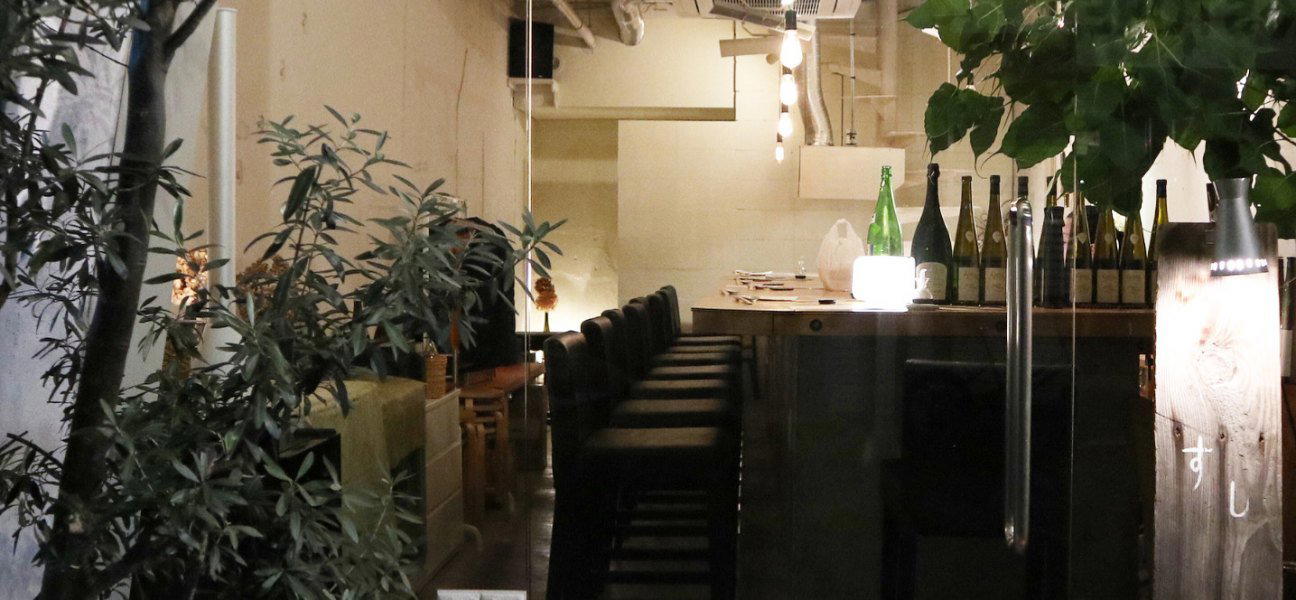
The most instructive thing about a well-run sushi counter is not the fish itself but the coordination happening across the narrow span of hinoki wood. In rooms where the chef, the person managing drinks and pacing, and the staff handling service all operate within a few metres of each other, the seams between those roles either disappear or become obvious. The difference between a counter that feels coherent and one that feels like a kitchen with an audience comes down to whether the people running it have worked out how to function as a unit rather than as separate departments.
The person guiding drink selections, local shochu from the prefecture's distilleries, or the rice-forward nihonshu that tends to suit Tosa Bay fish, may also be managing the pacing of courses and reading the table's engagement. That compression of roles, when handled well, produces a rhythm that feels attentive without being managed. It is a format that places considerable demand on everyone present, and counters that sustain it consistently over time tend to develop a loyal local following, which is the primary trust signal for any room in a city that does not rely on tourist throughput.
Kochi's dining corridor supports several formats that reflect this character. Kochi Izariya operates within the izakaya tradition that runs parallel to counter sushi culture in the city, while Hirome Market provides the high-volume, communal expression of the same local seafood supply. MIKI ドゥーブル and Brasserie 土佐 push the city's dining register toward European-influenced formats, and Canvas Restaurant & Pizzeria reflects Kochi's growing interest in international casual formats. Within that spread, a dedicated sushi counter occupies a specific and relatively small niche.
Regional Context: What Tosa Bay Produces
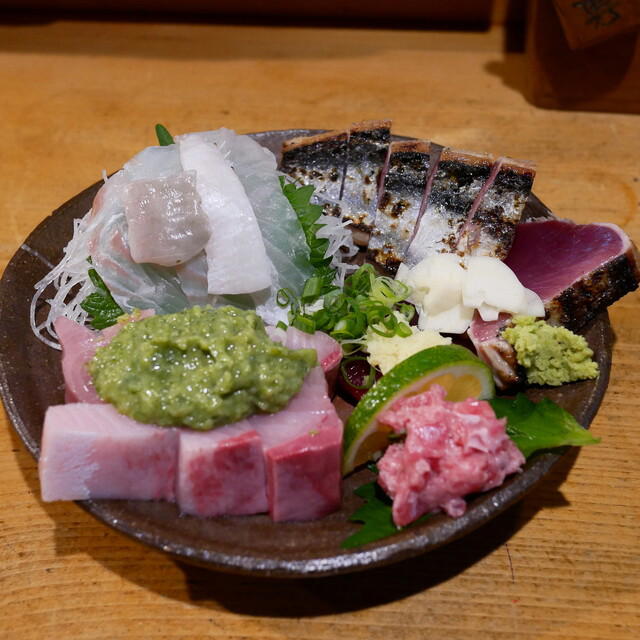
The ingredient argument for eating sushi in Kochi is stronger than its restaurant profile would suggest. Katsuo no tataki, seared skipjack, typically finished with garlic and ponzu, is the most recognised Kochi preparation, but the bay produces a wider range of fish across the seasons that matters to counter kitchens. Madai, hirame, and various aji species come through in quantities and at a freshness that the prefecture's small population and modest restaurant infrastructure do not always allow to travel far. Restaurants in Goh in Fukuoka or counters in Nanao, such as 一本木 皆川制 in Nanao, make comparable arguments about local provenance and proximity to their own fishing grounds. Kochi's version of that argument is specifically tied to the warm Kuroshio current influence on Tosa Bay, which produces flavour profiles in the fish that differ noticeably from colder northern waters.
Counter restaurants operating in this environment carry a specific advantage when they build relationships with the local market rather than relying on distributed supply. Whether うますし operates through that kind of direct market relationship is something leading confirmed on arrival, but the address on Otesuji places it in the part of the city where those supply chains are most accessible to smaller operations.
Planning a Visit
Kochi is accessible from Osaka by the Nankai-Tokushima or the JR limited express Anpanman train routes, with the Shimanto/Ashizuri express covering the journey in roughly two and a half hours from Okayama after the Shinkansen connection. The city is compact enough that Otesuji is walkable from Kochi Station in under fifteen minutes, or a short ride on the Tosa Dentetsu tram line that runs through the city centre. For those building a broader regional Japan itinerary, Kochi works as a two-night stop that connects Shikoku's interior to the coast, and pairs well with visits to Sapporo or Takashima for those moving through Japan's less-trafficked prefectures, including the counter at 古仙山乃 in Sapporo or 湖畔庵 in Takashima.
For reference on what sushi counter pricing looks like across Japan's regional tier, rooms at a comparable level to うますし's Otesuji location typically sit between ¥8,000 and ¥18,000 per head depending on format and drink spend, though specific pricing here should be confirmed directly with the venue. Booking practices for counter rooms in Kochi are generally less formal than Tokyo equivalents, but advance contact remains advisable for weekends and during the katsuo season in spring and early autumn, when local dining demand peaks. Contact details and current hours are leading sourced through a local restaurant reservation service or by visiting the address directly. For a fuller picture of where うますし sits within Kochi's overall dining options, see our full Kochi restaurants guide.
For international comparison on what counter coordination looks like at the highest level of the format, Le Bernardin in New York City and Atomix in New York City represent the Western critical standard against which Japanese counter dining is sometimes measured, though the register and intent differ considerably. 羽根屋 in Nishikawa Machi and Birdland in Sakai offer additional regional Japan reference points for those building a broader picture of the country's counter dining range.
Frequently asked questions
Where is うますし located?
うますし is located at 1 Chome-9-8 Otesuji, Kochi, 780-0842, Japan, Kochi.
Is うますし a good option for experiencing regional Shikoku sushi outside the main tourist circuit?
Kochi is one of Shikoku's least-visited prefectures by international travellers, and the Otesuji area where うますし is located functions as a working dining neighbourhood rather than a tourist corridor. That context matters: sushi counters here are shaped by what Tosa Bay actually produces rather than by demand from international visitors.
Can I walk in to うますし?
Sushi counters in Japan at this address format — 1 Chome-9-8 Otesuji, Kochi — typically operate on a reservation basis, especially for evening service. Arriving without a reservation carries real risk; contacting the venue in advance through local directories or your hotel concierge is the practical approach.
What is うますし known for?
うますし is a sushi counter in Kochi's Otesuji district, a city whose fishing grounds in Tosa Bay give local restaurants access to catch that rarely reaches major urban markets. Kochi sits outside the national sushi conversation dominated by Tokyo and Osaka, which means counters here operate without the same external scrutiny — and often with greater creative latitude over regional ingredients.
Budget and Context
Comparable venues nearby, for context on price, style, and recognition.
| Venue | Cuisine | Price | Awards | Notes |
|---|---|---|---|---|
| うますしThis venue — the venue you are viewing | Kochi Sushi Omakase | $500+ | Not listed | Not listed |
| Hirome Market | Kochi Street Food Market with Seared Bonito | $10–20 | Not listed | Obiyamachi, Kochi Street Food Market with Seared Bonito |
| Brasserie 一柳 | Seasonal Kaiseki | $100–150 | Not listed | Katsurahama, Seasonal Kaiseki |
| Hirome de Yasubee | Kochi yatai gyoza & Japanese snack bar | $1–10 | Tabelog 100 #82 | Obiyamachi / Hirome Market, Kochi yatai gyoza & Japanese snack bar |
| Yairo Tei | Not listed | Not listed | Not listed | Obiyamachi / Hirome Market, Kochi seafood izakaya specializing in seared bonito |
| イハラ | Innovative Fine Dining | $200–300 | Not listed | Harimaya-cho, Innovative Fine Dining |
Details
- Intimate
- Cozy
- Date Night
- Special Occasion
- Chefs Counter
- Sake Program
- Natural Wine
- Local Sourcing
- Omakase
- Counter Dining
- Sake
- Natural Wine
Current opening hours
- Monday
- Closed
- Tuesday
- Closed
- Wednesday
- 6–10 PM
- Thursday
- 6–10 PM
- Friday
- 6–10 PM
- Saturday
- 12–2 PM, 6–10 PM
- Sunday
- 12–2 PM, 6–10 PM
Hours can change for holidays and private events. Last verified .
Cozy and intimate with a focus on fresh sushi in a small 6-seat setting.