
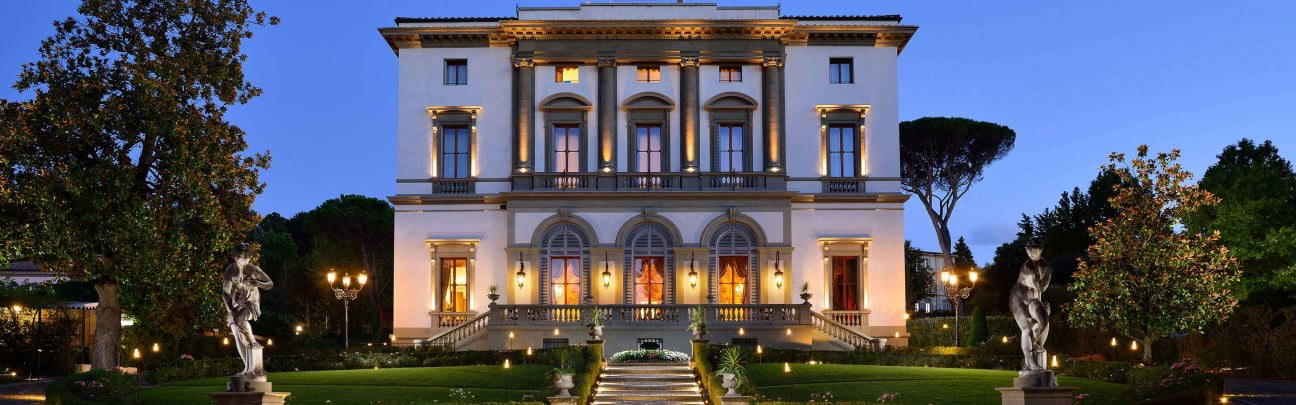
A Michelin Selected hotel housed in a 16th-century Florentine palazzo on Via del Giglio, Tivoli Palazzo Gaddi sits within walking distance of the city's most significant Renaissance monuments. The property belongs to a tier of historic-building conversions that prioritise architectural preservation alongside contemporary comfort, placing it in a competitive set defined by provenance rather than scale.
Pearl is the En Primeur Club membership app — saves, bookings, and concierge access live there. Same editors, same standards.
- Address
- Via del Giglio 9, Florence, Italy
- Phone
- +39 055 239 8095
- Website
- tivolihotels.com
 Saves & bookings on Pearl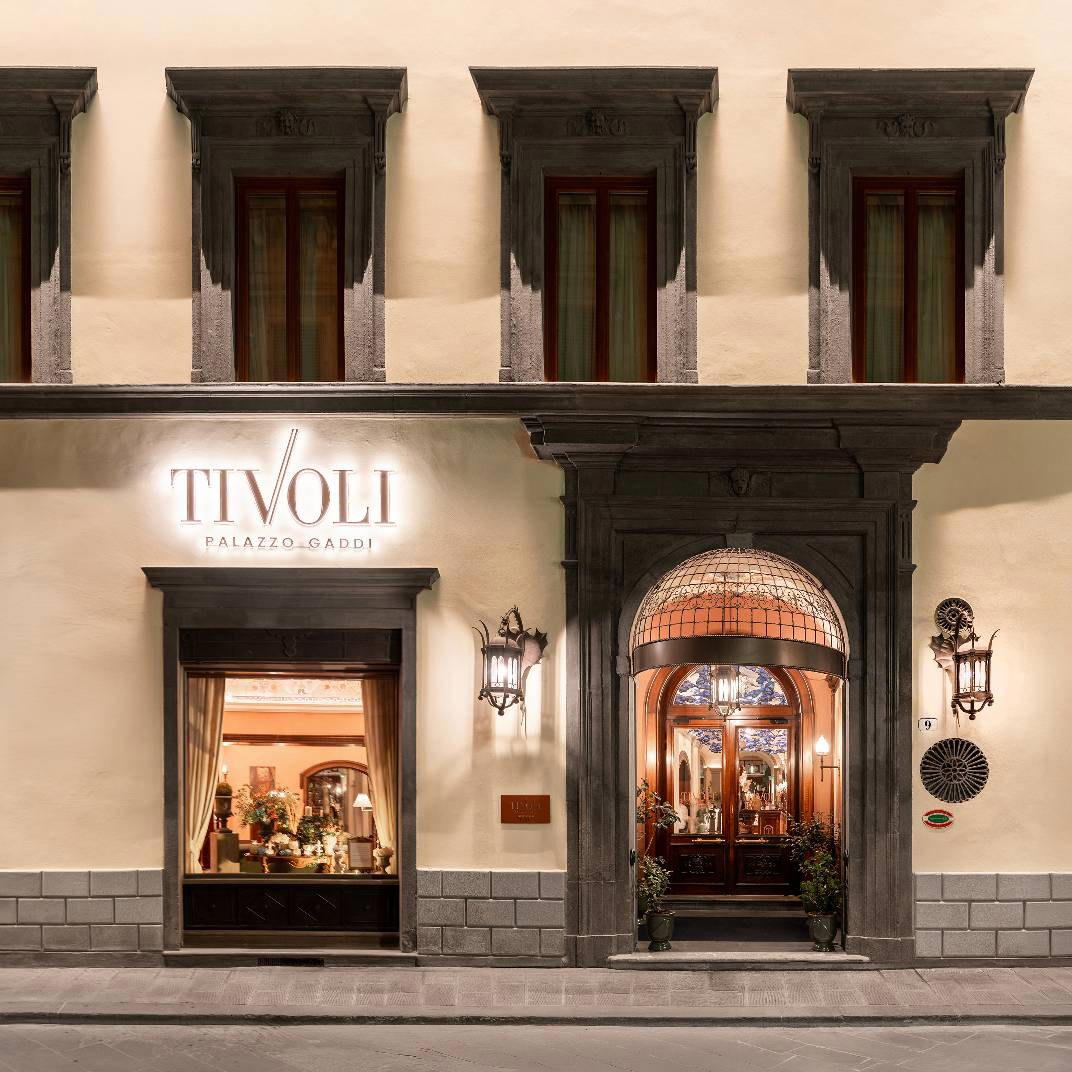
A Palazzo in the Critical Zone
Florence's hotel market has polarised sharply over the past decade. At one end sit the international flagships with garden estates and sky-facing terraces: the Four Seasons Hotel Firenze with its 11-acre garden is the clearest example. At the other end, a smaller cohort of palazzo conversions has grown more confident in trading on architectural provenance alone, without the spa acreage or Michelin-starred restaurants that anchor the trophy properties. Tivoli Palazzo Gaddi belongs to that second group. The building dates to the 16th century, and its address at Via del Giglio 9 puts it in the dense centro storico grid, roughly equidistant from the Duomo and Santa Maria Novella. That central position is not incidental; for a property of this scale, proximity to Florence's primary monuments is the product offering.
The Michelin Selected designation, current for 2025, is the clearest external validation of where this hotel sits competitively. Michelin's hotel selection is distinct from its restaurant starred system; Selected status signals quality of welcome, comfort, and overall experience. Within Florence, a handful of properties hold this designation, and the range is wide, from larger five-star palaces to tighter boutique addresses. Tivoli Palazzo Gaddi's inclusion confirms it competes on quality rather than simply on charm or history. That matters for a traveller calibrating expectations against properties like the Palazzo Portinari Salviati Residenza D'Epoca, where the heritage angle is similarly central.
The Palazzo Conversion as a Category
The conversion of historic Florentine palazzi into hotels is not a recent phenomenon, but the quality of that conversion varies considerably. The structural challenges are significant: irregular room footprints, load-bearing frescoed ceilings, protected facades, and the fundamental tension between contemporary comfort and preservation obligations. Properties that resolve this tension well tend to produce rooms where the architectural detail is the primary experience rather than a backdrop. Those that resolve it poorly produce rooms where the history feels apologetic and the amenity level insufficient to compensate.
Palazzo Gaddi, as a 16th-century structure, would have undergone exactly this calculus during its conversion. The Tivoli group, a mid-market-to-premium international hotel brand, brings operational consistency and service infrastructure that purely independent palazzo hotels sometimes lack. This positions the property differently from owner-operated boutique addresses like Ad Astra or the riverfront position of Hotel Lungarno, where editorial identity is tightly bound to individual ownership. Tivoli offers a more standardised experience anchored in a genuinely historic shell.
For context within the broader Italian market, the palazzo-hotel format reaches its most rarefied expression in properties like Aman Venice, where the palazzo setting defines the price ceiling and the entire guest experience is built around architectural access. Tivoli Palazzo Gaddi operates at a different price tier, but the conceptual lineage is shared: the building is the argument.
Location as Strategy
Via del Giglio is a short street in the heart of the centro storico, close enough to the Piazza del Duomo that the Brunelleschi dome is visible from nearby corners. Santa Maria Novella, one of the city's major churches and a significant art destination in its own right, is within walking distance to the northwest. This concentration of cultural infrastructure within a short walk is the practical case for staying in this exact zone rather than opting for properties positioned along the Arno or in the Oltrarno neighbourhood.
Florence's centro storico is not a quiet area, particularly in the summer months when foot traffic around the Duomo and the Uffizi is at its densest. A hotel like Tivoli Palazzo Gaddi, sited at this address, accepts that tradeoff explicitly: maximum cultural proximity in exchange for ambient urban noise and significant tourist congestion. Travellers who prioritise the ability to walk to the Accademia, the Orsanmichele, or the Mercato Centrale without a taxi or transit leg will find the positioning directly useful. Those prioritising garden space, quiet, or a sense of removal from the city centre should look at properties further out, such as Villa Cora in the Oltrarno hills or Villa La Massa along the Arno southeast of the city.
Elsewhere in the competitive Italian market, comparable city-centre palazzo positioning in different cities can be found at Bulgari Hotel Roma and Portrait Milano, though both operate at a higher price tier and with more brand identity attached to the property itself.
The Michelin Signal and What It Implies
Michelin's hotel selection process considers the full guest experience: the standard of rooms, the quality of welcome, the consistency of service, and the overall coherence of the property. Selected status does not require a restaurant or food offering to drive the assessment, which is relevant here given that specific dining information is not documented for this property. What the designation does confirm is that across the dimensions Michelin evaluates, the hotel meets the standards of a curated European hotel rather than simply a clean, comfortable base.
Within Florence, properties with comparable Michelin recognition include the Brunelleschi Hotel and Hotel Calimala, each of which holds Michelin Selected status. This peer group is a useful calibration: these are hotels where the case for staying rests on quality and location rather than on the kind of experiential depth that distinguishes the [Four Seasons Hotel Firenze] or the larger resort-adjacent properties. For the traveller whose hotel is primarily a base for intensive city engagement rather than a destination in itself, this tier is often the more rational choice.
Travellers combining Florence with broader Tuscany itineraries might also consider Rosewood Castiglion Del Bosco in Montalcino or, for a more intimate rural property, Castello di Reschio in Umbria as complements to a city stay here.
What It’s Closest To
Comparable venues nearby, for context on price, style, and recognition.
| Venue | Cuisine | Price | Awards | Notes |
|---|---|---|---|---|
| Tivoli Palazzo GaddiThis venue — the venue you are viewing | Historic palace blending Renaissance heritage with modern luxury | $$$$ | 5-Star | Not listed |
| Ville sull'Arno | Historic villa resort with modern renovations | $$$$ | 5-Star | Gavinana |
| NH Collection Firenze Porta Rossa | Historic 13th-century tower transformed into a 5-star luxury hotel blending Renaissance architecture with modern comforts. | $$$$ | 5-Star | Duomo |
| The Westin Excelsior, Florence | Classic luxury historic palazzo with Renaissance-inspired furnishings. | $$$$ | 5-Star | San Frediano |
| Bernini Palace Hotel | Historic Florentine palazzo with classical architecture, string-course cornices, and wooden shutters; modernized interiors preserving period charm with antiques and contemporary amenities. | $$$$ | 5-Star | San Niccolo |
| Leone Blu Suites | Boutique luxury palazzo hotel emphasizing heritage and exclusivity with contemporary design integration. | $$$$ | 4-Star | Santo Spirito |
Recognition history
Dated appearances from independent guides and award organizations, with the underlying list record or original source where available.
Michelin Selected
Michelin
Continue exploring
More in Florence
Hotels in Florence
Browse all →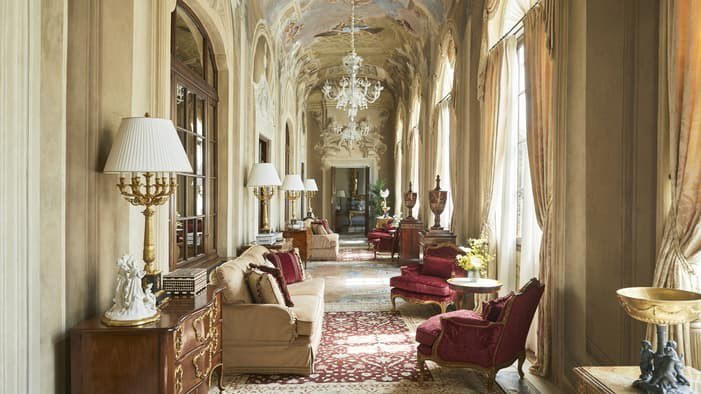
Bars in Florence
Browse all →
Restaurants in Florence
Browse all →

At a Glance
- Elegant
- Classic
- Sophisticated
- Ornate
- Romantic Getaway
- Anniversary
- Historic Building
- Panoramic View
- Terrace
- Wi Fi
- Restaurant
- Bar
- Room Service
- Concierge
- Elevator
- Skyline
- Wi Fi
- Restaurant
- Bar
- Room Service
- Concierge
- Elevator
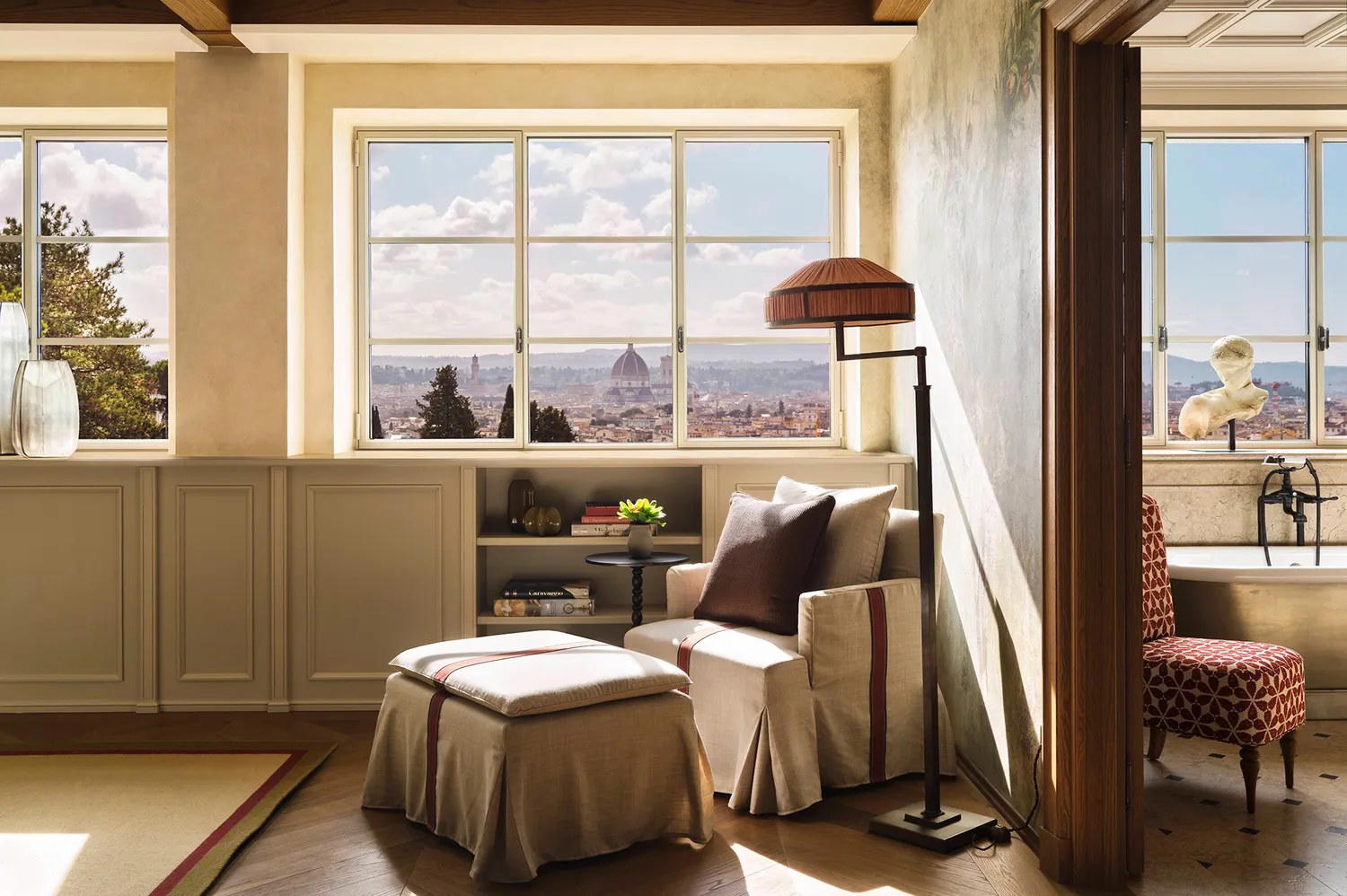
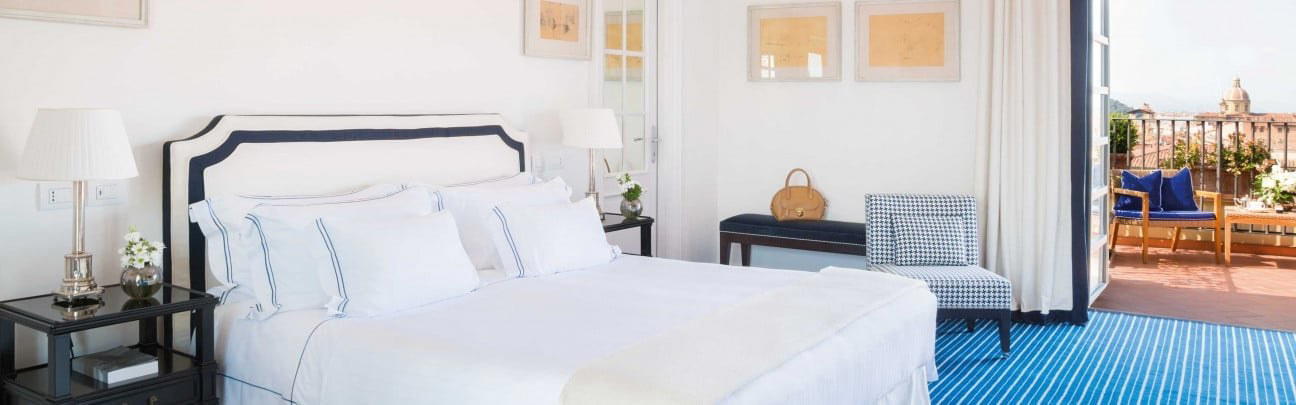
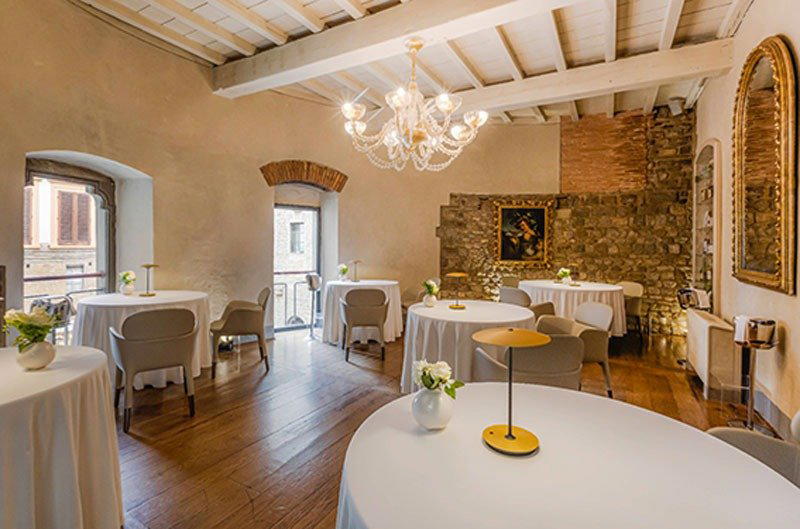
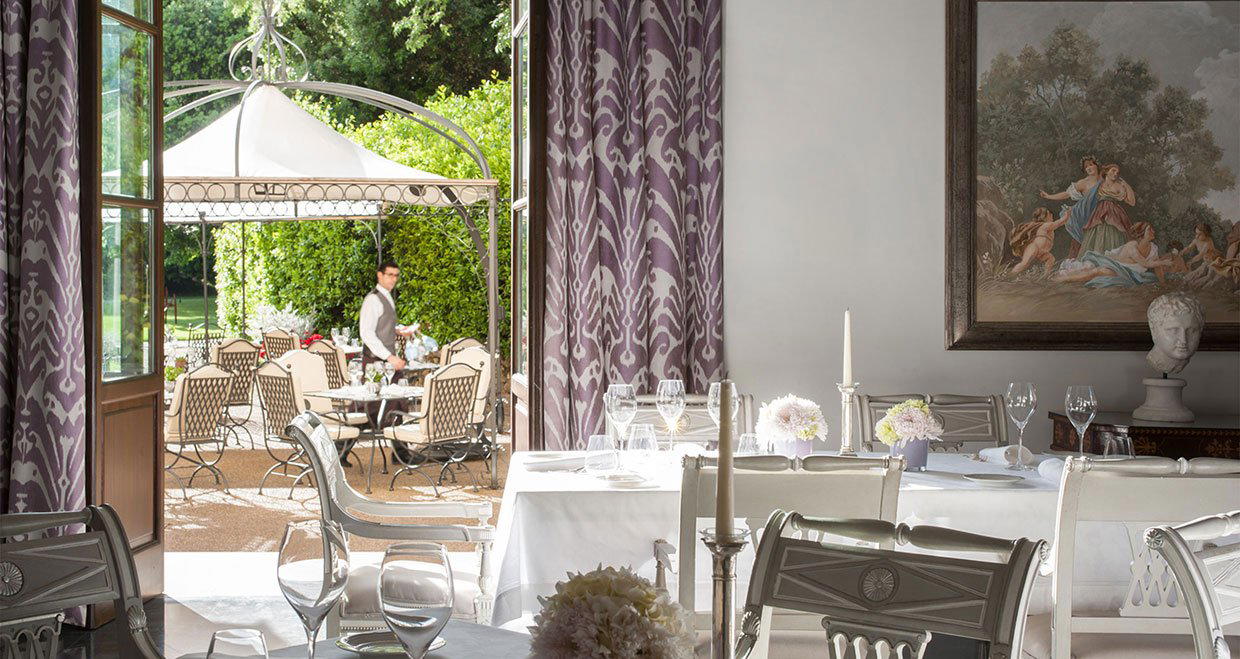
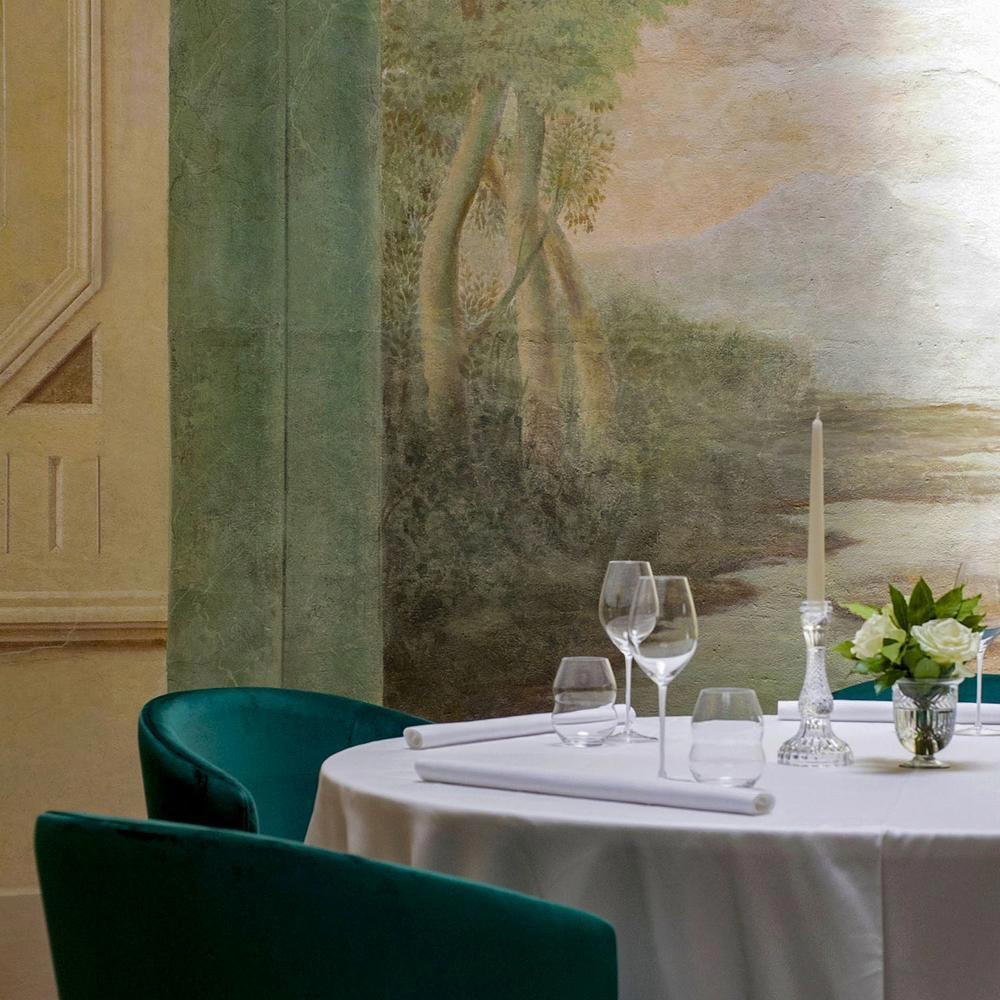
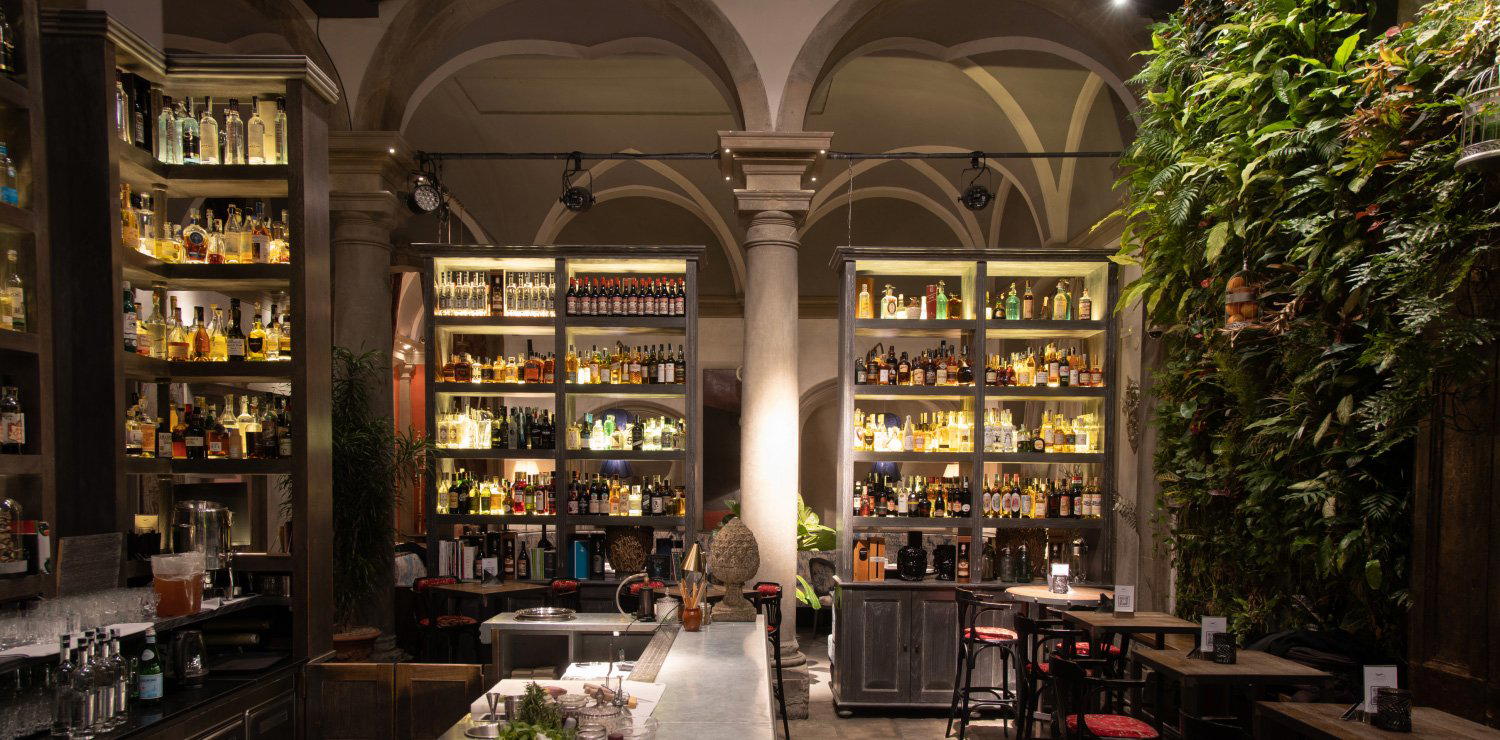
Elegant atmosphere with natural light illuminating period frescoes, stucco-work, lush fabrics, and contemporary comforts in a quiet, sophisticated setting.