

2 Michelin Keys · Mr & Mrs Smith Seal of Approval
A ten-suite mountain retreat in Binsar, Uttarakhand, designed by Sri Lankan architects in the Geoffrey Bawa tradition. At around $361 per night, The Kumaon pairs tropical modernist architecture with direct access to the Binsar Wildlife Sanctuary. The cantilevered dining room, floor-to-ceiling Himalayan views, and hand-built construction set it apart from standard hill-station hotel formats.

Pearl is the En Primeur Club membership app, where members save venues, book tables and use the concierge.
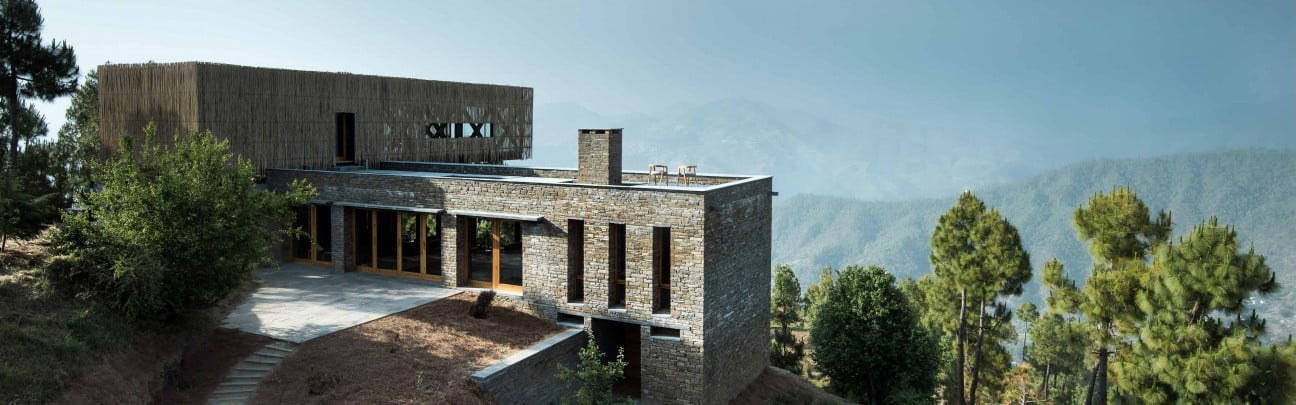
Architecture as Argument: Modernism at Altitude
The Kumaon sits above Binsar in the Kumaon Himalaya, and the first thing the property makes clear is that altitude changes the terms of modernist architecture. Tropical modernism, a discipline developed by the late Sri Lankan master Geoffrey Bawa, was built around heat, humidity, and the relationship between interior and jungle. At roughly 2,400 metres, that vocabulary has to work harder. Sri Lankan architects Pradeep Kodikara and Jineshi Samaraweera, both trained in the Bawa tradition, adapted those principles to a site where the challenge is not shade from equatorial sun but the drama of a Himalayan ridgeline and the cold clarity of mountain air. The result is a ten-suite property that operates somewhere between architectural statement and wilderness lodge, and belongs to neither category completely.
Across the Indian Himalayan foothills, the dominant hotel typology remains the colonial-era heritage conversion or the large resort hotel. Properties like Chapslee in Shimla represent the former, while larger operations serve the mass hill-station market. The Kumaon sits outside both categories: small-footprint, design-led, and conceived specifically for this site rather than dropped onto it. In that respect its closest conceptual peers are properties like Amaya in Solan or, at the higher end of India's design-led boutique spectrum, Ananda in the Himalayas in Narendra Nagar.
The Construction and the Materials
The remoteness of the Binsar site determined the construction method as much as the architects' intentions. Heavy machinery was impractical on the ridge road, so the building was assembled largely by hand. That constraint produced an outcome that many architects would spend careers engineering artificially: every wall carries evidence of craft. Stone walls, raw concrete beams, bamboo cladding, and hardwood floors and ceilings combine in a palette that reads as deliberate and resolved rather than rustic by default. The thermal logic is also sound: stone and concrete absorb and release heat slowly, moderating the temperature swings that define mountain living.
The ten suites function as the property's core argument. At around $361 per night, The Kumaon prices into a bracket that demands this level of architectural finish: a room that doesn't justify the rate through a celebrity brand or a large facilities package has to justify it through space, material quality, and view. Here, the suites are compact by resort standards but precisely configured, with floor-to-ceiling glazing that frames the Himalayan panorama as a continuous presence rather than an occasional view.
The Dining Room Over the Hillside
Editorial angle for any serious account of The Kumaon eventually settles on its dining room, not because of a named chef or a specific culinary programme but because of a structural decision: the restaurant cantilevers out over the hillside. This is not a view room with a window. The building projects over open air, placing the dining table in a position more commonly associated with observation decks than with meals. Across the Indian hotel tier that operates at comparable price points, the dining experience tends to anchor in heritage settings or grand interiors. At The Oberoi Amarvilas in Agra or The Taj Mahal Palace, Mumbai, the dining room's authority comes from history and scale. Here it comes entirely from geology and engineering.
What the architecture of the dining room does establish is a format in which the meal is inseparable from the physical experience of the site. That is a specific and relatively rare dining proposition in the Indian mountains, where most hotel restaurants treat the kitchen as the primary asset and the view as the bonus. The inversion matters.
For comparison, the nearby Mary Budden Estate represents another small-scale Kumaon property where the setting governs the experience. Both operate on the premise that the Kumaon hills are the product, not the backdrop. Our full Almora guide maps those options across price tiers and formats.
Binsar Wildlife Sanctuary and the Property's Position Within It
The Binsar Wildlife Sanctuary is the immediate context for the property's nature programming. The sanctuary supports populations of wild leopard, Himalayan black bear, and deer, alongside rhododendron forest and dense oak and rhododendron woodland at higher elevations. For wildlife-focused Himalayan travel, it occupies a distinct niche from the tiger reserves of Rajasthan and Madhya Pradesh that dominate the high-end India safari circuit. Properties like Aman-i-Khas in Ranthambore and Suján Jawai in Pali operate in reserve systems organised specifically around wildlife viewing. Binsar's appeal is different: the sanctuary is primarily a walking environment, oriented toward birdwatching, leopard tracking, and forest immersion rather than vehicle-based game drives.
The hiking trails that run through rhododendron forest from the property's position on the ridge represent the primary activity, and the sanctuary's status as a protected area limits the surrounding development that has compromised comparable sites elsewhere in Uttarakhand.
Planning a Stay
Kumaon is located on Binsar Road in the Gadholi area of Uttarakhand, above the town of Almora. The nearest major transport hub is Kathgodam railway station, approximately 90 kilometres away, from where road transfer to the property is the standard approach. The drive through the Kumaon foothills takes around two to two and a half hours depending on conditions. Gateway Dehradun offers a larger-city base for those combining the Kumaon with broader Uttarakhand travel.
With ten rooms and a price point around $361 per night, availability is limited by design. Travellers comparing this property against larger Himalayan hotel operations should note that the ten-suite format is both a feature and a constraint: the property operates at low capacity deliberately, which affects the booking window required.
The Kumaon's design-led, low-key position in the Indian luxury market makes it most relevant for travellers whose reference points include properties like Amanbagh in Ajabgarh or, internationally, Aman Venice, where architectural integrity and site specificity carry more weight than amenity breadth. Those seeking a broader urban luxury framework will find properties like The Leela Palace New Delhi or Haveli Dharampura in Delhi better suited to that expectation set.
Cost and Credentials
Comparable venues nearby, for context on price, style, and recognition.
| Venue | Price | Awards | Notes |
|---|---|---|---|
| The KumaonThis venue (the venue you are viewing) | $300–500 | 2 Michelin Keys · Mr & Mrs Smith Seal of Approval | Not listed |
| Mary Budden Estate | $200–300 | Small Luxury Hotels of the World Member | Binsar, 19th-century colonial estate restored as luxury wilderness retreat |
| Taj Rishikesh Resort & Spa, Uttarakhand | Not listed | 1 Michelin Key | Narendranagar, Luxury riverside resort with eco-friendly Himalayan design |
| The Oberoi Vindhyavilas Wildlife Resort, Bandhavgarh | Not listed | Travel + Leisure It List Hotels | Bandhavgarh National Park, Tented luxury wildlife resort inspired by Vindhya mountains and tribal heritage |
| Taj Theog Resort & Spa, Shimla | Not listed | Michelin Selected | Theog, Lodge-style luxury resort blending contemporary architecture with mountain tranquility. |
| Shakti Prana | Not listed | 5-Star | Kasar Devi, remote eco-luxury mountain retreat |
Recognition history
Dated appearances from independent guides and award organizations, with the underlying list record or original source where available.
Michelin 2 Keys
Michelin
Mr & Mrs Smith Seal of Approval
Mr & Mrs Smith
Full recognition history (3 entries)
Michelin 1 Key
Michelin
Continue exploring
More in Almora

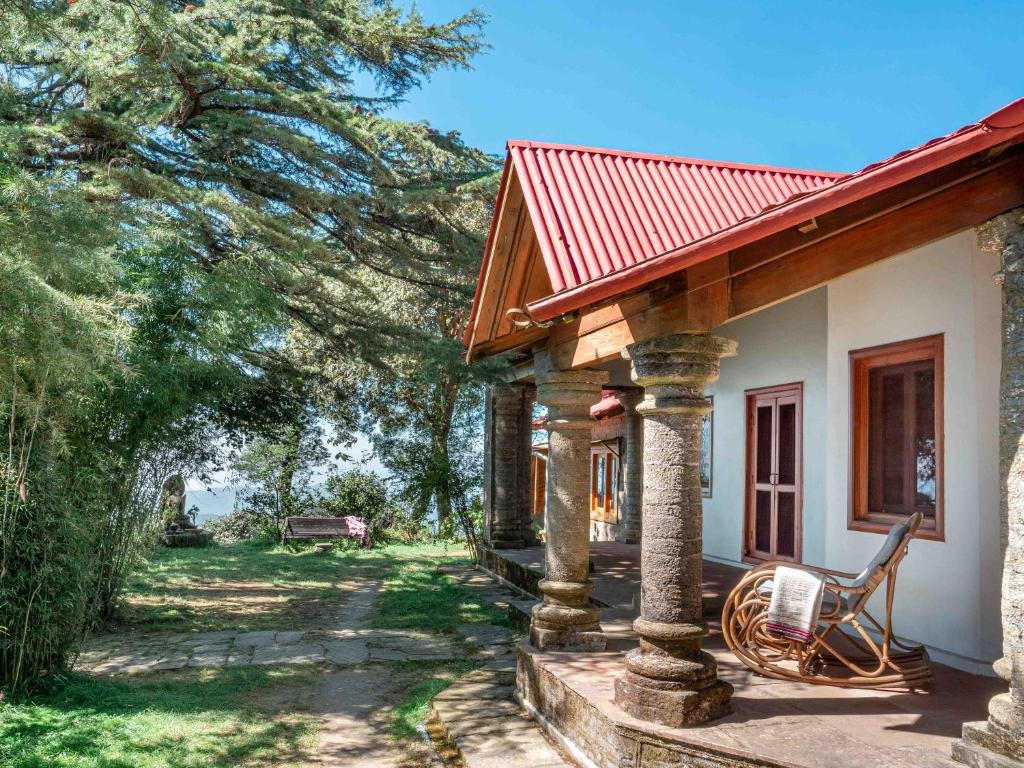
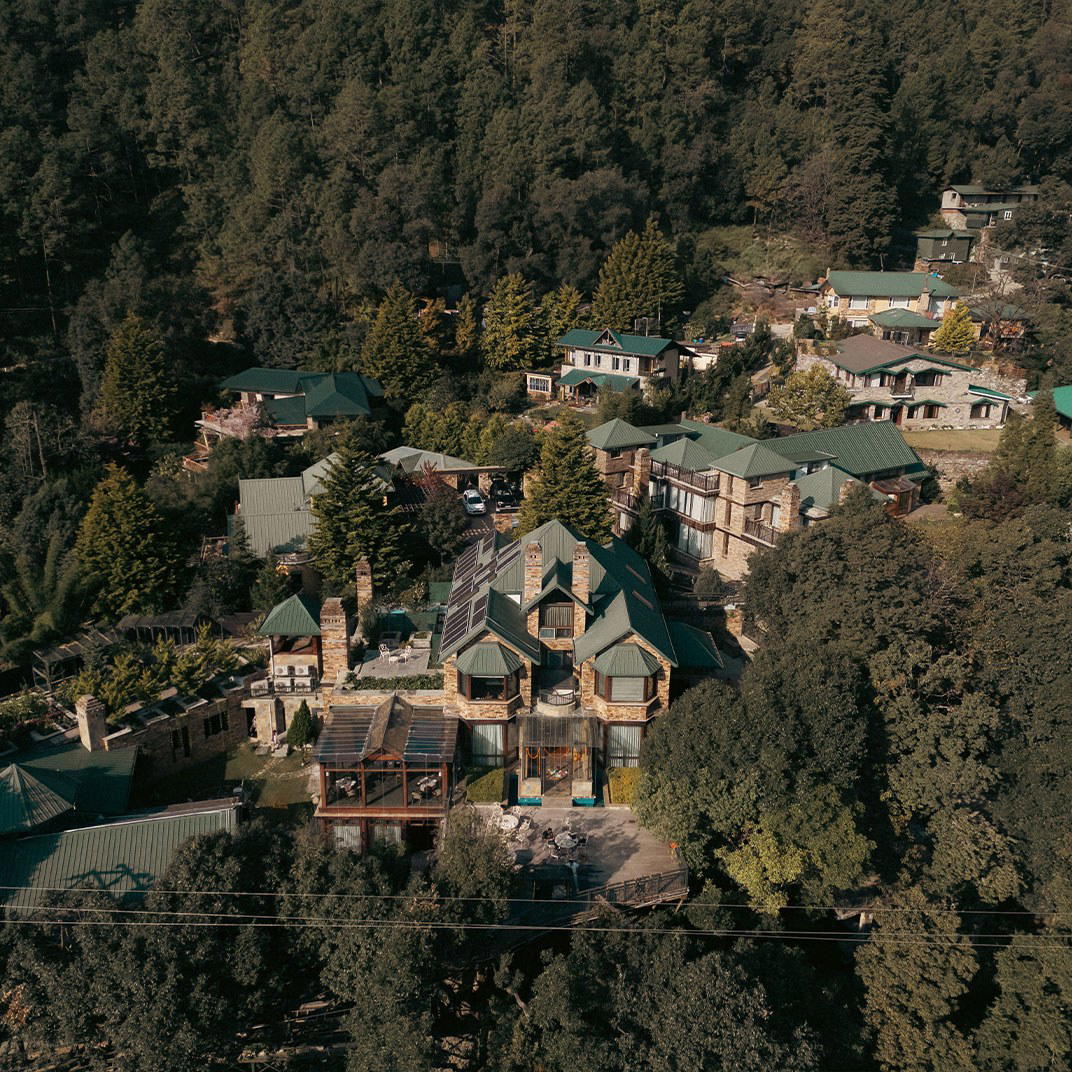
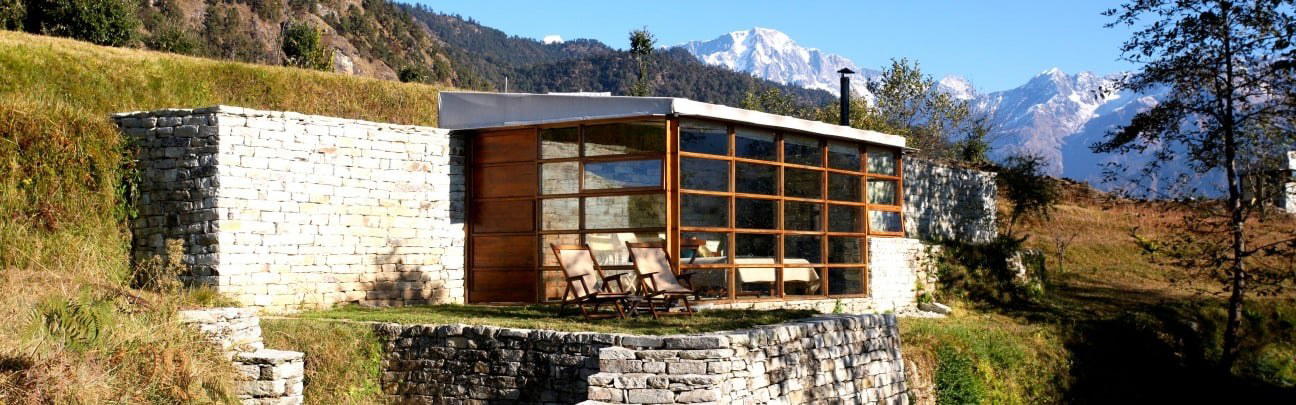
Details
- Romantic
- Quiet
- Scenic
- Elegant
- Sophisticated
- Minimalist
- Romantic Getaway
- Wellness Retreat
- Anniversary
- Weekend Escape
- Honeymoon
- Panoramic View
- Terrace
- Garden
- Destination Spa
- Private Dining
- Wi Fi
- Spa
- Restaurant
- Garden
- Massage
- Concierge
- 24 Hour Front Desk
- Room Service
- Laundry Service
- Mountain
Serene and contemplative with natural light flooding through floor-to-ceiling windows framing mountain vistas; warm, intimate spaces with fireplaces and locally sourced materials creating a calming, almost spiritual atmosphere.