




1 Michelin Key · World's 50 Best #30 · La Liste Top Hotels
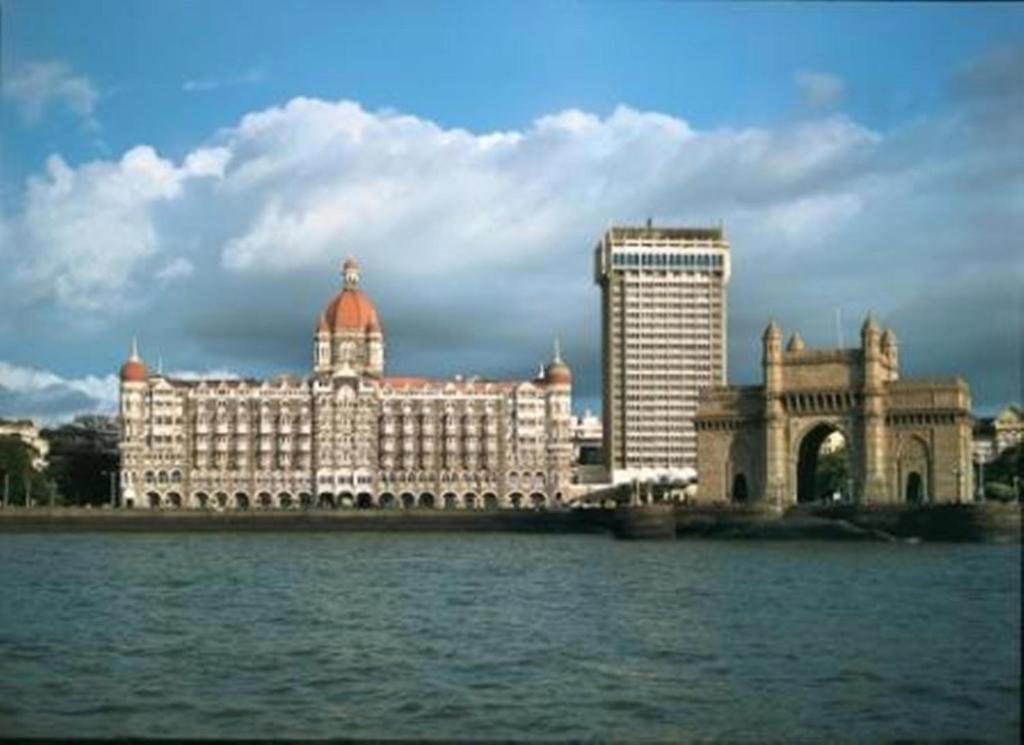
Open since 1903 and ranked 38th on the World's 50 Best Hotels list (2025), The Taj Mahal Palace occupies a singular position in Mumbai's hotel order: the property where Indian luxury hospitality effectively began. Positioned at Apollo Bandar in Colaba, directly opposite the Gateway of India, its 285 rooms split between a history-laden Heritage Wing and a 1973 Tower addition, with rates from $456 per night.

Pearl is the En Primeur Club membership app — saves, bookings, and concierge access live there. Same editors, same standards.
- Address
- Apollo Bandar, Colaba, Mumbai, Maharashtra 400001
- Phone
- +91 22 6665 3366
- Website
- tajhotels.com
- Directions
- Get directions
Where Mumbai's Luxury Standard Was Set
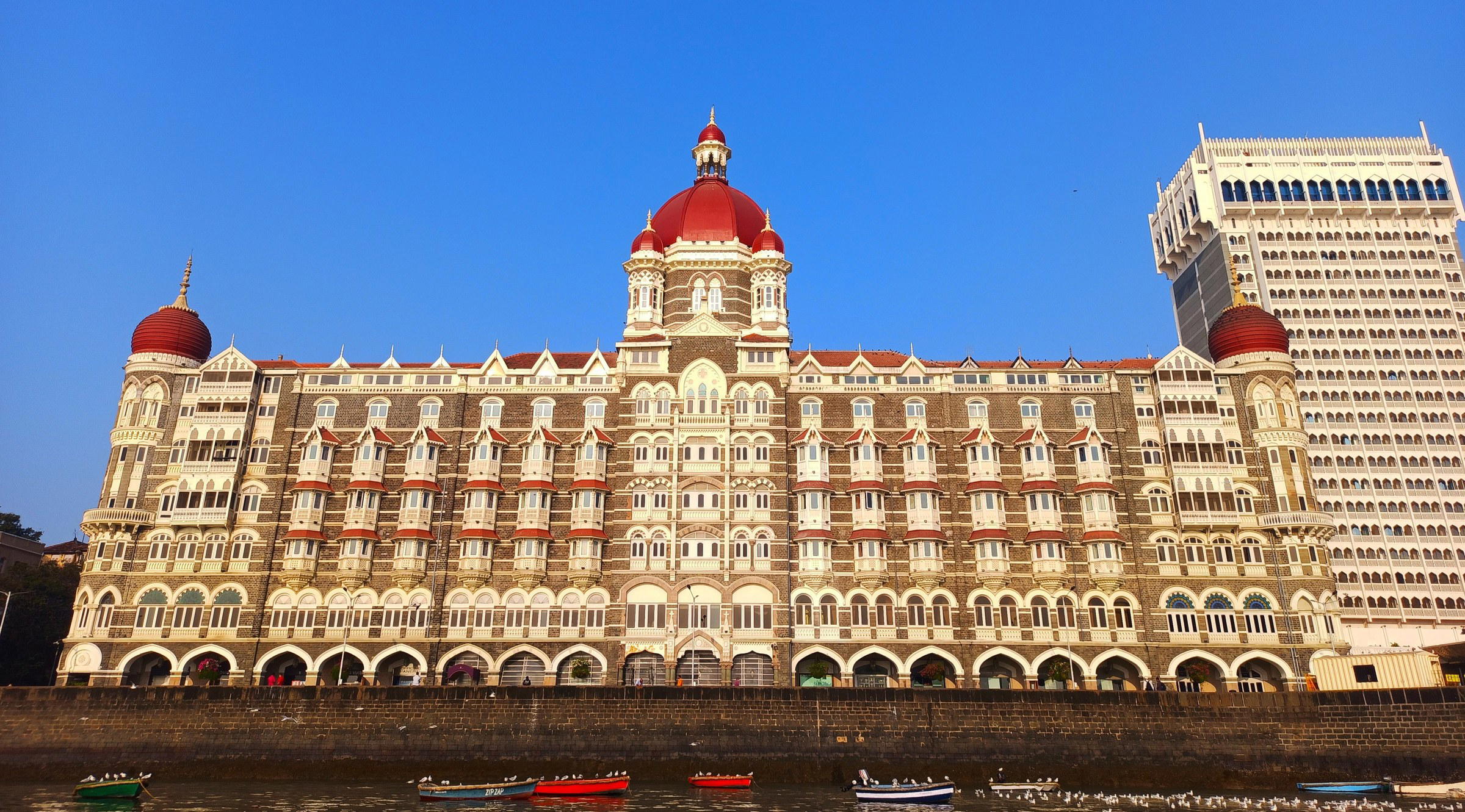
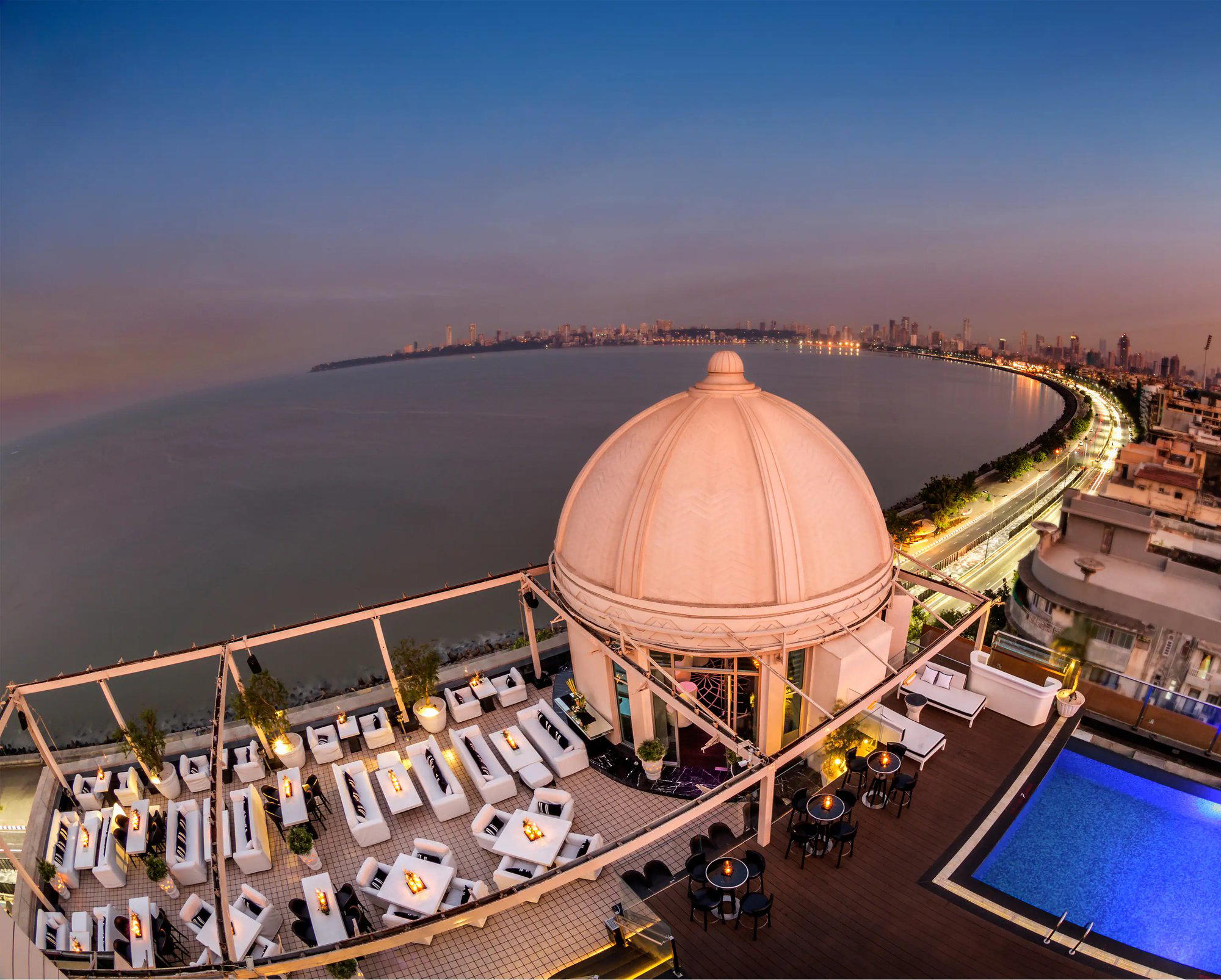
Approach The Taj Mahal Palace from the water side and the geometry of the situation becomes clear: the famous domed silhouette you see from the harbour is, according to a long-circulating legend, technically the back of the building. The story holds that the architect submitted plans from abroad without visiting the site, and the hotel rose facing inward rather than toward the sea. Whether the tale is apocryphal or not, the practical consequence is that guest rooms fill the harbour-facing facade, the swimming pool occupies what was meant to be the entrance forecourt, and the actual arrival point is a comparatively modest doorway on the landward side. The misdirection works in the guest's favour.
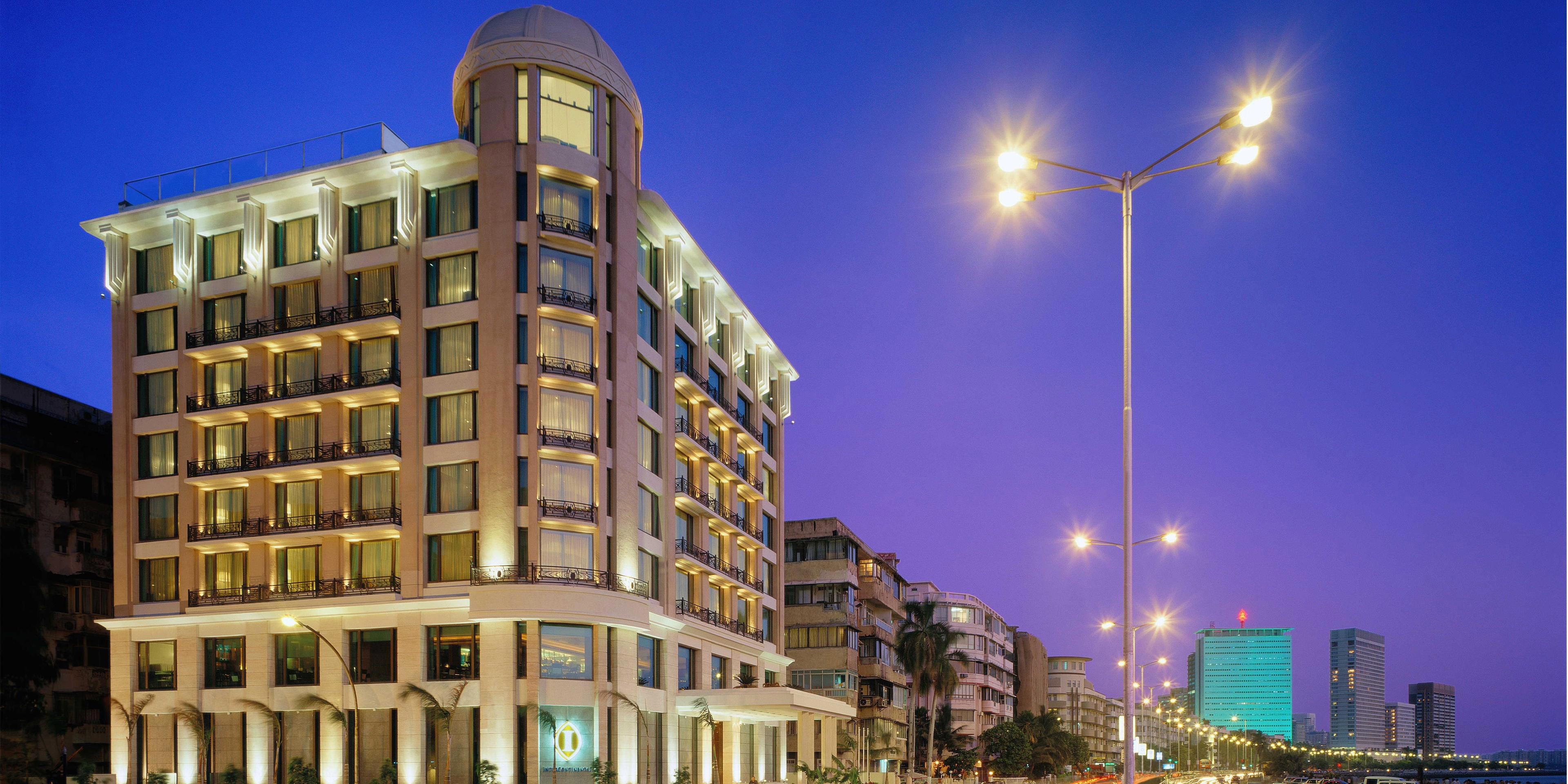
That anecdote captures something true about the property's relationship with Mumbai: it has always operated on its own terms. Since Jamsetji Tata commissioned it in 1903, the hotel has functioned less as an accommodation option within the city's hospitality market and more as the fixed point against which that market calibrates itself. The full Mumbai hotel scene has grown considerably in the 120-plus years since, with properties including InterContinental Marine Drive-Mumbai, Sofitel Mumbai BKC, and ITC Grand Central all occupying serious positions in the upper tier. None of them, however, carries the same founding weight.
Critical Recognition and Where It Sits in the Market
The award record is substantial and current. The Taj Mahal Palace placed 38th on the World's 50 Best Hotels list in 2025, a ranking that positions it inside the global top 40 at a moment when that list carries more editorial credibility than it did in its earlier iterations. La Liste awarded the property 98 points in its 2026 Leading Hotels ranking, a score that places it among a narrow cohort of properties worldwide. The World Travel Awards named it India's Leading Palace Hotel for 2025. Taken together, these recognitions from three separate credentialing systems, each with distinct methodology, amount to an unusually consistent external validation.
At a published rate from $456 per night, the hotel operates in the upper band of Mumbai's five-star market. That price point positions it against properties like ITC Maratha and Soho House Mumbai, though the comparison set for a property with this level of award recognition is arguably less local and more global: the grandes dames of Paris and New York, properties like Aman New York or The Fifth Avenue Hotel, where history, architecture, and current service standards are all expected to hold simultaneously.
The Architecture as Argument
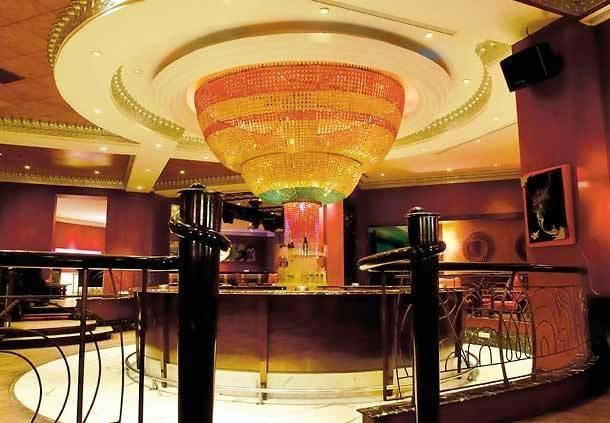
The building draws from Moorish, Rajput, and Oriental sources simultaneously, a combination that reads as coherent rather than eclectic in person. Vaulted alabaster ceilings, onyx columns, silk carpets, and crystal chandeliers define the Heritage Wing interiors, while the structural footnote that the dome sits on the same steel scaffolding design used for the Eiffel Tower gives the property an unexpected connection to the engineering history of the same era. The hotel was the first building in Mumbai to install electric elevators, telephones, electric lighting, an ice-making machine, and Turkish baths, a series of firsts that reflects its founding ambition to introduce international infrastructure standards to India at a time when that infrastructure was scarce.
The Taj Art Gallery, housed within the property, functions as one of Mumbai's more credible spaces for contemporary Indian art, showing experimental works, sculptures, and paintings from emerging artists. For travellers whose itineraries extend beyond the hotel, this is the kind of detail that shifts the property from accommodation to address.
The Rooms: Heritage Wing vs. Tower
285 rooms divide between the original Heritage Wing and a Tower addition completed in 1973. The distinction matters more here than in most hotels where a newer wing is simply newer. The Heritage Wing rooms retain period furniture and original artworks that function as evidence of the hotel's history rather than decoration applied to simulate it. The Tower Wing is more contemporary in finish, more uniform in atmosphere, and more antiseptic by comparison, though it remains a luxury product in its own right.
Suite categories extend the differentiation further. The Tata Suite, named for the hotel's founder, features white Makrana marble floors, hand-knotted carpets, colonial furniture, and chandeliers. The Ravi Shankar Suite commemorates the musician with a display of his sitars, a theme approach that varies across the suite inventory. All suites include personal butler service. Rooms oriented toward the Arabian Sea and the Gateway of India carry the strongest locational argument: the view from those positions frames one of the more consequential urban waterfronts in Asia.
Dining and Bars: A Portfolio with Documented Firsts
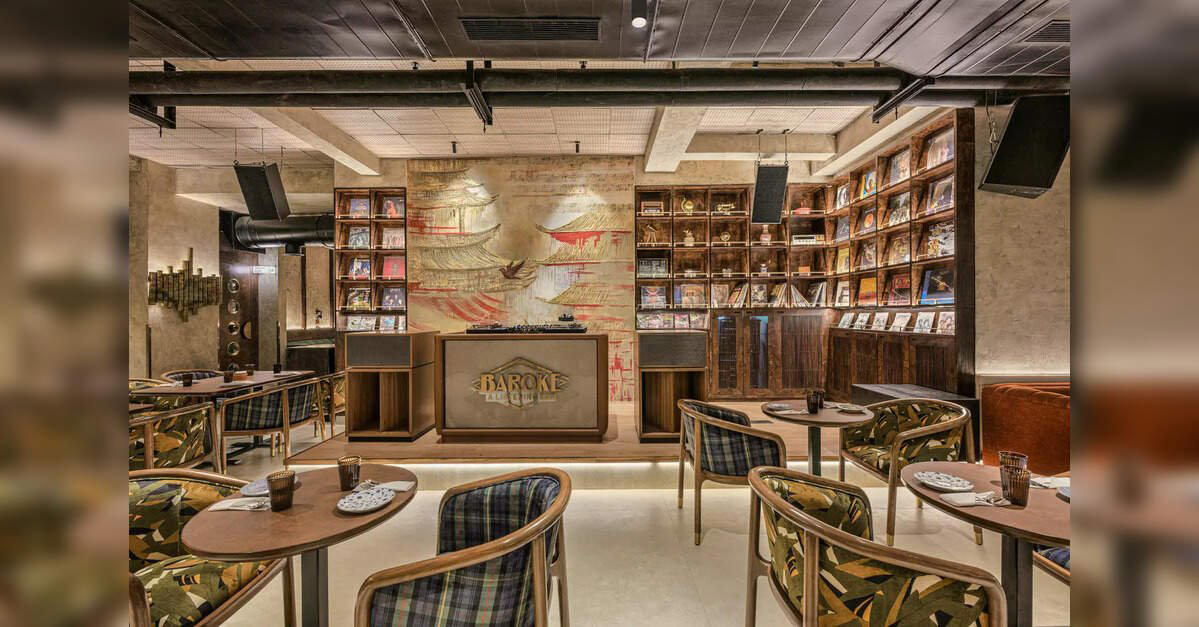
The food and beverage program at the Taj Mahal Palace carries its own list of firsts within the city. Harbour Bar opened in 1933 as Mumbai's first licensed bar and now runs speakeasy nights from Wednesday through Sunday. Golden Dragon holds the claim of being India's first authentic Sichuan and Cantonese restaurant, with more than 50 years of operation. Wasabi by Morimoto brought Contemporary Japanese dining to Mumbai for the first time, with seafood and wasabi sourced directly from Japan. Shamiana, the hotel's all-day coffee shop, is described as the original coffee shop of the city.
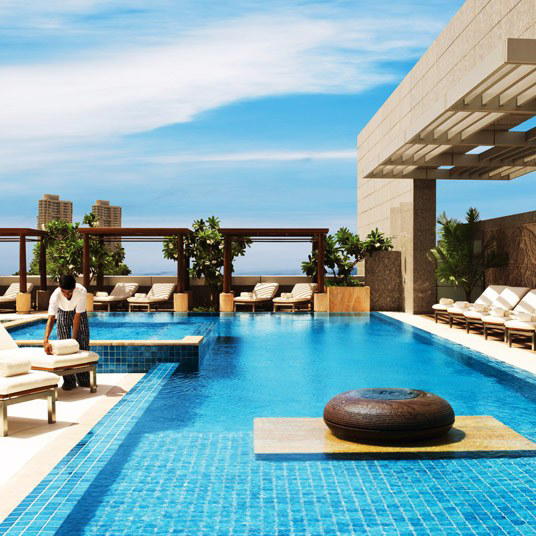
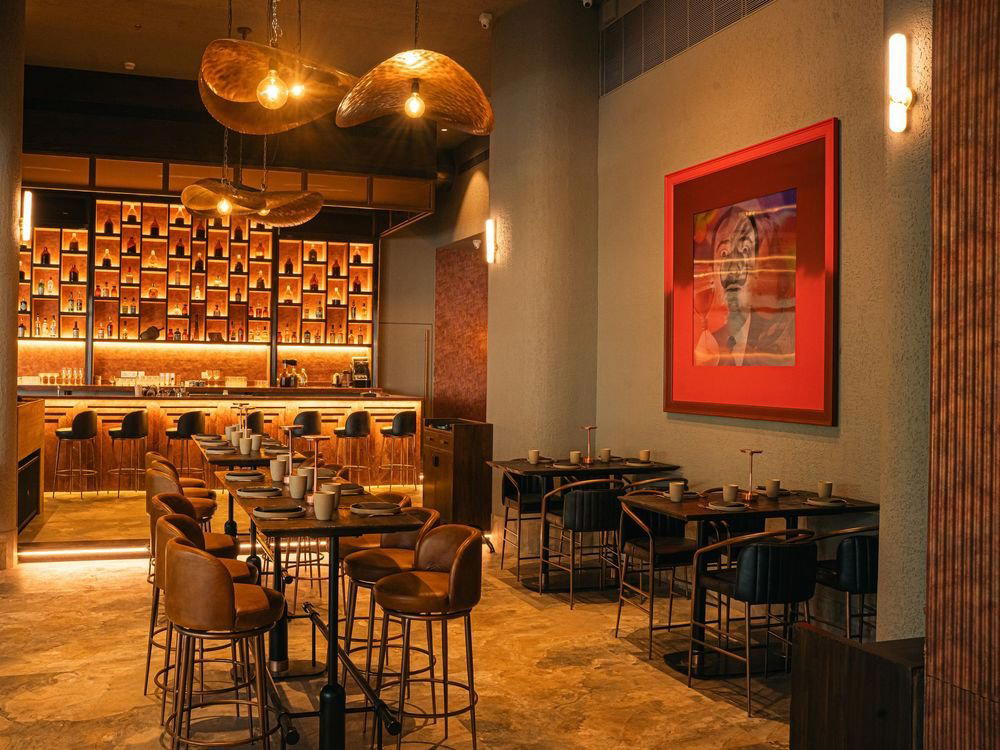
The more recent additions expand the range without abandoning the credentials approach. Loya is a beverage-forward restaurant focused on researched cuisine from North India. Souk operates as a rooftop restaurant with harbour views and an Eastern Mediterranean menu. Sea Lounge maintains an afternoon tea program that draws from both English and Indian street food traditions. La Patisserie covers the retail baked goods and confectionery position. Aquarius, the poolside option, is restricted to hotel residents.
For context on how this dining footprint fits Mumbai's broader food scene, our full Mumbai guide covers the city's current restaurant and bar landscape in detail.
Wellness and Practical Considerations
The J Wellness Circle spans 6,500 square feet and includes treatment rooms, a traditional Hammam, an Ayurveda Sanctuary, and yoga and meditation programming. The format sits within a broader Indian luxury wellness tradition that properties like Amanbagh and The Leela Palace New Delhi have also built programs around, though the Taj's version operates in an urban hotel context rather than a retreat setting.
The hotel offers guided daily heritage walks through its history, with private tour options also available. During yachting season, sailing and cruising facilities are offered, including sunrise cruises and speed boat excursions. A shopping arcade within the property houses luxury retail brands. The Colaba location, directly opposite the Gateway of India at Apollo Bandar, is among the most visited areas of central Mumbai, and the surrounding streets can generate significant pedestrian and vehicle congestion, particularly at peak tourist times. Planning arrival timing with that in mind is practical rather than optional.
Guests arriving from the airport may find the transit distance from Chhatrapati Shivaji Maharaj International Airport worth factoring into plans; travellers needing proximity to the airport have Aurika Mumbai International Airport as a nearby alternative. For those building broader India itineraries around this stay, the Taj Hotels group's network extends to properties across the country, and EP Club covers comparable palace-category options including The Leela Palace Jaipur, The Oberoi Amarvilas in Agra, and Suján Jawai in Pali.
Style and Standing
Comparable venues nearby, for context on price, style, and recognition.
| Venue | Cuisine | Price | Awards | Notes |
|---|---|---|---|---|
| The Taj Mahal Palace, MumbaiThis venue — the venue you are viewing | Historic palace with modern tower wing | $300–500 | 1 Michelin Key · World's 50 Best #30 | Not listed |
| The Oberoi, Mumbai | Luxurious urban hotel with panoramic sea and city views. | Not listed | Michelin Selected · La Liste Top Hotels | Nariman Point |
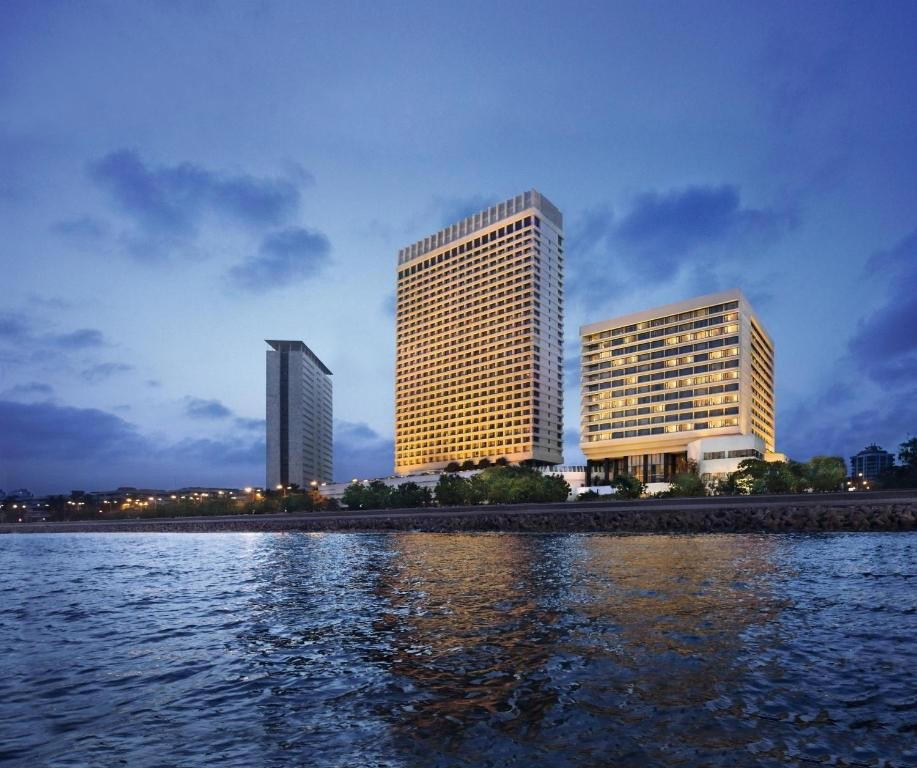
| Taj Mahal Tower, Mumbai | Dual-wing luxury hotel combining historic colonial-era Palace architecture with modern Tower design, positioned as Mumbai's premier heritage luxury destination. | $300–500 | 1 Michelin Key | Bombay Colaba |
| The St. Regis Mumbai | Luxury urban hotel with butler service and city views | Not listed | 1 Michelin Key · Michelin Guide New Hotels New Hotel | Lower Parel |
| Sofitel Mumbai BKC | Contemporary luxury business hotel with Indian influences | Not listed | Michelin Selected · World Luxury Hotel Awards WLHA Country Winner | Kolekalyan |
| ITC Grand Central, A Luxury Collection Hotel, Mumbai | Blend of Raj era character and contemporary design in LEED platinum certified environment | Not listed | Forbes 4-Star | Parel Shivedi |
Recognition history
Dated appearances from independent guides and award organizations, with the underlying list record or original source where available.
Michelin 1 Key
Michelin
World's 50 Best Hotels #30 · No. 30
World's 50 Best · 2026 World’s 50 Best Hotels 1-50
La Liste Top Hotels
La Liste
Forbes 4-Star
Forbes
Virtuoso Luxury Hotel Partner
Virtuoso
Full recognition history (9 entries)
Forbes 4-Star
Forbes
Michelin 1 Key
Michelin
World Travel Awards
World Travel Awards
World's 50 Best Hotels #38
World's 50 Best
Details
- Ornate
- Elegant
- Well Known
- Sophisticated
- Classic
- Honeymoon
- Romantic Getaway
- Business Trip
- Anniversary
- Celebration
- Historic Building
- Panoramic View
- Butler Service
- Rooftop Pool
- Pool
- Spa
- Fitness Center
- Room Service
- Concierge
- Business Center
- Valet Parking
- EV Charging
- Waterfront
- Skyline
- Elevator
- Step Free Entrance
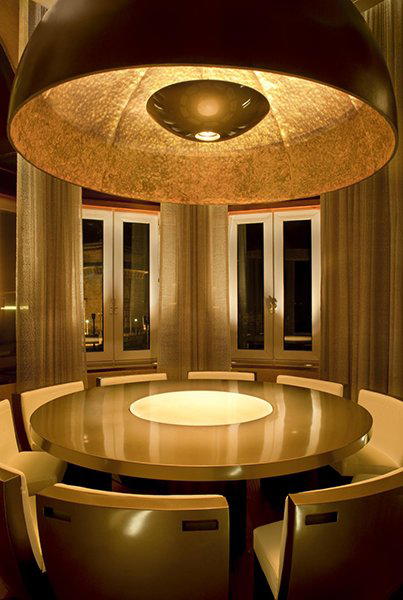
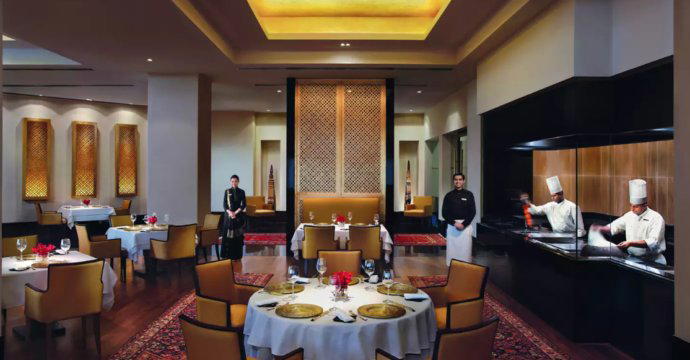
Ornate atmosphere with period charm, crystal chandeliers, antiques, and marble interiors, creating a sense of grandeur and tranquility.