
Positioned a mile from Chhatrapati Shivaji Maharaj International Airport in Andheri East, ITC Maratha is among Mumbai's most logistically useful luxury addresses for international travellers. Its Indo-Saracenic architecture, Maratha heritage programming, and 6,500-square-foot spa place it well above the standard airport-adjacent tier.
Pearl is the En Primeur Club membership app — saves, bookings, and concierge access live there. Same editors, same standards.
- Address
- Chhatrapati Shivaji Maharaj Int'l Airport Rd, near International Airport, Ashok Nagar, Andheri East, Mumbai, Maharashtra 400099
- Phone
- +91 22 2830 3030
- Website
- marriott.com
- Directions
- Get directions
 Saves & bookings on Pearl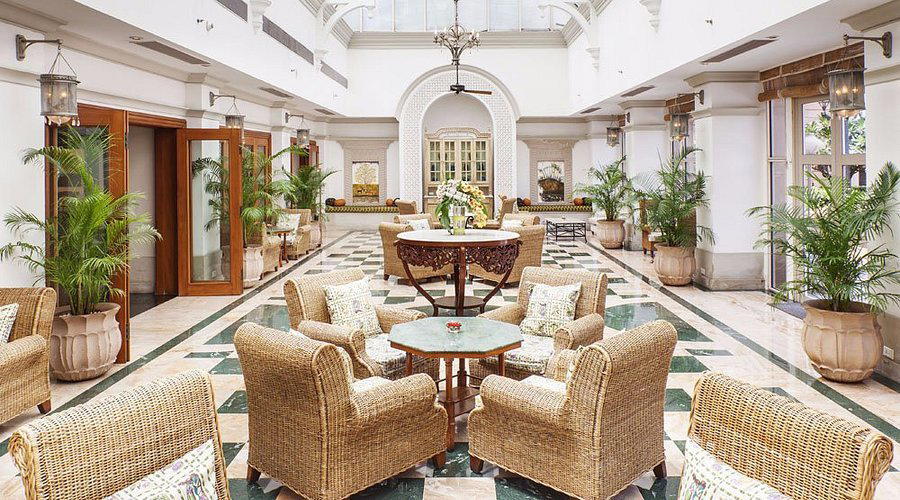
Airport Proximity, Without the Compromise
Mumbai's luxury hotel map divides broadly into two camps: the heritage palaces and promenade properties of South Mumbai, and the newer, operationally focused towers of the northern suburbs. ITC Maratha sits in that second geography, and proximity to Chhatrapati Shivaji Maharaj International Airport does not require architectural or cultural concession. The domed roofline is visible from a distance and announces, before check-in, that this is not a transit hotel. The address in Andheri East places guests roughly a mile from the international terminal, which in Mumbai traffic is a meaningful calculation, and within reach of the business districts of Powai, BKC, and the western suburbs without the city-length transfer that properties in Colaba or Marine Drive require.
For comparison, The Taj Mahal Palace, Mumbai and InterContinental Marine Drive-Mumbai offer the South Mumbai waterfront experience, but travellers on early departures or tight corporate schedules are trading location convenience for atmosphere. ITC Maratha inverts that equation, keeping the heritage atmosphere and ceding the sea view.
Architecture as Argument
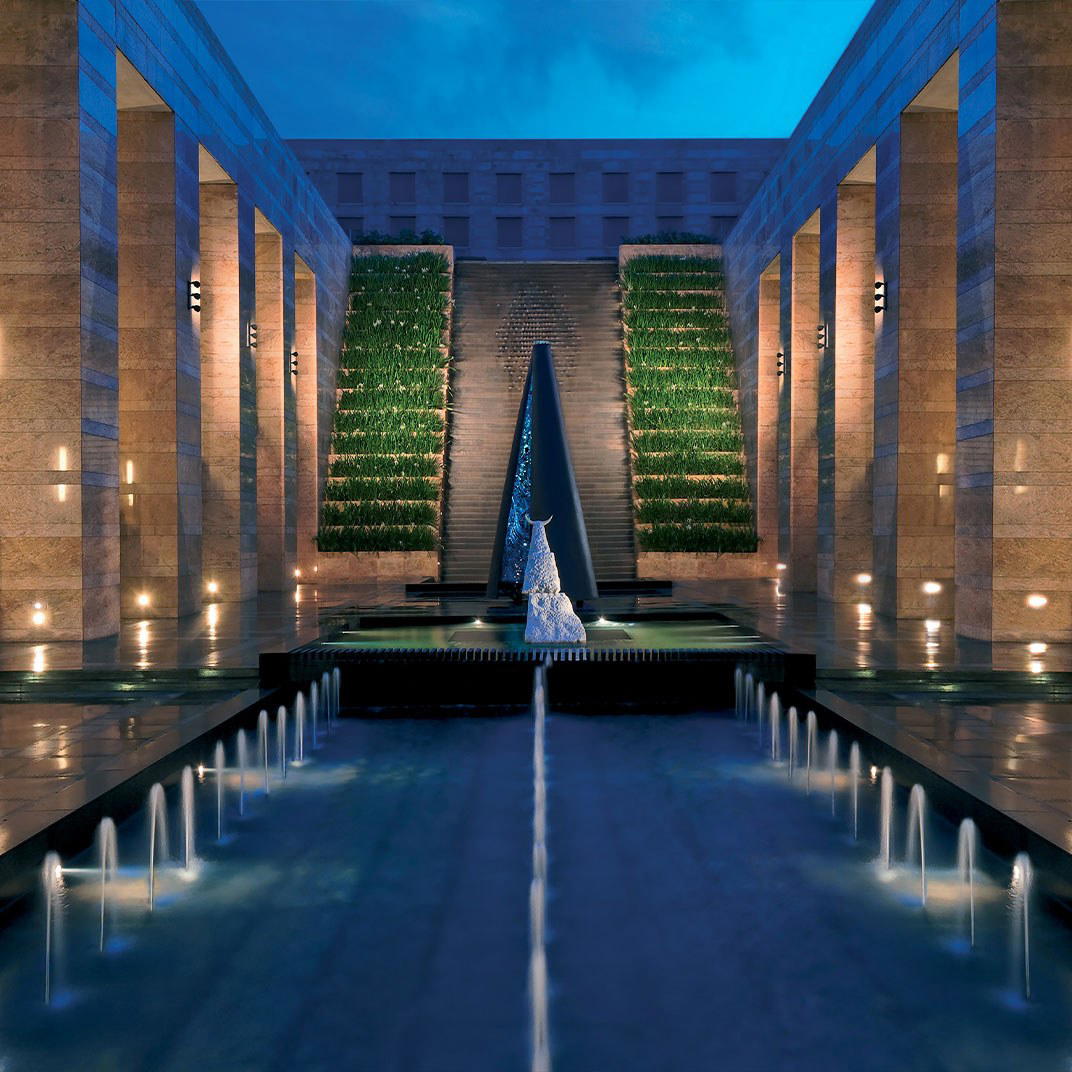
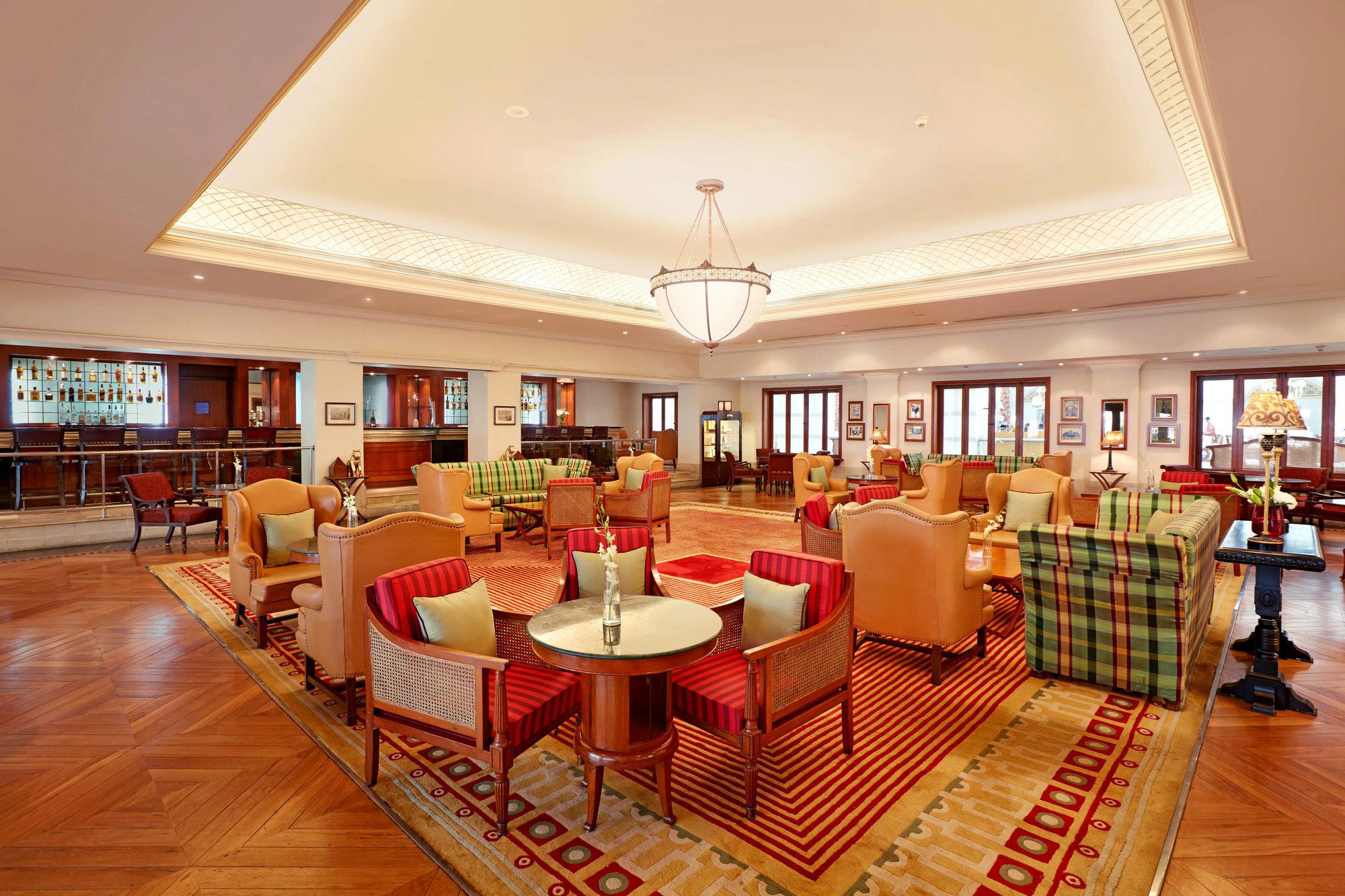
Indo-Saracenic architecture, developed by British architects in the late 19th century as a synthesis of Mughal and Hindu design vocabularies, produced some of the subcontinent's most recognisable civic buildings. ITC Maratha borrows from that tradition and applies it to a modern large-format hotel with reasonable conviction. The domed central structure sets the register on arrival; inside, the scale is used to display an art collection that spans Warli tribal painting to Paithani silk, the regional textile that also appears in the uniforms worn by hotel staff. The connection between material and geography is deliberate and consistent enough to read as curatorial rather than decorative.
Paithani silk, woven in Paithan in Maharashtra's Aurangabad district, carries centuries of craft history. Its presence throughout the property, from wall hangings to sari fabric, situates ITC Maratha within Maharashtra's cultural record rather than simply gesturing at it. This is the kind of regional specificity that separates the ITC brand's heritage properties from more generic luxury-tier competitors. The sister property, ITC Grand Central, A Luxury Collection Hotel, Mumbai, takes a different architectural approach in the Parel neighbourhood, making the two addresses complementary rather than interchangeable for Mumbai itineraries.
Where the Address Earns Its Keep
The practical case for Andheri East is direct for a specific traveller profile: international arrivals connecting to Rajasthan, Gujarat, or other Indian destinations within 24 to 48 hours benefit from staying north rather than committing to the south. Dharavi and the northern mill district lie between the airport zone and South Mumbai; crossing that geography twice in a short stay adds meaningful time and cost. Guests planning onward trips to, say, Amanbagh in Ajabgarh, Suján Jawai in Pali, or The Oberoi Amarvilas in Agra are better served by a hotel that keeps the airport close. The same logic applies to routes toward The Leela Palace Jaipur in Jaipur or The Leela Palace New Delhi in New Delhi.
For broader India itinerary reference, EP Club covers a range of regional properties, from Chapslee in Shimla and Haveli Dharampura in Delhi to Garner Kutch Gujarat in Kutch and Natraj Hotel and Restaurant in Udaipur, allowing travellers to map accommodation choices across a full circuit. ITC Maratha works well as a gateway node in that kind of itinerary.
The Rooms and What They Signal
The room hierarchy is structured around purpose. ITC One rooms are calibrated for business use, with desk space and single access to 24-hour boardrooms for up to three hours per stay, a practical detail that matters for one-night corporate stopovers where the room doubles as a workspace. Tower-category rooms add butler service and lounge access, raising the ceiling on amenity without requiring a suite-level commitment. The Grand Presidential Suite at 2,590 square feet takes Chhatrapati Shivaji, the 17th-century founder of the Maratha Empire, as its design brief, with portraiture and Paithani silk detailing throughout.
A practical note for solo women travellers: Eva rooms include a dedicated female butler and in-room door monitoring capability.
ITC has removed single-use plastics across its properties, so bath products and water vessels in the rooms are recyclable.
The Peshwa Pavilion and the Spa Floor
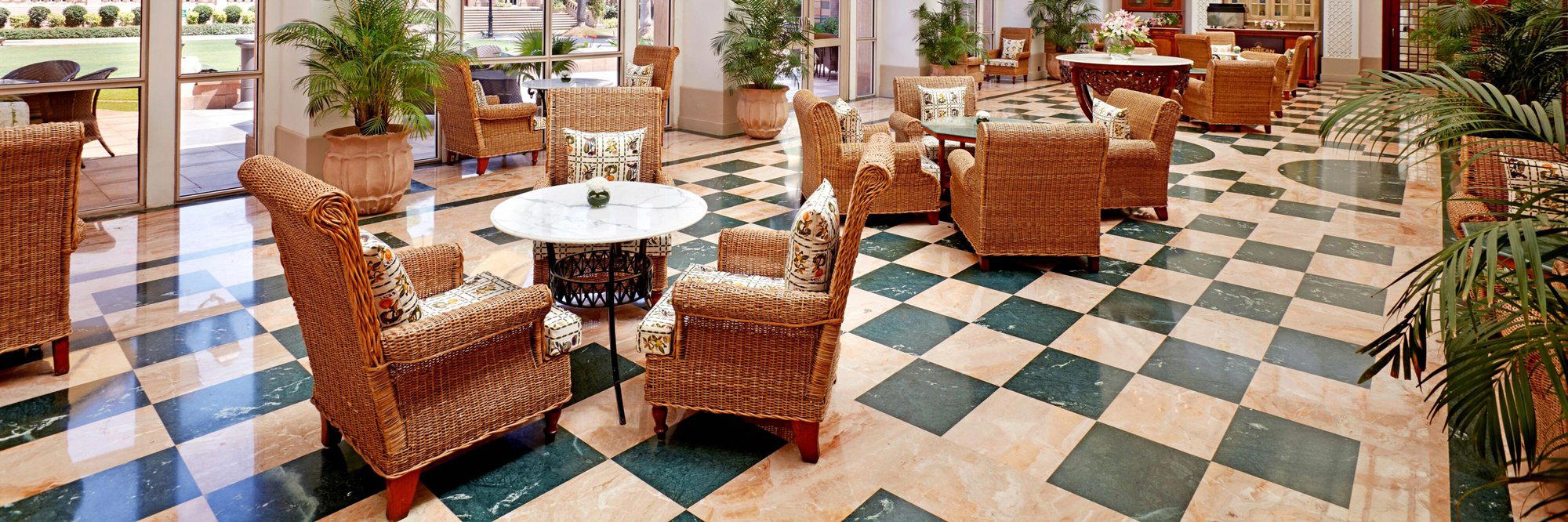
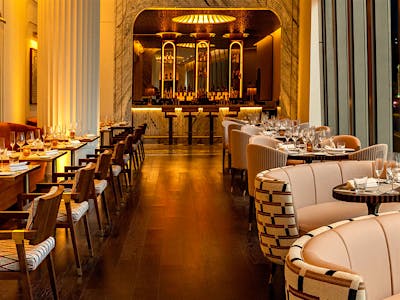
The Peshwa Pavilion operates around the clock, which in practice means it absorbs both the late arrivals who want tea before sleep and the early departures who need something before a 5am car. The availability of a marble-tabled, properly staffed restaurant at any hour is a functional asset for an airport-adjacent property drawing international long-haul arrivals across time zones.
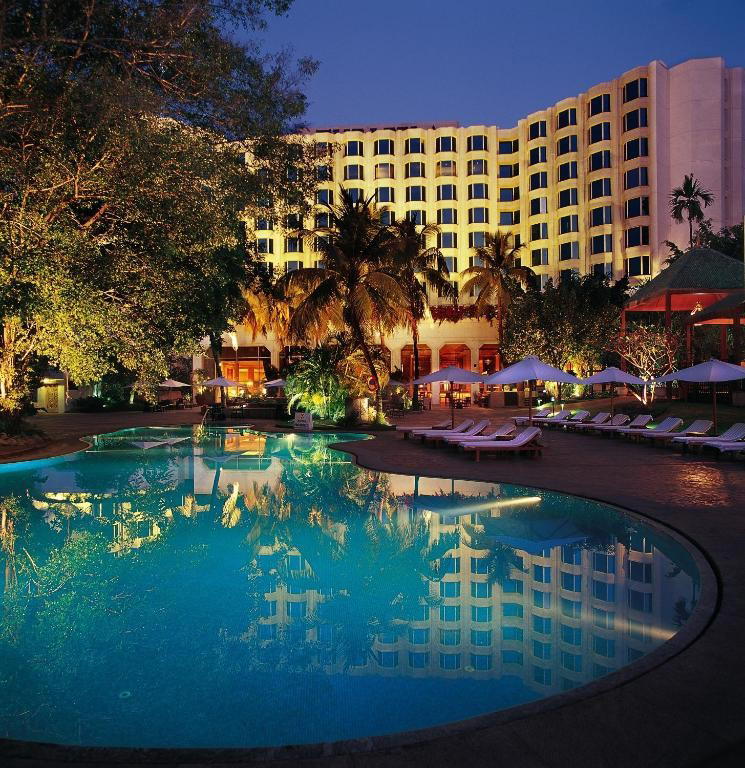
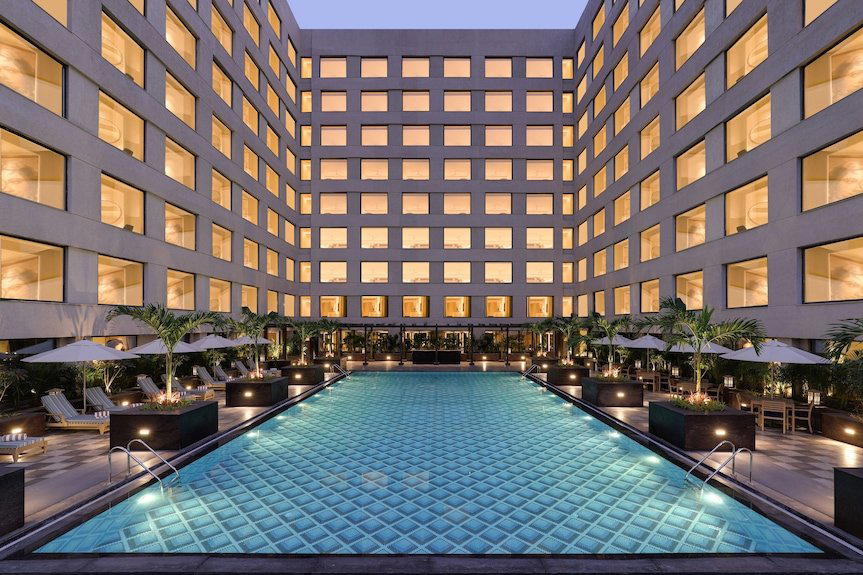
On the 11th floor, the outdoor oval pool is framed by stone lions and positioned above the Andheri roofline. The Kaya Kalp spa at 6,500 square feet uses regional food ingredients, including pomegranate, basmati rice, and mung bean, as treatment components, a format that connects the spa program to Maharashtra's agricultural and culinary traditions rather than defaulting to international wellness templates. This approach is consistent here.
Seasonality and Booking Timing
Mumbai's winter months, broadly October through February, draw the highest hotel occupancy across the city. At ITC Maratha, advance booking is recommended. The property's combination of airport access, cultural programming, and Luxury Collection positioning means it draws both leisure and corporate traffic simultaneously during the cooler months. Guests arriving in the monsoon season, June through September, will find rates and availability more accommodating, though Mumbai's airport infrastructure during heavy rainfall introduces its own logistical considerations.
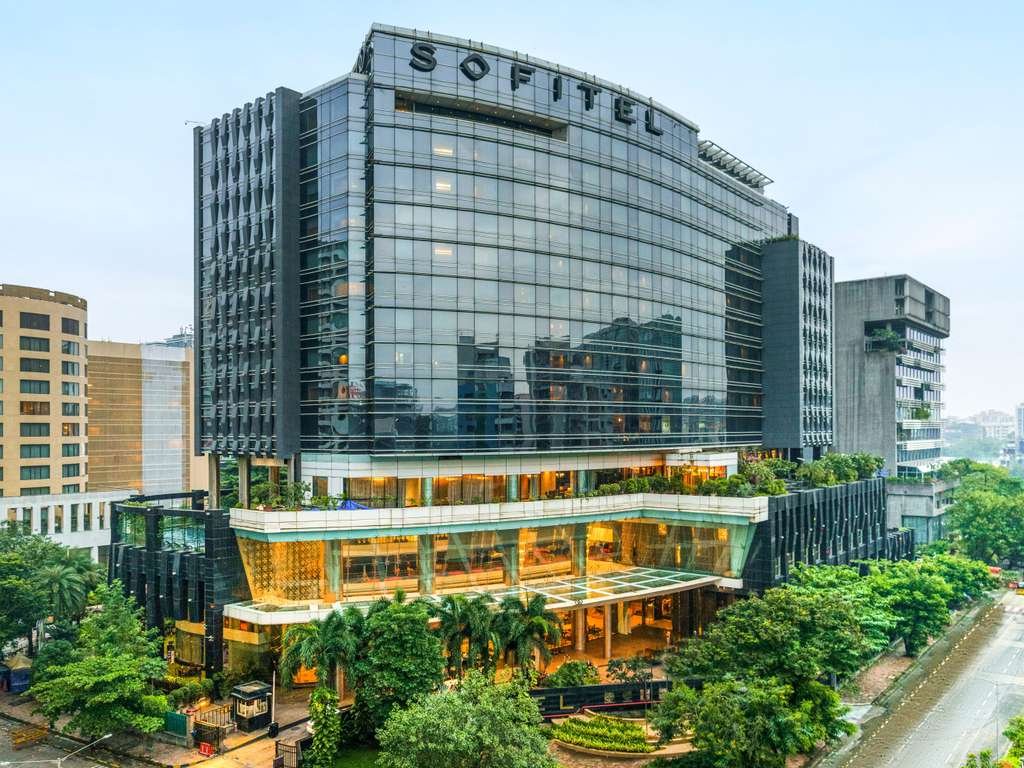
For Mumbai alternatives across different neighbourhood contexts, Sofitel Mumbai BKC operates in the Bandra Kurla Complex financial district, Soho House Mumbai anchors a different social register entirely, and Aurika Mumbai International Airport competes directly in the airport-proximity category. Le Sutra the Indian art hotel and Sea Palace Hotel serve a different price tier.
Planning Your Stay
ITC Maratha is part of Marriott International's Luxury Collection, which means bookings are accessible through Marriott Bonvoy channels and points redemption applies. The property is at Chhatrapati Shivaji Maharaj International Airport Road, Andheri East, Mumbai 400099. Given peak-season occupancy patterns, securing rooms ahead for winter travel is sensible. For guests whose India itineraries extend south, Hyatt House Bengaluru Devanahalli in Bengaluru occupies a comparable airport-adjacent positioning in that city's hotel geography.
Compact Comparison
Comparable venues nearby, for context on price, style, and recognition.
| Venue | Cuisine | Price | Notes |
|---|---|---|---|
| ITC Maratha, A Luxury Collection Hotel, MumbaiThis venue — the venue you are viewing | Not listed | $$$$ | Not listed |
| ITC Grand Central, A Luxury Collection Hotel, Mumbai | Not listed | $$$$ | Parel Shivedi, Blend of Raj era character and contemporary design in LEED platinum certified environment |
| The Leela Mumbai | Not listed | $$$$ | Marol, Luxurious urban oasis with landscaped tropical gardens and palatial Indian elegance. |
| The Resort Mumbai | Not listed | $$$$ | Aakse, Luxury beach resort blending comfort and nature |
| Aurika Mumbai International Airport | Not listed | $$$$ | Sahar, Modern luxury airport hotel blending heritage-inspired design with contemporary comfort |
| InterContinental Marine Drive-Mumbai | Churchgate, Oceanfront luxury boutique | $$$$ | Not listed |
Recognition history
Dated appearances from independent guides and award organizations, with the underlying list record or original source where available.
Forbes 4-Star
Forbes
Forbes 4-Star
Forbes
At a Glance
- Elegant
- Sophisticated
- Ornate
- Business Trip
- Romantic Getaway
- Celebration
- Rooftop Pool
- Historic Building
- Butler Service
- Wi Fi
- Pool
- Spa
- Fitness Center
- Room Service
- Concierge
- Business Center
- Garden
- Wi Fi
- Pool
- Spa
- Fitness Center
- Room Service
- Concierge
- Business Center
Elegant and regal with understated grandeur, featuring soundproofed rooms and a serene spa atmosphere.