Aman-i-Khas


2 Michelin Keys · Virtuoso Luxury Hotel Partner
Aman-i-Khas places ten canvas tents at the edge of Ranthambore National Park, one of India's most active tiger reserves, in a format that trades hotel infrastructure for immersion in the Rajasthan wilderness. At roughly $1,800 per night, it occupies the highest tier of wildlife camp accommodation in India, with a six-month operating season running October through April and transfers available from Delhi, Jaipur, and Sawai Madhopur station.

Pearl is the En Primeur Club membership app — saves, bookings, and concierge access live there. Same editors, same standards.
- Address
- Village- Sherpur, near Ranthambore National Park, Khilchipur, Sawai Madhopur, Rajasthan 322001
- Phone
- +91 7462 252 052
- Website
- aman.com
- Directions
- Get directions
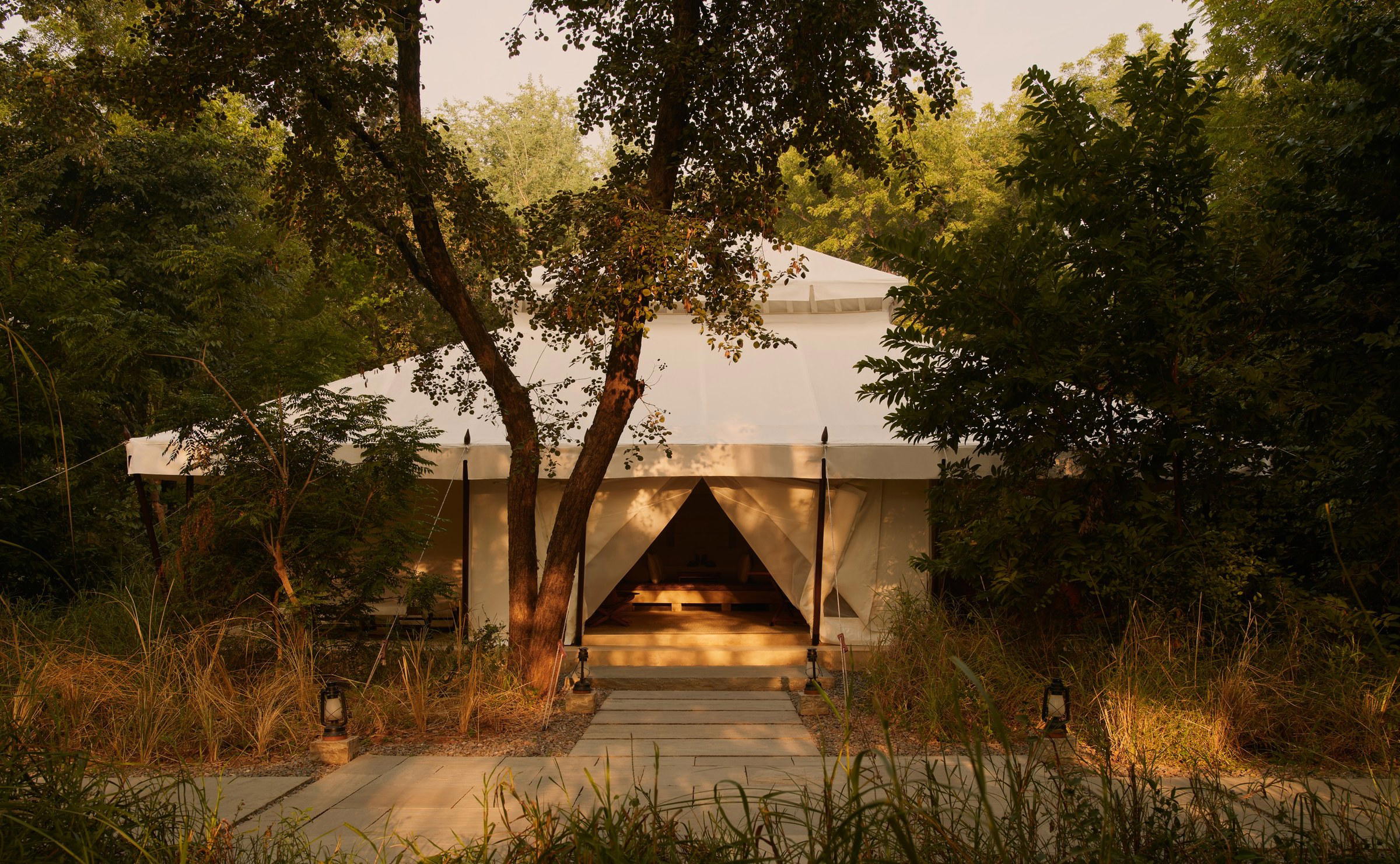
Canvas, Steel, and Mughal Shadow: How Aman-i-Khas Is Built
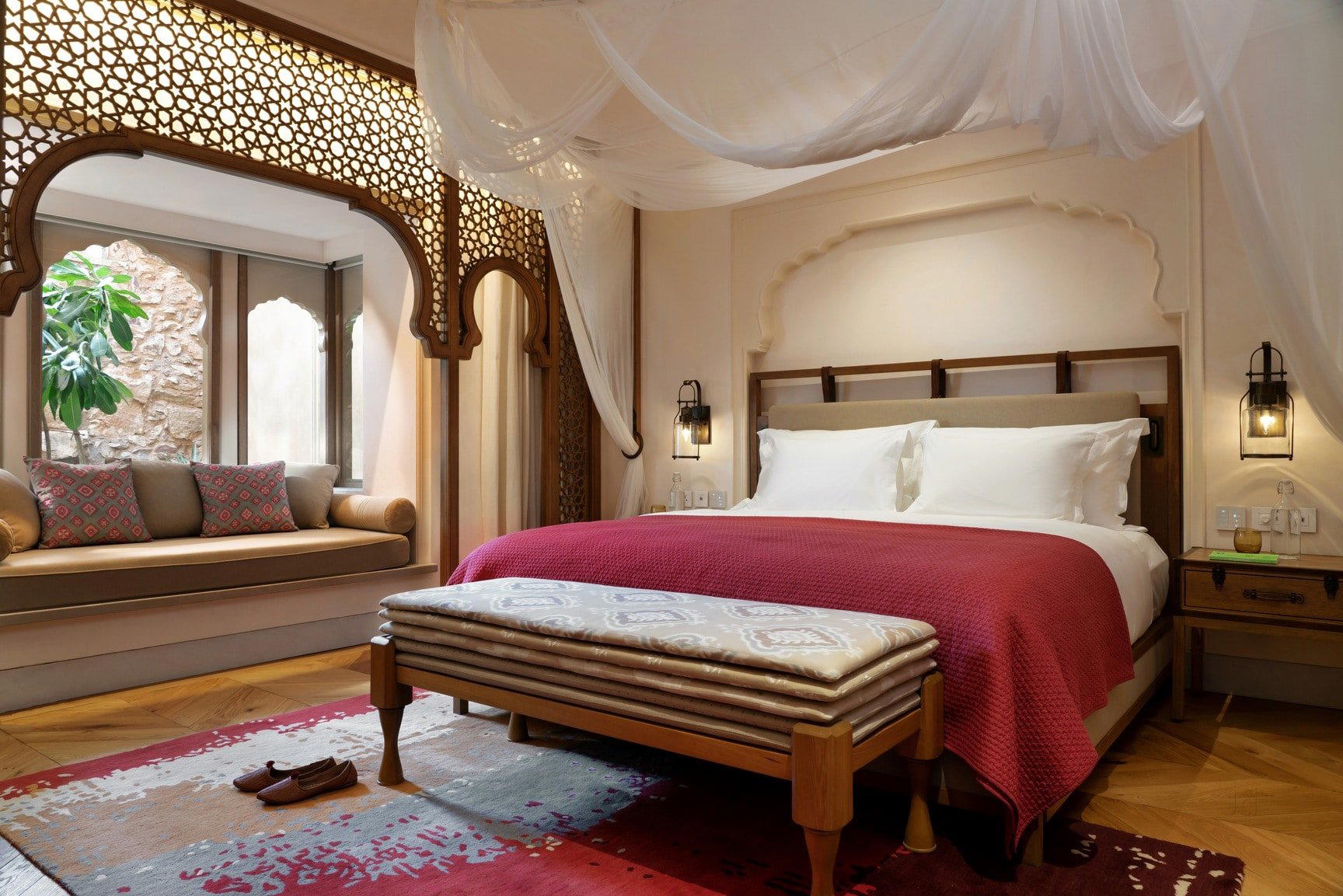
Luxury tented camps across India divide broadly into two camps: those that use the tent as a decorative gesture draped over solid construction, and those that treat the canvas envelope as architecture in itself. Aman-i-Khas belongs to the second tradition. Each of the ten accommodation tents is constructed from canvas stretched over a steel frame and set on a concrete plinth, measuring 108 square metres per unit. That footprint is generous by any standard, but what distinguishes the design is the vertical drama: the central living area ascends to a six-metre canopy that creates the spatial impression of a Mughal pavilion rather than a camping shelter.
The Mughal reference is not decorative shorthand. The travelling court of the Mughal emperors moved across the subcontinent in elaborate tent cities, and the design logic of Aman-i-Khas draws on that tradition with deliberate restraint. Interior walls and ceilings are draped in fine cotton, furniture is minimal and unobtrusive, and the cream-and-natural-wood palette avoids the heavy pattern and colour that characterise many heritage Rajasthan properties. The effect is a kind of disciplined calm. Screened sections separate sleeping, bathing, and dressing from the central volume. A deep soaking tub and separate shower occupy the bathing area. The entry sequence passes through a screened vestibule containing an armchair and a dining table, so even the threshold between outside and inside has its own spatial logic.
All ten tents are identical in configuration, which is an unusual choice for a property at this price point. Most competitors in the premium wilderness category differentiate by tent type, view category, or proximity to water, generating a hierarchy that rewards upgrades. Aman-i-Khas does not follow that model. The consistency signals a curatorial decision: every guest receives the same spatial experience, and the variation comes from the wilderness outside rather than the room category within. Each tent is air-conditioned, has a ceiling fan, and includes a cooler chest for drinks, so the temperature control is layered rather than dependent on a single system — a practical consideration during the warmer months of the operating season.
A Season Tied to the Park
The camp opens in October and closes at the end of April. That six-month window is not arbitrary: it maps directly onto the optimal period for wildlife activity in Ranthambore, when cooler temperatures bring animals to water sources and the grasslands remain accessible after the monsoon. The park's tigers are among the most studied and, by wildlife tourism standards, most reliably sighted in India, which makes Ranthambore a different proposition from some other Indian reserves where sightings require extended stays and considerable luck. Game drives operate from open-topped four-wheel-drive vehicles, and the surrounding terrain also supports crocodiles, deer, antelope, gazelle, and a wide range of bird life.
The ten-tent capacity, combined with the seasonal closure, means that availability is structurally limited. With only ten rooms operating for roughly 180 nights per year, the property sells out early, and the advice to book well in advance is logistical rather than promotional. Guests who arrive with flexible dates have more options, but peak months in the cool season book out months ahead.
Dining and Communal Space
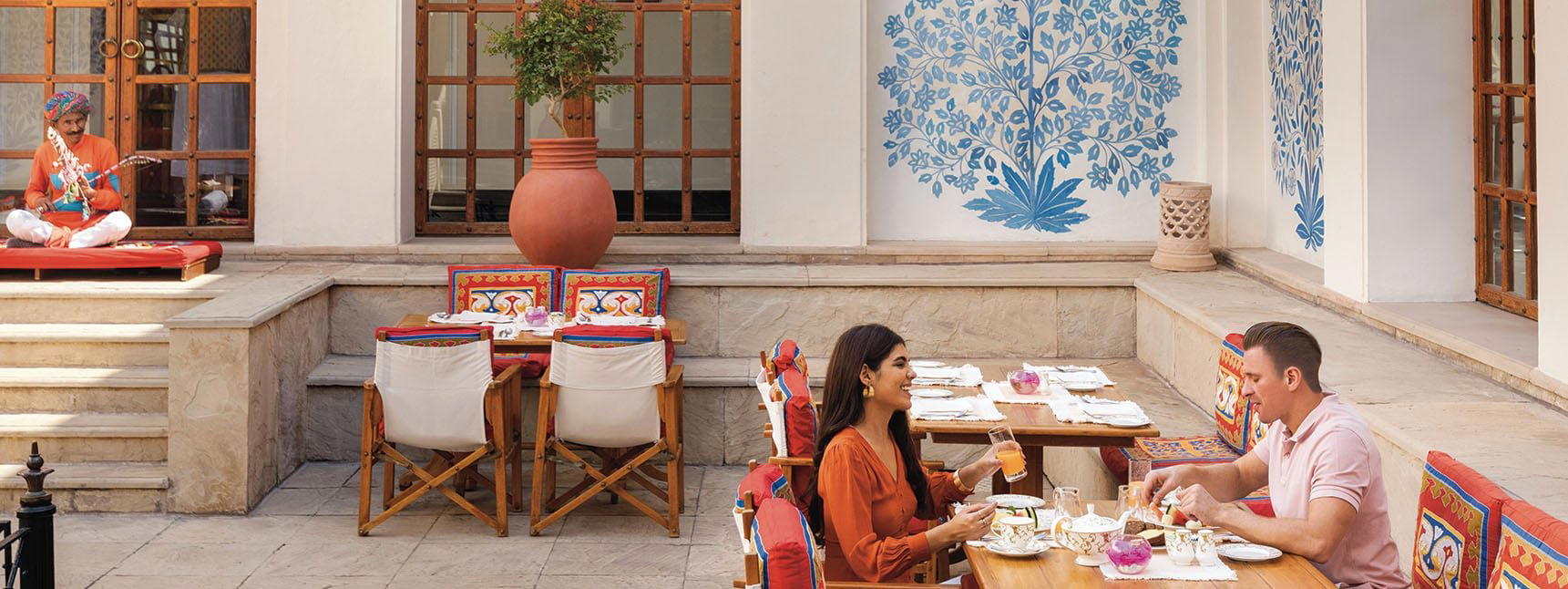
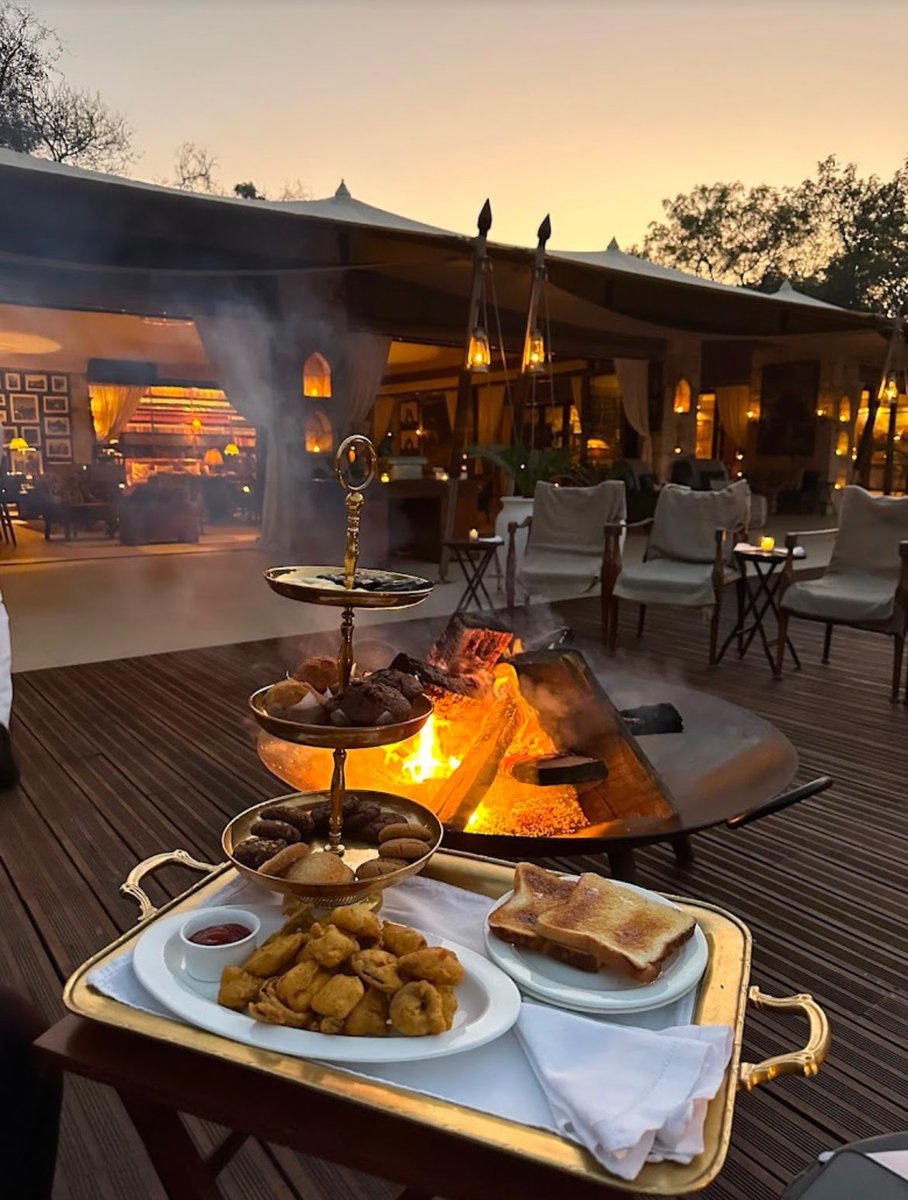
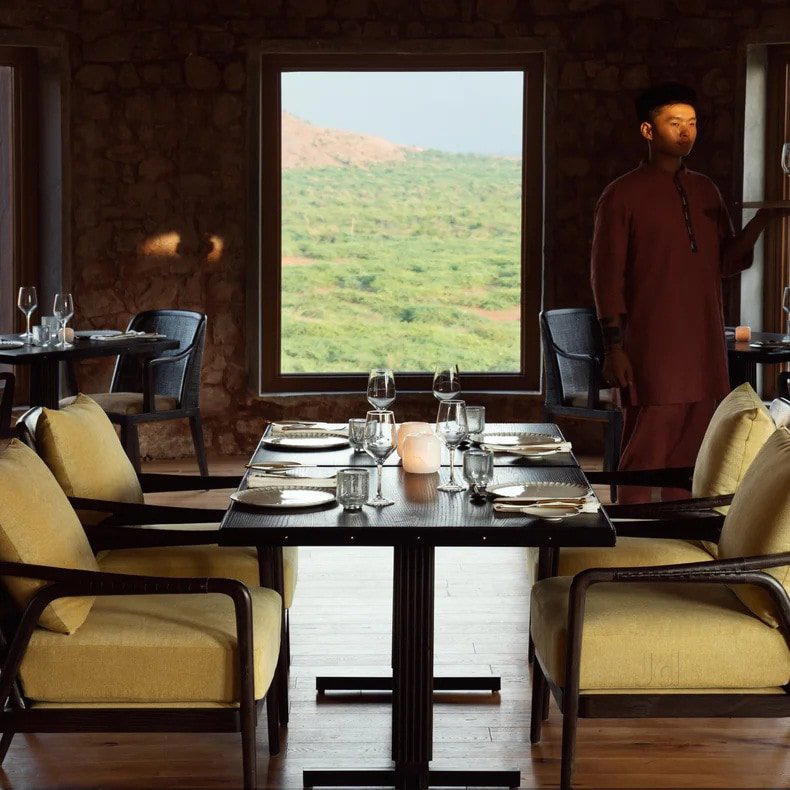
Dining programme at Aman-i-Khas reflects the same low-infrastructure logic as the accommodation. A dedicated Dining Tent is furnished with tables and chairs, but meals rotate through multiple locations in the grounds depending on the time of day and season. Dinner frequently concludes around an outdoor log fire, which functions as the social anchor of the camp during cooler winter evenings. The Fireplace at the upper level of the property operates as an informal outdoor lounge, separate from the main dining tent, giving guests a second gathering point after dark.
Menu covers Indian cuisine alongside a range of Western dishes. Most vegetables and herbs are sourced from the camp's organic garden on the grounds, which allows the kitchen to respond to what is actually growing rather than operating from a fixed imported supply chain. That approach suits the remote location and aligns with the camp's broader emphasis on self-sufficiency within the landscape. For guests making meal comparisons, our full Ranthambore restaurants guide covers options beyond the camp perimeter, though given the distance to town and the pace of a wildlife-focused stay, most guests eat in-camp for the majority of their visit.
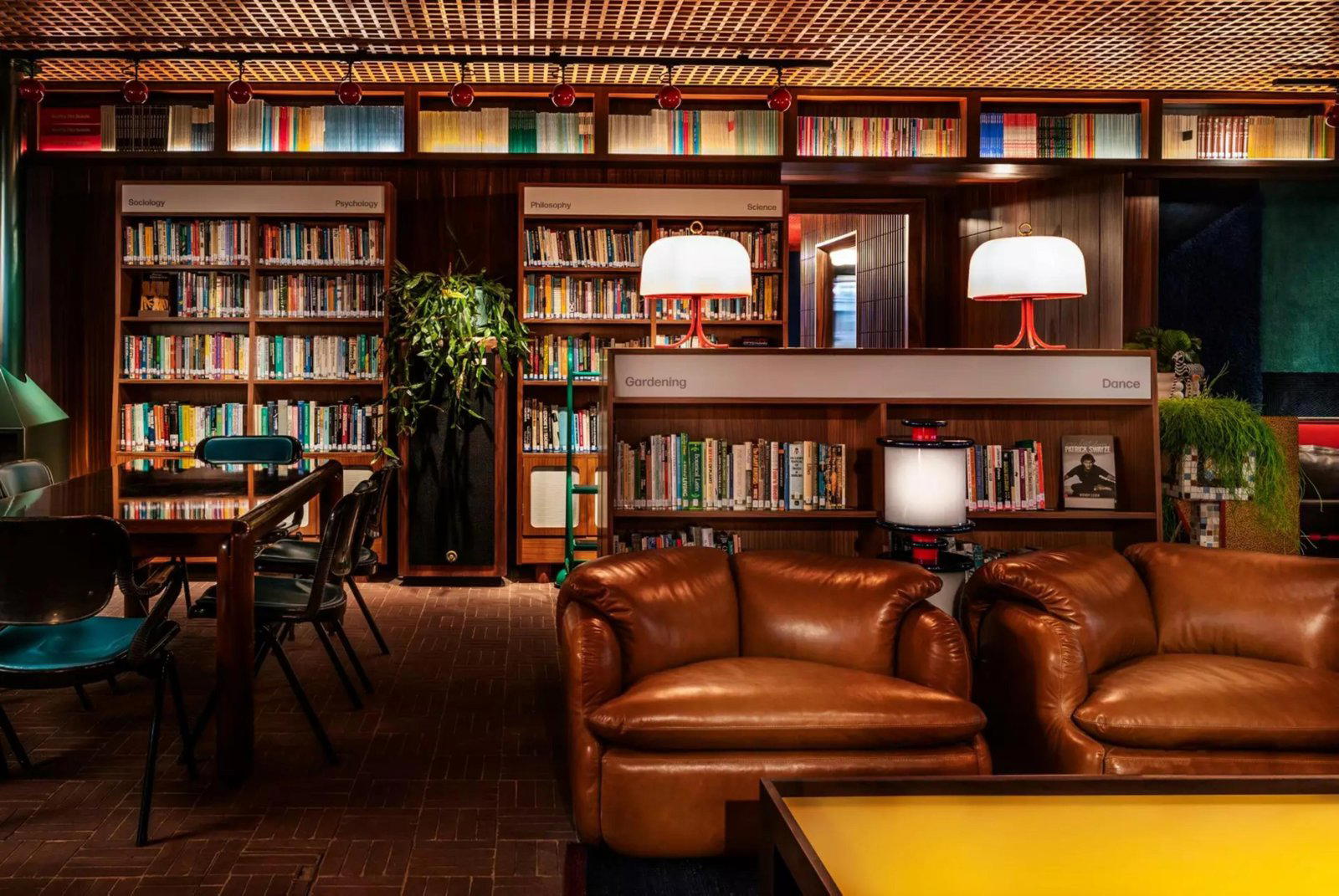
Adjacent to the dining tent, the Lounge Tent is stocked with reading tables, banquettes, and a library of coffee-table books covering Ranthambore's wildlife, the history of Rajasthan, and broader Indian cultural subjects. The Spa Tent, with twin treatment areas and two massage tables, completes the guest facilities. There is also a stepwell-style pool for use after game drives. The total picture is one of deliberate modesty in facility count, compensated by quality of execution in each category.
Aman-i-Khas in the Context of Indian Luxury Camps
The premium wilderness camp format in India is a competitive space. Properties like Suján Jawai in Pali operate in Rajasthan with a similar tented architecture and comparable wildlife emphasis, while the broader Aman portfolio in the region includes Amanbagh in Ajabgarh, which takes a more built, haveli-influenced approach. Aman-i-Khas occupies the group's most pared-back position in India, prioritising proximity to the park and the integrity of the tent format over resort amenities.
At approximately $1,800 per night, it prices at the top of the Indian wilderness camp category. For comparison, palace conversions like The Leela Palace Jaipur and monument-adjacent properties like The Oberoi Amarvilas in Agra occupy a different competitive register, one defined by architectural grandeur and proximity to heritage sites rather than wildlife access. The two categories attract different motivations, and guests choosing Aman-i-Khas are primarily purchasing access to the park and to a particular kind of immersive isolation, not a hotel experience that happens to be near wildlife. For guests building a longer India itinerary, Aman New York and Aman Venice represent the group's urban counterparts, though the tonal contrast with the Ranthambore camp is considerable.
Other properties for cross-reference when planning a Rajasthan circuit include Alila Fort Bishangarh in Manoharpur, Haveli Dharampura in Delhi, and for travellers extending north, Ananda in the Himalayas offers a wellness-focused contrast to the Ranthambore experience.
Getting There
The most efficient connection from Delhi is by train: the journey to Sawai Madhopur station takes just under four hours, and the camp collects guests from the station in an open jeep-style vehicle for the 15-minute drive to the property. By car from Delhi, the journey runs to approximately seven hours. From Jaipur, the drive takes around three and a half hours by road, with transfers available at approximately $250 USD one way. Helicopter access from Delhi is also an option for guests with constrained time. The The Leela Palace New Delhi is one starting point for guests routing through the capital before heading south into Rajasthan.
In Context: Similar Options
Comparable venues nearby, for context on price, style, and recognition.
| Venue | Cuisine | Price | Awards | Notes |
|---|---|---|---|---|
| Aman-i-KhasThis venue — the venue you are viewing | Luxury tented camp inspired by Mughal hunting pavilions | $1,000–1,500 | 2 Michelin Keys · Virtuoso Luxury Hotel Partner | Not listed |
| The Leela Palace Jaipur | Modern palatial luxury inspired by traditional Indian royal architecture and heritage, combining contemporary amenities with classical design elements. | $300–500 | 2 Michelin Keys · La Liste Top Hotels | Kukas |
| Six Senses Fort Barwara | Restored 16th-century fort with contemporary Rajasthani style suites | Not listed | 2 Michelin Keys · La Liste Top Hotels | Barwara |
| The Imperial New Delhi | Historic luxury heritage hotel blending Victorian-era architecture with contemporary Art Deco design elements, positioned as an urban resort with curated art collections and refined public spaces. | $300–500 | 2 Michelin Keys · La Liste Top Hotels | Connaught Place |
| Raffles Jaipur | Palatial recreation of Mughal Zenana with Rajasthani heritage craftsmanship | $500–750 | 2 Michelin Keys · Fodor's Most Incredible Hotels in the World | Kookas |
| Suján Sher Bagh | 1920s-style luxury tented safari camp blending conservation, heritage, and ornate wilderness comfort | Not listed | 2 Michelin Keys · Conde Nast Gold List | Ranthambhore Tiger Reserve |
Recognition history
Dated appearances from independent guides and award organizations, with the underlying list record or original source where available.
Michelin 2 Keys
Michelin
Virtuoso Luxury Hotel Partner
Virtuoso
Full recognition history (3 entries)
Michelin 2 Keys
Michelin
Continue exploring
More in Sawāi Mādhopur
Hotels in Sawāi Mādhopur
Browse all →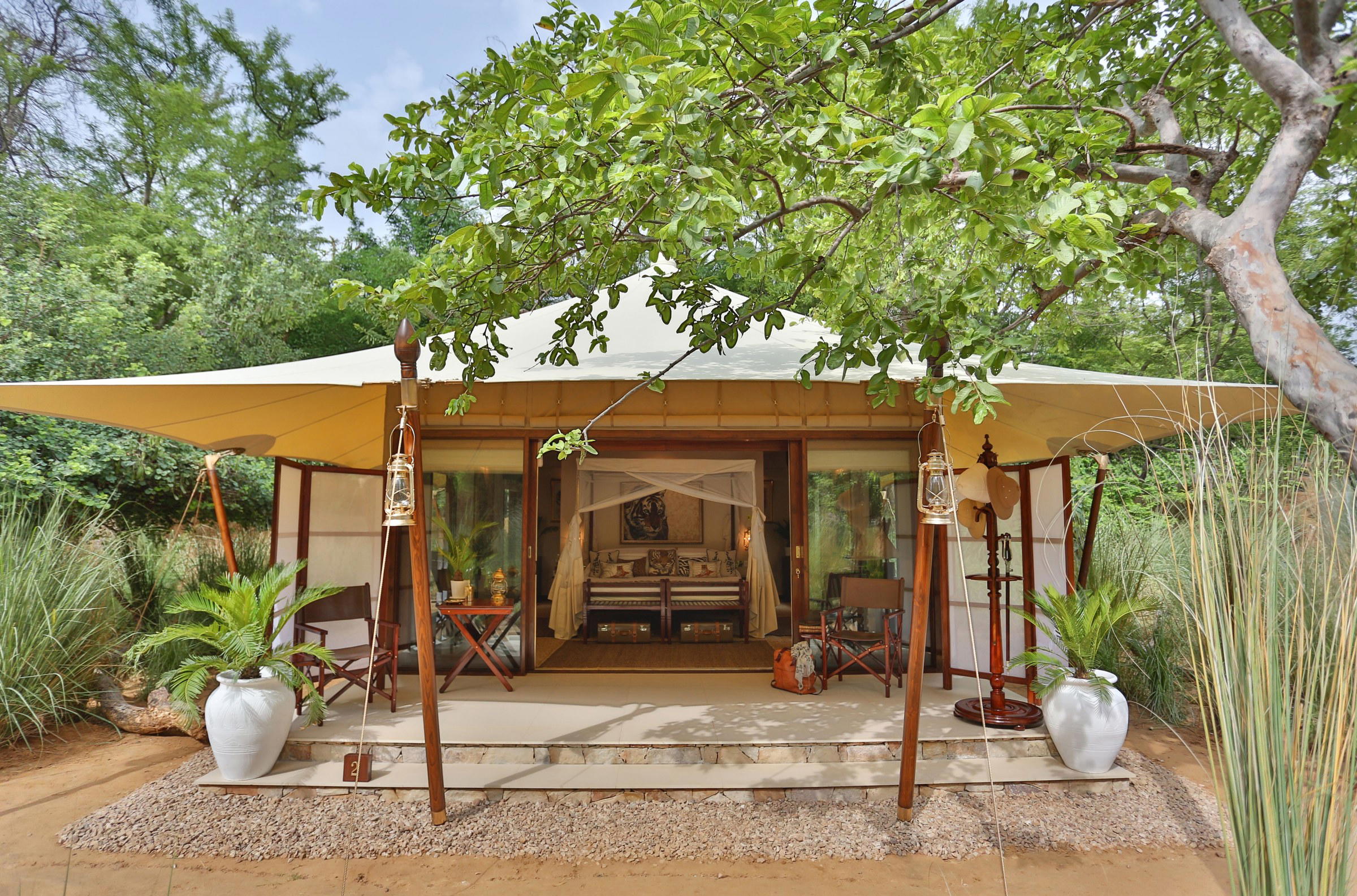
Bars in Sawāi Mādhopur
Browse all →

Details
- Romantic
- Quiet
- Elegant
- Scenic
- Intimate
- Ornate
- Sophisticated
- Honeymoon
- Romantic Getaway
- Wellness Retreat
- Weekend Escape
- Group Retreat
- Private Villa
- Panoramic View
- Garden
- Terrace
- Wi Fi
- Pool
- Spa
- Room Service
- Concierge
- Valet Parking
- Garden
Serene and intimate wilderness atmosphere with softly lit dining tents, communal fire pit under stars, and tranquil step-well pool surrounded by nature.