

A 5-star, 26-room retreat in Nusa Dua recognised within the Great Hotels of the World collection, THE BALÉ occupies a distinct tier among Bali's peninsula properties: small enough to feel private, refined enough to hold its own against the area's larger resort footprints. Its compact scale and collection membership place it firmly in the design-led, low-key luxury niche that has grown considerably across Southeast Asia over the past decade.
Pearl is the En Primeur Club membership app — saves, bookings, and concierge access live there. Same editors, same standards.
- Address
- Jl. Raya Nusa Dua Selatan, Benoa, Kec. Kuta Sel., Kabupaten Badung, Bali 80363, Indonesia
- Phone
- +62 361 775111
- Website
- lifestyleretreats.com
- Directions
- Get directions
 Saves & bookings on Pearl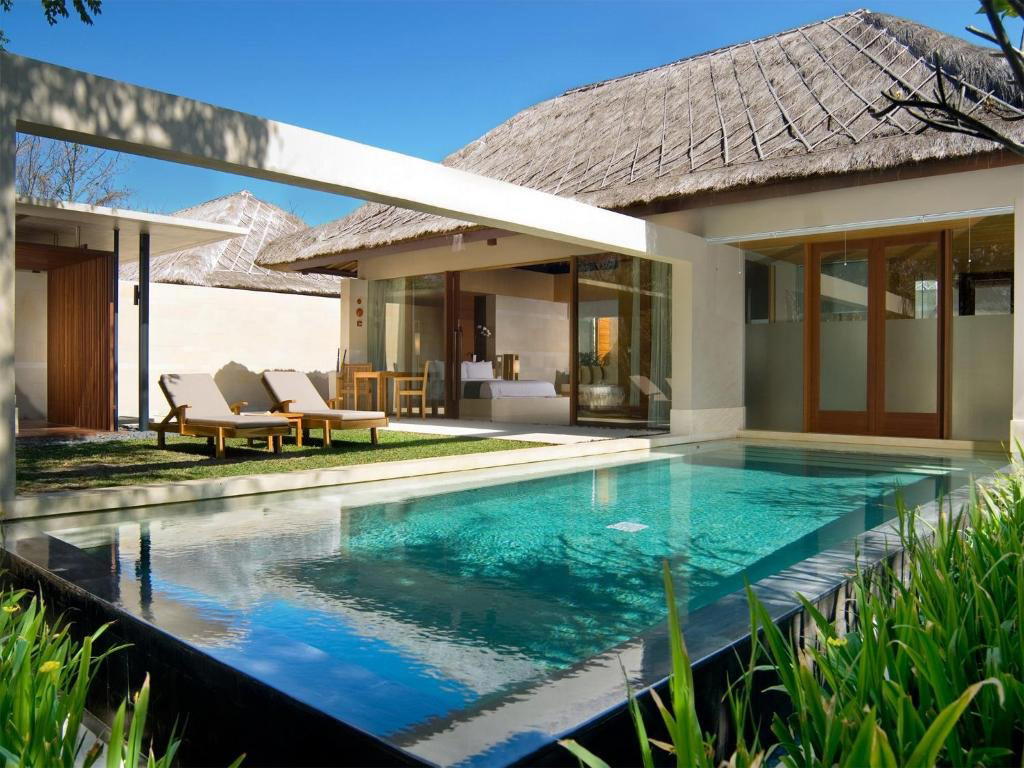
What Small-Scale Luxury Looks Like in Nusa Dua
Nusa Dua's southern peninsula has long been Bali's most controlled resort corridor: gated, manicured, and dominated by large international hotel brands whose footprints run to hundreds of rooms and multiple pools. Properties like Conrad Bali, Sofitel Bali Nusa Dua Beach Resort, and The Ritz-Carlton, Bali set the dominant template here: sprawling grounds, convention-ready infrastructure, and a scale that suits groups and families as much as couples seeking quiet. Against that backdrop, THE BALÉ Nusa Dua operates on a deliberately different register. With just 26 rooms and membership in the Great Hotels of the World collection, it belongs to a cohort of Bali properties where the calculation is straightforwardly about ratio, fewer guests per square metre, less ambient noise, more considered service interactions.
Across Southeast Asian luxury, this split between large international footprints and smaller, design-led properties has become the defining structural divide. Aman Villas at Nusa Dua occupies the extreme end of that spectrum in this same corridor. THE BALÉ sits in the same general category, though at a scale that places it in a different, somewhat more accessible bracket within the low-key luxury tier. For travellers comparing the peninsula's options, the 26-room count is itself a meaningful data point, it signals an operational philosophy that differs from the 300-key resorts sharing the same postcode.
The Responsible Luxury Argument in Bali's Resort Belt
Bali's luxury sector faces a sustainability tension that is sharper than almost anywhere else in Southeast Asia. The island receives millions of visitors annually, and the Nusa Dua corridor, despite its planning controls, is not insulated from the broader pressures on water supply, local employment, and ecological balance. In this context, the scale at which a property operates is itself a form of environmental positioning. A 26-room property, by definition, concentrates fewer resource demands, less laundry throughput, less food waste, smaller energy load, than a resort built around 250 or 350 keys.
The Great Hotels of the World collection, which counts THE BALÉ among its Bali members, selects properties in part on the basis of character and independence rather than brand standardisation. This matters beyond marketing: independent and collection-affiliated properties in Bali tend to have more direct relationships with local suppliers and communities than the large international chains, which route procurement through regional or global contracts. That is not a universal rule, but it is a documented pattern across the region's smaller boutique sector. Properties like Bambu Indah in Banjar Badung and Desa Seni Baturiti in Tabanan represent the far end of that spectrum, properties built explicitly around ecological and community commitments. THE BALÉ's positioning is less activist, but its scale and collection membership place it closer to that end of the axis than to the convention-hotel model.
For travellers whose accommodation decisions factor in responsible tourism, the property's compact footprint in a zone where over-tourism is a live concern carries some weight. Nihi Sumba in Sumba has demonstrated, at a higher price point and on a different island, that limited-key luxury can anchor serious community investment programs. The model at THE BALÉ operates within different parameters, but the principle of scale as responsibility holds across both examples.
Where THE BALÉ Sits in the Nusa Dua Competitive Set
Positioning THE BALÉ accurately requires separating it from two adjacent categories it superficially resembles but does not actually belong to. It is not a villa complex in the manner of Mulia Villas, which offers freestanding residential units with a different service architecture. Nor is it a branded luxury hotel in the mould of Hilton Bali Resort or Samabe Bali Suites and Villas, both of which carry the infrastructure and programming of large-footprint resort operations. THE BALÉ's 26-room scale and collection affiliation put it in a third category: the premium boutique, where the guest-to-staff ratio and the physical intimacy of the property are themselves the product.
Among Bali's wider island properties, comparable logic applies at places like Alila Villas Uluwatu in the Bukit peninsula and Mandapa, a Ritz-Carlton Reserve, in Ubud, properties where the experience is built around restriction of volume as much as provision of amenity. Those two examples sit at higher price points and carry more extensive design credentials. THE BALÉ offers a version of the same underlying logic within Nusa Dua's particular geography and at a somewhat different investment level.
Travellers considering Bali's broader sustainability-conscious accommodation scene may also look beyond the island entirely. Hotel Komune in Gianyar and Villa Waru on Nusa Lembongan represent different versions of low-scale Balinese hospitality with their own community and environmental positioning. For a fuller view of how the Nusa Dua corridor compares to these alternatives, our full Nusa Dua guide maps the area's properties across scale, style, and price tier.
Planning a Stay: What to Know Before Booking
THE BALÉ Nusa Dua sits on Jl. Raya Nusa Dua Selatan, Benoa, Kec. Kuta Sel. Kabupaten Badung, Bali 80363, Indonesia. The Nusa Dua peninsula is approximately 30 to 40 minutes from Ngurah Rai International Airport depending on traffic, which on Bali's southern arterials can stretch that window considerably during peak hours. Pre-arranged airport transfers are standard practice at properties of this tier on the peninsula, and arriving without one during high season is a risk not worth taking.
At 26 rooms, this is a property where availability moves quickly during Bali's primary peak windows, July through August and the Christmas-to-New-Year period. Booking lead times that would be adequate for a larger resort are not reliable here. Given the property's Great Hotels of the World affiliation, direct booking or booking through a collection-recognised travel specialist is the more reliable route than third-party platforms, which may not reflect real-time inventory accurately at this scale.
Guests arriving from outside Southeast Asia should factor in Bali's visa-on-arrival system, which applies to most Western passport holders at a fixed fee payable at the airport. Entry requirements have been stable but should be confirmed against current Indonesian immigration policy in advance of travel, particularly for longer stays.
For context on how Indonesia's broader hospitality geography compares, properties like Potato Head Suites and Studios in Seminyak and Desa Potato Head in Denpasar represent a different, more culturally programmed approach to Bali luxury. Kampung Sampireun in Garut and Batur Natural Hot Spring in Kintamani show how nature-integrated hospitality operates elsewhere in the Indonesian archipelago.
A Pricing-First Comparison
Comparable venues nearby, for context on price, style, and recognition.
| Venue | Price | Awards | Notes |
|---|---|---|---|
| THE BALÉ Nusa DuaThis venue — the venue you are viewing | $$$$ | 5-Star | Not listed |
| Sofitel Bali Nusa Dua Beach Resort | $$$$ | 5-Star | Nusa Dua, Luxurious beachfront resort blending French elegance with Balinese heritage |
| Mulia Villas - Nusa Dua, Bali | $$$$ | 5-Star | Nusa Dua, Luxury private pool villas harmonizing modern elegance with Balinese charm in terraced design inspired by rice paddies. |
| The Ritz-Carlton, Bali | $$$$ | 5-Star | Nusa Dua, Luxury beachfront resort with private villas and pool-access suites amid tropical gardens. |
| The St. Regis Bali Resort | $$$$ | 5-Star | Nusa Dua, Luxury beachfront resort blending Balinese tradition with contemporary elegance |
| The Apurva Kempinski Bali | $$$$ | 5-Star | Nusa Dua, Contemporary Javanese palace inspired by Majapahit Kingdom and Balinese temples |
Recognition history
Dated appearances from independent guides and award organizations, with the underlying list record or original source where available.
Great Hotels of the World GHOTW Collection Member
Great Hotels of the World
Michelin Selected
Michelin
At a Glance
- Romantic
- Quiet
- Elegant
- Intimate
- Sophisticated
- Honeymoon
- Romantic Getaway
- Anniversary
- Wellness Retreat
- Private Villa
- Infinity Pool
- Beachfront
- Destination Spa
- Pool
- Spa
- Fitness Center
- Room Service
- Concierge
- Wi Fi
- Beach Access
- Garden
- Pool
- Spa
- Fitness Center
- Room Service
- Concierge
- Wi Fi
- Beach Access
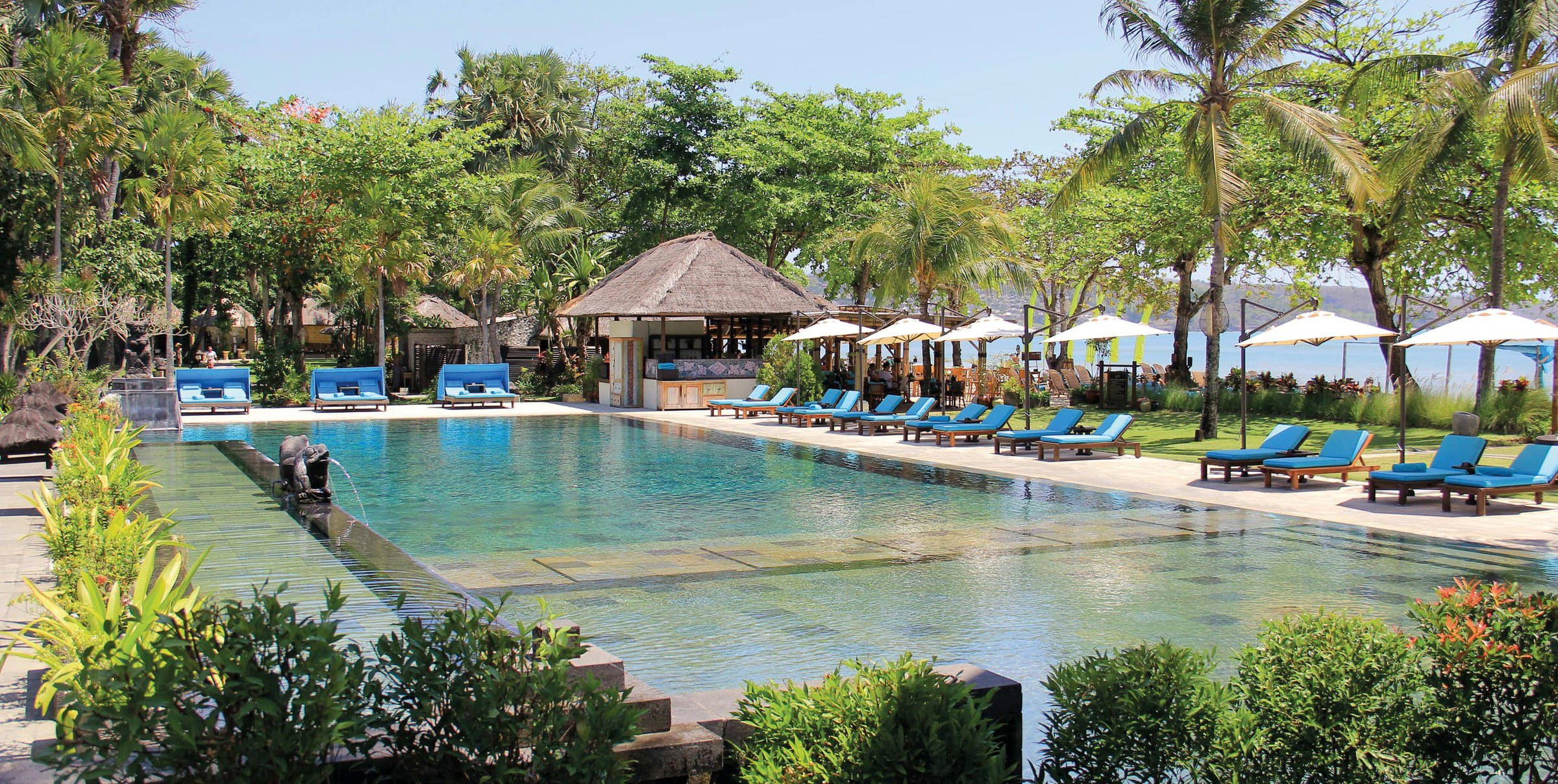
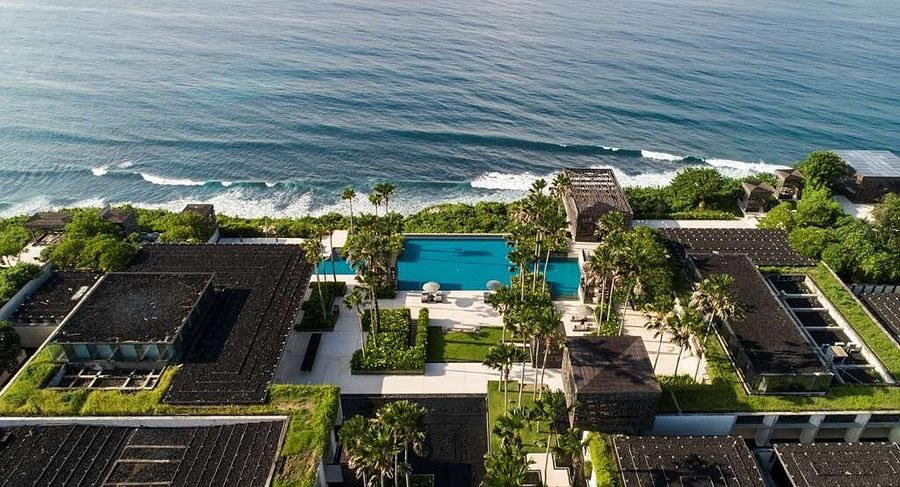
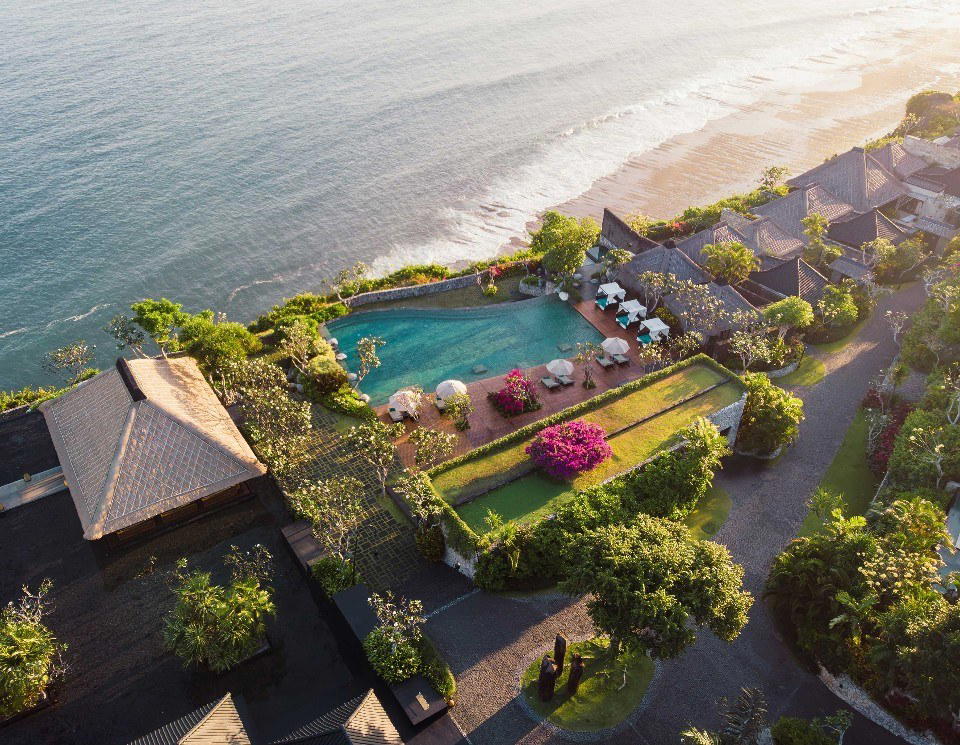
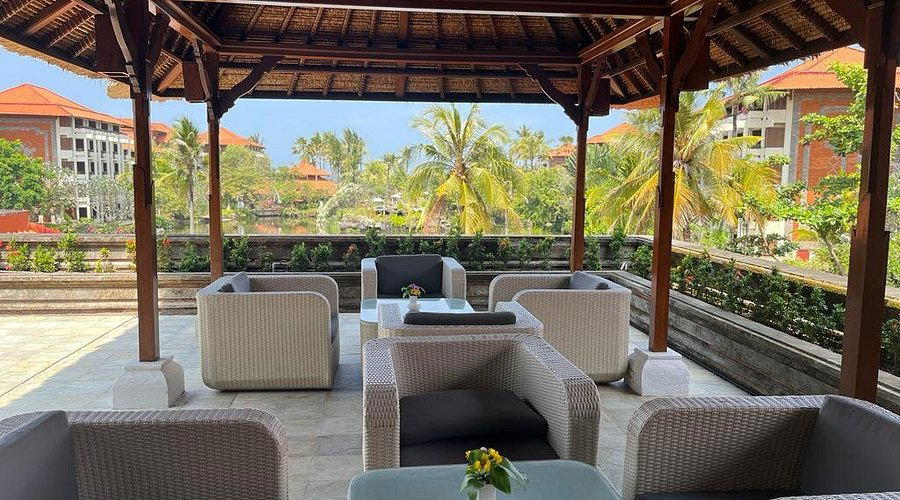
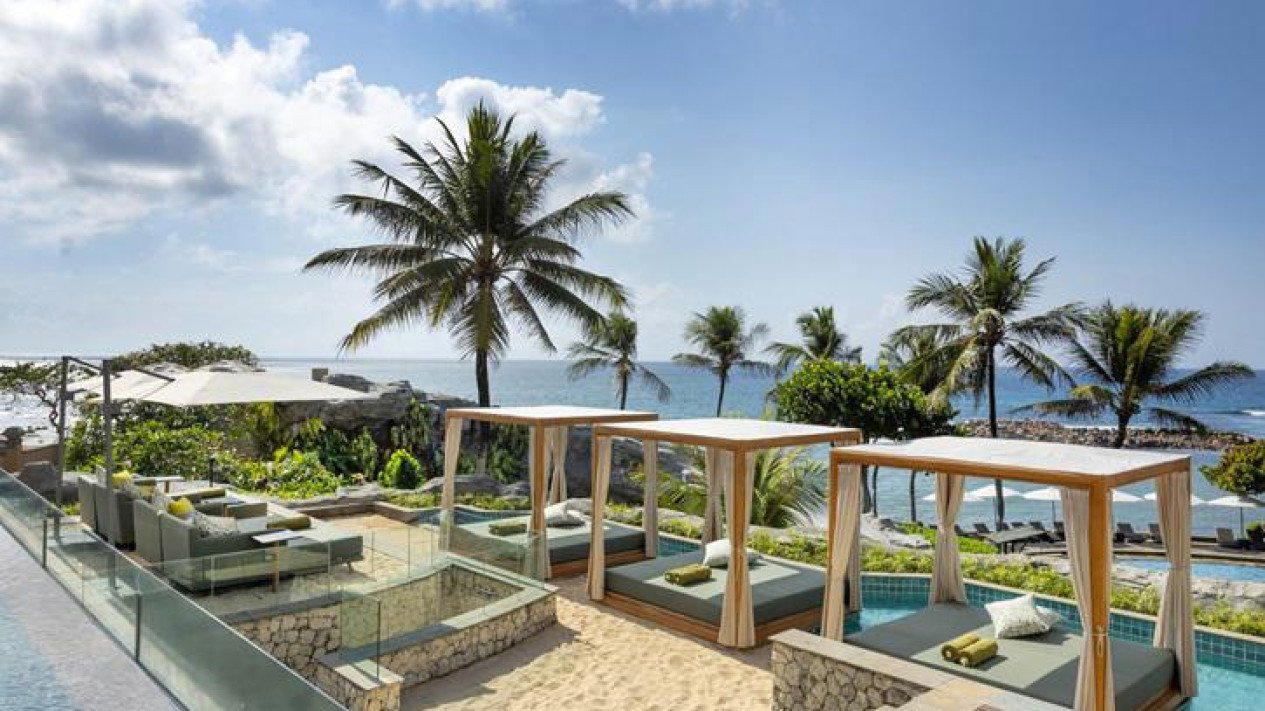
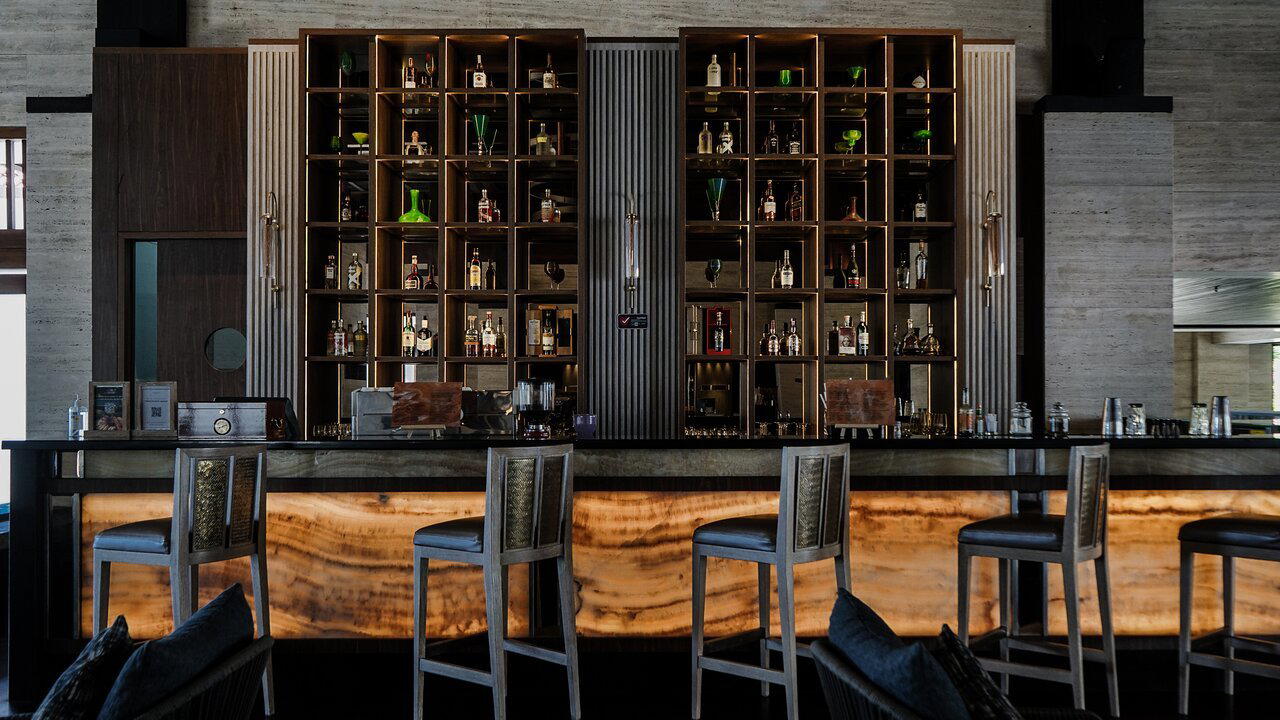
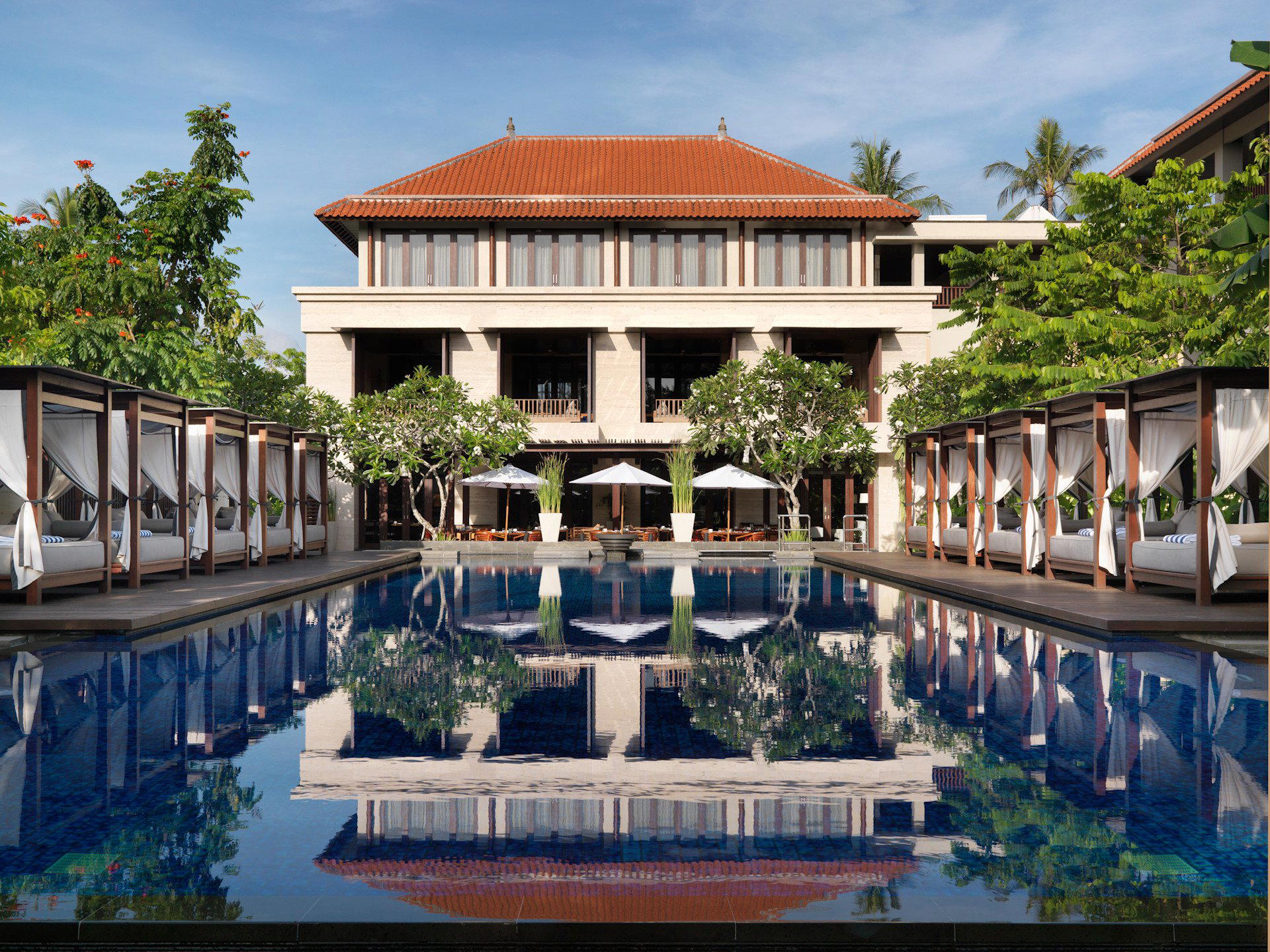
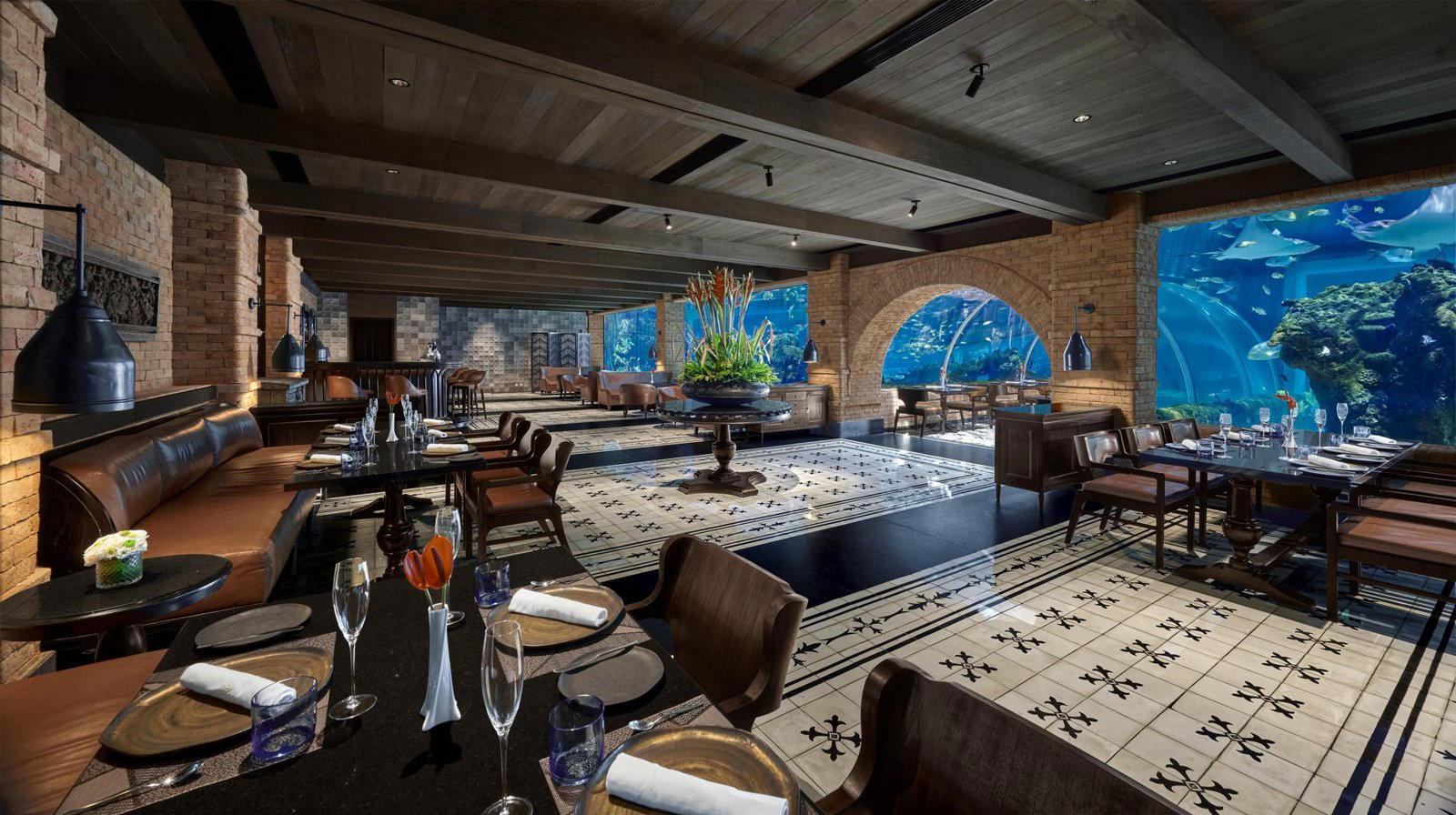
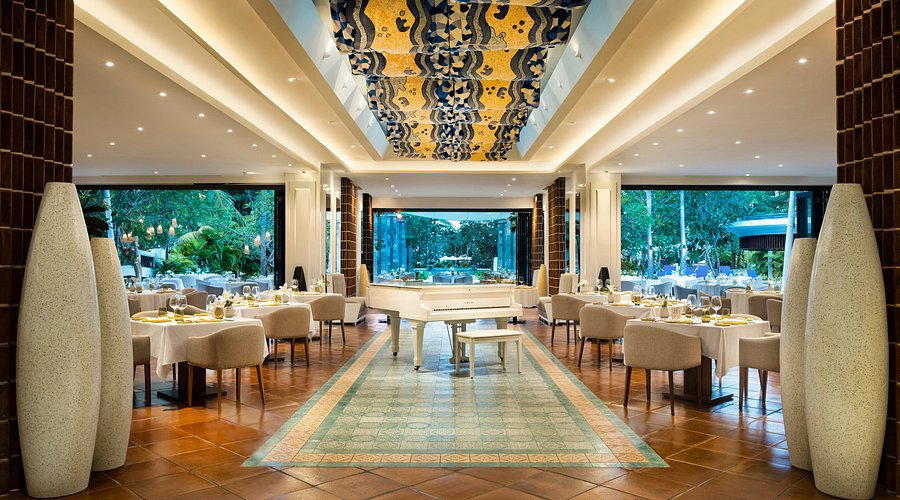
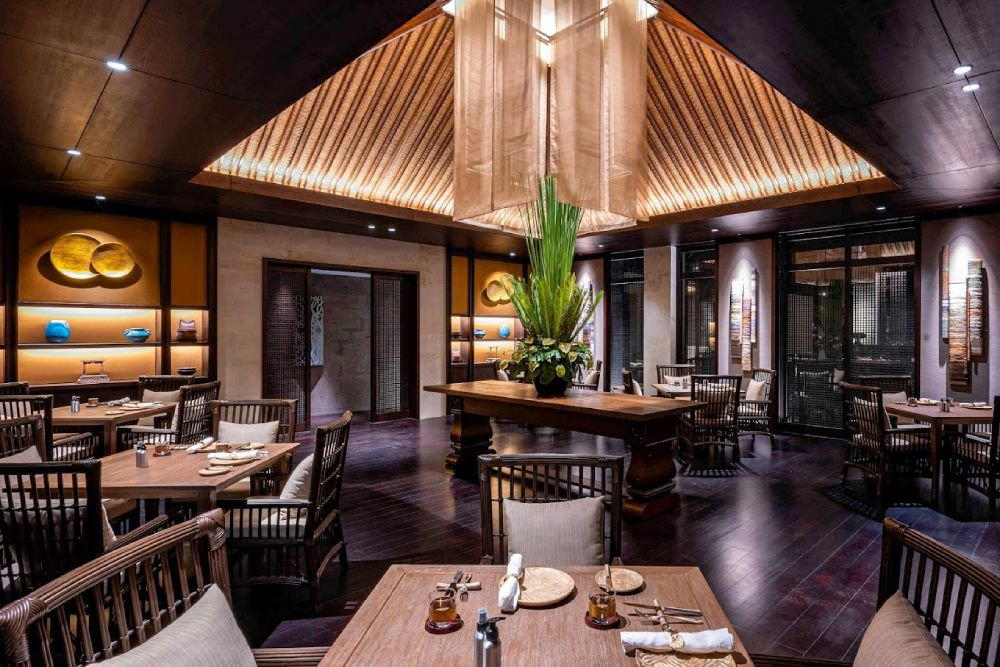
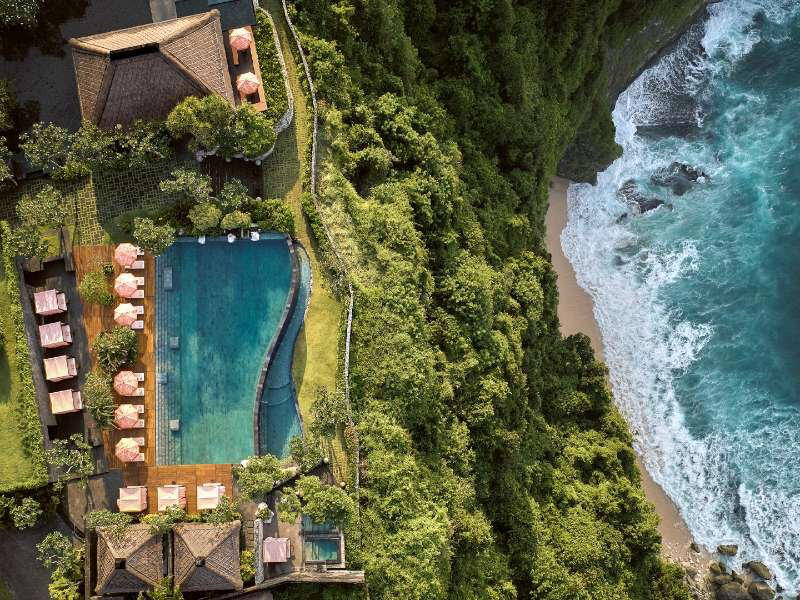
Tranquil and serene with lush gardens, water features, and shaded cabanas creating a romantic, relaxing atmosphere.