



1 Michelin Key · Forbes 4-Star · Virtuoso Luxury Hotel Partner
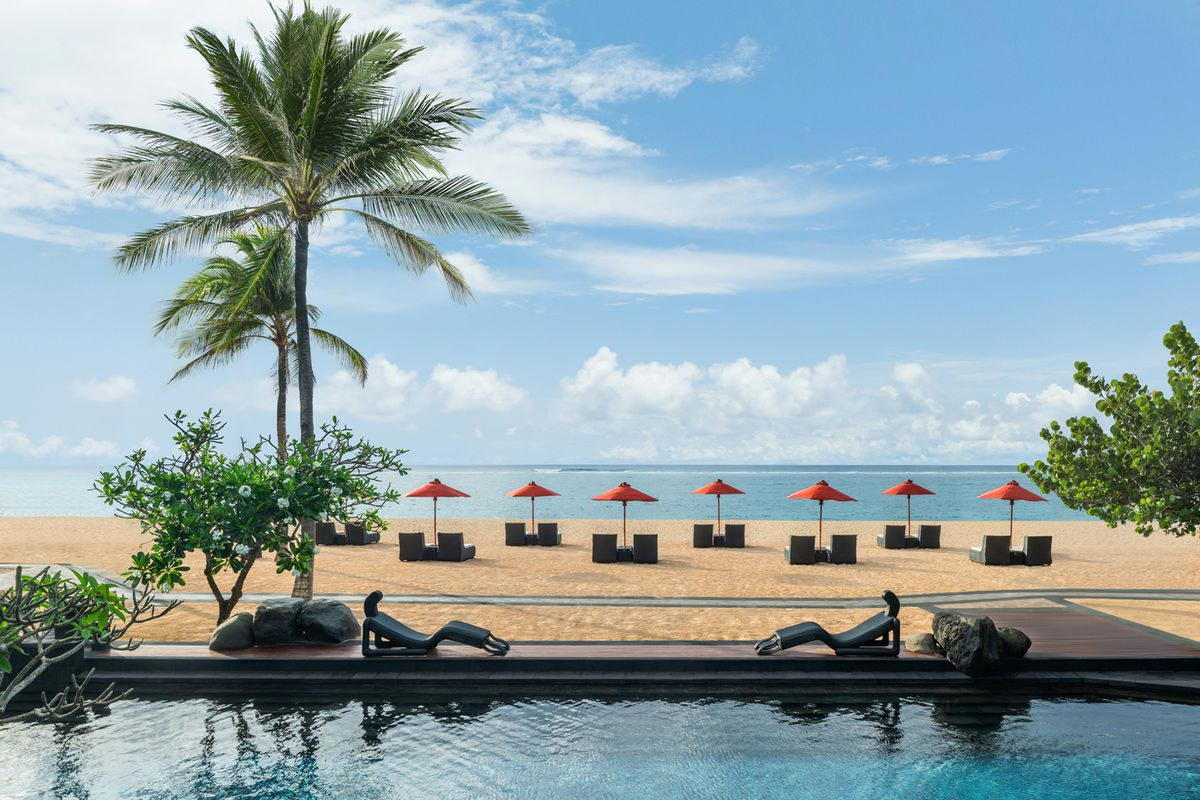
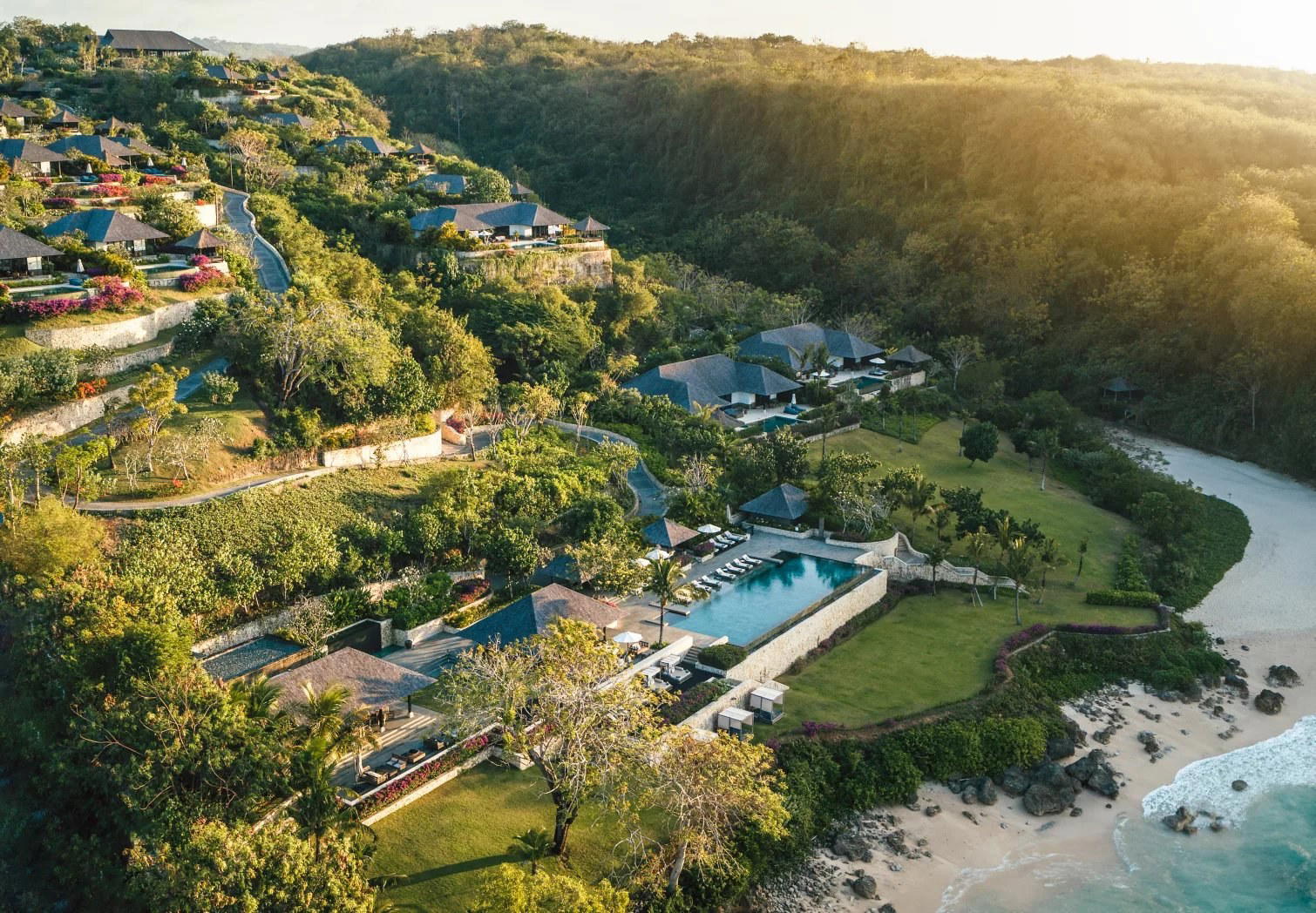
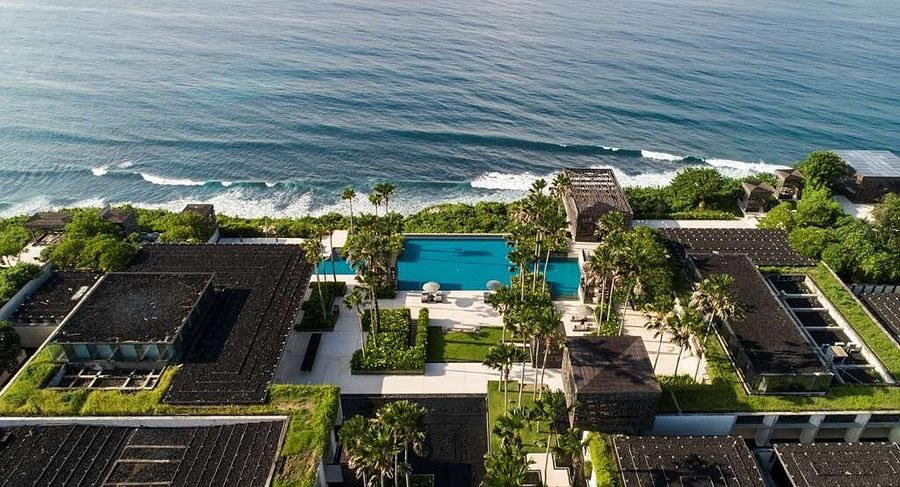
Set across 8.8 hectares of beachfront in Nusa Dua's prestige enclave, The St. Regis Bali Resort holds 124 suites and villas furnished with handcrafted Balinese art and private pools. A 3,668-square-metre salt lagoon, four dining venues, and 24-hour butler service define the operational scale.

Pearl is the En Primeur Club membership app — saves, bookings, and concierge access live there. Same editors, same standards.
- Address
- Jl. Raya Nusa Dua Selatan, Benoa, Kec. Kuta Sel., Kabupaten Badung, Bali 80363
- Phone
- +62 361 8478111
- Website
- marriott.com
- Directions
- Get directions
Arrival in Nusa Dua: What the Approach Signals
The road into The St. Regis Bali Resort does not feel like a hotel driveway. Dense tropical foliage closes in from both sides, and after dark, blue-lit pathways direct arriving vehicles through what reads less as a resort entrance and more as a threshold. That deliberate staging is consistent with how Nusa Dua operates as a whole: the enclave is Bali's most insulated luxury corridor, a planned resort zone where international-brand properties sit on controlled beachfront parcels, separated from the commercial density of Seminyak or the cultural intensity of Ubud. Within that zone, The St. Regis occupies one of the larger footprints, with 8.8 hectares of grounds that include manicured garden pathways, decorative fountains, and a private shopping precinct selling local crafts and provisions.
For travellers choosing between Nusa Dua's upper tier, the competitive field includes Aman Villas at Nusa Dua, Mulia Villas, The Mulia, and Samabe Bali Suites and Villas. The St. Regis positions itself differently from the villa-only formats: its 124-key inventory spans suites and villas, making it operationally larger than pure villa retreats while maintaining service ratios that the brand has built its identity around.
The Dining Ritual: Sequence and Setting
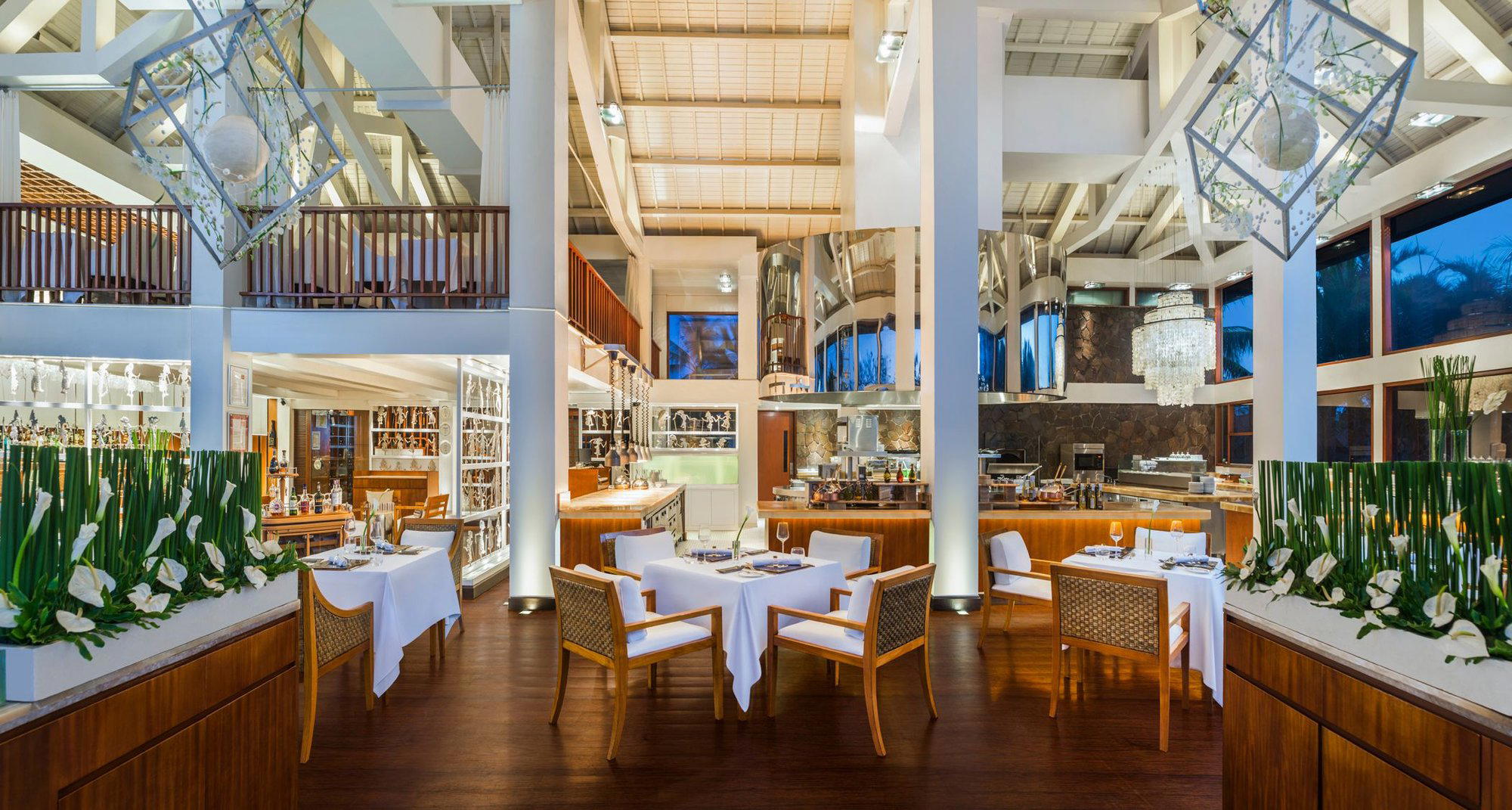
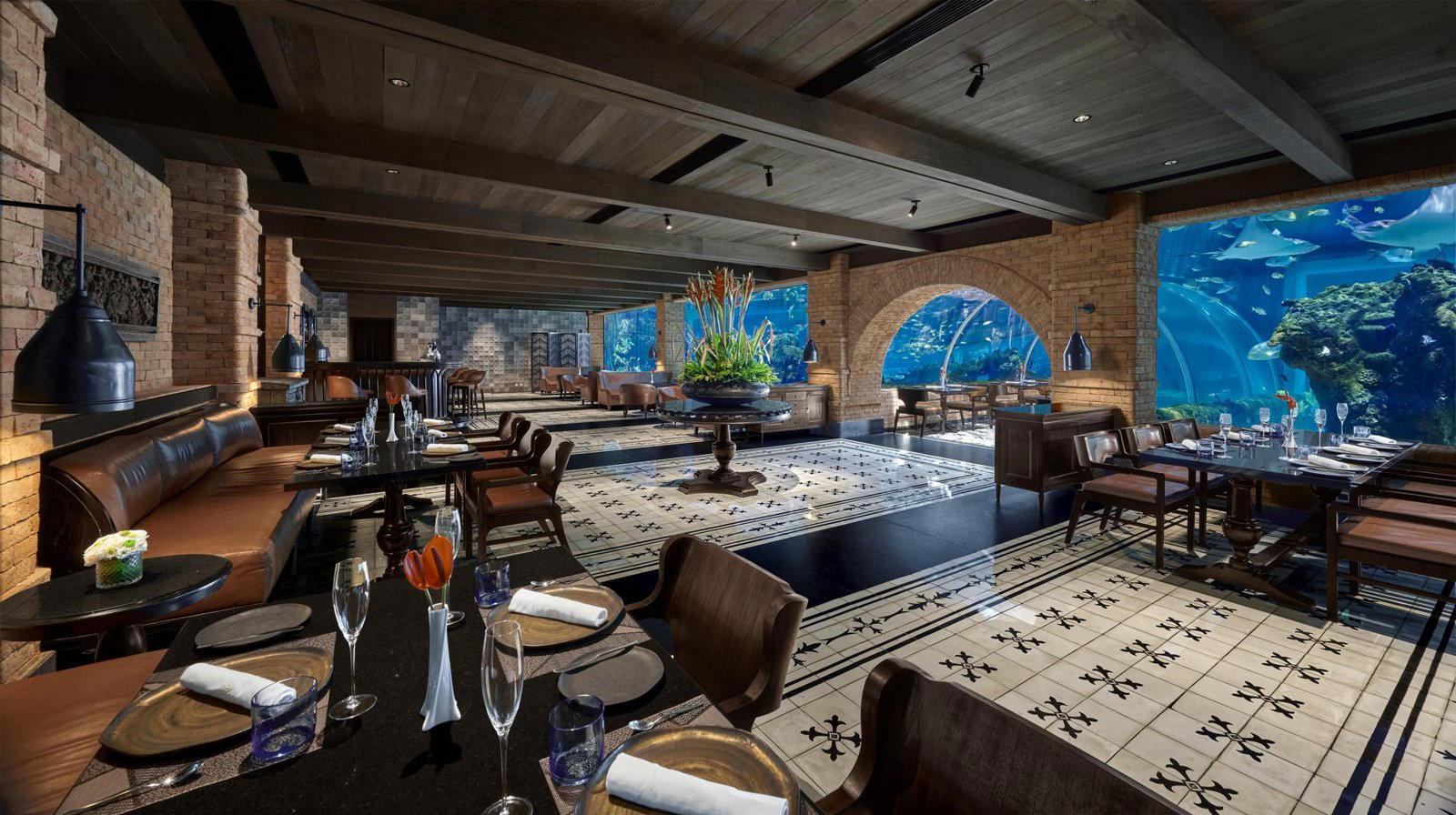
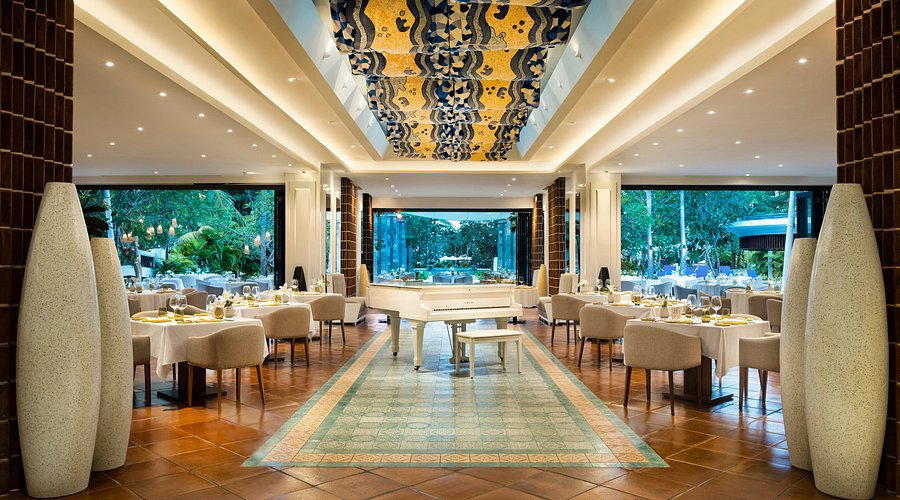
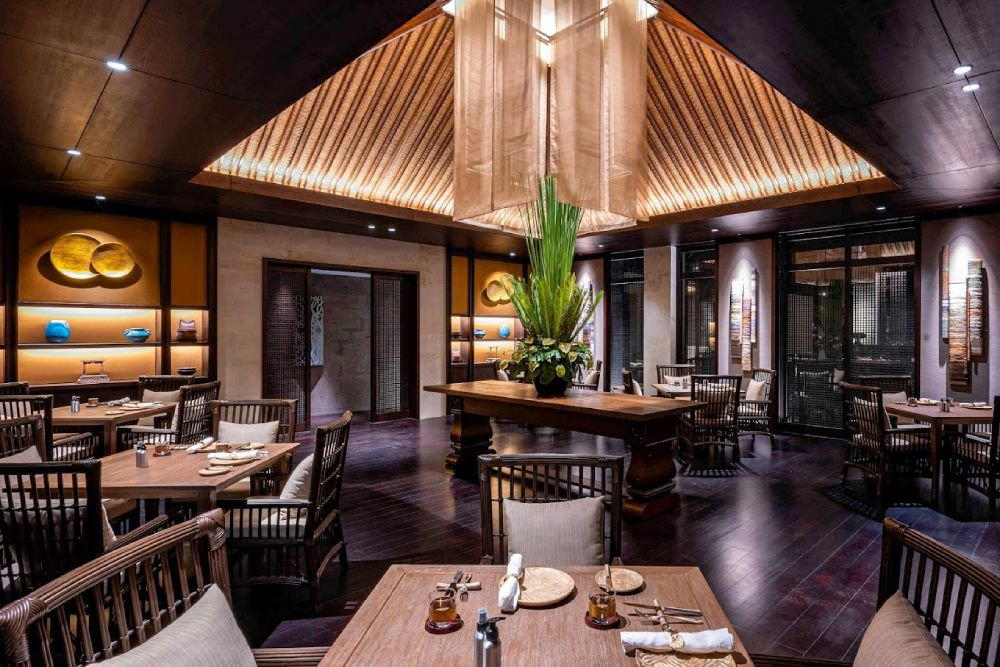
In Bali's top-tier resorts, dining is rarely incidental. The meal is structured into the day's rhythm, and the setting carries as much weight as the menu. At The St. Regis Bali, four distinct dining venues each occupy different orientations to the water and landscape, which means the sequence of where you eat across a stay functions almost like a programme. The Pan-Asian fine-dining restaurant looks directly over the Indian Ocean, which makes it the natural anchor for a considered evening. The arrangement follows a pattern common to large beachfront properties: one venue for spectacle and occasion, others for casual proximity to the pool and lagoon.
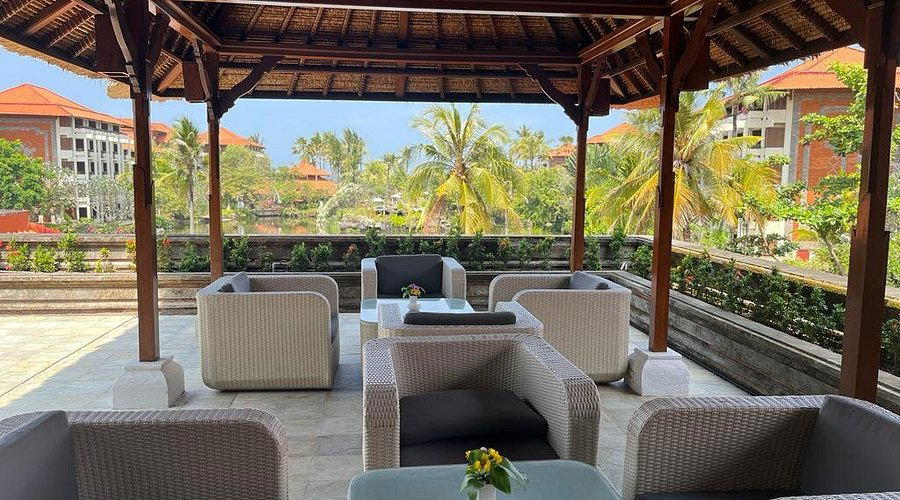
What distinguishes the dining ritual here is the interplay between the formal venues and the Bali Bengong, the traditional Indonesian open-sided pavilion that appears throughout the villa category. Guests in villas can take meals in their own Bale Bengong within the private garden, a format that turns breakfast or a private dinner into something closer to a ceremony. The butler service, running 24 hours across the property, manages these logistics: pre-dawn picnics on the beach, cocktail gatherings arranged in the garden, or in-villa dining timed to a guest's schedule. That service layer is what separates this tier from properties that provide good rooms but leave meal programming to the guest entirely.
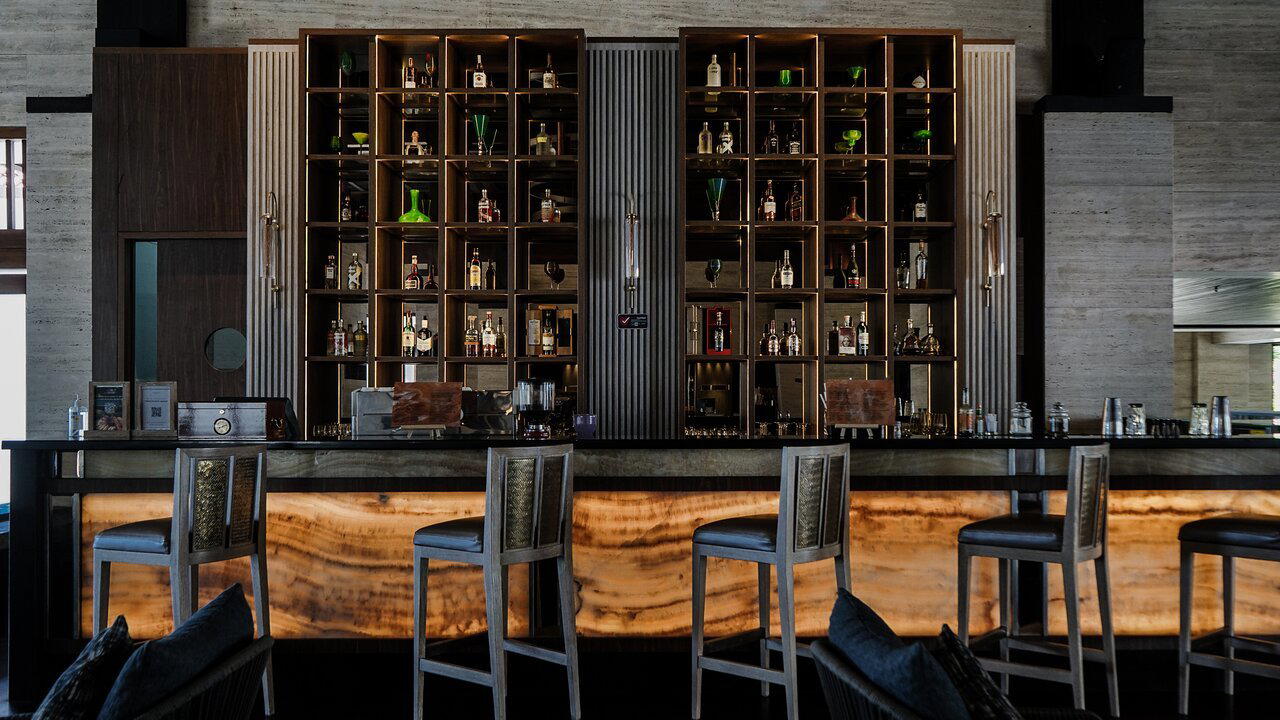
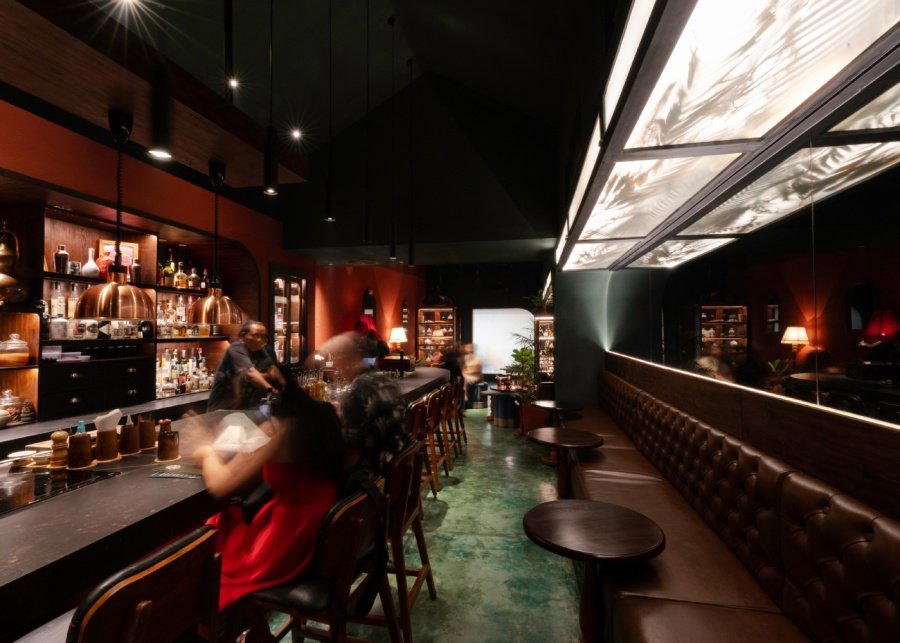
The classic St. Regis Bar operates as the property's cocktail anchor, consistent with the brand's broader identity across its global portfolio. The St. Regis has maintained a bar programme at each of its properties since the Bloody Mary was introduced at the New York original in the early twentieth century. At Aman New York and The Fifth Avenue Hotel, bar programming is central to the property identity. In Bali, the bar sits within a beachfront resort context, which shifts its role: it is less a destination for local clientele and more a structured punctuation mark in the resort day, the place where the afternoon shifts into evening.
The Iridium Spa and the Architecture of Recovery
Bali's spa culture is well-documented and commercially saturated. At the villa-and-resort level in Nusa Dua, treatments are standard inclusions rather than differentiators, which makes the physical design of a spa facility more meaningful than the menu of services. The Iridium Spa at The St. Regis Bali uses a butterfly motif carried through the architecture, with koi ponds surrounding the treatment wing's eight private rooms and two couples suites. A Finnish sauna and an aromatherapy steam room with rotating daily scents sit alongside the treatment rooms, and a beauty salon and dedicated yoga room operate separately from the main fitness centre. The overall facility is large enough to function as a self-contained retreat within the resort, which is consistent with how guests at this tier tend to structure multi-night stays: the spa functions as a second home base alongside the villa.
Accommodation Tier: Suites, Villas, and the Lagoon Question
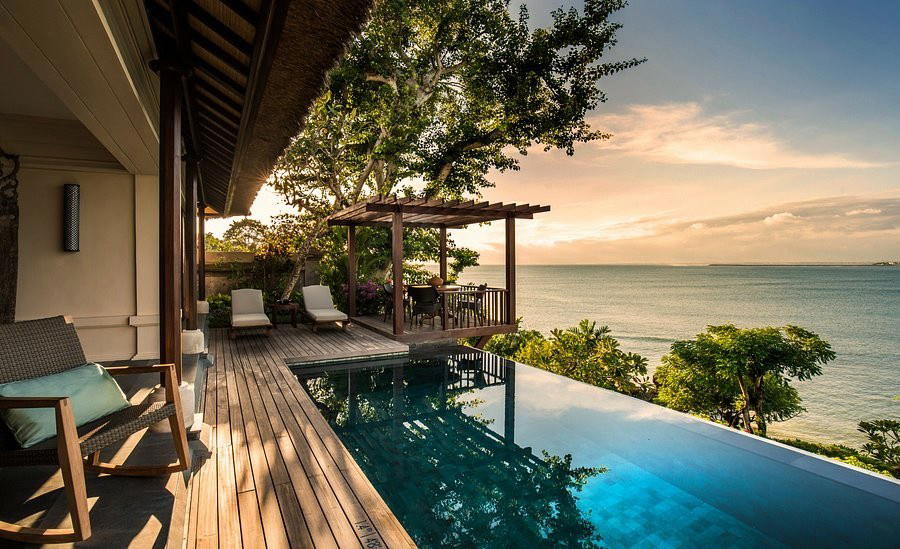
The 81 suites and 42 villas spread across approximately 20 acres of grounds connected by garden pathways with gazebos positioned throughout. The suite category uses tropical hardwood floors and Balinese art as its primary design language; the villa category adds private plunge pools, crystal chandeliers, and refined pool cabanas as distinguishing elements.
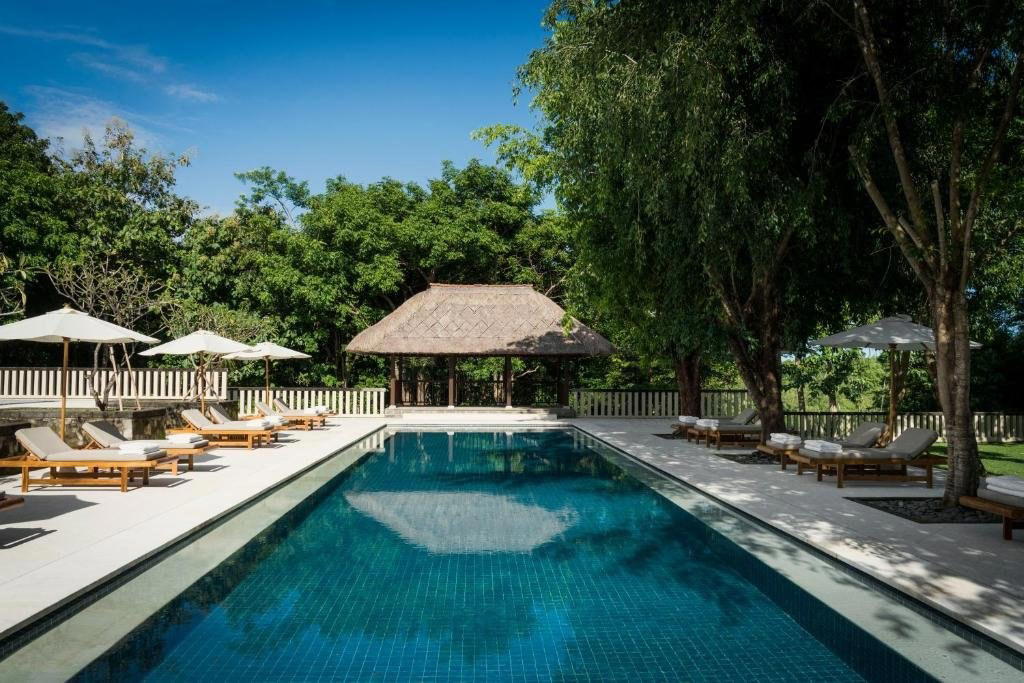
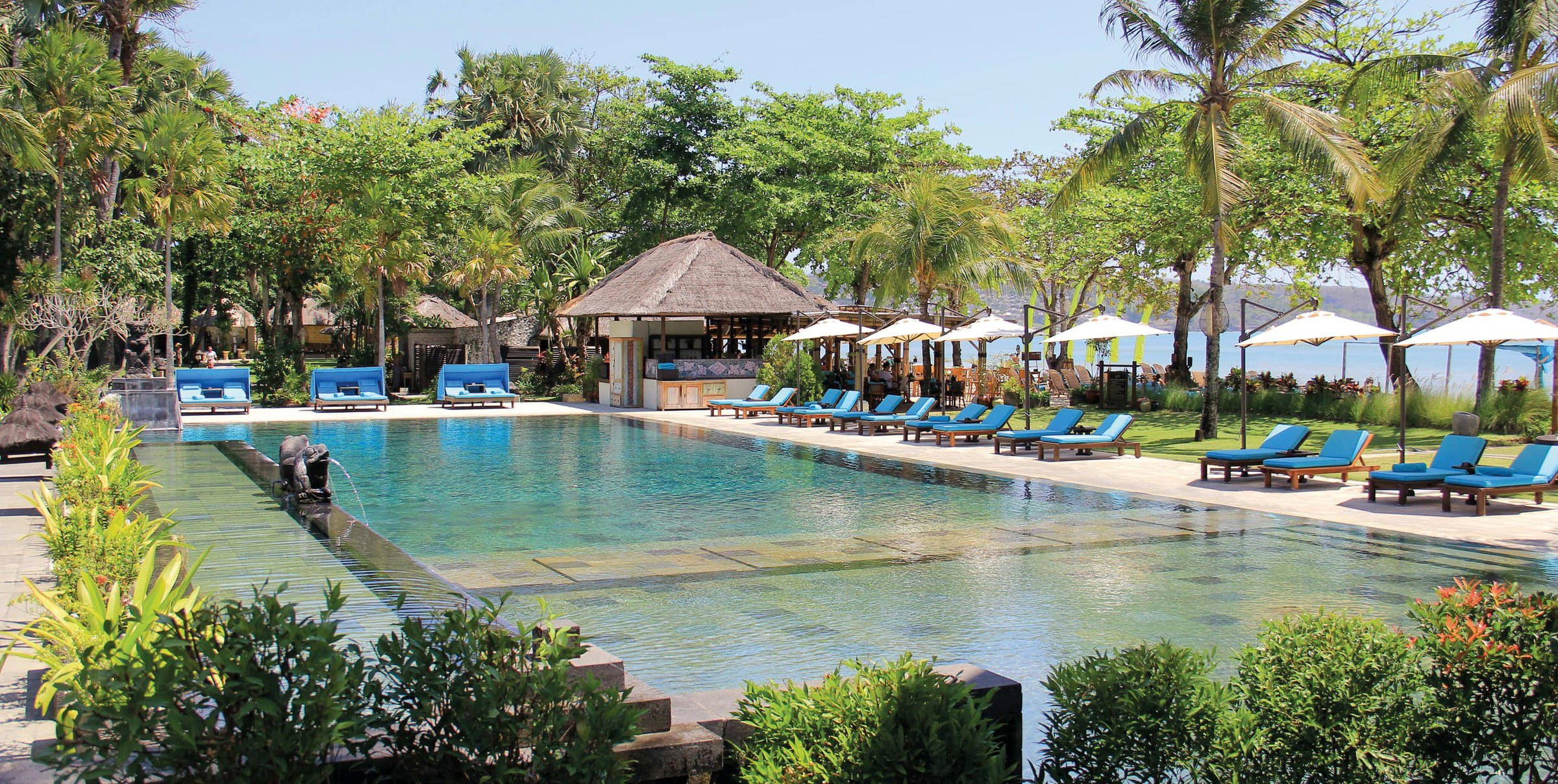
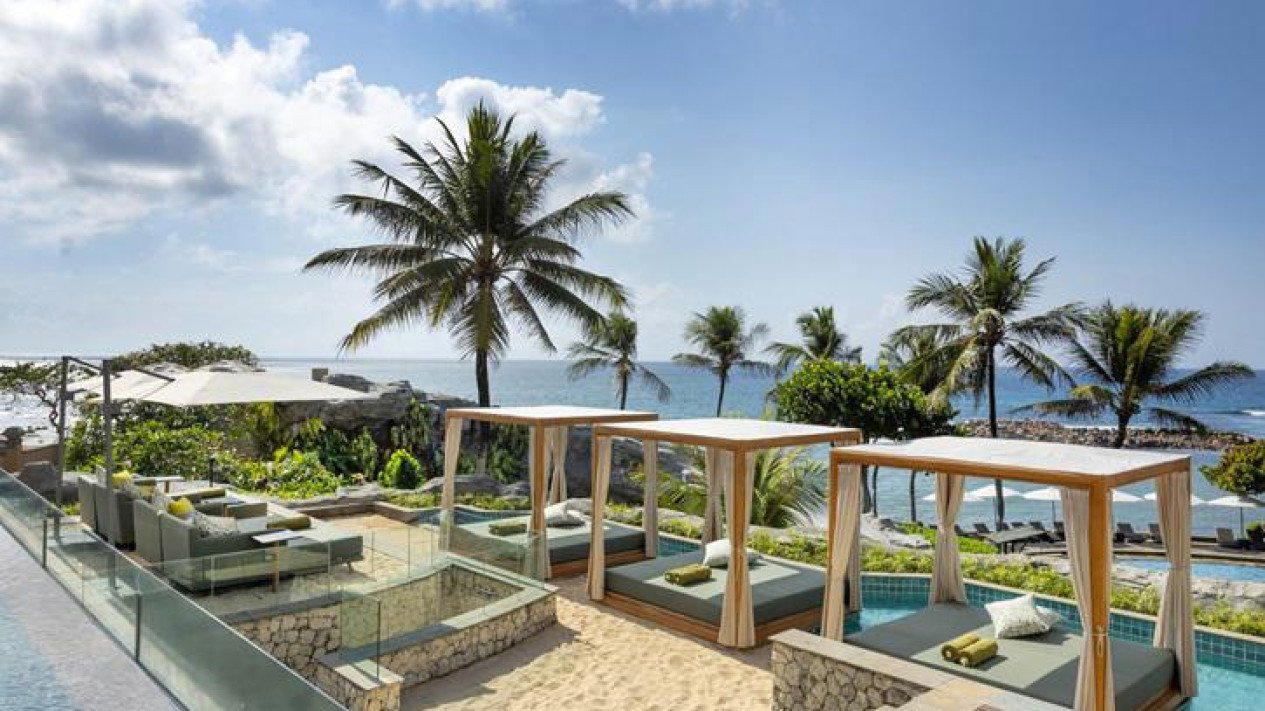
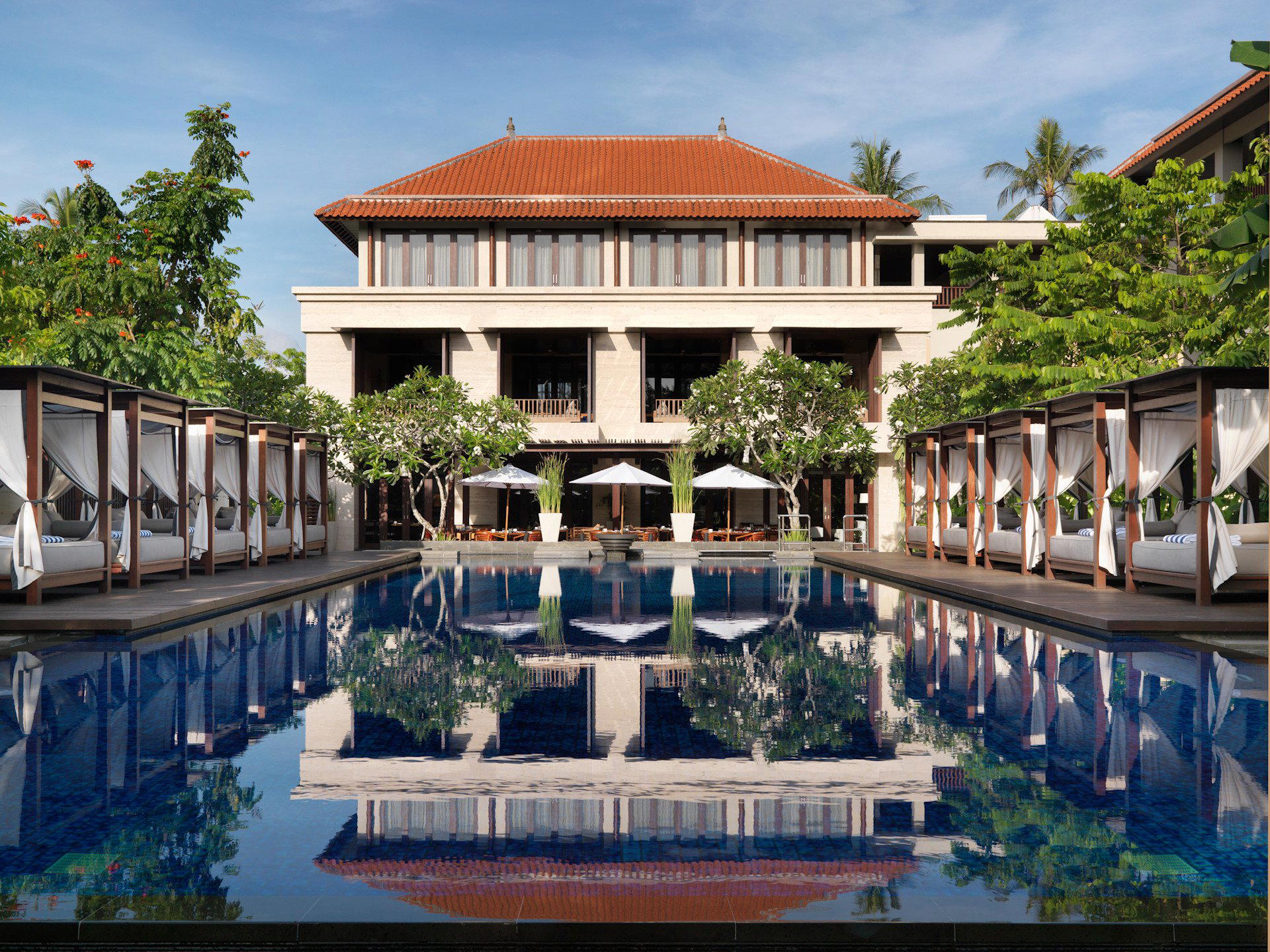
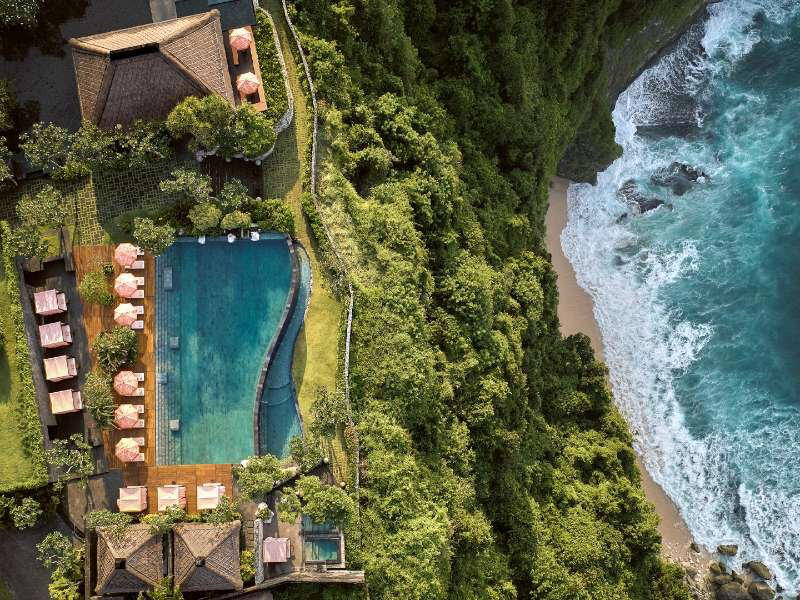
Two villa configurations carry the most editorial weight. The Lagoon Villa connects directly to the resort's 40,000-square-foot saltwater lagoon from the terrace, so the boundary between private and communal water is architectural rather than categorical. The Strand Villas offer unobstructed ocean views over the white sand, which in Nusa Dua's beachfront context is a premium orientation. The 3,668-square-metre lagoon is swimmable, which matters in a climate where pool temperature and water quality affect how much time guests actually spend in the water rather than beside it.
All accommodations provide 24-hour butler service. The fitness centre officially operates from 7 a.m. to 11 p.m. but overnight guests can access it at any hour by requesting assistance from their butler, a logistical detail that matters for guests managing time zones or early training schedules. Marble bathrooms, walk-in wardrobes, and current entertainment technology are standard across the suite and villa categories.
Nusa Dua's Position in Bali's Broader Accommodation Map
Nusa Dua sits at the southern tip of Bali's Bukit Peninsula, and the Bali Mandara toll road, which stretches over the Gulf of Benoa, has made transit from the airport and from Seminyak considerably faster than it was before the road's construction. For guests flying into Ngurah Rai International Airport, the connection to Nusa Dua is among the most direct in Bali's resort geography.
That ease of access is one reason Nusa Dua functions as the conference and large-group resort zone while simultaneously serving leisure travellers who want a contained, managed environment. The contrast with Bali's other luxury tiers is sharp: Mandapa, a Ritz-Carlton Reserve in Ubud places guests within a river valley with direct cultural immersion; Alila Villas Uluwatu trades on cliff-edge drama; Nihi Sumba operates as a remote island property with a strong conservation identity. Nusa Dua's version of luxury is deliberately controlled: beachfront access, international service standards, and proximity to Bali Golf and Country Club, where the resort concierge manages tee times, equipment, and caddies.
Elsewhere on the island, design-led properties like Potato Head Suites and Studios in Seminyak and Bambu Indah take different positions, prioritising cultural specificity or sustainability credentials over the full-service resort model. The St. Regis operates firmly within the full-service international framework, part of Marriott International's portfolio, with the brand's butler service and spa programming built into the offer regardless of location.
Travellers considering other Nusa Dua properties in a similar tier should review Hilton Bali Resort, Sofitel Bali Nusa Dua Beach Resort, Conrad Bali, and THE BALE Nusa Dua as peer-set comparisons. Our full Nusa Dua restaurants and hotels guide maps the enclave across price tiers and formats. For Indonesian properties beyond Bali, Kampung Sampireun Resort and Spa in Garut and Desa Seni Baturiti in Tabanan offer contrasting scales. Travellers interested in Aman's approach to comparable luxury across different geographies can compare with Aman Venice.
Planning Your Stay
The property sits at Jl. Raya Nusa Dua Selatan, Benoa, within the Nusa Dua resort enclave in Badung Regency. Access from Ngurah Rai International Airport is direct via the Bali Mandara toll road. The resort holds 124 accommodations across suite and villa categories, all with 24-hour butler service. The Iridium Spa operates 12 treatment rooms including two couples suites. Dining spans four venues, including a Pan-Asian restaurant with Indian Ocean views and the St. Regis Bar. Booking should be made directly through the Marriott International platform or a preferred travel agent with Marriott Bonvoy access.
A Credentials Check
Comparable venues nearby, for context on price, style, and recognition.
| Venue | Cuisine | Price | Awards | Notes |
|---|---|---|---|---|
| The St. Regis Bali ResortThis venue — the venue you are viewing | Luxury beachfront resort blending Balinese tradition with contemporary elegance | Not listed | 1 Michelin Key · Forbes 4-Star | Not listed |
| The Mulia - Nusa Dua, Bali | All-suite luxury beachfront resort with traditional Balinese architectural influences and modern ornate interiors. | Not listed | La Liste Top Hotels · Forbes 5-Star | Nusa Dua |
| The Ritz-Carlton, Bali | Luxury beachfront resort with private villas and pool-access suites amid tropical gardens. | Not listed | La Liste Top Hotels · Virtuoso Luxury Hotel Partner | Nusa Dua |
| The Laguna, a Luxury Collection Resort & Spa, Nusa Dua, Bali | Balinese oasis with modern luxury | $200–300 | Michelin Selected | Nusa Dua |
| THE BALÉ Nusa Dua | Modernist Balinese pavilions with private gardens and pools | Not listed | Michelin Selected | Nusa Dua |
| Aman Villas at Nusa Dua | Balinese luxury villas with private pools and gardens | $1,500–2,500 | Michelin Selected · Mr & Mrs Smith Seal of Approval | Nusa Dua |
Recognition history
Dated appearances from independent guides and award organizations, with the underlying list record or original source where available.
Michelin 1 Key
Michelin
Forbes 4-Star
Forbes
Travel + Leisure 100 Favorite Hotels in the World #57 · No. 57
Travel + Leisure · 2026 Travel + Leisure 100 Favorite Hotels in the World
Virtuoso Luxury Hotel Partner
Virtuoso
Full recognition history (7 entries)
Forbes 4-Star
Forbes
Michelin Selected
Michelin
Travel + Leisure 100 Favorite Hotels in the World #69
Travel + Leisure
Details
- Elegant
- Sophisticated
- Ornate
- Scenic
- Honeymoon
- Romantic Getaway
- Family Vacation
- Wellness Retreat
- Beachfront
- Infinity Pool
- Private Villa
- Butler Service
- Destination Spa
- Pool
- Spa
- Fitness Center
- Room Service
- Concierge
- Kids Club
- Beach Access
- Waterfront
- Garden
- Wheelchair Accessible
- Elevator
- Step Free Entrance
- Accessible Parking
Tranquil and elegant atmosphere with serene pools, spa serenity, and cultural evening fire dances, enhanced by soundproofed rooms and ocean views.