In Baturiti, where Tabanan's volcanic uplands begin to cool, Desa Seni occupies a compound of restored traditional Balinese architecture set among organic gardens and rice-field edges. The property belongs to a design-led tier of Bali accommodation that prioritises spatial authenticity over resort-scale amenity. For travellers moving through Tabanan rather than defaulting to Seminyak or Ubud, it presents a substantively different proposition.
Pearl is the En Primeur Club membership app — saves, bookings, and concierge access live there. Same editors, same standards.
- Address
- Br. Mayungan Let No.13, Antapan, Kec. Baturiti, Kabupaten Tabanan, Bali 80361, Indonesia
- Website
- desaseni.com
- Directions
- Get directions
 Saves & bookings on Pearl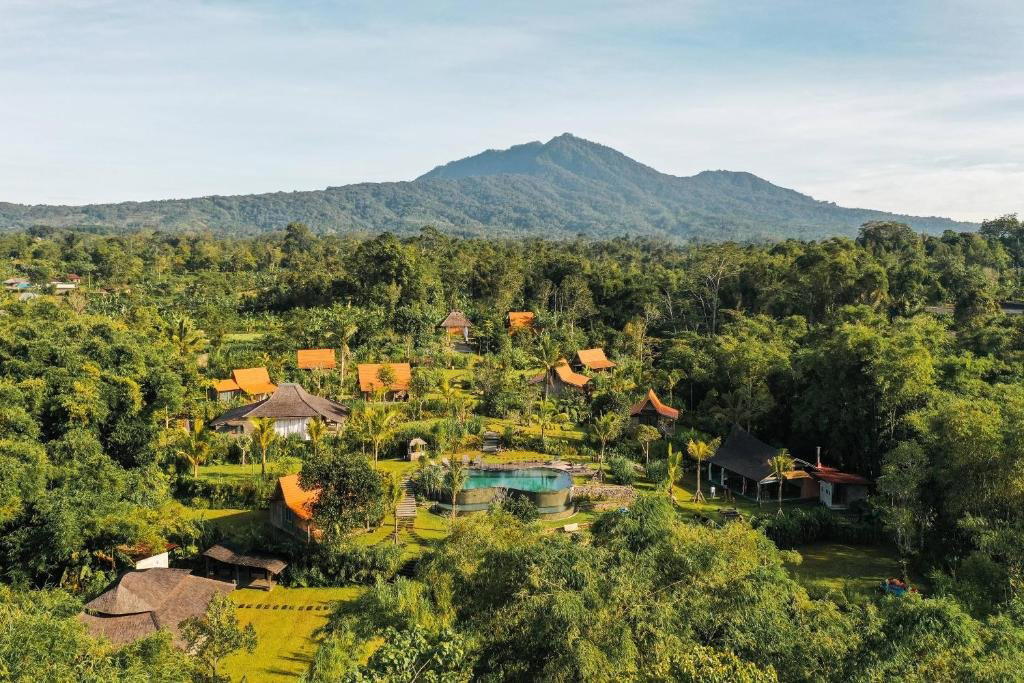
Architecture as Argument: Desa Seni Baturiti in Context
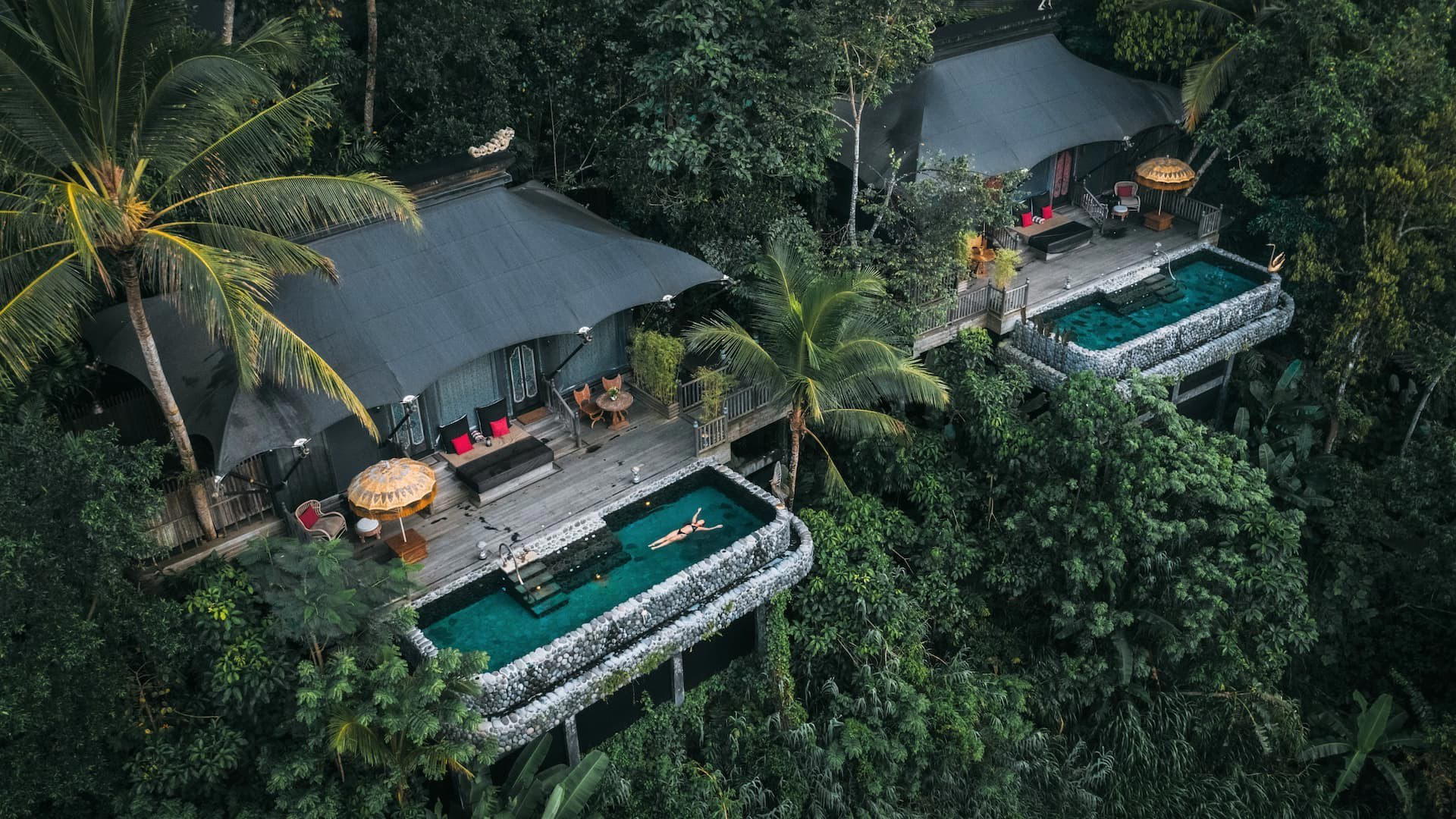
Desa Seni Baturiti is a 5-star hotel in Baturiti, Tabanan, with 9 rooms and rates from about $148 per night. These are places built around rescued and relocated antique Javanese and Balinese structures, where the architecture itself is the curatorial act. Desa Seni Baturiti, positioned in Antapan village in the highland regency of Tabanan, belongs to that category. The approach here is not decorative, the compound is assembled from vernacular timber structures, joglo and limasan forms, that predate the property by generations. In a region where most new hospitality development means poured concrete with a thatched roof, that distinction is material.
Tabanan sits to the west of Ubud's more trafficked circuits and draws a different kind of visitor: one interested in the working agricultural landscape, in the quieter temple networks, in the cooler temperatures that the elevation of Baturiti provides. Properties like Nirjhara and Soori Bali have helped establish Tabanan as a credible destination in its own right rather than an overflow from Seminyak or Canggu. Desa Seni fits within that emerging comparable set, though its positioning in Baturiti, further inland, higher in elevation, places it closer to the volcanic foothills than either of those coastal or near-coastal alternatives.
What the Compound Communicates
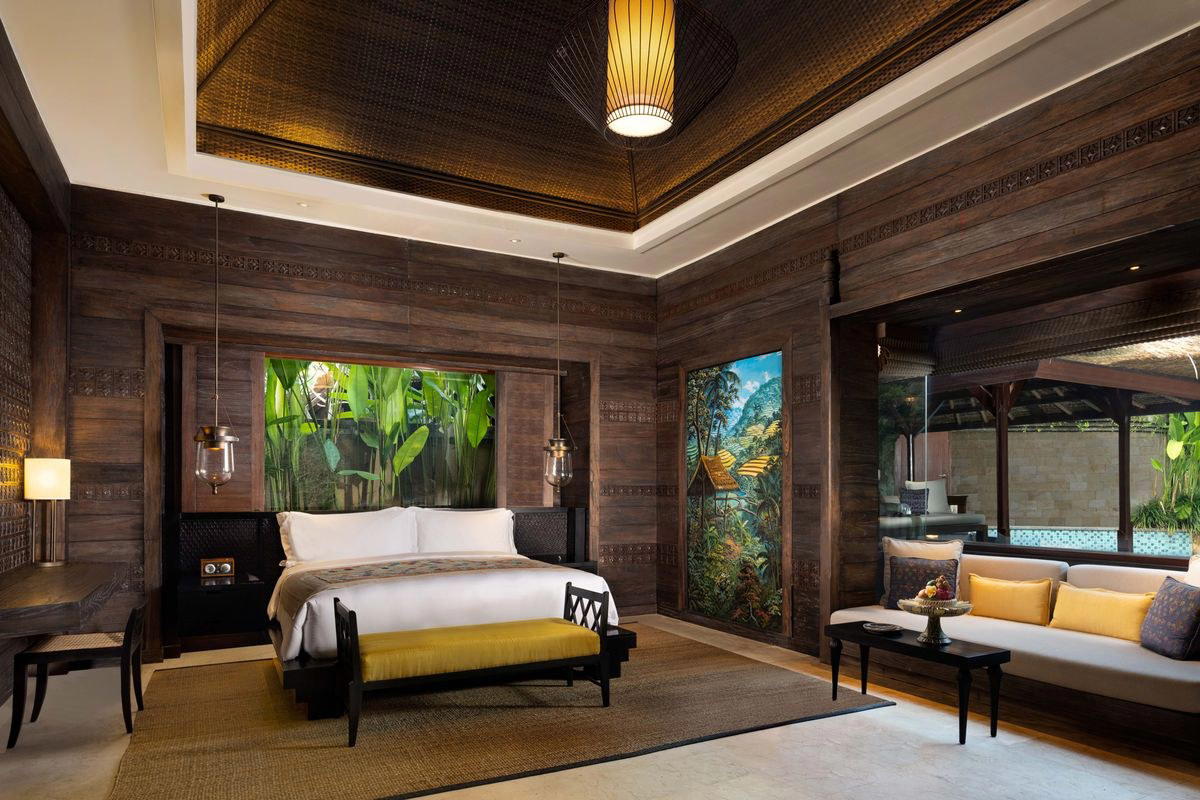
The logic of a compound assembled from traditional structures is different from that of a designed resort. Each structure carries its own proportions, its own material history, hand-carved teak panels, alang-alang thatch, raised timber floors. The spatial experience is cumulative rather than singular. You move between a pavilion, a garden corridor, a rice-field view, and each transition is deliberately low-key. There is no grand lobby sequence engineered to produce a first-impression moment; the arrival is understated, and the property reveals itself through use.
This design philosophy has a direct precedent in how Balinese ceremonial and domestic architecture has always functioned: as a sequence of enclosed and open spaces, each with social or ritual specificity, connected by pathways rather than corridors. Properties that adopt this structure without understanding it tend to produce a kind of themed disorder. When the underlying spatial logic is respected, the result is something closer to the experience Bali's traditional compounds were built to create, a sense of orientation within a bounded but organic world. Desa Seni's Antapan address, in a village setting rather than a resort strip, reinforces that spatial argument with genuine agricultural context.
For travellers with a reference point in Bali's design-led accommodation tier, the comparison is with properties like Bambu Indah, which applies a comparable rescued-structure logic near Ubud, or with the broader ethos of place-rooted Indonesian hospitality visible at Nihi Sumba and Kampung Sampireun Resort and Spa. Each operates from a different geography and scale, but the underlying premise, that local material culture is more interesting than international hospitality standardisation, connects them.
The Baturiti Position: Elevation, Agriculture, and Quiet
Baturiti sits on the road that climbs from Denpasar toward Lake Beratan and the Bedugul highlands. The temperature drop from the coast is noticeable, mornings here are cool enough to require a layer, and the evenings cool faster than in Seminyak or Sanur. The surrounding landscape is productive in a way that Bali's southern tourist zones no longer are: strawberry farms, vegetable plots, and the terraced rice systems that the Tabanan regency has maintained across centuries. The setting is not scenic in the postcard sense. It is agricultural, working, and, relative to Bali's more visited corridors, genuinely quiet.
That quietness is a feature for one type of traveller and a deterrent for another. Guests who come to Baturiti are not looking for proximity to Seminyak beach clubs or Canggu's coffee shop circuit. They are after a different register of the island, one that the Balinese themselves tend to consider the real one. Properties like Jl. Banjar Dukuh in Tabanan reflect a similar logic of distance-from-the-mainstream as a value proposition rather than a compromise.
For those using Tabanan as a base for wider Bali exploration, the regency's road network connects reasonably to Ubud to the east, to Mandapa, a Ritz-Carlton Reserve territory, and north toward the volcanic landscapes around Batur Natural Hot Spring in Kintamani. Ngurai Rai International Airport is roughly one to one-and-a-half hours south, depending on traffic through Denpasar, which means Baturiti functions as a property for those willing to build the journey into the itinerary rather than minimise transfer time.
How It Sits in Bali's Broader Accommodation Market
Bali's premium accommodation spans international-brand resorts, design-driven boutiques, and villa rentals. Desa Seni belongs to the second tier. It is not competing on the amenity depth of a full-service international resort, nor on the privacy and butler-service model of the standalone villa market. Its competitive claim is the authenticity of its architecture and the specificity of its location.
Within that design-driven boutique tier, the property occupies a niche defined by material heritage rather than contemporary design language. This is a different approach from the minimalist concrete-and-stone aesthetic of Soori Bali on the Tabanan coast, or the sculptural modernism of some Seminyak boutique properties. The rescued-structure model is rarer in Bali's current development pipeline, where land and construction costs have pushed most new entrants toward the contemporary villa format.
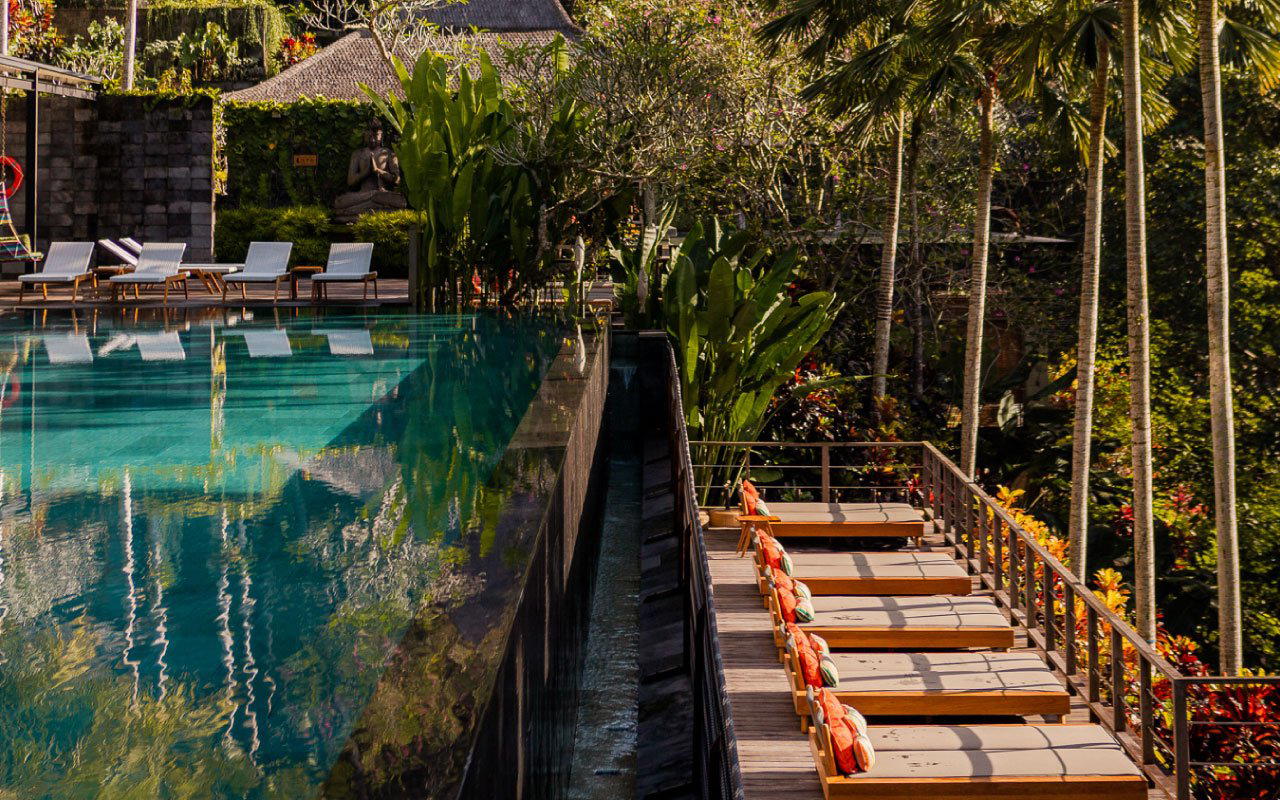
Travellers calibrating their expectations should note that this type of property tends to reward guests who engage with the setting on its own terms, the garden, the village context, the architectural detail, rather than those prioritising pool space, restaurant programming, or nightlife proximity. For the latter, properties along the Seminyak-Canggu corridor, such as Potato Head Suites and Studios or Desa Potato Head, operate in a fundamentally different register.
Planning Your Stay
Baturiti's highland position means the dry season months, May through September, offer the clearest skies and particularly comfortable daytime temperatures for exploring the surrounding agricultural landscape. The wet season, roughly October through March, brings afternoon rain but also the greenest version of the surrounding rice fields. Both have their logic. Reaching the property involves either a private transfer from Denpasar or renting a car or scooter, as public transport to the Baturiti area is limited.
Quick Comparison
Comparable venues nearby, for context on price, style, and recognition.
| Venue | Cuisine | Price | Awards | Notes |
|---|---|---|---|---|
| Desa Seni BaturitiThis venue — the venue you are viewing | Sustainable eco-resort with restored antique wooden homes blending tradition and modernity | $$$ | 5-Star | Not listed |
| Jl. Banjar Dukuh | Oceanfront luxury resort with private villas | $$$$ | 5-Star | Kelating, Kerambitan |
| Soori Bali | Contemporary beachfront luxury villas blending modern Indonesian design with nature | $$$$ | Michelin 1 Key | Tabanan |
| Nirjhara | Luxurious eco-resort blending contemporary architecture with authentic Balinese influence. | $$$$ | Michelin 1 Key | Tabanan |
| Hoshinoya Bali | Balinese village-style luxury resort fusing Japanese minimalism with local craftsmanship | $$$$ | 5-Star | Tampaksiring |
| Kamandalu Ubud | Traditional Balinese village-inspired luxury resort blending local heritage with contemporary comfort. | $$$$ | 5-Star | Ubud, Gianyar Regency |
At a Glance
- Quiet
- Scenic
- Rustic
- Cozy
- Bohemian
- Wellness Retreat
- Romantic Getaway
- Weekend Escape
- Garden
- Panoramic View
- Pool
- Spa
- Wi Fi
- Restaurant
- Garden
- Garden
- Mountain
- Pool
- Spa
- Wi Fi
- Restaurant
- Garden
Serene and peaceful atmosphere surrounded by nature, with mindful living, creative activities, and a focus on tranquility and inspiration.