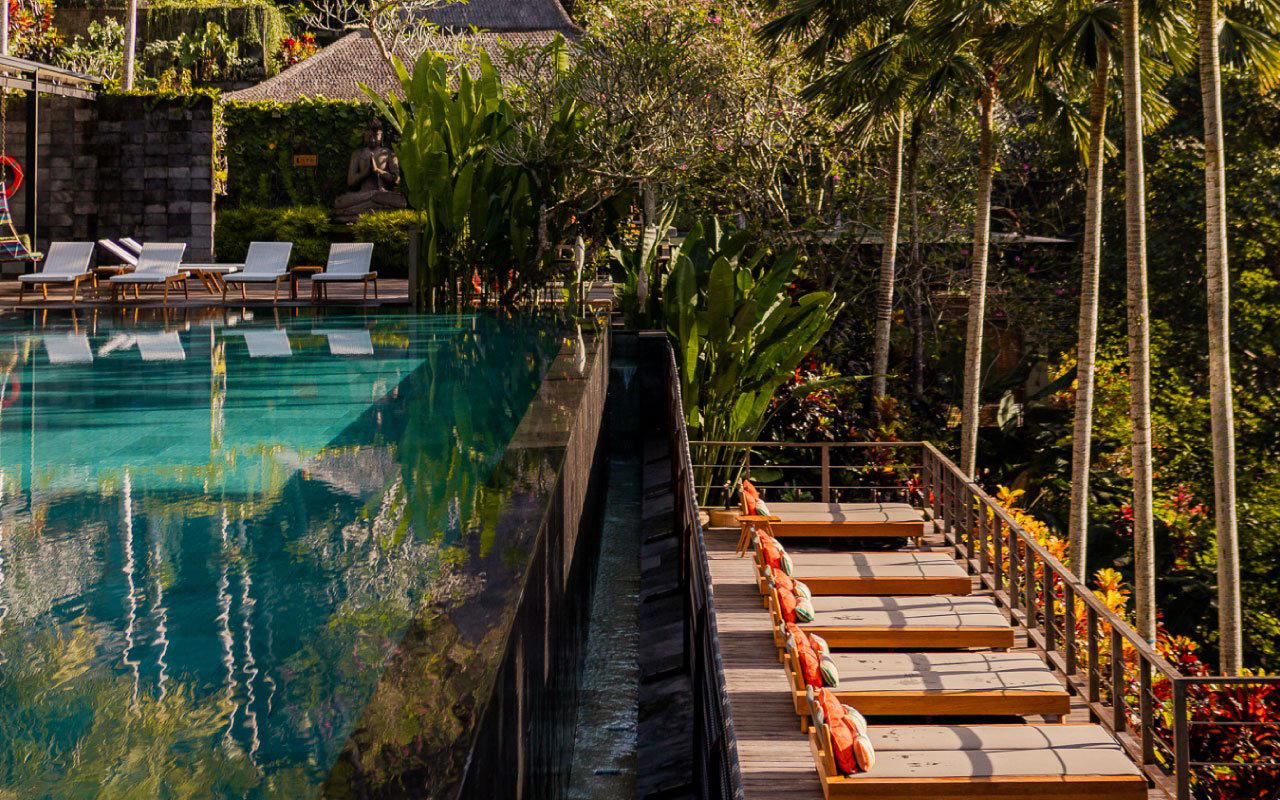
Perched at the edge of an active volcanic caldera in Kintamani, Batur Natural Hot Spring draws geothermal water directly from Mount Batur into open-air pools overlooking Lake Batur. The setting places raw volcanic geology in direct conversation with the water itself, making it one of Bali's more elemental bathing experiences. Visitors typically combine a visit with sunrise trekking on the volcano, using the pools for recovery before or after the ascent.
Pearl is the En Primeur Club membership app — saves, bookings, and concierge access live there. Same editors, same standards.
- Address
- Toya Bungkah Kintamani Desa Pekraman Batur, Songan B, Kec. Kintamani, Kabupaten Bangli, Bali 80612, Indonesia
- Website
- baturhotspring.com
- Directions
- Get directions
 Saves & bookings on Pearl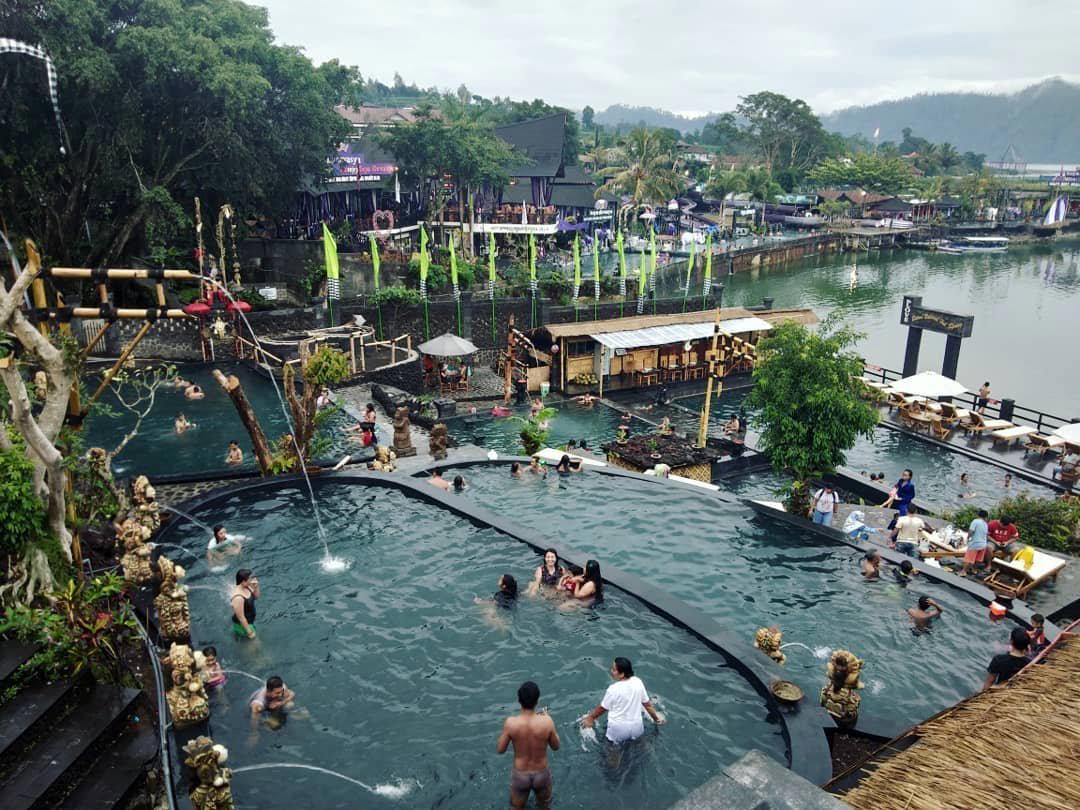
Where Geology Does the Architecture
Most spa and bathing experiences in Bali are designed inward: pavilions shuttered from the outside, pools sunk into manicured gardens, the landscape held at a careful distance. Batur Natural Hot Spring works in the opposite direction. The pools sit at the rim of the Batur caldera in Kintamani, and the view across Lake Batur to the crater wall of an active stratovolcano is not a backdrop arranged for photography, it is the primary spatial experience. The water that fills those pools rises geothermally from the same volcanic system, putting the guest in direct physical contact with the geological event unfolding beneath them. That relationship between material and setting is the design argument here, and it requires no architect to make it.
Kintamani sits roughly 1,500 metres above sea level in Bali's central highlands, and the temperature at the caldera rim is meaningfully cooler than the coast. Arriving from Ubud or Denpasar, the shift in air quality is immediate: thinner, damper, often misted over by low cloud in the early morning hours. The drive into the Toya Bungkah area along the inner caldera road passes through villages of dark volcanic stone, and the landscape has a severity that coastal Bali doesn't share. That severity is part of what the hot spring experience trades on. Soaking in geothermal water while mist moves off the lake surface and the caldera wall holds the opposite horizon is a specific atmospheric condition that no designed spa can replicate artificially.
The Spatial Logic of an Open Volcanic Site
Open-air geothermal bathing in an active caldera presents a set of design constraints that shape the experience directly. The ground here is volcanic substrate, porous, dark-coloured, retaining heat differently than limestone or laterite. Structures at such sites globally tend to be minimal by necessity: the geology does not reward over-engineering, and the better operators worldwide have learned that restraint serves the setting better than elaboration. Batur's position within this tradition places it closer to Iceland's outdoor geothermal culture or Japan's rotenburo mountain springs than to the resort pool architecture more common in southern Bali.
The pools themselves draw water at temperatures that reflect proximity to the volcanic heat source, which varies by depth and season. Geothermal bathing at altitude, particularly in a misted highland environment, produces a physiological contrast, warm water, cool ambient air, that is more pronounced than at sea-level hot springs. That contrast is a recurring reason why visitors cite the experience as more restorative than comparable bathing options at lower elevations across the island.
For a broader orientation to the Kintamani area and what pairs well with a visit here, our full Kintamani restaurants guide covers the surrounding area in detail. Those staying further into the highlands often use properties near Ubud as a base; Mandapa, a Ritz-Carlton Reserve in Ubud, is among the more considered options for guests who want post-trek recovery facilities alongside highland access. Buahan, a Banyan Tree Escape in Payangan, sits closer to the caldera and takes a deliberately open-sided approach to its architecture that shares something of Batur's logic of exposure over enclosure.
Timing, Trekking, and the Sunrise Circuit
The dominant visitor pattern at Batur combines a pre-dawn summit trek on Mount Batur with a post-descent soak. The Mount Batur sunrise trek departs typically between 2 and 4 a.m. to reach the 1,717-metre summit for first light, a journey that takes roughly two hours at a steady pace. By the time trekkers descend to the caldera base, the morning mist is still low on the lake and the hot spring pools are at their most atmospheric. That sequence, physical ascent, volcanic dawn, geothermal recovery, constitutes a complete experience that explains why Kintamani draws a different visitor profile than coastal Bali's wellness circuit.
Guests who prefer the soak without the trek typically arrive mid-morning, after the sunrise crowd has dispersed but before midday tour groups reach the site. The surrounding Toya Bungkah village area has a modest infrastructure of warungs and small guesthouses that serve the trekking economy, and the site is accessible by private vehicle from Ubud in approximately 90 minutes depending on traffic through the highland road network.
For those building a broader Bali itinerary that includes both highland and coastal experiences, the island's premium accommodation tier has developed strong options across multiple zones. Alila Villas Uluwatu anchors the southern clifftop circuit, while AYANA Resort Bali in Jimbaran offers a different coastal register. Those moving between Bali and other Indonesian islands will find useful context at Nihi Sumba in Sumba and Amanwana in Moyo Island. Within Bali's more design-conscious accommodation sector, Bambu Indah in Banjar Badung and Desa Seni Baturiti in Tabanan represent the local-materials approach that has defined the island's alternative luxury tier. Further afield in the Indonesian archipelago, Kampung Sampireun Resort and Spa in Garut applies a comparable vernacular sensibility in West Java. Bali's coastal luxury options extend across Hotel Komune and Beach Club Bali in Gianyar, VOUK Hotel and Suites Bali in Nusa Dua, Amarterra Villas Resort Bali Nusa Dua, and O in Badung. For those combining Bali with Java, Amanjiwo in Magelang anchors the Borobudur corridor. Other notable regional references include Amankila in Manggis, Padangbai in Karangasem, Villa Waru Nusa Lembongan, Bliss Sanctuary for Women in Canggu, Potato Head Suites and Studios in Seminyak, and Desa Potato Head in Denpasar. International Aman properties offer a useful comparative lens for those calibrating luxury expectations: Aman New York and Aman Venice demonstrate how the group's restraint-led design philosophy translates across radically different urban contexts. The Fifth Avenue Hotel in New York City and Ayana Midplaza Jakarta round out the broader accommodation picture for travellers moving between destinations.
Planning a Visit
Batur Natural Hot Spring sits in Toya Bungkah village on the inner caldera road, addressed at Desa Pekraman Batur, Songan B, Kecamatan Kintamani, Kabupaten Bangli, Bali 80612. Access from Ubud is direct by private vehicle or hired driver via the highland road through Kintamani town; the drive takes approximately 90 minutes and the final approach into the caldera drops steeply before reaching the lake level.
In Context: Similar Options
Comparable venues nearby, for context on price, style, and recognition.
| Venue | Cuisine | Price | Notes |
|---|---|---|---|
| Batur Natural Hot SpringThis venue — the venue you are viewing | natural geothermal resort | Not listed | Not listed |
| Further Hotel | Diffused luxury boutique hotel integrated into the village fabric | $$$$ | Pererenan |
| Abisena Wellness and Resort Ubud | Luxury wellness resort with private villas and attentive service in a jungle setting | $$$$ | Tegallalang |
| o | blend of midcentury modern and boho-chic with traditional Balinese craftsmanship | $ | Canggu |
| Hotel Komune and Beach Club Bali | Hotel | $$$ | Gianyar |
| Villa Waru Nusa Lembongan | Beachfront private villa retreat | $$$$ | Mushroom Bay |
At a Glance
- Scenic
- Quiet
- Rustic
- Wellness Retreat
- Family Vacation
- Panoramic View
- Pool
- Mountain
- Pool
Relaxing natural setting with cool mountain air and therapeutic mineral-rich waters.