Bambu Indah

Bambu Indah occupies a bend in the Ayung River valley outside Ubud, where antique Javanese joglo houses have been rebuilt on terraced grounds that drop toward one of Bali's most photographed natural swimming pools. The property sits in a specific niche of Bali's design-led hospitality scene: small in scale, architecturally committed, and positioned for travellers who treat the built environment as part of the experience itself.
Pearl is the En Primeur Club membership app — saves, bookings, and concierge access live there. Same editors, same standards.
- Address
- Jl. Baung, Sayan, Kecamatan Ubud, Kabupaten Gianyar, Bali 80571, Indonesia
- Phone
- +62 361 977922
- Website
- bambuindah.com
- Directions
- Get directions
 Saves & bookings on Pearl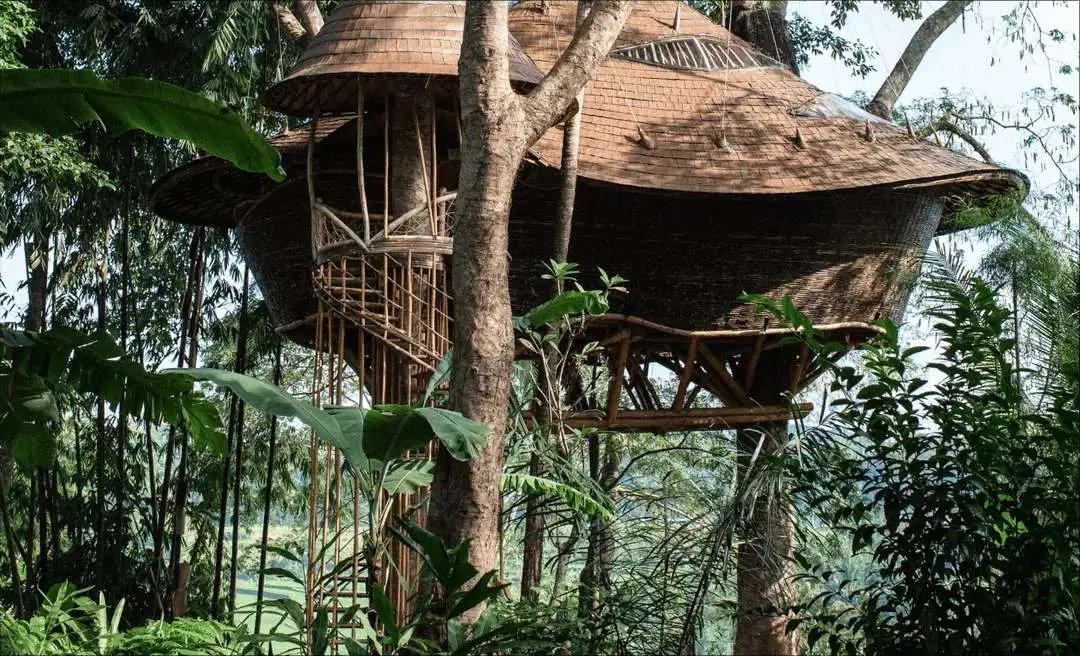
Where Architecture Is the Amenity
Bambu Indah is a 5-star hotel in Sayan, Bali,551 reviews and 24 rooms. Bambu Indah, set along the forested ridge above the Ayung River in Sayan, belongs firmly to the second category. The property has assembled a collection of antique Javanese bridal houses, some estimated to be over a century old, dismantled in Java and rebuilt on terraced grounds in Ubud's river-valley hinterland. This is not boutique hospitality as a marketing designation. It is a specific architectural argument: that rescued vernacular structures, placed in conversation with a working organic farm and the surrounding jungle, constitute a more complete form of luxury than polished uniformity.
That argument has found a receptive audience. The Sayan ridge, already home to some of Bali's most architecturally considered properties, represents a distinct sub-market within Ubud's broader accommodation offer. Where Mandapa, a Ritz-Carlton Reserve in Ubud operates at full-service resort scale with Ritz-Carlton infrastructure, and where Alila Villas Uluwatu in Uluwatu represents the precision of architect-led new build, Bambu Indah occupies a different register entirely: low-capacity, materially specific, and rooted in salvage and reuse rather than new construction.
The Physical Logic of the Property
The joglo houses that anchor the accommodation are the design's central fact. Joglo is a traditional Javanese timber-frame construction, typically associated with aristocratic and ceremonial structures, characterised by a steeply pitched pyramidal roof supported by four central pillars. The decision to source these structures from Java rather than build new is not merely aesthetic. It places the property in a tradition of adaptive reuse that has become increasingly significant in regional design circles, where the embodied history of a material or structure is treated as an architectural value in its own right.
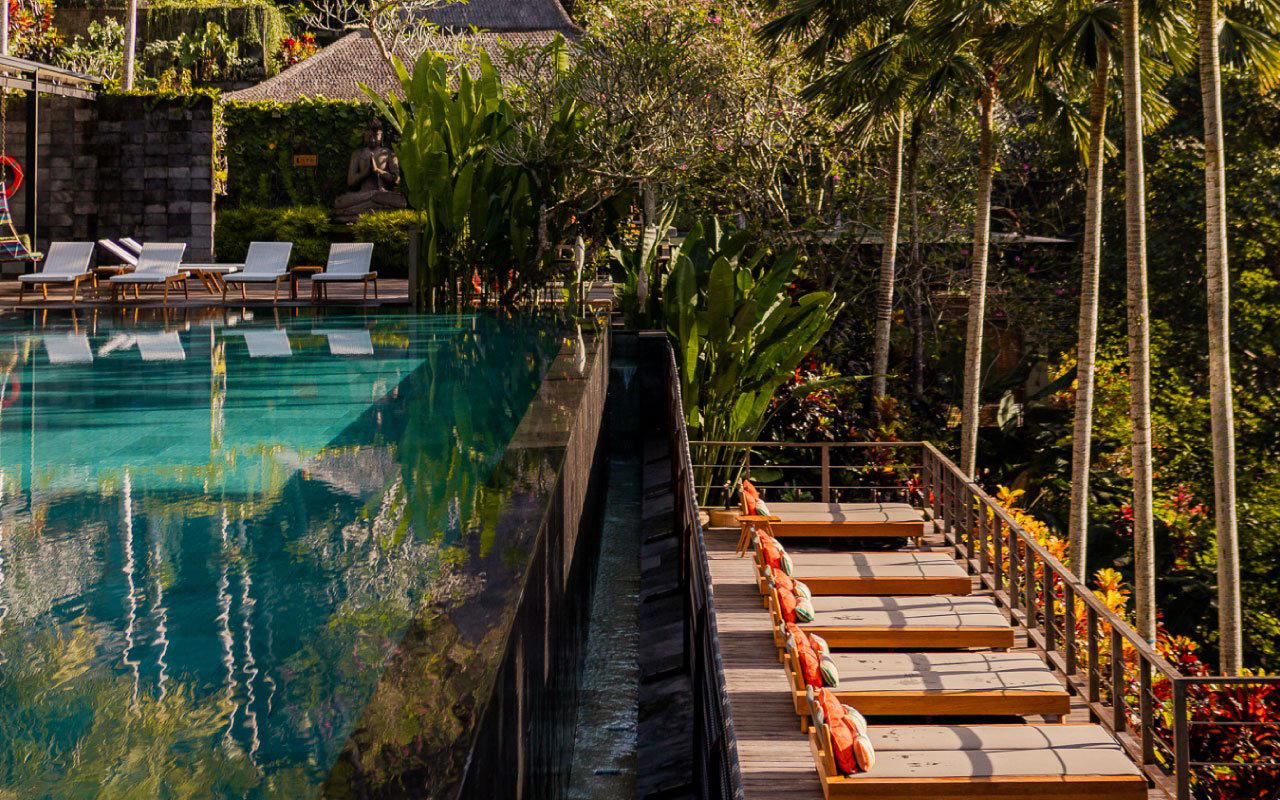
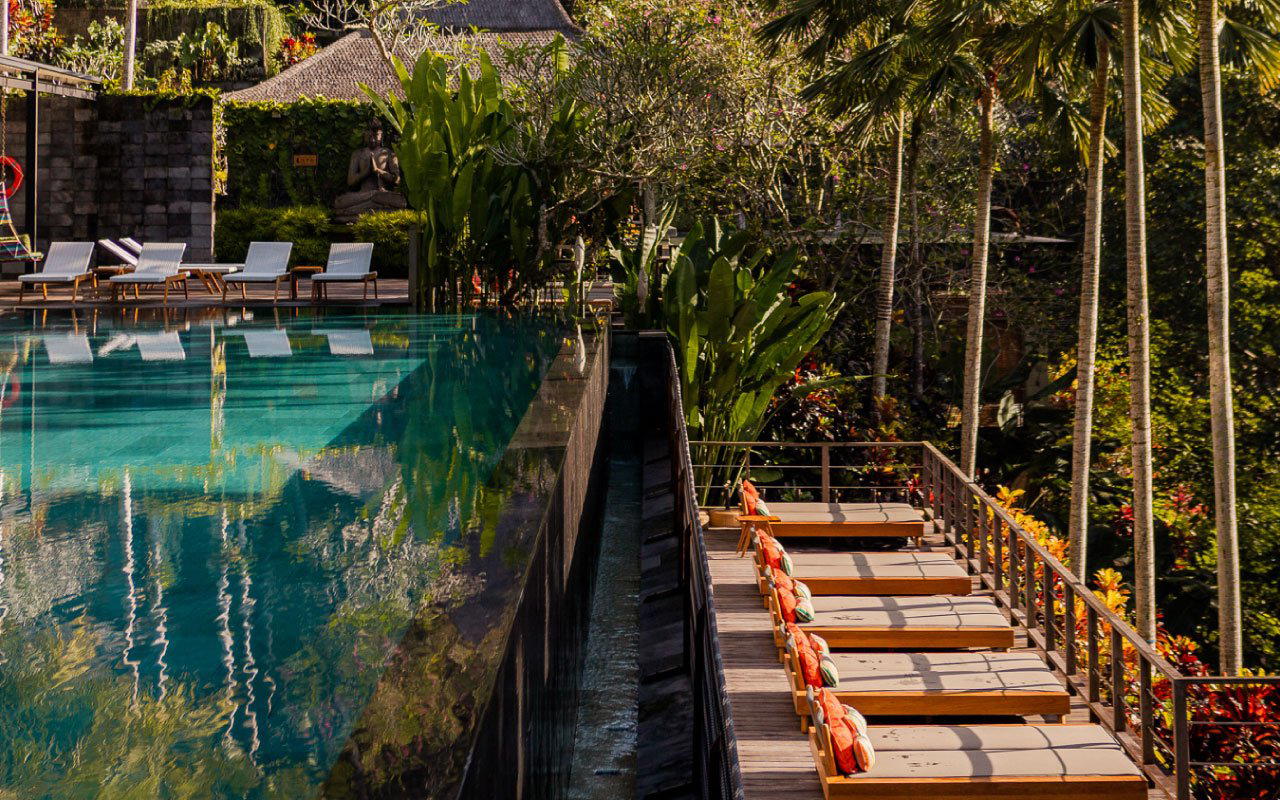
The grounds descend toward the Ayung in a sequence of terraces, with the natural swimming pool fed by spring water forming one of the property's most-documented spaces. In a region where infinity pools cantilevered over river valleys have become almost standard for the upper tier of Bali properties, a spring-fed natural pool represents a deliberate counter-position. It signals the property's broader orientation toward ecological specificity over imported amenity. The organic farm integrated into the grounds extends that logic into food production, creating a closed-loop relationship between the land and the table that is more structural than decorative.
For comparison, the Aman properties that have long defined Ubud's architectural reputation, including Amankila in Manggis and Amanwana in Moyo Island, achieve their spatial authority through custom design and material restraint within a contemporary idiom. The hotel approaches the same problem from the opposite direction: through age, accumulation, and the visible evidence of previous lives in the structures themselves. These are different propositions, and they attract different kinds of attention.
Placing Bambu Indah in the Bali Design Conversation
Bali's design-led accommodation sector has expanded significantly over the past decade, with properties across the island making increasingly sophisticated claims about materiality, local craft, and ecological commitment. The range runs from Fivelements Retreat Bali, which operates within a wellness and Balinese healing framework, to urban-adjacent properties like Desa Potato Head in Denpasar and Potato Head Suites and Studios in Seminyak, which approach sustainability through cultural programming and circular economy infrastructure at scale.
The hotel's position in this field is distinguishable by its specificity of method. The property's commitment is not to wellness programming or urban sustainability messaging, but to a particular form of architectural conservation expressed through hospitality. That specificity narrows the audience but deepens the proposition for those inside it. Properties with comparable orientations elsewhere in the region, such as Nihi Sumba in Sumba, have demonstrated that this kind of specificity can sustain international recognition over time.
The broader Indonesian design-led tier also includes properties like Kampung Sampireun Resort and Spa in Garut and Desa Seni Baturiti in Tabanan, both of which work with traditional architectural forms and local materials in ways that parallel the hotel's approach, though in different geographical and cultural registers. What connects them is the treatment of vernacular building traditions as a source of contemporary hospitality value, rather than as a decorative reference point.
Getting There and Planning Your Stay
The property sits in Sayan, a short drive from central Ubud, on the western edge of the Ayung River gorge. Access from Ngurah Rai International Airport in Denpasar typically takes between 60 and 90 minutes depending on traffic, with the final approach involving the narrow roads that characterise the Ubud hinterland. The Sayan ridge location places guests close to the river valley walks and rice terrace routes that define this part of Bali's interior, while keeping a workable distance from the commercial density of Ubud's central streets.
Given the property's small scale and the specificity of its accommodation types, early booking is advisable, particularly for the original joglo structures, which are finite in number.
At-a-Glance Comparison
Comparable venues nearby, for context on price, style, and recognition.
| Venue | Cuisine | Price | Awards | Notes |
|---|---|---|---|---|
| Bambu IndahThis venue — the venue you are viewing | Regenerative eco-luxury with bamboo and reclaimed teak structures | $$$$ | 5-Star | Not listed |
| Fivelements Retreat Bali | Eco-conscious Balinese healing village | $$$$ | 5-Star | Banjar Badung |
| Je Ne Sais Quoi, Seminyak | Luxury boutique villa resort | $$$$ | 5-Star | Seminyak |
| One Eleven | Contemporary luxury villa resort blending private villa exclusivity with five-star resort amenities in a minimalist aesthetic. | $$$$ | 5-Star | Seminyak |
| The Amala | Zen-inspired luxury villa resort blending modern design with tropical serenity | $$$$ | 5-Star | Seminyak |
| The Ridge Bali | Locally-owned design-forward boutique villa collection with wabi-sabi-inspired architecture and warm minimalist aesthetics infused with Balinese touches. | $$$$ | 5-Star | Sayan |
Recognition history
Dated appearances from independent guides and award organizations, with the underlying list record or original source where available.
Michelin Guide New Hotels New Hotel
Michelin Guide New Hotels
Michelin Selected
Michelin
Continue exploring
More in Banjar Badung
Hotels in Banjar Badung
Browse all →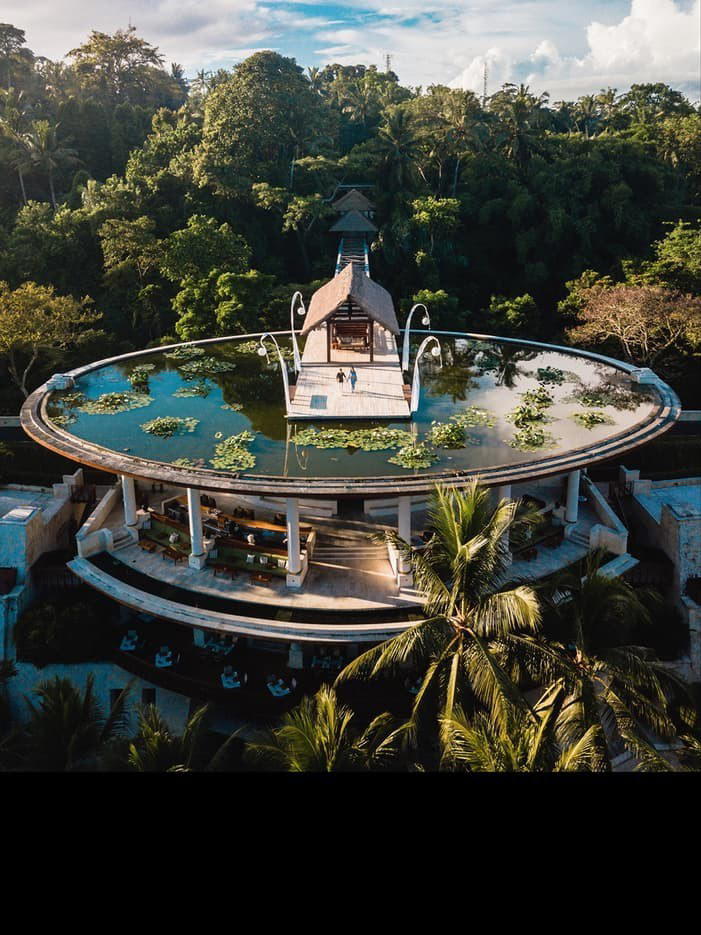
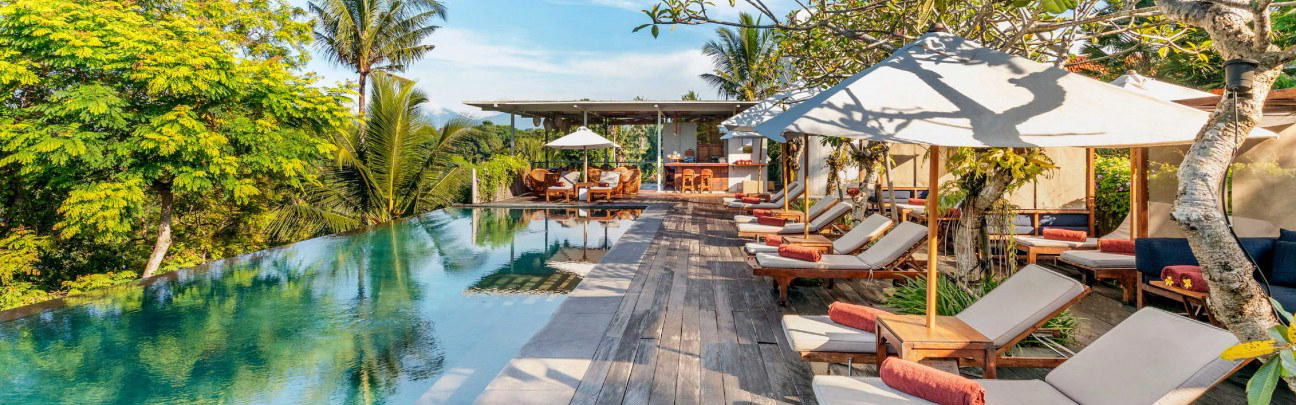
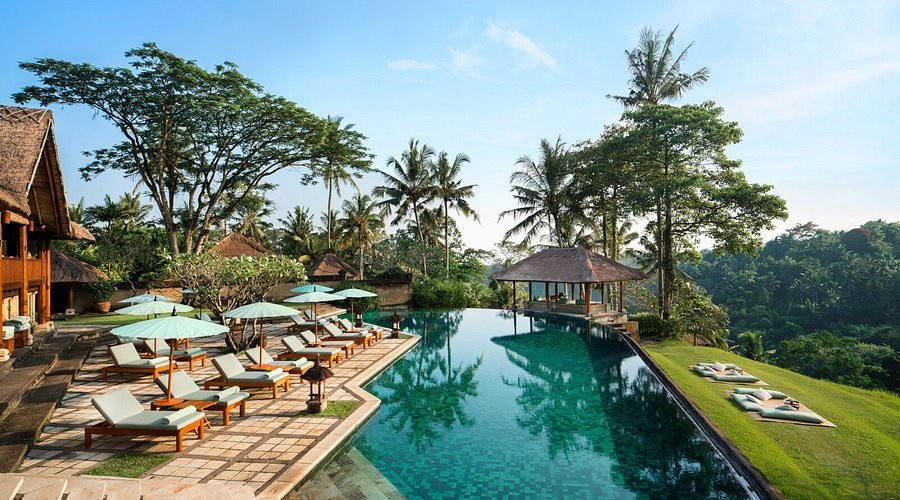
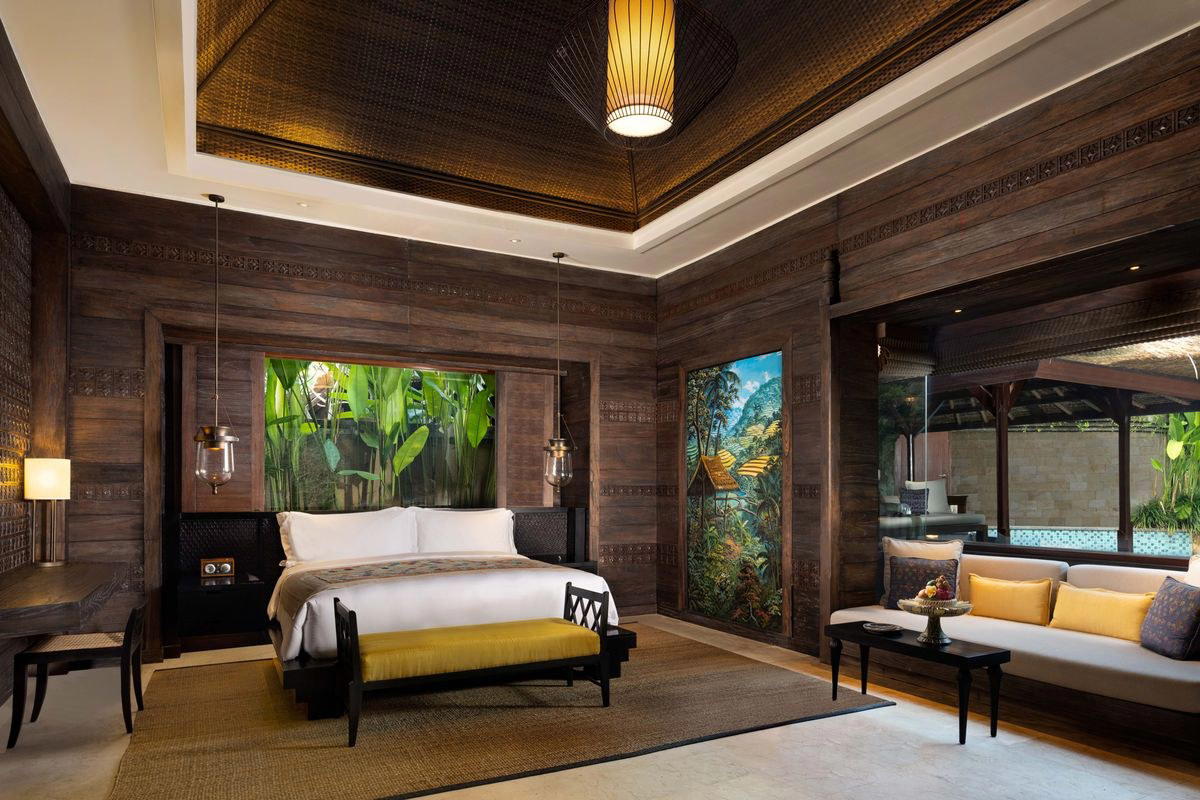
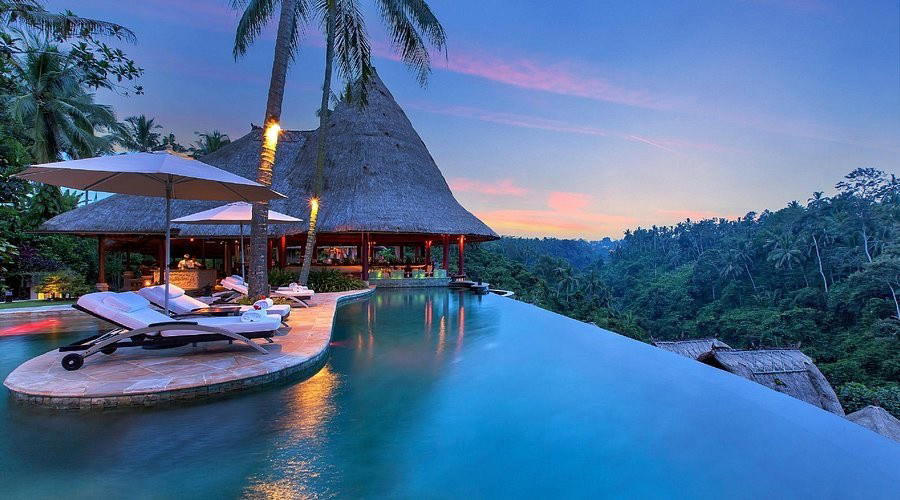
Bars in Banjar Badung
Browse all →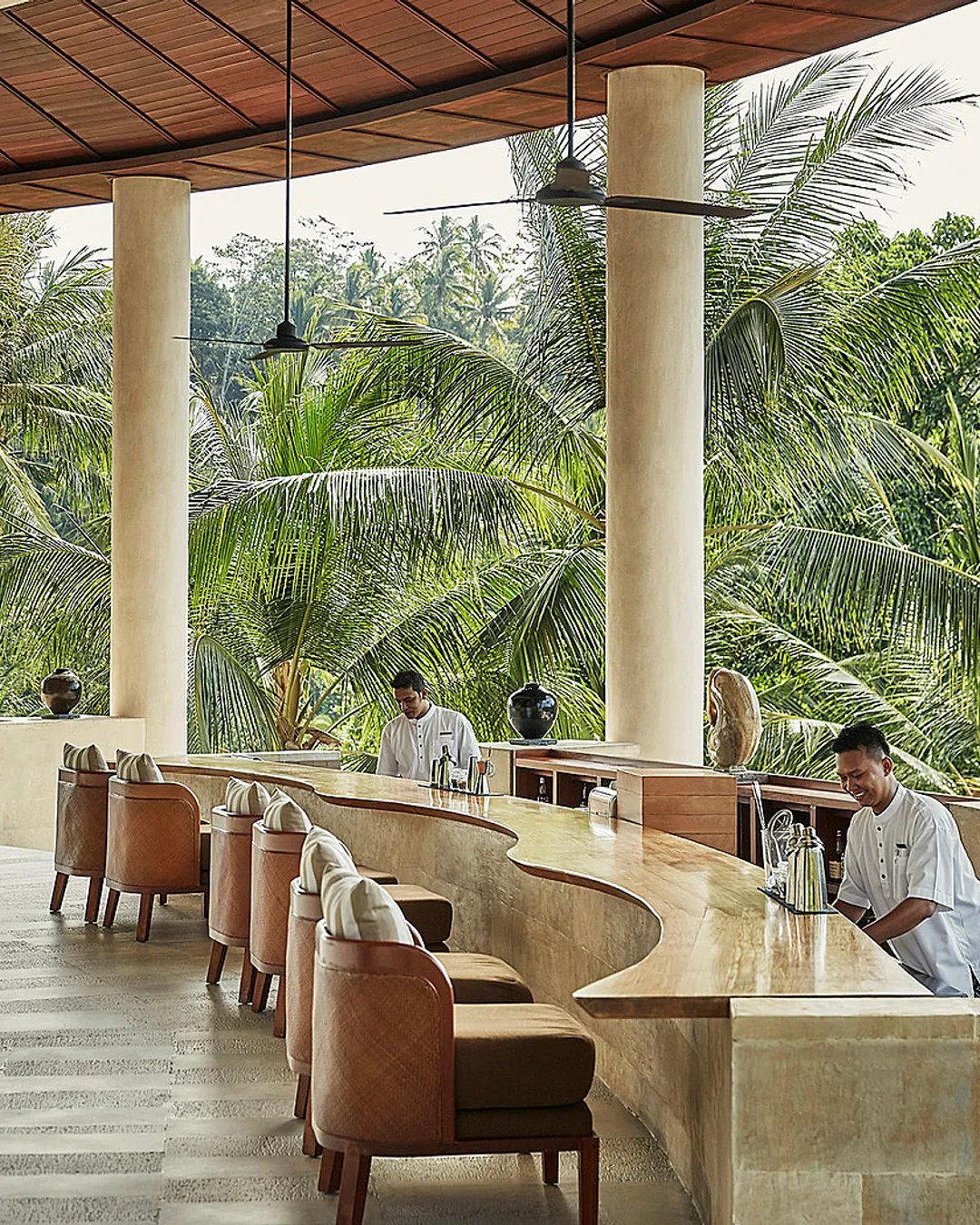
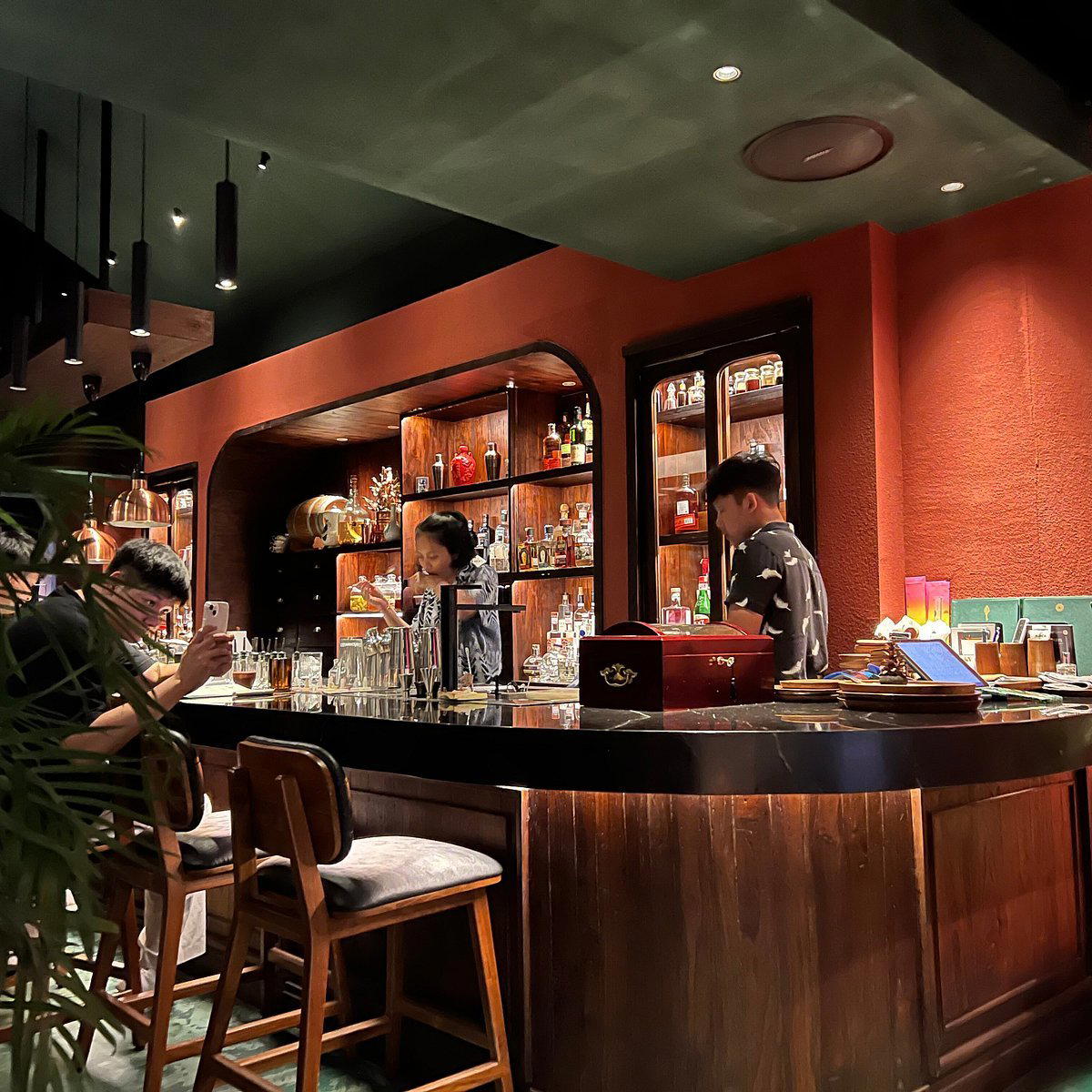
Restaurants in Banjar Badung
Browse all →
At a Glance
- Whimsical
- Rustic
- Scenic
- Bohemian
- Intimate
- Honeymoon
- Romantic Getaway
- Wellness Retreat
- Weekend Escape
- Infinity Pool
- Private Villa
- Panoramic View
- Garden
- Pool
- Spa
- Wi Fi
- Massage
- Mountain
- Garden
- Pool
- Spa
- Wi Fi
- Massage
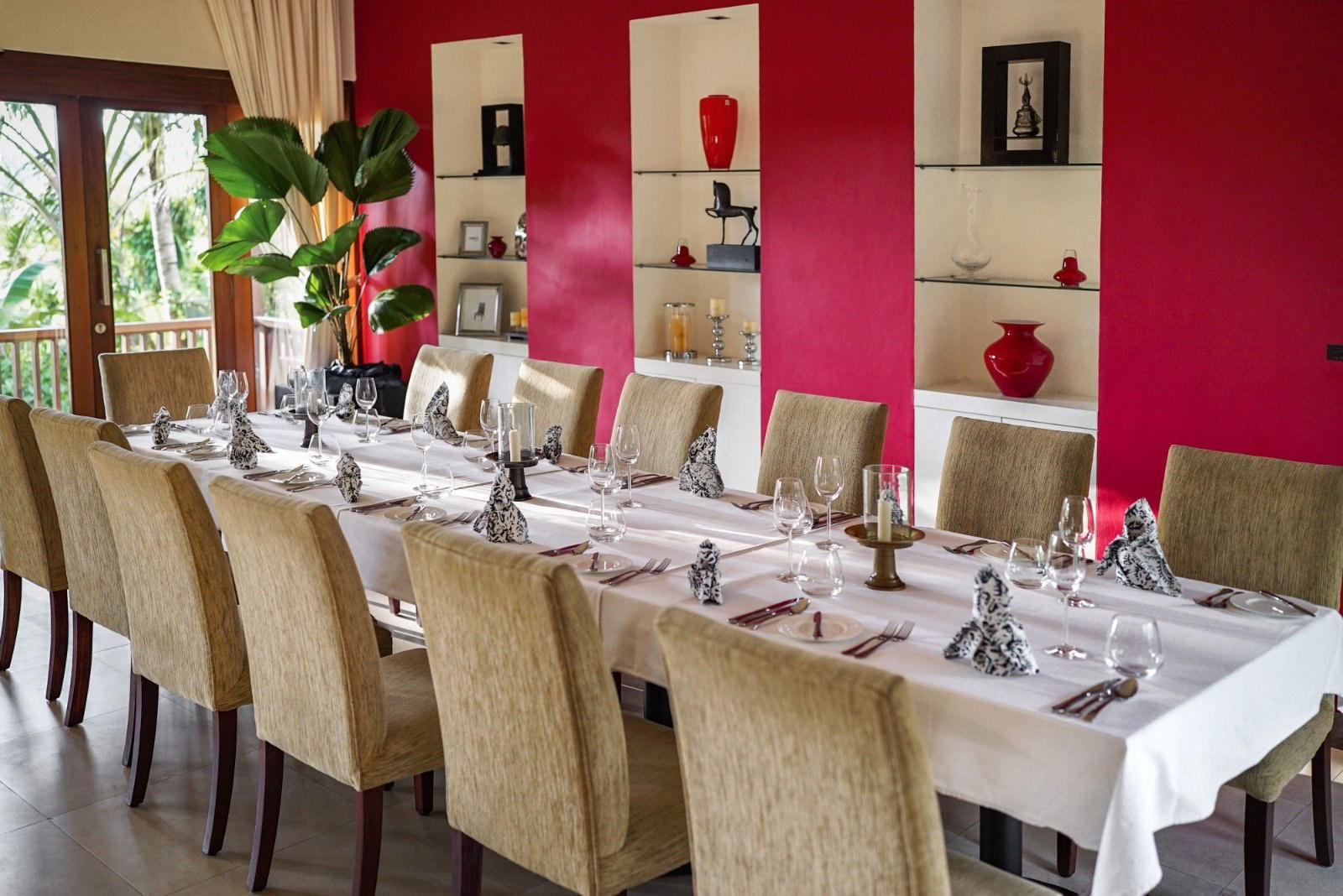
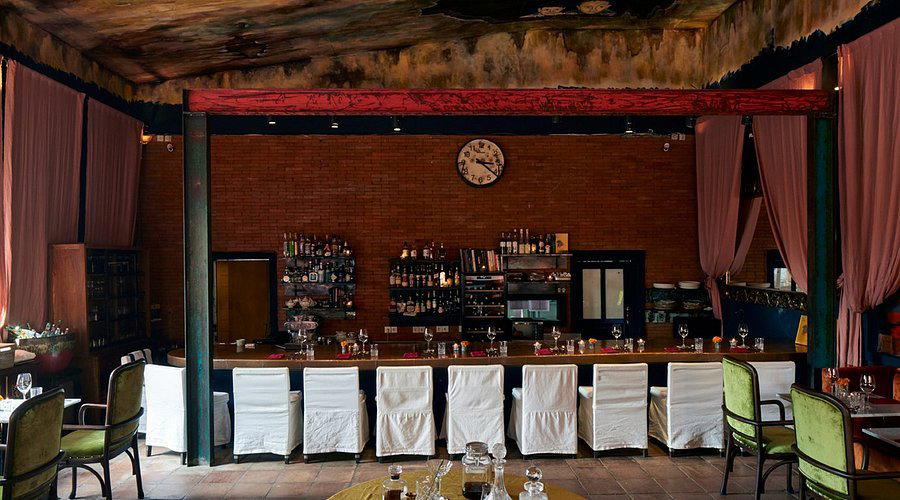
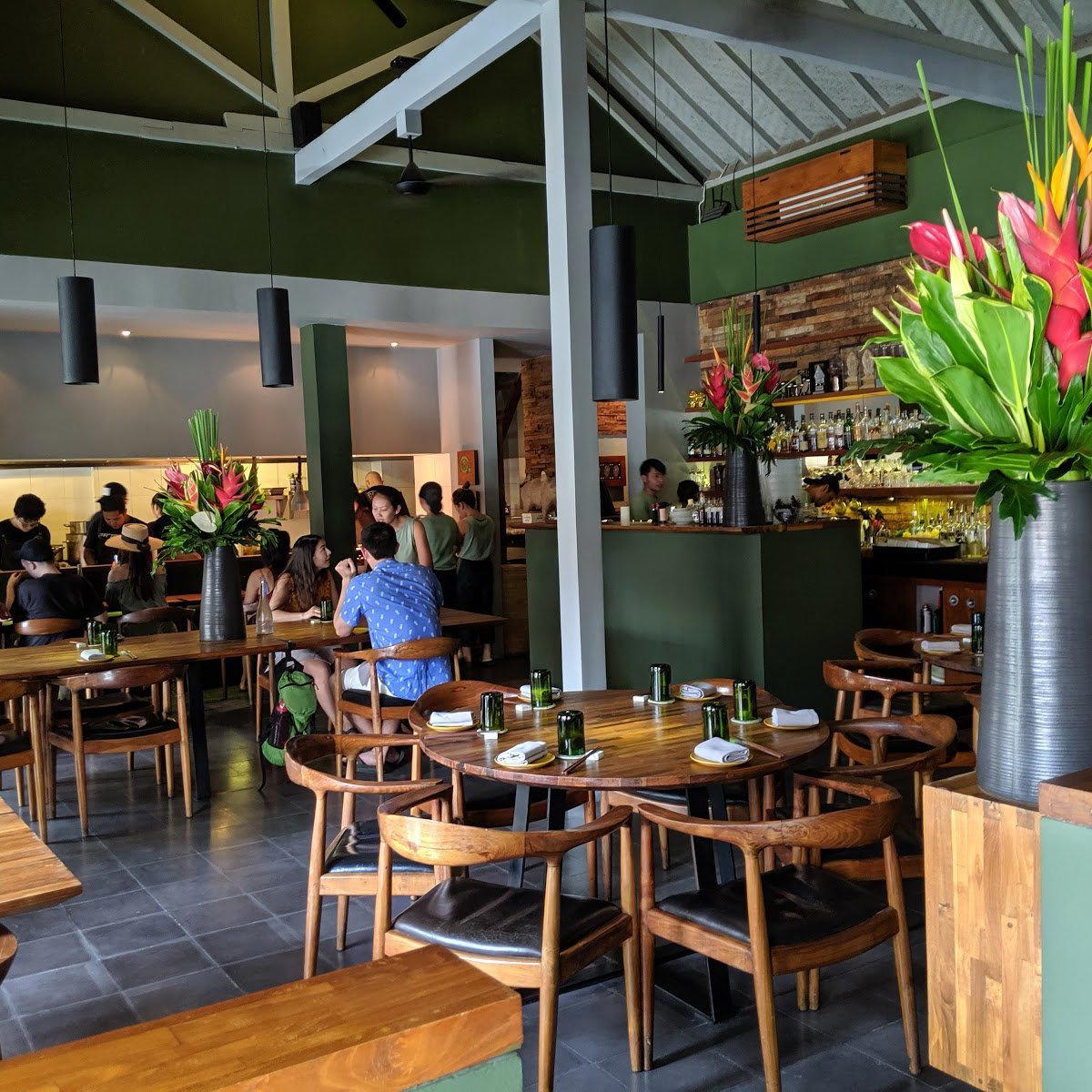
Serene and tranquil jungle atmosphere with natural light filtering through bamboo structures and lush greenery.