
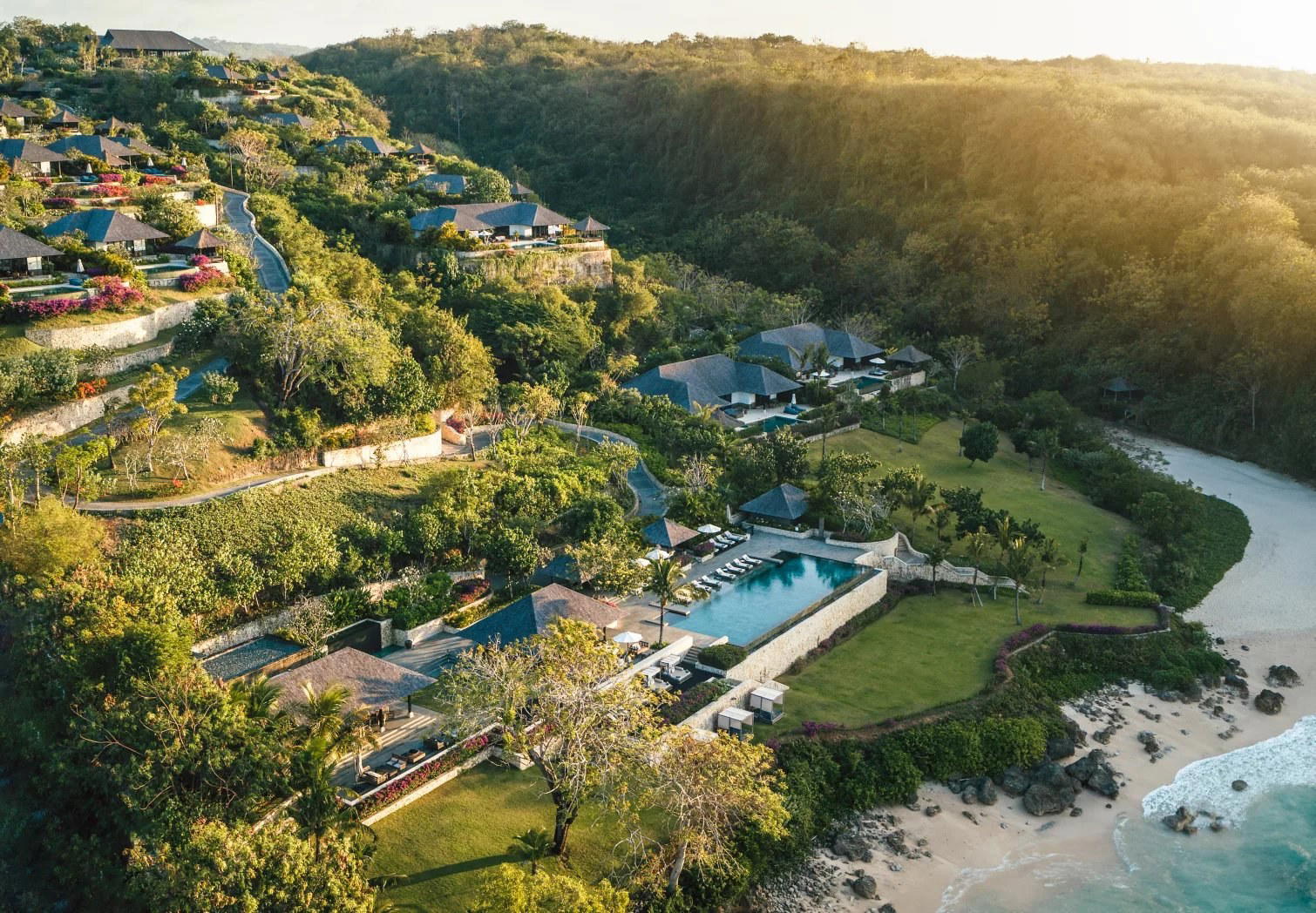
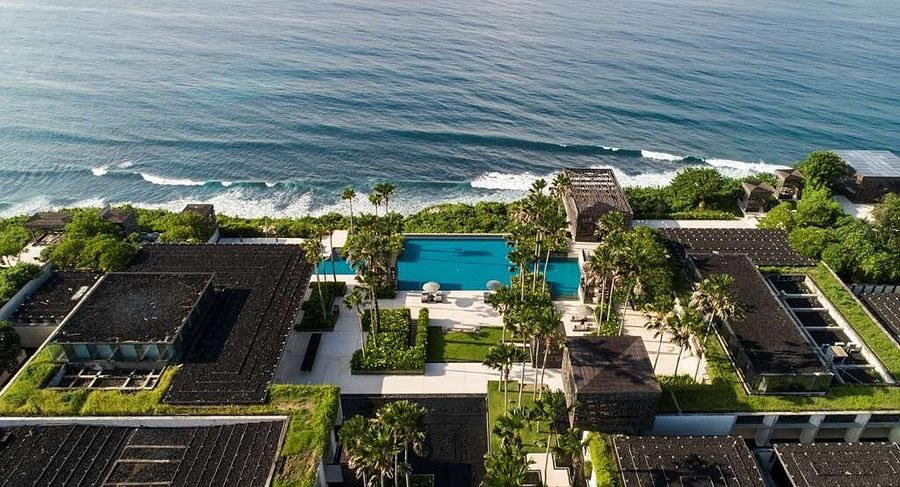
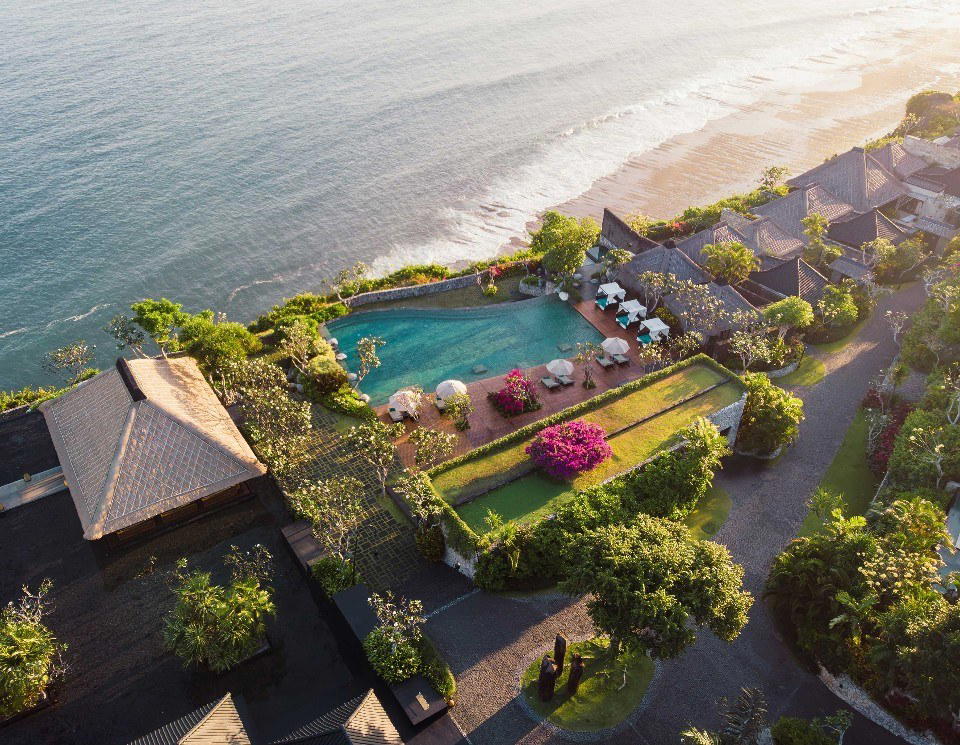
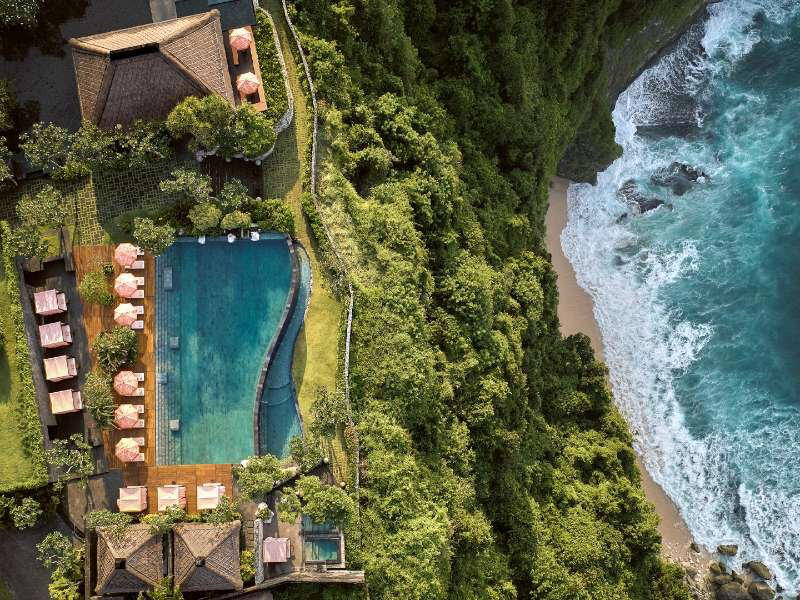
Occupying a clifftop position above Nusa Dua's coastline, The Apurva Kempinski Bali operates at the larger, more formal end of Bali's five-star spectrum. The property's 465 rooms, suites, and villas are distributed across a resort designed around open-air Indonesian architecture, with six dining venues ranging from Bali's first aquarium restaurant to a Japanese izakaya with Jakarta lineage. For scale and culinary range, it sits in a different tier from the island's boutique competitors.
Pearl is the En Primeur Club membership app — saves, bookings, and concierge access live there. Same editors, same standards.
- Address
- Jalan Raya Nusa Dua Selatan, Sawangan
- Website
- kempinski.com
- Directions
- Get directions
 Saves & bookings on Pearl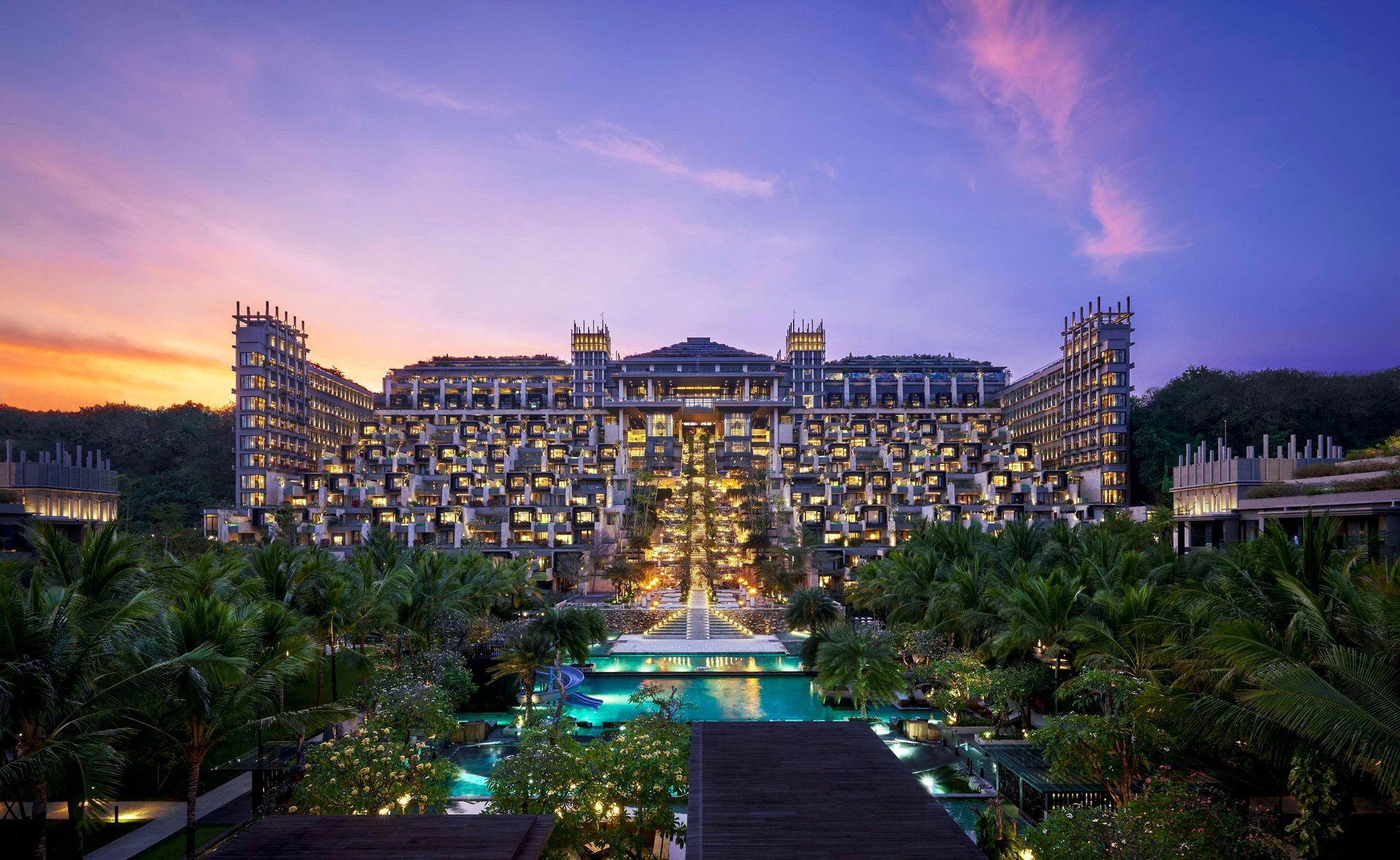
Clifftop Scale in Nusa Dua's Five-Star Corridor
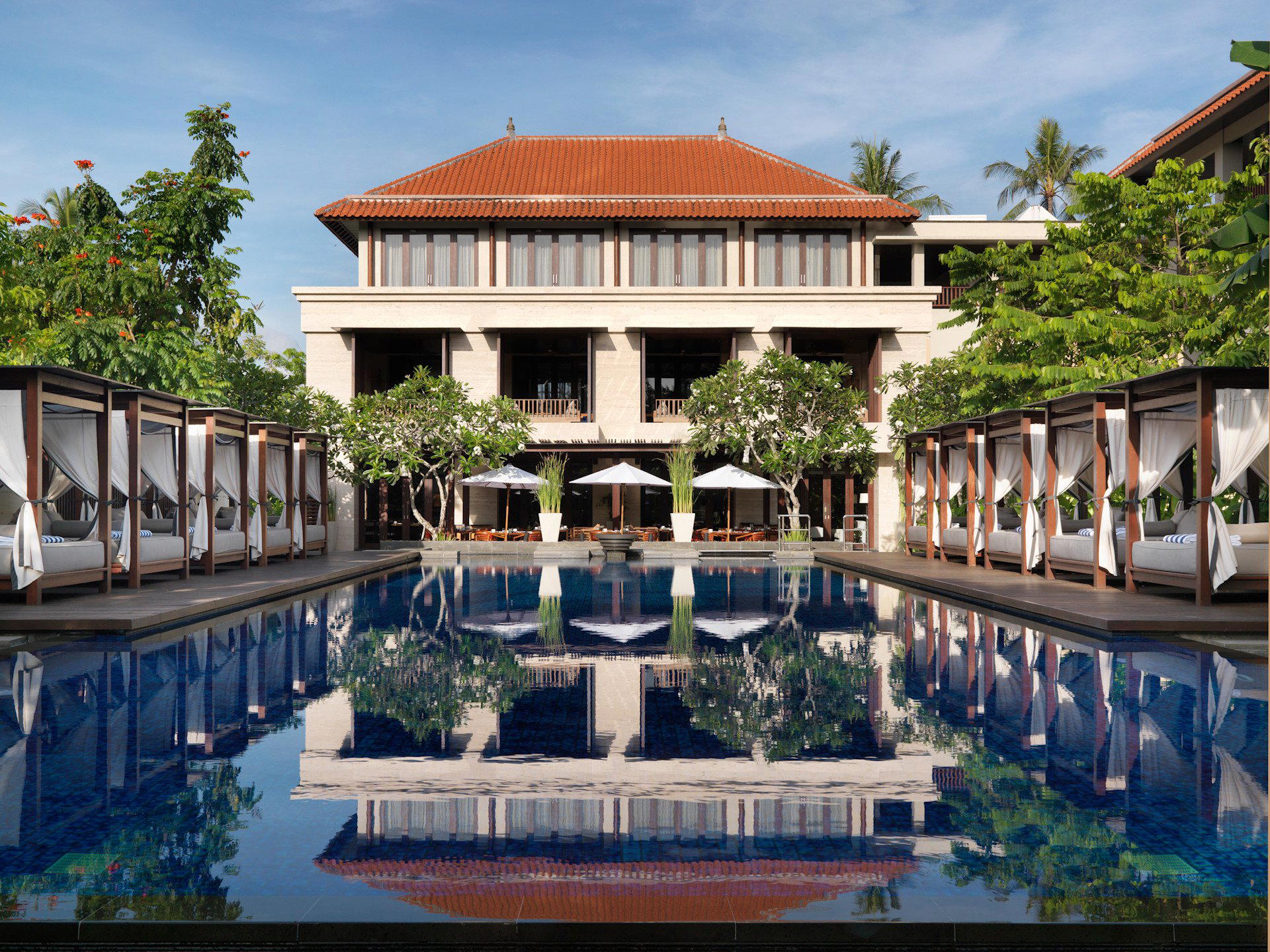
Nusa Dua occupies a particular position in Bali's accommodation hierarchy: it is where large international brands have historically planted their most ambitious footprints, trading the organic character of Seminyak or Ubud for planned infrastructure, private beach access, and a certain predictability of experience. Within that corridor, properties tend to compete on scale, finish, and the breadth of what they can offer without a guest needing to leave the grounds. The Apurva Kempinski Bali is a 5-star hotel in Nusa Dua, Bali, with 465 rooms and a cliff-edge address above the Indian Ocean and a resort layout designed to function as a self-contained destination. Guests arriving at the property pass through an open-air entrance that draws on Indonesian palace architecture, where the surrounding terraced gardens and the ocean beyond form the immediate frame of reference rather than an interior lobby. The physical approach does the work that a conventional hotel arrival relies on a chandelier or a reception desk to achieve.
A Resort at the Larger End of the Bali Market
At 465 keys across guestrooms, specialty suites, and villas, The Apurva Kempinski operates at a scale that separates it from smaller design-led properties. That scale brings certain advantages: the dining program runs to six distinct venues, the spa operates as a dedicated facility rather than a side offering, and meeting and event infrastructure is substantial enough to support large corporate groups alongside leisure guests. For travellers comparing options across Nusa Dua, the VOUK Hotel and Suites Nusa Dua and the Ayodya Resort Bali occupy the same general district, though the Apurva's cliff position and the variety of its food and beverage program place it in a distinct sub-tier. Properties like the Amarterra Villas Resort Nusa Dua pursue a quieter, villa-only approach in the same neighbourhood, which serves a different preference entirely.
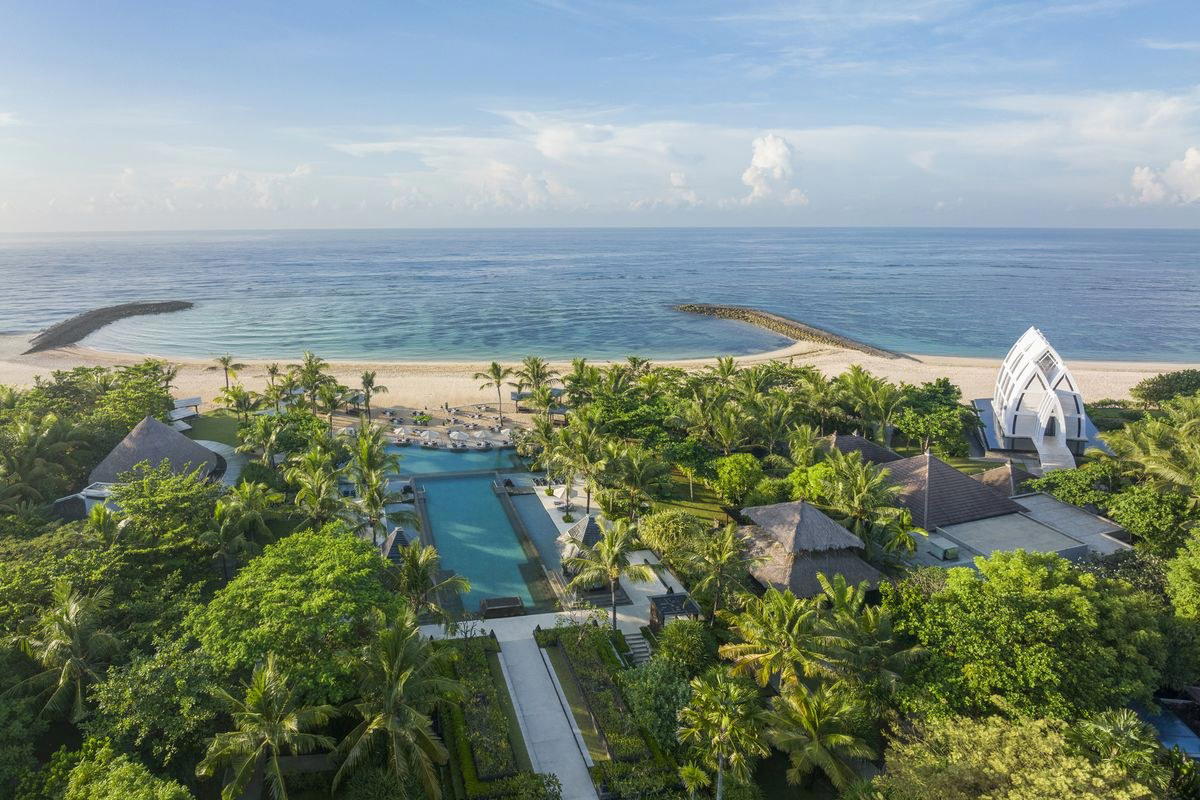
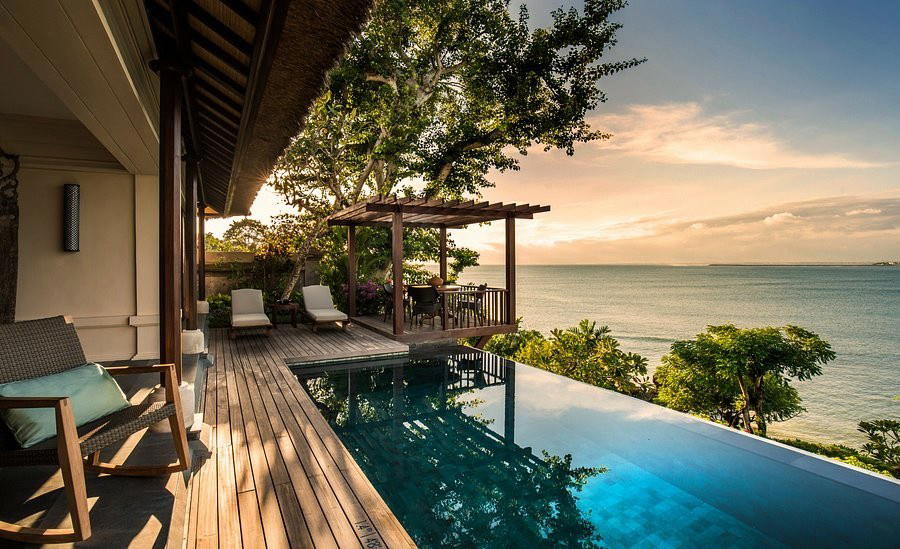
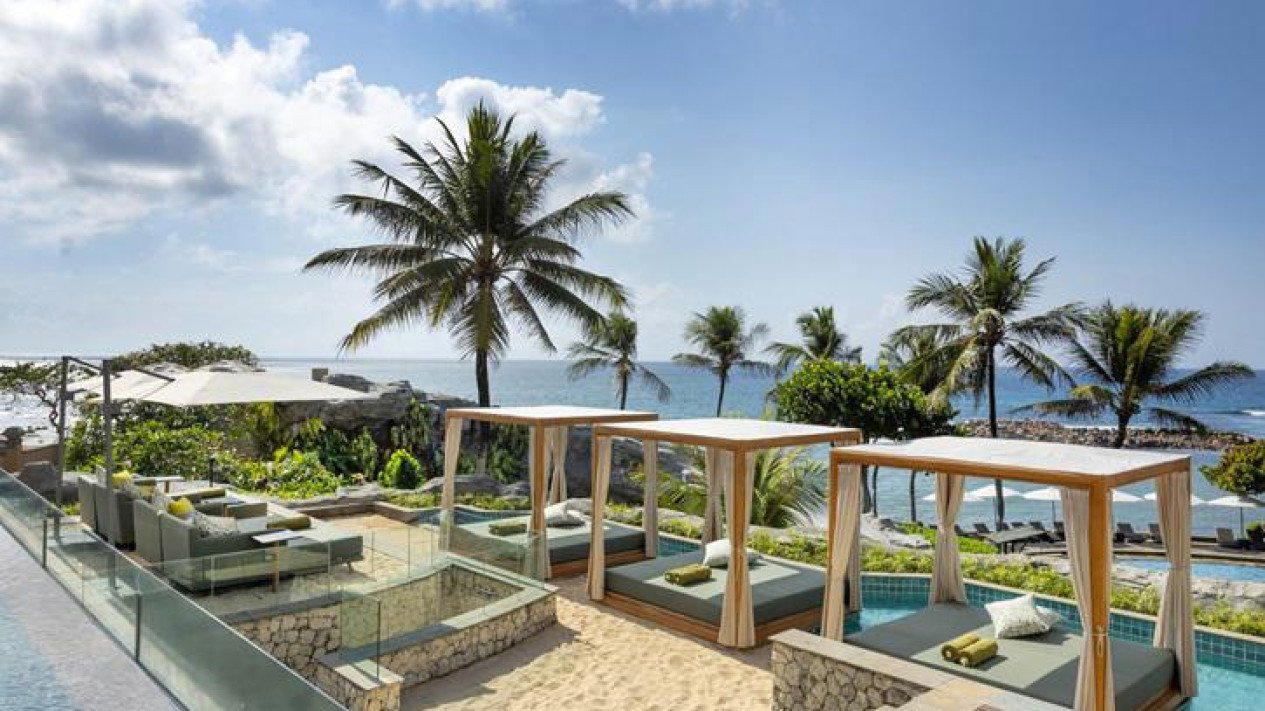
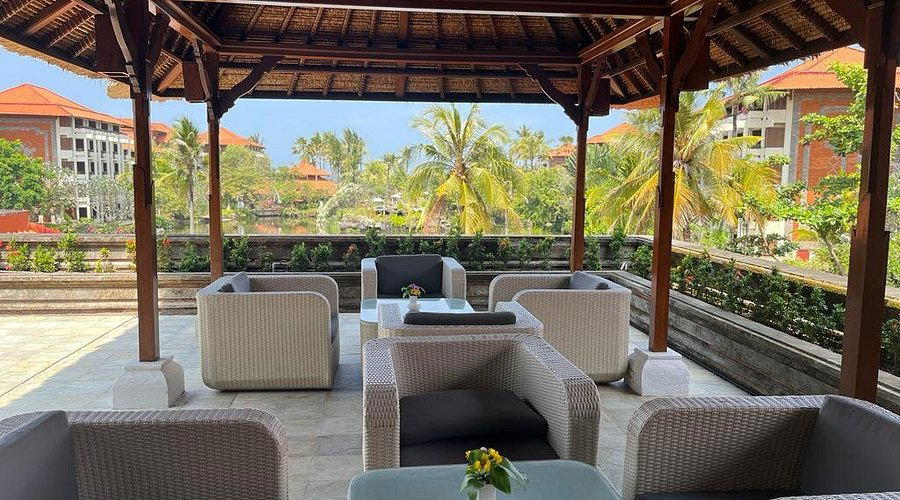
Of the 465 accommodations, 176 suites and 43 villas include private pools, and 48 Grand Deluxe Rooms connect directly to a lagoon pool. The design draws from Indonesia's tropical vernacular, using materials and spatial logic that reference the archipelago's architectural traditions rather than applying a neutral international luxury template.
The Dining Program: Range as the Editorial Argument
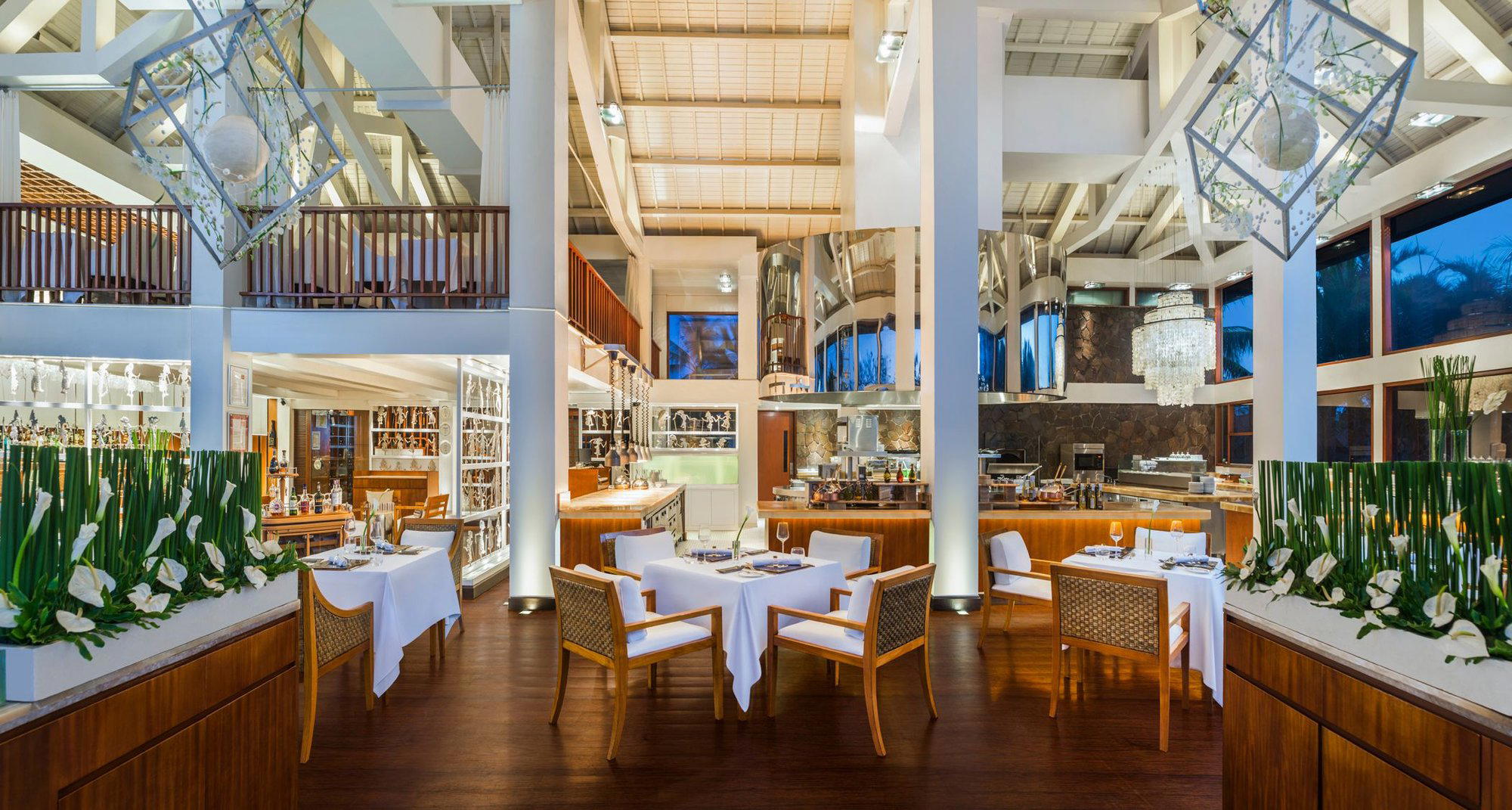
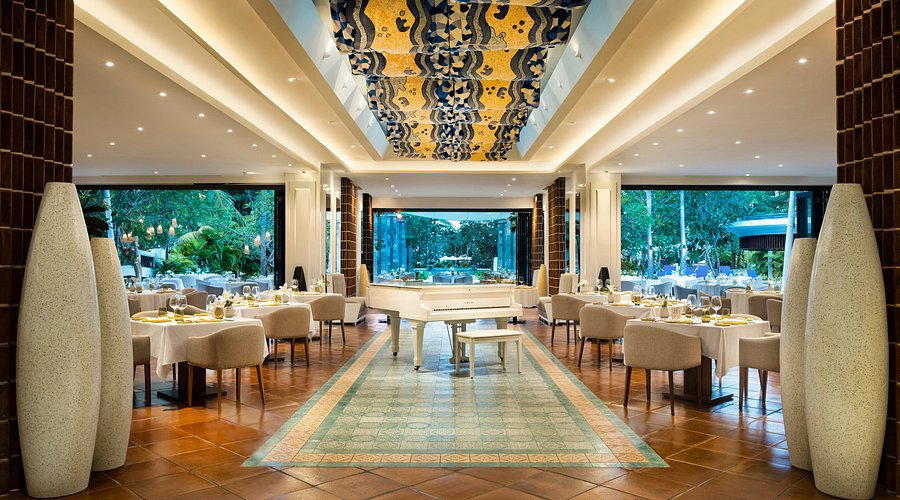
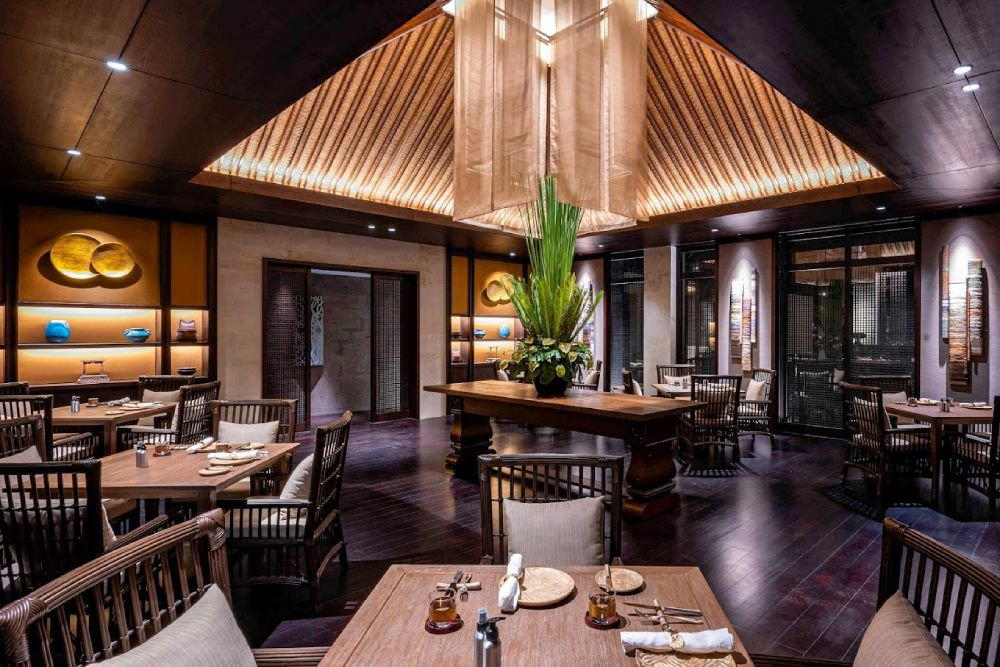
Across Bali's five-star hotels, the dining program is increasingly the differentiator. A single signature restaurant with a respected chef has become the baseline expectation; properties competing at the highest tier now operate what amount to small restaurant groups under one roof, each venue with its own format and culinary logic. The Apurva Kempinski runs six outlets, which is significant even by resort standards, and the range is genuinely diverse rather than a sequence of variations on the same kitchen.
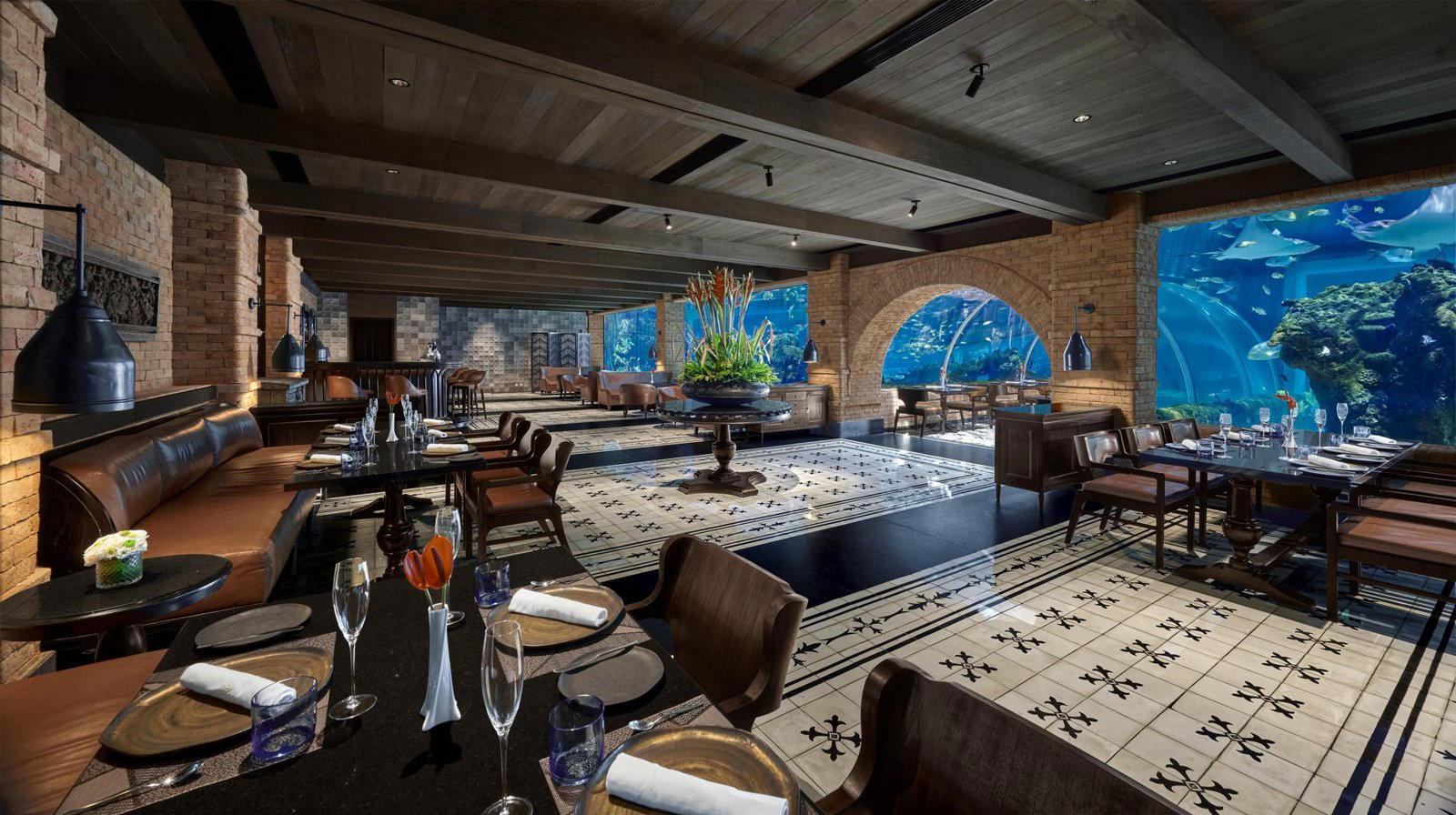
Koral holds one distinctive positioning in the program: it is identified as Bali's first aquarium restaurant, with coastal Indonesian cooking served in a setting built around the marine environment of the surrounding waters. The format is a deliberate statement about the archipelago's relationship with the sea, and it gives the property a venue that has no direct equivalent elsewhere on the island. For guests with an interest in Indonesian regional cooking, this is the outlet that merits the closest attention.
Izakaya by OKU connects the property to a recognized culinary lineage. OKU is the Japanese restaurant at Hotel Indonesia Kempinski Jakarta, where it operates with award recognition in the Indonesian capital's competitive dining market. The Bali outpost carries that institutional reference, which positions it differently from a standalone hotel Japanese restaurant without a named program behind it. The distinction matters for guests who are using the dining program as part of their reason for choosing the property.
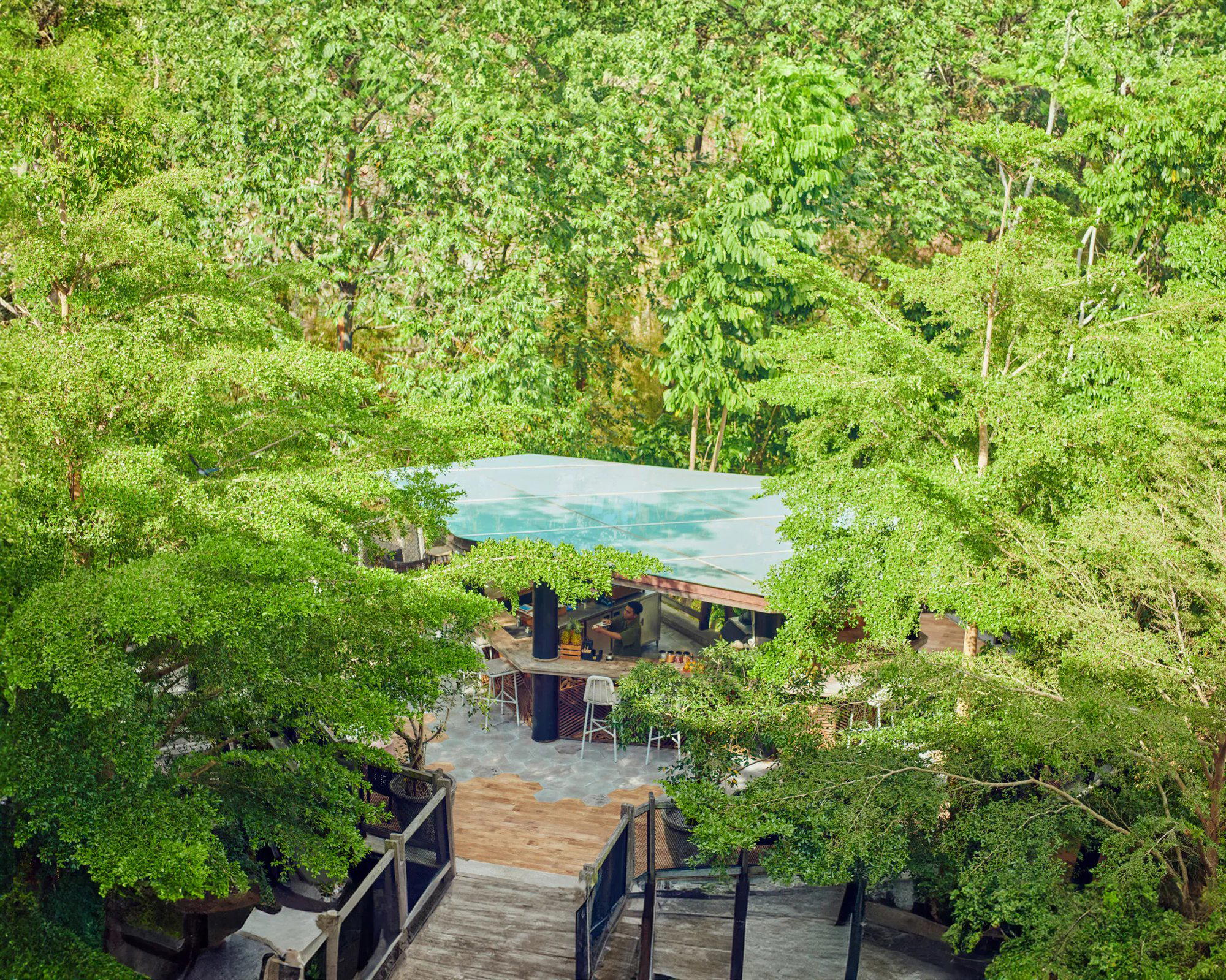
Bai Yun operates as a Chinese restaurant with a dim sum and hotpot focus, a format that has a strong following among the Indonesian domestic travel market and among visitors from across Asia who travel with specific culinary expectations. L'Atelier by Cyril Kongo occupies the highest floor of the resort, offering Mediterranean tapas alongside a premium cigar selection in a format that leans into the creative and the theatrical. Pala Restaurant and Rooftop Bar anchors the all-day dining function with live cooking stations and a particular focus on Indian cooking, while Reef Beach Club handles casual oceanfront eating. Selasar Deli in the lobby covers coffee and light refreshments, with specialty luwak coffee and jamu herbal tonic among the options.
On the Question of Beverage Depth
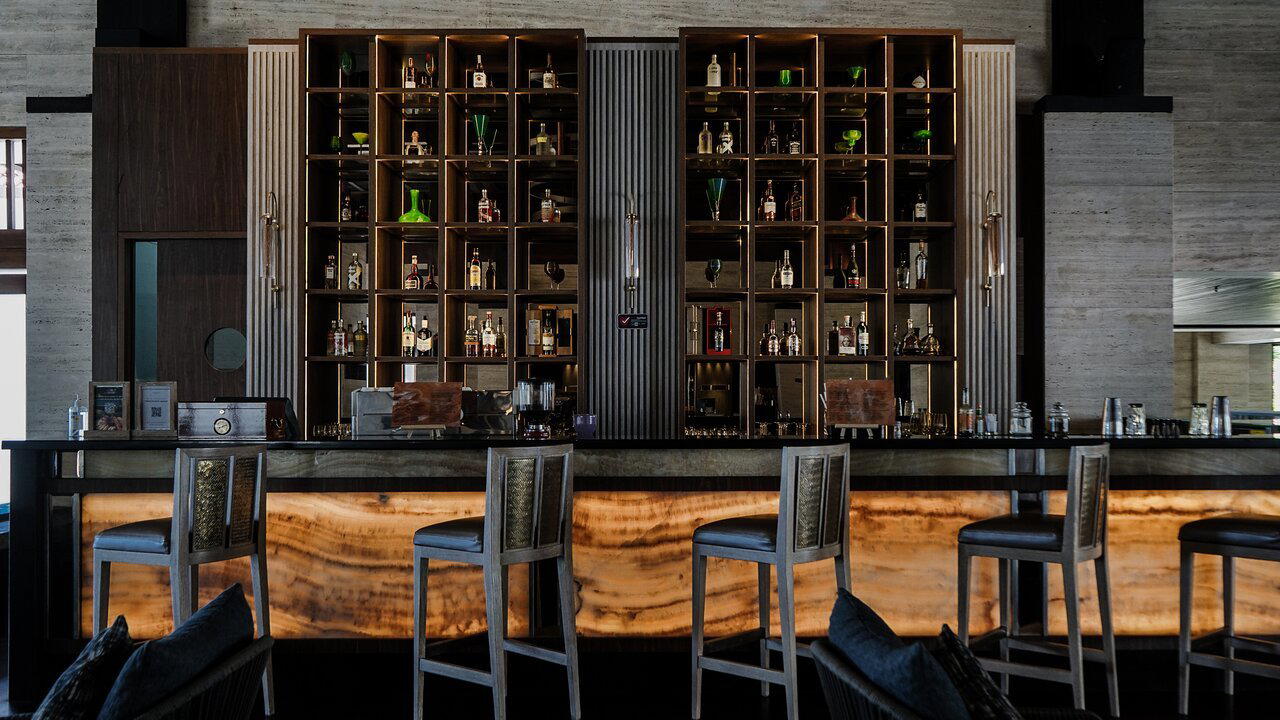
For a property operating six dining venues and positioning itself at the premium end of Nusa Dua's market, the beverage program is a natural area of focus. Indonesia does not have a domestic wine industry of any consequence, which means that every bottle served at a property like this is imported, and the cost structure for wine in Bali reflects high import duties. At resorts in this tier, the cellar tends to be built around European producers with strong recognition in Asian markets, supplemented by selections from Australia and New Zealand, which face more favorable logistics. The sommelier function at large integrated resorts in Bali has grown in sophistication over the past decade, and the six-venue format here creates a meaningful opportunity to match wine programs to the specific culinary character of each outlet rather than running a single list across all rooms. The Japanese program at Izakaya by OKU, for instance, creates a context for sake and Japanese whisky alongside wine, while the Mediterranean format at L'Atelier creates different selection priorities. Whether the property executes on this potential is something that can only be assessed through direct experience, but the structural conditions for a considered beverage program are present.
Where This Property Sits Relative to Bali's Alternatives
Bali's accommodation market spans a wider range than almost any island destination of comparable size. The Apurva Kempinski represents one clear point on that range: large-scale, internationally managed, strong on culinary and event infrastructure, with a physical address that prioritizes coastal drama. Properties like Mandapa, a Ritz-Carlton Reserve in Ubud, or the Anantara Ubud Bali Resort, work from a different premise entirely, trading scale for immersion in Bali's inland cultural environment. For those who want the south Bali coastal setting but in a smaller format, options like the Andaz Bali or villa-based properties such as Asvara Villa sit in a distinct sub-tier. Further afield, Nihi Sumba operates a radically different model in East Nusa Tenggara, and properties like Bambu Indah or Desa Seni Baturiti in Tabanan occupy a design-conscious, culturally rooted niche that serves preferences the large integrated resort format does not address. Our full Bali restaurants and hotels guide maps the options across all of these tiers.
Planning the Stay
The property is located at Jalan Raya Nusa Dua Selatan in Sawangan, placing it at the southern end of the Nusa Dua zone. For guests considering Bali within a longer regional itinerary, comparisons to large integrated resort experiences elsewhere in Asia are worth making before booking: properties like Goddess Retreats or the Further Hotel in Bali, or internationally, the Aman New York and Aman Venice, represent different structural philosophies for luxury accommodation that can help clarify what a traveller actually prioritizes. The Apurva Kempinski makes sense for guests who want a strong dining program, private-pool accommodation, and a Nusa Dua coastal address within a single property.
Frequently Asked Questions
- Is The Apurva Kempinski Bali more low-key or high-energy? The property operates at the higher-energy end of Nusa Dua's five-star options. With 465 rooms and suites, six dining venues, event facilities, and a beach club, it is built for activity rather than retreat. Guests seeking a quieter register in the same district should compare it against smaller villa properties in the area, while those coming from major international city hotels like The Fifth Avenue Hotel in New York will find the scale broadly familiar.
- What room category do guests prefer at The Apurva Kempinski Bali? Given the style of the property and the Indonesian coastal setting, the 176 suites with private pools and the 43 private villas represent the accommodation format most aligned with the resort's positioning. The 48 Grand Deluxe Rooms with lagoon pool access offer a middle tier for guests who want outdoor water access without the full villa footprint. Grand Seminyak and Potato Head Suites and Studios in Seminyak offer a useful point of comparison for guests weighing suite-format options across different Bali districts.
The Quick Read
Comparable venues nearby, for context on price, style, and recognition.
| Venue | Price | Notes |
|---|---|---|
| The Apurva Kempinski BaliThis venue — the venue you are viewing | $$$$ | Not listed |
| Andaz Bali | $$$$ | Sanur, Contemporary luxury resort interpreting traditional Balinese village architecture with modern amenities and sustainable design principles. |
| Kaamala Resort | $$$$ | Ubud, Modern luxury resort blending seclusion with central Ubud access |
| The Damai | $$$$ | Lovina Beach, Secluded luxury boutique resort |
| Asvara Villa | $$$$ | Sambahan, Contemporary Balinese luxury boutique villa resort blending modern comfort with traditional tropical aesthetics. |
| Anantara Ubud Bali Resort | $$$$ | Payangan, luxury rainforest sanctuary blending Balinese culture and modern comfort |
Recognition history
Dated appearances from independent guides and award organizations, with the underlying list record or original source where available.
Virtuoso Luxury Hotel Partner
Virtuoso
At a Glance
- Elegant
- Sophisticated
- Ornate
- Scenic
- Honeymoon
- Romantic Getaway
- Family Vacation
- Wellness Retreat
- Destination Wedding
- Beachfront
- Infinity Pool
- Private Villa
- Destination Spa
- Panoramic View
- Pool
- Spa
- Fitness Center
- Room Service
- Concierge
- Business Center
- Valet Parking
- Kids Club
- Beach Access
- EV Charging
- Waterfront
- Garden
- Pool
- Spa
- Fitness Center
- Room Service
- Concierge
- Business Center
- Valet Parking
- Kids Club
- Beach Access
- EV Charging
Tranquil and elegant with natural light, lush tropical gardens, and dramatic ocean vistas creating a serene sophisticated atmosphere.