
A Michelin Selected hotel occupying a reimagined century-old department store in central Maebashi, Shiroiya sits at the intersection of adaptive reuse architecture and contemporary Japanese hospitality. The property draws guests who treat Gunma's prefectural capital as a destination in its own right rather than a transit point between Tokyo and the mountains.
Pearl is the En Primeur Club membership app — saves, bookings, and concierge access live there. Same editors, same standards.
- Address
- Honmachi 2-2-15, Maebashi, Japan
- Phone
- +81-27-231-4618
 Saves & bookings on Pearl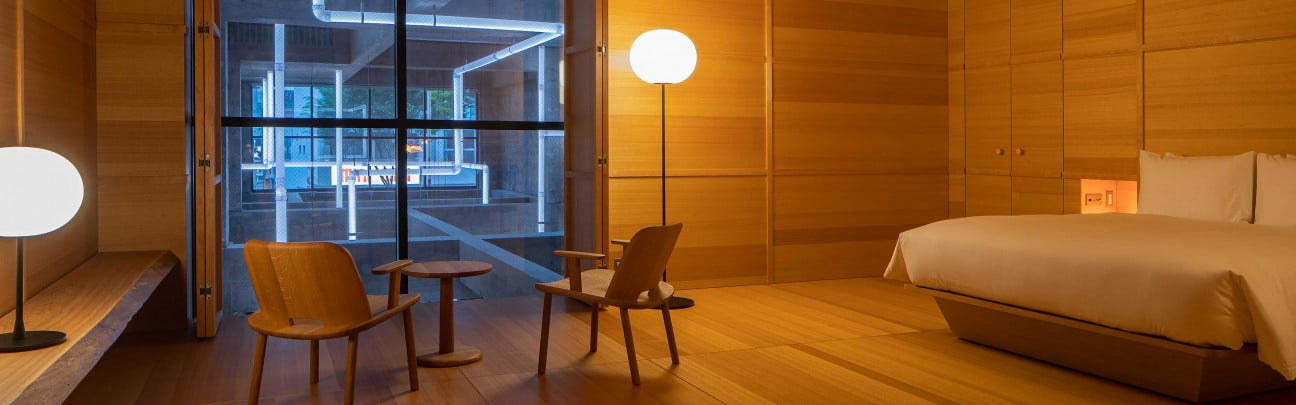
A Department Store Becomes a Hotel: Maebashi's Architecture Moment
The building at Honmachi 2-2-15 was a functioning department store for most of the twentieth century before its closure left a gap in the city's commercial core. The conversion that followed belongs to a specific and growing category of Japanese urban hospitality: the adaptive reuse project where the architecture is the proposition, and the city around it is the context that gives it meaning.
Japan has a well-established tradition of repurposing mid-century civic and commercial structures into design-led hotels. Properties like Benesse House in Naoshima demonstrated that art and architecture, presented with institutional seriousness, could anchor an entire island's identity as a destination. Shiroiya operates on a similar logic applied to a prefectural city: the intervention is designed to activate a neighbourhood, not merely to house overnight guests.
The Physical Argument: What the Building Does
The structural shell of the former Shiroiya department store has been retained and worked with rather than obscured. The approach reflects a broader philosophy in Japanese adaptive reuse: existing material is treated as a record of time rather than a liability. Industrial ceiling heights, raw concrete surfaces, and the spatial generosity of a former retail floor plan create proportions that purpose-built boutique hotels rarely achieve.
The building is divided into two wings with distinct characters. One tower is older in feel, retaining more of the original material palette; the other takes the structure in a more contemporary direction, with commissioned artwork and installation-scale interventions that bring the interior closer to a gallery experience than a conventional hotel lobby. This dual-character approach is consistent with how Japan's more architecturally serious hospitality projects position themselves: the building's layers of history are not erased but placed in dialogue with present-day design.
Compared with ryokan-format properties elsewhere in the Kanto region, such as Fufu Nikko or Nasu Mukunone, Shiroiya operates in a different register entirely. Those properties ground their identity in landscape, onsen culture, and the rituals of the traditional inn. Shiroiya grounds its identity in urban space, art, and the specific history of a single building in a mid-sized Japanese city.
Michelin Selection and What It Signals
Shiroiya Hotel holds a Michelin Selected designation in the 2025 Michelin Hotels guide, placing it within the broader ecosystem of properties the guide considers worth the journey rather than merely convenient. Michelin's hotel selection in Japan has grown more geographically dispersed in recent years, moving beyond the obvious concentrations in Tokyo, Kyoto, and Hakone to include properties that make a case for less-visited destinations. Shiroiya's inclusion in that list functions as an external validation of the Maebashi-as-destination argument.
For context on what Michelin Selected means at the upper end of the Japanese hotel market, the designation appears alongside different property types: traditional ryokan such as Gora Kadan in Hakone and Asaba in Izu, design-forward resorts like Zaborin in Kutchan, and resort-scale luxury in Amanemu in Mie. Shiroiya sits in that company not because it competes on spa facilities or room count, but because the design and cultural programming rationale holds up under scrutiny.
Maebashi as Context
Gunma Prefecture's capital is about an hour from Tokyo by Shinkansen to Takasaki followed by a short local connection, making it genuinely accessible without being a day-trip city in the casual sense. Maebashi carries a civic character that prefectural capitals of its scale often do in Japan: a government and light-industry base with a mid-century urban grid that has not been entirely redeveloped into generic commercial architecture. That relative preservation is precisely what makes a building like Shiroiya's former department store available as a project.
The city has a modest but growing reputation among Japanese creative communities as a place where real estate economics allow cultural projects to exist at a scale that Tokyo no longer permits. A hotel built around that premise is well-positioned to attract the kind of guest who reads architectural press as readily as travel press.
Where Shiroiya Sits in the Japan Hotel Conversation
Japan's hotel market at the serious end splits between international luxury flagships and domestically-rooted design projects. The flagship category includes properties like Bvlgari Hotel Tokyo and HOTEL THE MITSUI KYOTO, which operate with the infrastructure and brand recognition of international hospitality groups. Shiroiya operates in the domestically-rooted design category, which prizes architectural specificity and local cultural engagement over global service standards. Neither approach is superior; they answer different questions for different travellers.
Other properties in this design-led domestic tier worth comparing include Satoyama-Jujo in Niigata, which applies a similar logic to rural food culture and local craft, and Fufu Kyu-Karuizawa Restful Forest, which uses the Karuizawa natural environment as its primary design material. Shiroiya uses the Maebashi urban fabric and a specific building's history as its equivalent raw material.
Further afield but useful for understanding this tier's range: Sekitei in Hatsukaichi-shi, Kamenoi Besso in Yufu, and Nishimuraya Honkan in Kinosaki-cho each represent different inflections of place-specific Japanese hospitality. Internationally, the premise of a historically significant building converted into a design hotel has parallels at Badrutt's Palace Hotel in St. Moritz and Hôtel de Paris Monte-Carlo, though those operate in an entirely different economic and brand register.
Planning a Stay
Shiroiya Hotel is located at Honmachi 2-2-15 in central Maebashi, walkable from the city's main commercial area. Given the property's profile and Michelin Selected status, booking in advance is advisable, particularly for weekend stays and during periods when architectural and design tourism from Tokyo tends to peak.
Quick Comparison
Comparable venues nearby, for context on price, style, and recognition.
| Venue | Cuisine | Price | Notes |
|---|---|---|---|
| Shiroiya HotelThis venue — the venue you are viewing | Contemporary art and architecture hotel in renovated historic ryokan with brutalist concrete and green tower extension. | $$$$ | Not listed |
| Machiyado Ichiryu | Modern Japanese ryokan in renovated townhouse | $$$$ | Old Town |
| Hoshinoya Taketomi Island | Ryukyu-inspired luxury resort mimicking a traditional village | $$$$ | Taketomi Island |
| Regent Kyoto | An upper-luxury urban retreat that integrates a historic Kyoto garden and century-old ryotei into a small-scale, heritage-rich estate in the Okazaki cultural district. | $$$$ | Okazaki |
| TRUNK(HOTEL) | Boutique hotel rooted in local community with artisan craftsmanship. | $$$$ | Shibuya |
| Fufu Karuizawa Wind in the Sunshine | Modern ryokan-style natural resort | $$$$ | Nagakura |
Recognition history
Dated appearances from independent guides and award organizations, with the underlying list record or original source where available.
Mr & Mrs Smith Smith Seal of Approval
Mr & Mrs Smith
Michelin Selected
Michelin
Continue exploring
More in Maebashi
At a Glance
- Modern
- Elegant
- Sophisticated
- Minimalist
- Romantic Getaway
- Business Trip
- Weekend Escape
- Historic Building
- Design Destination
- Sauna
- Wi Fi
- Restaurant
- Sauna
- Wi Fi
- Restaurant
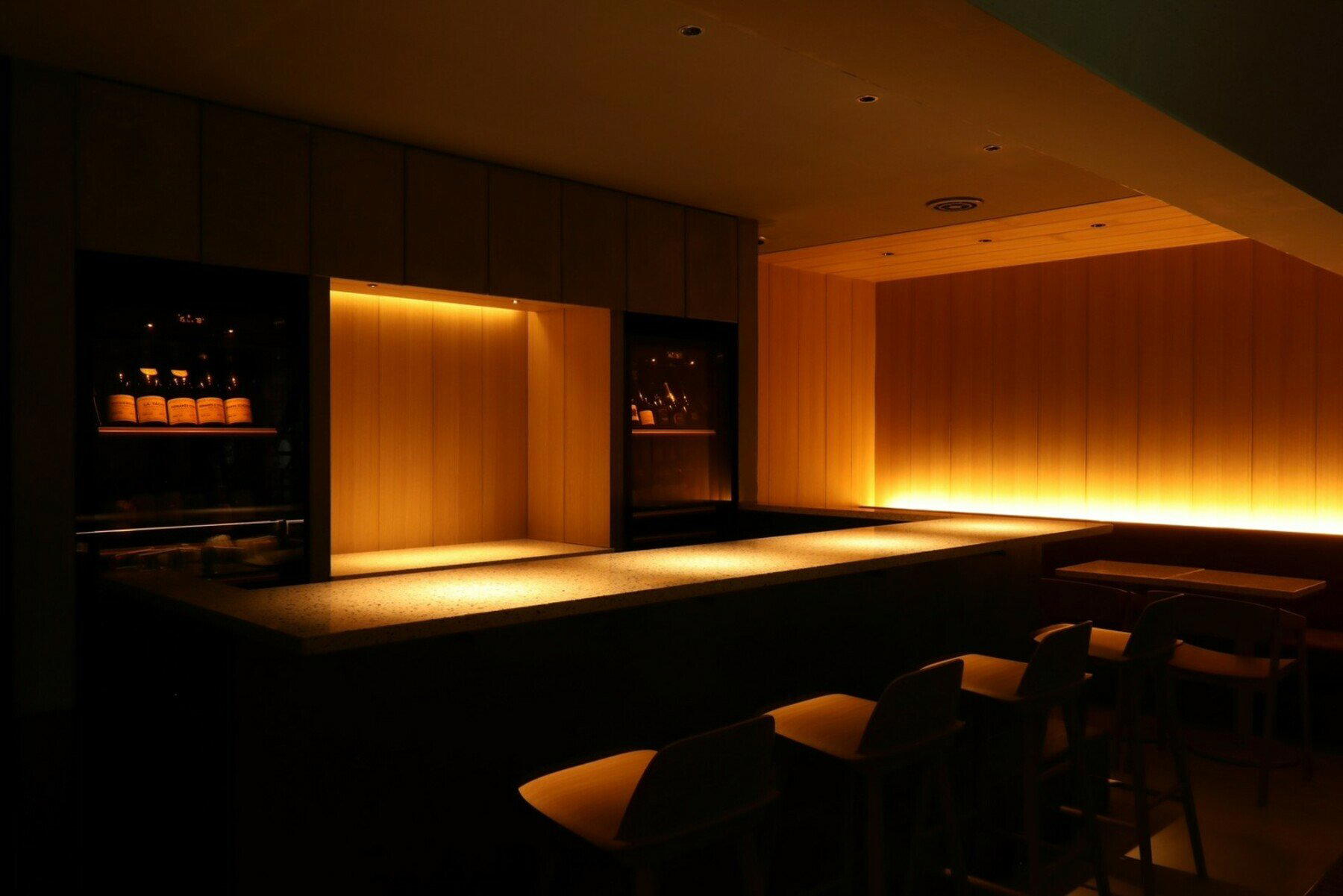
Art-filled atrium with lighting installations, contemporary interiors blending heritage concrete with modern minimalism, and serene artistic spaces.