
1 Michelin Key
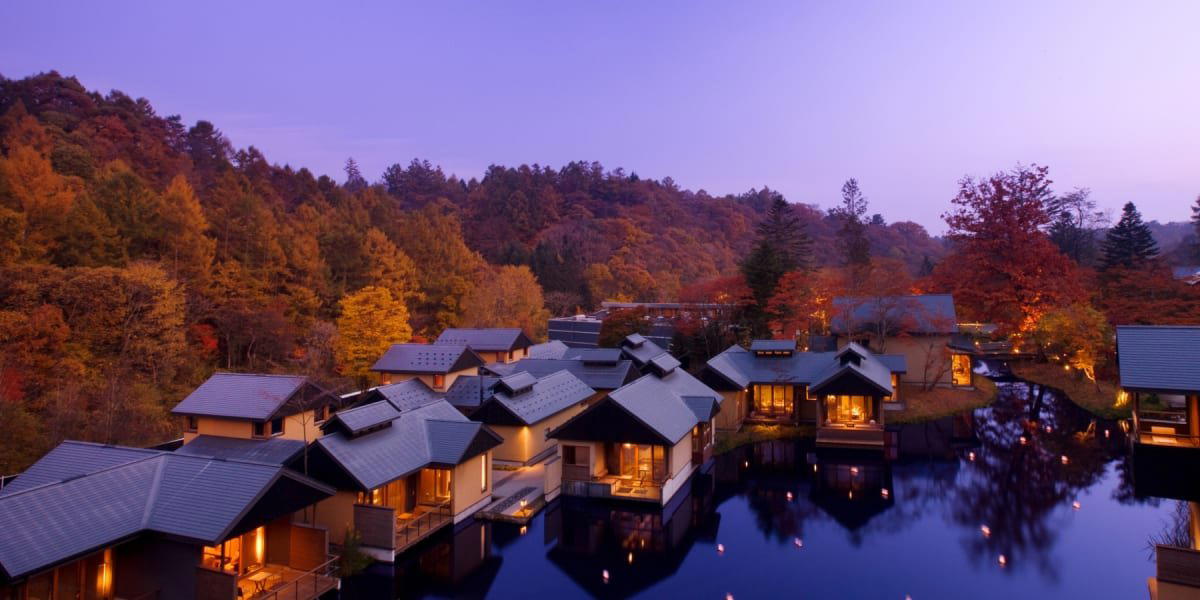
A Michelin Key-recognised ryokan in eastern Nagano Prefecture, Fufu Karuizawa Wind in the Sunshine sits below the volcanic slopes of Mount Asama and carries the Fufu brand's signature modernist aesthetic. Twenty-four rooms, hot springs drawing calcium-sodium sulfate-tinged water, and a restaurant that applies French technique to Japanese seasonal produce make it one of Karuizawa's more considered high-end retreats. Rates from around $637 per night.

Pearl is the En Primeur Club membership app — saves, bookings, and concierge access live there. Same editors, same standards.
- Address
- 568-1 Nagakura, Karuizawa, Kitasaku District, Nagano 389-0111
- Phone
- +81 570-011-722
- Website
- fufukaruizawa.jp
- Directions
- Get directions
Karuizawa's Modern Ryokan Tier
Karuizawa has long attracted a certain kind of Japanese traveller: the Tokyo weekender seeking cooler air, forest quiet, and a level of hospitality that the city's hotels, however accomplished, rarely replicate. Over the past decade, that demand has fractured into distinct tiers. At one end sit heritage ryokan with generational pedigrees and kaiseki programmes anchored in strict seasonal logic. At the other, a newer cohort of design-led properties has emerged, applying modernist restraint to the ryokan format without abandoning its essential premise: that a stay should be immersive, that the landscape should enter the building, and that food should justify the journey. Fufu Kyu-Karuizawa Restful Forest and Hoshinoya Karuizawa occupy that second tier. So does Fufu Karuizawa Wind in the Sunshine, which the Michelin Guide recognised with one Key in 2024, placing it formally within Karuizawa's upper accommodation bracket.
Arriving Under the Shadow of Asama
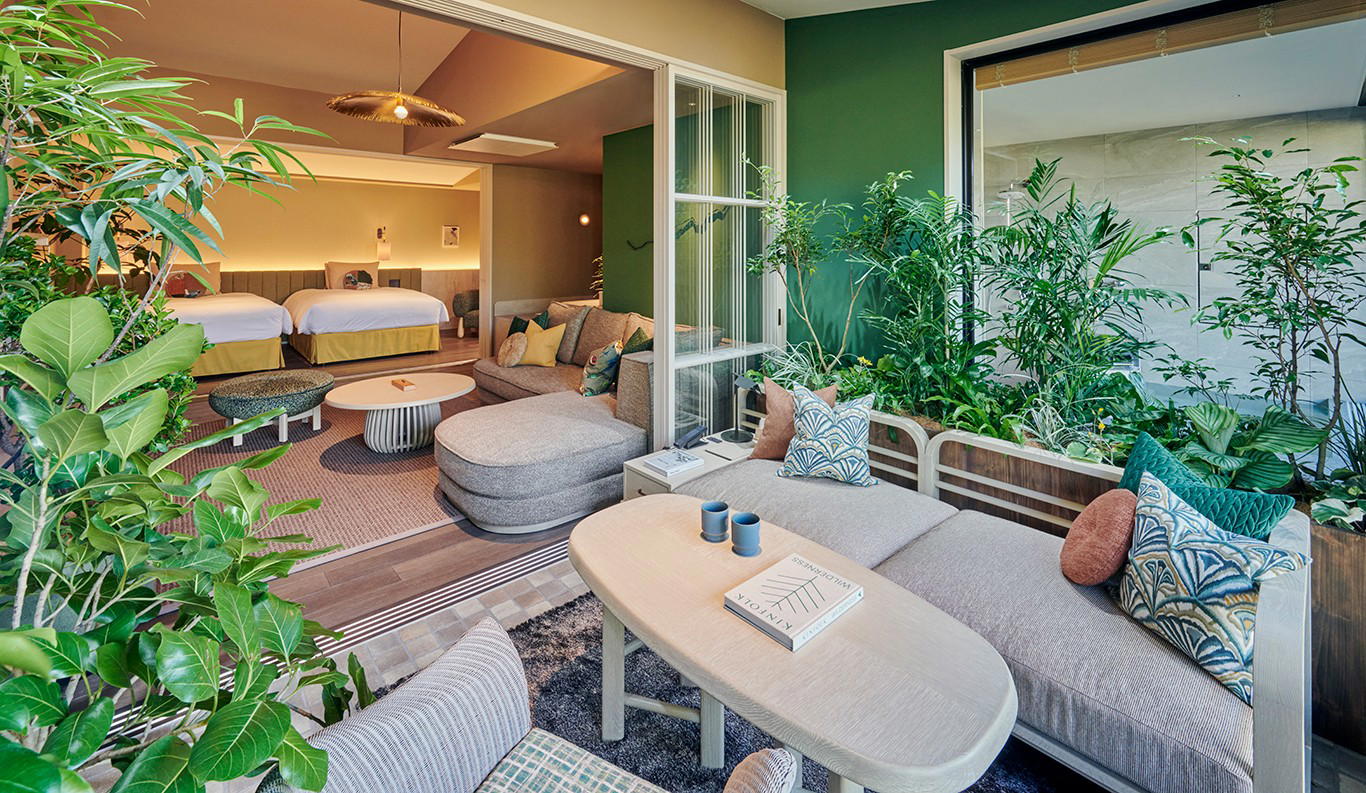
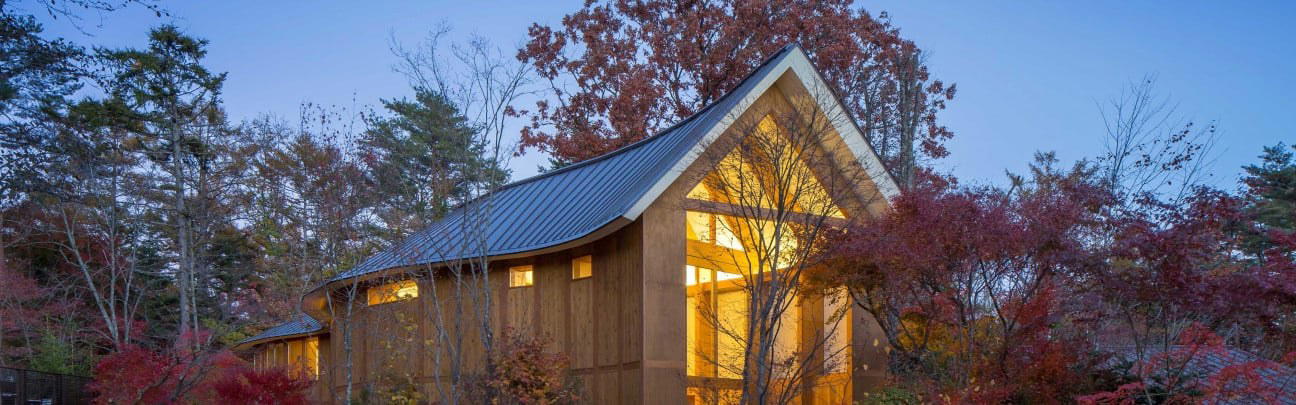
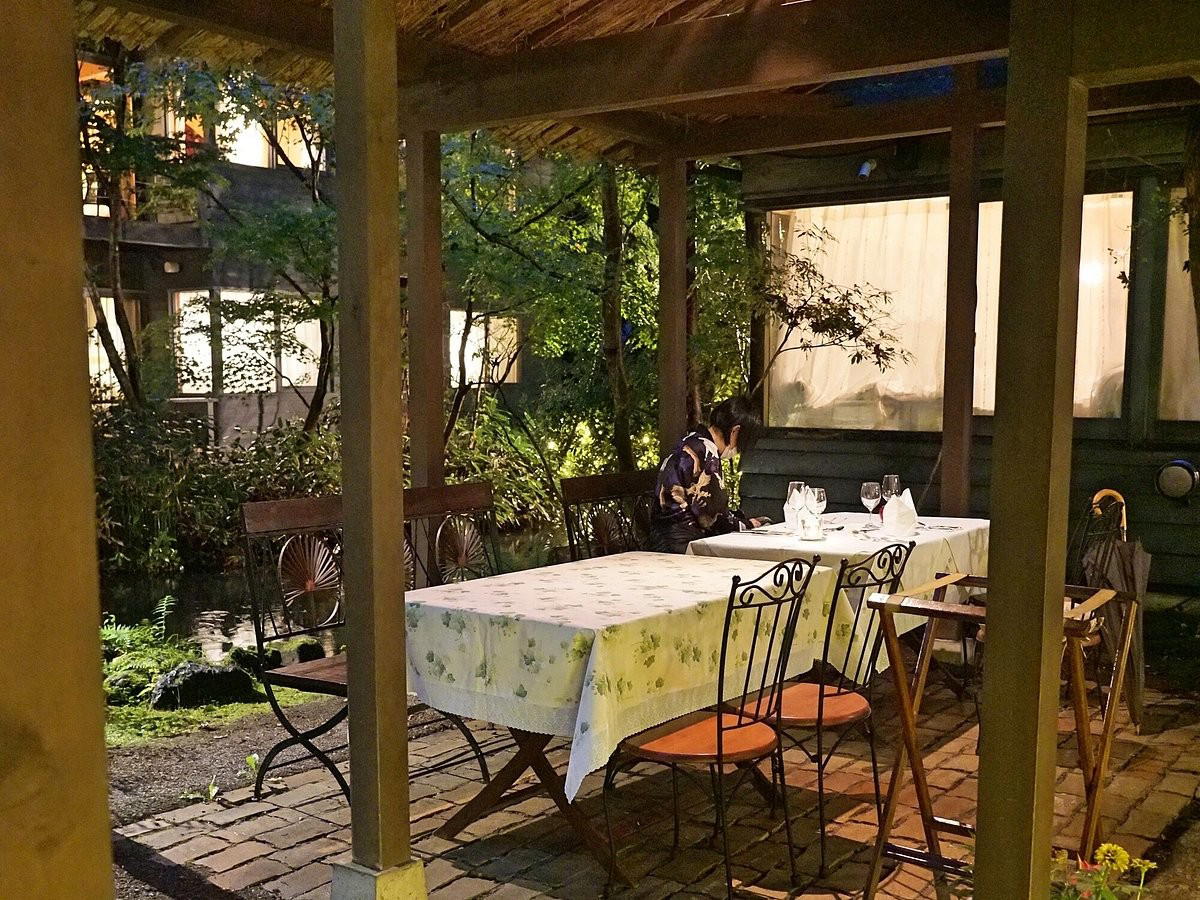
The address at 568-1 Nagakura puts the property in the eastern reaches of Karuizawa, a quieter zone than the boutique-dense old Karuizawa village area. What frames the approach is Mount Asama itself, one of Japan's most active volcanoes, whose silhouette dominates the northeastern horizon. That geological presence is not incidental. The hot springs here draw calcium-sodium sulfate-tinged water directly linked to Asama's volcanic activity, giving the onsen a mineral character noticeably different from the more neutral alkaline springs found elsewhere in Nagano. The surrounding terrain is dense with forest, and that verdant setting does not stop at the entrance. Living plants run through the public spaces and private areas alike, a design decision that softens the property's crisp modernist interiors and creates continuity between inside and out. The overall effect is a building that reads as warm and organic despite its clean architectural lines, a balance that the better ryokan-format properties in Japan's resort towns have been working toward for years.
The Dining Programme: French Technique, Japanese Seasonality
The restaurant at Fufu Karuizawa Wind in the Sunshine is where the property's editorial identity crystallises most clearly. The kitchen operates in a tradition that is genuinely difficult to execute well: a Japanese interpretation of French cooking that uses local seasonal produce as its primary material rather than as garnish or gesture. This is not fusion in the loose, hybrid sense. It is a formal discipline with a specific lineage in Japan, one that developed through decades of Japanese chefs training in French kitchens and then returning to apply those methods to ingredients defined by Japanese geography and seasonality.
Nagano Prefecture offers a credible larder for this approach. The region's altitude and climate produce vegetables, dairy, and mountain proteins that hold their own against the better-known produce zones further south. A kitchen working in this format and in this location has the raw material to do something genuinely precise, provided the seasonal sourcing is treated as non-negotiable rather than aspirational. The Michelin Key recognition signals that the overall hospitality programme, including the food, meets a threshold of consistency and calibration that peer properties in the area do not all share. Among Karuizawa's high-end stays, the combination of French-influenced restaurant programming and onsen access in a single property is relatively uncommon. SHISHI-IWA-HOUSE Karuizawa, the architecturally prominent property nearby, takes a different programming approach. Fufu's bet is that guests will value culinary coherence as much as design spectacle.
For context within the broader Fufu brand: the group operates multiple high-end modern ryokan across Japan, with each property differentiated by its natural setting rather than a uniform template. Fufu Kawaguchiko positions itself against Fuji views; Fufu Nikko draws from the heritage zone around Nikko's shrines. The Karuizawa property uses Asama's volcanic backdrop and the region's agricultural depth as its differentiating material. Across the brand, the dining programme is treated as a structural component of the stay, not an amenity running alongside it.
Scale and Format
At 24 rooms, Fufu Karuizawa Wind in the Sunshine sits in the smaller end of the brand's portfolio, and that scale is consequential for the dining experience. Smaller room counts allow kitchen teams to work at a pace and with a level of precision that larger resort restaurants cannot sustain. Guests are not spread across multiple seatings competing for the same produce. The programme can be tighter, more seasonal in the strict sense, and more responsive to what is actually available from local suppliers on a given day. This is the argument for small-count ryokan dining as a format, and it applies here directly.
Rates start at approximately $637 per night, which positions the property within the premium segment of Karuizawa accommodation. For comparison within the broader category of high-end Japanese ryokan, properties like Gora Kadan in Hakone and Asaba in Izu operate in comparable price registers and offer similarly defined dining as a central feature. Within Nagano itself, the pricing reflects the Michelin Key recognition and the level of service implied by the brand's wider reputation.
The Onsen as Context
Hot spring access at Japanese ryokan is often treated as a secondary feature, something listed after the room category and meal plan. At this property, the onsen is more structurally relevant than that framing suggests. Calcium-sodium sulfate waters have specific therapeutic associations in Japanese bathing culture, and their mineral profile gives them a texture and weight in the water that sodium chloride or simple alkaline springs lack. The volcanic sourcing from Asama ties the bathing experience directly to the property's geographical identity, reinforcing the sense that the setting is not decorative but functional. Properties like Amanemu in Mie and ENOWA Yufu have built strong reputations in part by making onsen access feel like the primary reason for the stay rather than a listed amenity. Fufu Karuizawa makes a similar argument through its volcanic spring access and the integration of natural materials throughout the property design.
Where It Sits in Japan's High-End Ryokan Field
Japan's premium ryokan circuit runs from the well-documented Hokkaido properties, including Zaborin in Kutchan, down through Tohoku, the Japan Alps, and into the southern resort zones. Within that circuit, Karuizawa has a specific identity: it is accessible from Tokyo by Shinkansen in roughly 70 minutes from Tokyo station, it has a cooler summer climate that makes it a natural retreat from July through September, and it carries social capital among urban Japanese travellers that other resort towns in Nagano lack. That accessibility and status have drawn a concentration of well-funded properties to the area. The Michelin Key framework, applied to hotels for the first time in Japan in 2024, gives guests an external calibration point that previously required more local knowledge to assess. Fufu Karuizawa's recognition in that inaugural cohort places it within a defined peer group at the national level.
For guests already familiar with the broader spectrum of premium Japanese hospitality, from Benesse House on Naoshima to Nishimuraya Honkan in Kinosaki, the Fufu Karuizawa property represents a specific proposition: modernist design, volcanically sourced onsen, and a restaurant programme built around French method applied to Nagano's seasonal produce, at a scale where the kitchen can actually follow through on that premise.
Planning Your Stay
Karuizawa's peak season runs from late July through August, when Tokyo's heat makes the altitude genuinely appealing and room availability at properties of this calibre becomes tightest. The autumn foliage period in October draws a second surge. Advance booking well ahead of either window is advisable, particularly for a 24-room property where inventory is inherently limited. The nearest Shinkansen access is Karuizawa Station on the Hokuriku Shinkansen line, roughly 70 minutes from Tokyo Station, making the property feasible as a two-night weekend stay without sacrificing transit time. For guests building a wider itinerary through Japan's ryokan circuit, the Karuizawa stop pairs logically with Hakone, Izu, or a Nagano Prefecture extension toward the Japan Alps. See our full Karuizawa restaurants and hotels guide for a broader map of what the area offers across categories and price points.
A Pricing-First Comparison
Comparable venues nearby, for context on price, style, and recognition.
| Venue | Cuisine | Price | Awards | Notes |
|---|---|---|---|---|
| Fufu Karuizawa Wind in the SunshineThis venue — the venue you are viewing | Hotel | $500–750 | 1 Michelin Key | Not listed |
| Fufu Kyu-Karuizawa Restful Forest | Not listed | $500–750 | 1 Michelin Key | Kyu-Karuizawa, Small luxury forest resort |
| Shishi-Iwa House | Not listed | $300–500 | 1 Michelin Key · Mr & Mrs Smith Seal of Approval | Karuizawa, Architect-driven forest retreat that blends contemporary Japanese design, art, and culinary culture with close contact to nature. |
| Hoshinoya Karuizawa | Not listed | $750–1,000 | Michelin Selected | Karuizawa, Contemporary luxury ryokan reimagined as detached pavilions following traditional Japanese architectural principles with biophilic design philosophy. |
| SHISHI-IWA-HOUSE Karuizawa | Not listed | $300–500 | 1 Michelin Key · Mr & Mrs Smith Seal of Approval | Karuizawa, architectural retreat harmonizing with nature |
| guntu | Not listed | $2,500+ | Michelin Selected · Tablet Hotels Top 40 New Hotels | Onomichi, Floating luxury ryokan blending traditional Japanese inn with modern yacht design |
Recognition history
Dated appearances from independent guides and award organizations, with the underlying list record or original source where available.
Michelin 1 Key
Michelin
Full recognition history (3 entries)
Michelin 1 Key
Michelin
Michelin 1 Key
Michelin
Continue exploring
More in Karuizawa
Hotels in Karuizawa
Browse all →
Restaurants in Karuizawa
Browse all →
Wineries in Karuizawa
Browse all →

Details
- Quiet
- Scenic
- Elegant
- Modern
- Cozy
- Sophisticated
- Wellness Retreat
- Romantic Getaway
- Weekend Escape
- Destination Spa
- Panoramic View
- Garden
- Wi Fi
- Spa
- Restaurant
- Parking
- Sauna
- Mountain
- Garden
- Wheelchair Accessible
Bright, greenery-filled, and naturalistic, with a sunny, restorative atmosphere and views of Mount Asama.