
Indian Shokudo Charakara puts Indian curry into Maebashi’s everyday dining register rather than the city’s special-occasion bracket. Its Tabelog 100 selection for Asian and ethnic cuisine in EAST 2024, plus earlier selections in 2022 and 2023, gives the small Sojamachi address a credentialed place in Gunma’s casual restaurant culture.
Pearl is the En Primeur Club membership app — saves, bookings, and concierge access live there. Same editors, same standards.
- Address
- Japan, 〒371-0852 Gunma, Maebashi, Sojamachi Soja, 2014-5 大山マンション 104
- Phone
- +81 90-4090-7963
- Website
- x.com
 Saves & bookings on Pearl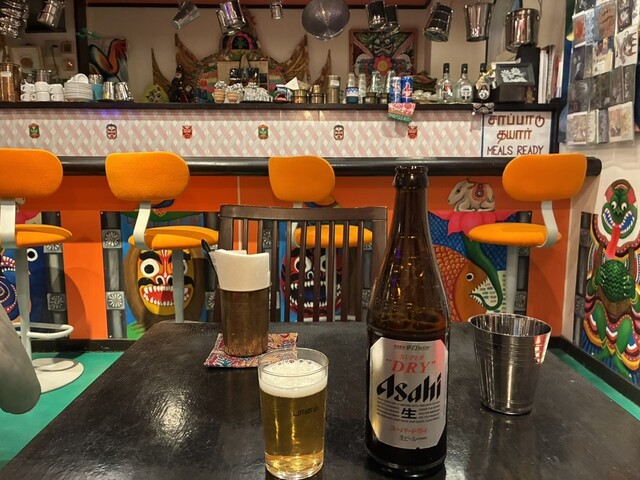
Approaching a curry shop in Maebashi differs from arriving at a polished tasting-menu room. The rhythm is local and practical: a compact Sojamachi address, an apartment-block setting, and a dining style for spice, rice, and pace rather than ceremony. In that context, Indian Shokudo Charakara fits a Japanese tradition that has made curry both foreign and familiar, adapted through railway-station counters, neighborhood lunch rooms, family restaurants, and specialist kitchens that push the category beyond comfort-food shorthand.
Japanese curry culture tends to split into two lanes: the thick, sweet-leaning domestic style that became a national staple, and the broader Indian and South Asian register, where spice structure, breads, lentils, and regional curry grammar sit closer to source cuisines. Maebashi is not Tokyo, and that matters. Outside the capital, an Indian curry restaurant must serve regular local demand first, then earn wider recognition. Charakara’s selection for Tabelog 100 Asian cuisine and ethnic cuisine EAST in 2024, after selections in 2022 and 2023, places it in that second category while keeping the genre’s basic appeal: accessible prices, everyday frequency, and a clear difference from soba, tonkatsu, ramen, and izakaya dining.
Indian curry in Maebashi's everyday dining register
Maebashi rewards specialization at several price points. A city meal can mean the contemporary polish of 白井屋ザ・レストラン, a French-leaning table such as cépages, or the higher dinner spend of nagi. It can also mean focused cooking with a gentler bill, as in the mid-range bracket around Kokuya and the lunch-to-dinner spread at el viento. Indian curry sits differently: less about coursing or wine-program signaling, more about repeatable pleasure and command of spice balance.
That makes the Tabelog 100 recognition useful. It does not turn a casual curry counter into a Michelin-style destination; it signals that a low-price, everyday category can be judged as seriously as formal dining. For travelers building a Maebashi itinerary, the distinction matters. A city’s food character is rarely visible only through expensive rooms. It is often clearer where locals can return, the bill needs no occasion, and the menu category is direct enough to expose technique.
Indian curry in Japan also has a long history of adaptation, entering popular life through British naval curry, postwar home cooking, and later Indian, Nepali, Pakistani, Sri Lankan, and Bangladeshi restaurants. The result is not one canon but a layered dining language: tandoor-led menus, thali-like sets, lunch curries with rice or naan, or narrower specialist approaches. Charakara’s public categorization as Indian and Indian curry places it in that specialist lane, a counterpoint to Maebashi’s French, Japanese, and casual European options.
A small-room format that suits solo curry dining
The room format reinforces the point. Counter seating and sofa seating bring the experience closer to a neighborhood shokudo than a formal ethnic restaurant. The Japanese shokudo is an everyday institution, defined less by décor than clarity of purpose. Applying that frame to Indian curry integrates the meal into local life rather than staging it as exoticism. It is not a transplanted banquet format; it is curry fitted to Maebashi lunch and dinner.
Solo dining is especially relevant. Japan has long normalized eating alone, from ramen counters to teishoku rooms, and curry benefits from the same efficiency. A solo-friendly curry shop must do more than offer a seat; it must make ordering and eating feel natural without the social weight of a full restaurant occasion. That helps travelers moving through Gunma by train or car who want local credibility without the time commitment of a coursed dinner.
The city context keeps expectations honest. Maebashi is Gunma Prefecture’s capital, but it lacks Tokyo’s dining saturation. Recognition here means a specialist restaurant has drawn attention beyond its neighborhood while staying modest and accessible. For a broader city sweep, Our full Maebashi restaurants guide contrasts curry, French, Japanese, and casual formats. Travelers planning a fuller stay can pair that with Our full Maebashi hotels guide, while category-specific browsing sits in Our full Maebashi bars guide, Our full Maebashi wineries guide, and Our full Maebashi experiences guide.
Why the curry category deserves serious attention
Premium travel dining often over-indexes on scarcity: hard reservations, expensive counters, chef biographies, and formal tasting menus. Curry resists that hierarchy. Its seriousness lies in repetition, spice control, heat management, and a plate’s ability to carry cultural translation without becoming academic. In Japan, that translation has been unusually durable. Curry is home dish and restaurant field, school-lunch memory and specialist pursuit. A recognized Indian curry room in Maebashi therefore shows how regional Japanese cities absorb international cuisines and make them local without stripping away identity.
Beyond Gunma, the curry and casual-specialist spectrum appears across Japan: [Curry Senmon Ten] Maruyama Kyoju. in Sapporo shows northern curry specialization, while (Shoku) Vietnam in Kawasaki reflects another strand of Asian cooking adapted to Japanese urban dining. The same logic applies outside Japan, where focused formats such as Jōdo Saké Bar in Los Angeles or Onigiri Time in Pasadena carry cultural specificity without spectacle. Different cuisines, same editorial lesson: small formats often explain food culture more clearly than grand rooms.
Within Japan’s travel map, it is tempting to chase only big-city names. Tokyo offers density, Osaka offers appetite, and regional capitals ask for slower reading. That is where Maebashi becomes interesting. A meal here can sit beside unrelated but equally local decisions, from a Kamakura beef specialist such as -Grilled beef Sukiyaki- KAMAKURA TANUKIAN 鎌倉 たぬき庵 in Kamakura to casual urban addresses like. 鮪と炭火焼き うお炭 秋葉原店 in Tokyo.cafe in Osaka, and.know in Kumamoto. The connective thread is not cuisine type; it is reading everyday formats as seriously as destination dining.
Indian Shokudo Charakara’s appeal is not grandeur. It is a category Japan has made deeply its own, a Maebashi setting that grounds the meal, and external recognition that gives travelers reason to look beyond obvious regional staples. Choose it for a low-ceremony, spice-led meal with enough critical recognition to justify crossing town, not for a long, formal restaurant performance.
- South Indian meals (meals/meal sets)
- Chicken dum biryani
- Prawn biryani
- Mutton korma
- Dosa
- Nihari
Cost Snapshot
Comparable venues by cuisine and price in the same metro.
| Venue | Cuisine | Price | Notes |
|---|---|---|---|
| Indian Shokudo CharakaraThis venue — the venue you are viewing | Not listed | $ | Not listed |
| nagi | Not listed | $$$ | Central Maebashi, Creative Japanese Izakaya |
| cépages | Not listed | $$$$ | Chiyoda-cho, Contemporary French with Gunma Influences |
| el viento | Central Maebashi, Spanish Tapas & Paella | $$ | Not listed |
| Kokuya | Not listed | $$ | Central Maebashi, Traditional Unagi & Fugu Restaurant |
| 白井屋ザ・レストラン | Not listed | $$$$ | Honcho, Maebashi, Innovative Joushu Cuisine (Gunma Regional Fine Dining) |
Recognition history
Dated appearances from independent guides and award organizations, with the underlying list record or original source where available.
Tabelog 100 #24 · No. 24
Tabelog · Tabelog 100 - Asian cuisine / Ethnic cuisine - EAST - 2024
Continue exploring
More in Maebashi
Restaurants in Maebashi
Browse all →
Hotels in Maebashi
Browse all →
Wineries in Maebashi
Browse all →
At a Glance
- Cozy
- Solo
- Casual Hangout
- Group Dining
- Standalone
Current opening hours
- Monday
- 11 AM–3 PM
- Tuesday
- 11 AM–3 PM
- Wednesday
- Closed
- Thursday
- 11 AM–3 PM, 6–9 PM
- Friday
- 11 AM–3 PM, 6–9 PM
- Saturday
- 11 AM–3 PM, 6–9 PM
- Sunday
- 11 AM–3 PM, 6–9 PM
Hours can change for holidays and private events. Last verified .
A relaxed, canteen-like neighborhood spot with counter and sofa seating in a modest apartment-building space, more focused on serious South Indian food than on decor, drawing curry enthusiasts including diplomats and food writers.