
Relais Chateaux Award
Seven Villas occupies a quieter stretch of the West Lake shoreline in Hangzhou, where classical garden architecture and still-water views set the tone for an extended stay. Rates from US$545 per night position it in the upper tier of Hangzhou's lakeside accommodation. The property's Chinese cuisine programme and emphasis on garden seclusion make it a considered alternative to the city's larger international hotel brands.

Pearl is the En Primeur Club membership app, where members save venues, book tables and use the concierge.
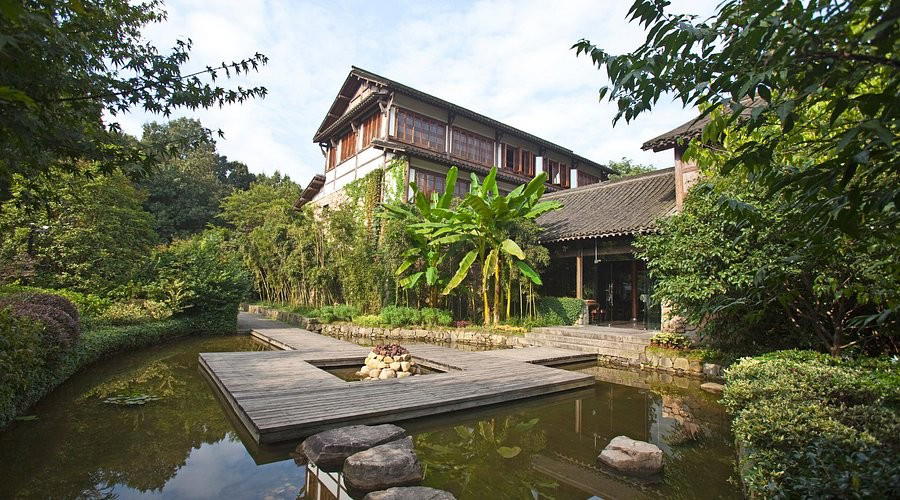
West Lake, Framed Differently
Hangzhou's West Lake has shaped Chinese aesthetic sensibility for over a thousand years. Poets, emperors, and painters used it as a reference point for beauty, and modern Hangzhou has built an entire hospitality economy around its banks. Most visitors encounter the lake through large international flagships: the Four Seasons Hotel Hangzhou at West Lake, with its Song Dynasty courtyard architecture scaled to a full-service resort, or Amanfayun, which reconstructed an entire village path through the tea hills west of the lake. Seven Villas takes a quieter position within this same geography. Sited at Bapanling Road No. 1 in the Xi Hu district, GPS coordinates 30.2289, 120.1328, the property sits close to the water and uses that proximity as its primary argument, rather than competing on scale or brand recognition.
The approach matters here. Hangzhou's premium accommodation market has developed along two tracks: internationally branded hotels that import global service standards into a lakeside setting, and smaller, more rooted properties that treat the garden and the lake view as the experience itself. Seven Villas belongs to the second category, where the quality of the gardens and ponds, and the silence they make possible, do work that a spa menu or a rooftop bar might do elsewhere. For travellers comparing options across the city, this distinction is worth holding in mind before booking. See our full Hangzhou restaurants guide for a broader picture of how the city's hospitality tier is structured.
The Garden as Structural Logic
Classical Chinese garden design operates on a specific set of principles: borrowed scenery, controlled sightlines, the alternation of enclosed and open space. Water is not decorative; it is load-bearing. The ponds at Seven Villas function in exactly this way, organizing the visual rhythm of the property and creating a layered relationship between interior and exterior that single-use amenities cannot replicate. This is a tradition rooted in Jiangnan garden culture, the same tradition that produced Suzhou's Humble Administrator's Garden and the Scholar's Gardens that line the canals of the region. Hangzhou sits within that tradition geographically and climatically, and properties that draw on it seriously are doing something architecturally coherent, not merely decorative.
The distinction becomes clearer in comparison. At the Banyan Tree Hangzhou, the emphasis falls on spa architecture and villa-format privacy. At the Conrad Hangzhou, the organizing logic is international business hospitality adapted to a scenic setting. Seven Villas, with its gardens and ponds as the structural feature, asks a different question of the guest: whether stillness and visual composition can carry an extended stay. For a certain kind of traveller, the answer is yes, and Hangzhou's climate, with its soft springs and mist-heavy autumns, makes that proposition easier to sustain than it would be in a drier or more urban setting.
How the Chinese Cuisine Programme is Structured
The editorial angle on Seven Villas that carries the most weight is its Chinese cuisine offering. In Hangzhou, this means operating in the shadow of one of China's most codified regional traditions: Hangbang cuisine, rooted in the same imperial court patronage that built the West Lake gardens. Dishes like Dongpo pork, West Lake vinegar fish, and beggar's chicken carry centuries of institutional weight, and any serious Chinese kitchen in the city is in implicit dialogue with that repertoire.
Structure of a menu in this tradition tends to reflect Confucian principles of balance and sequence: cold dishes arrive first, establishing flavour anchors; hot dishes build in intensity; soups appear as palate transitions rather than openers; rice or noodles close the savoury arc; dessert is understated, usually seasonal fruit or a lightly sweetened soup. This is not the open-ended tasting format of European fine dining. It is a more prescribed architecture, and the quality of a kitchen reveals itself in how it handles the transitions between courses, and how much it respects the seasonal constraints that Hangbang cooking traditionally imposes.
Seven Villas' Chinese cuisine is noted as a highlight of the property. In the context described above, that framing suggests a kitchen that takes the Hangbang repertoire seriously rather than offering a simplified or tourist-facing version of it. The garden setting reinforces this: historically, literati dining in the Jiangnan region took place in garden pavilions, and the connection between the natural environment and what appeared on the table was not incidental but deliberate. Eating within sight of water and cultivated greenery was considered to enhance the appreciation of seasonal ingredients. The physical setting at Seven Villas places the dining experience inside that older logic, even if the guest arrives without knowing its history.
For comparison, Fuchun Resort Hotel Fuyang takes a different approach to regional cuisine, leaning into the mountain and river landscapes south of the city. The Hangzhou Muh Shoou Xixi Hotel positions itself within the Xixi wetland ecosystem, with a correspondingly different environmental framing. Seven Villas, by contrast, keeps its focus on the lake and the classical garden tradition most directly associated with the city's identity.
Access, Rates, and the Practical Case
Rates at Seven Villas begin from US$545 per night, placing it in Hangzhou's upper accommodation tier but below the entry point of some of the city's most prominent international brands. Hangzhou Xiaoshan International Airport sits 32 kilometres from the property, accessible by car along Bapanling Road No. 1. Hangzhou Railway Station is 10 kilometres away, a more convenient arrival point for travellers connecting from Shanghai on the high-speed rail link, which covers the distance in under an hour. The GPS coordinates (30.2289, 120.1328) confirm the property's position within the Xi Hu district, close to the western shore of the lake.
The rate positions Seven Villas against a competitive set that includes the Four Seasons Hotel Hangzhou at Hangzhou Centre and the Conrad Hangzhou Tonglu, among others. Within China more broadly, comparable garden-and-lake retreat formats can be found at Amandayan in Lijiang and at nature-integrated properties like the Mohe Youran Mountain Residence in Da Hinggan Ling, though the Hangzhou setting carries the particular advantage of West Lake's established cultural and scenic infrastructure.
For travellers building a broader China itinerary, Seven Villas fits naturally into a route that includes Mandarin Oriental Qianmen in Beijing or the JW Marriott Hotel Shanghai at Tomorrow Square in Shanghai, with Hangzhou serving as the slower, more contemplative stop between two higher-intensity cities. Within a regional circuit, options like Xiamen Yunding Resort or 1 Hotel Haitang Bay in Sanya offer coastal alternatives for travellers whose priority is water rather than cultural heritage. Internationally, travellers drawn to garden-and-water retreat formats might also consider Aman Venice, where a palazzo setting creates a structurally similar relationship between enclosed architecture and open water, though the reference tradition is entirely different.
What the Property Signals
Seven Villas communicates its priorities through what it chooses to emphasize: the West Lake position, the gardens and ponds, the Chinese cuisine programme, and the quality of retreat from urban noise. These are not supplementary amenities. They are the property's core argument, and for a guest who arrives seeking a particular kind of stillness within one of China's most historically significant natural settings, they are sufficient. At rates from US$545 per night, the calculation is direct: this is a property where the natural environment and the cultural programme do the heavy lifting, and where the physical setting around West Lake is the primary reason to choose it over alternatives in Hangzhou's well-populated upper accommodation market.
At-a-Glance Comparison
Comparable venues nearby, for context on price, style, and recognition.
| Venue | Cuisine | Price | Awards | Notes |
|---|---|---|---|---|
| Seven VillasThis venue (the venue you are viewing) | Intimate Relais & Chateaux resort with seven traditional Chinese villas in a forested West Lake setting. | $500–750 | Relais Chateaux Award | Not listed |
| voco Hangzhou Binjiang Minghao | Modern design hotel with Art Deco architecture and thoughtful, unstuffy charm. | $100–200 | Michelin Selected | Binjiang District |
| Hangzhou Muh Shoou Xixi Hotel | Boutique luxury seamlessly integrated with surrounding wetlands. | $300–500 | Small Luxury Hotels of the World Member | Yuhangxian |
| Midtown Shangri-La, Hangzhou | Modern luxury hotel in mixed-use complex | $100–200 | Forbes Recommended | Hangzhoushi |
| Vallie Hotel | Tranquil forest retreat in repurposed tea farmer buildings | $500–750 | Small Luxury Hotels of the World Member | Xiaoshanshi |
| InterContinental One Thousand Island Lake Resort | Nature-inspired luxury resort | Not listed | Michelin Selected | Chun'an County |
Recognition history
Dated appearances from independent guides and award organizations, with the underlying list record or original source where available.
Relais Chateaux Award
Relais Chateaux
Full recognition history (2 entries)
Relais Chateaux Award
Relais Chateaux
Continue exploring
More in Hangzhou
Hotels in Hangzhou
All hotels in Hangzhou →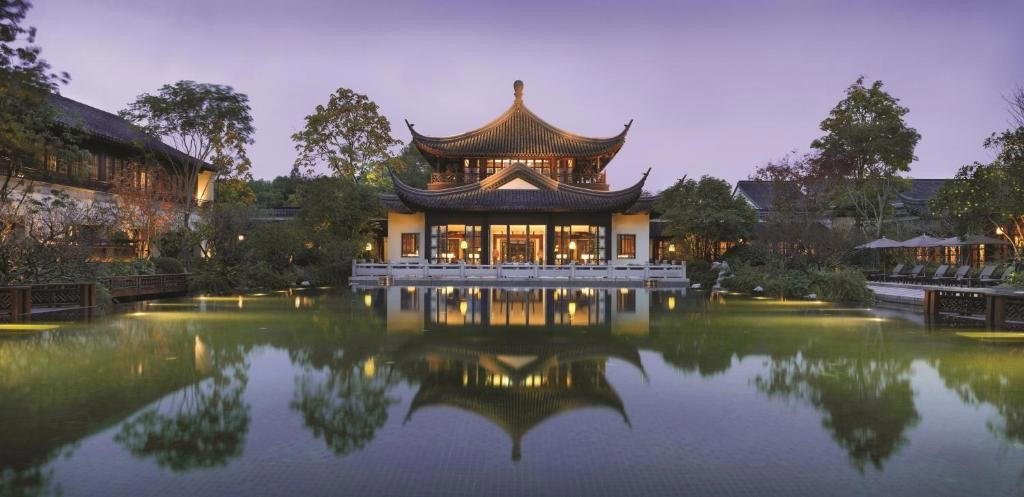
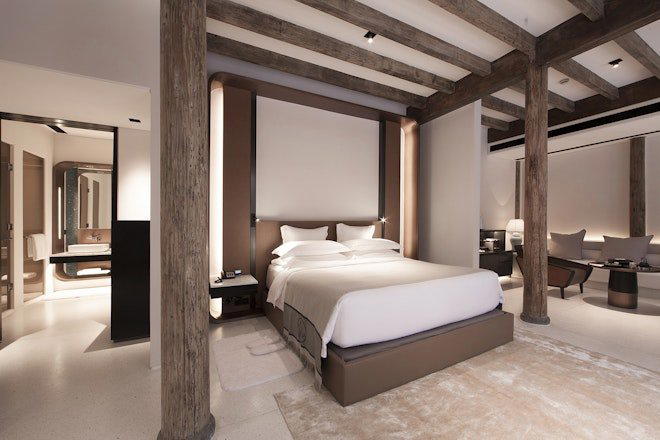
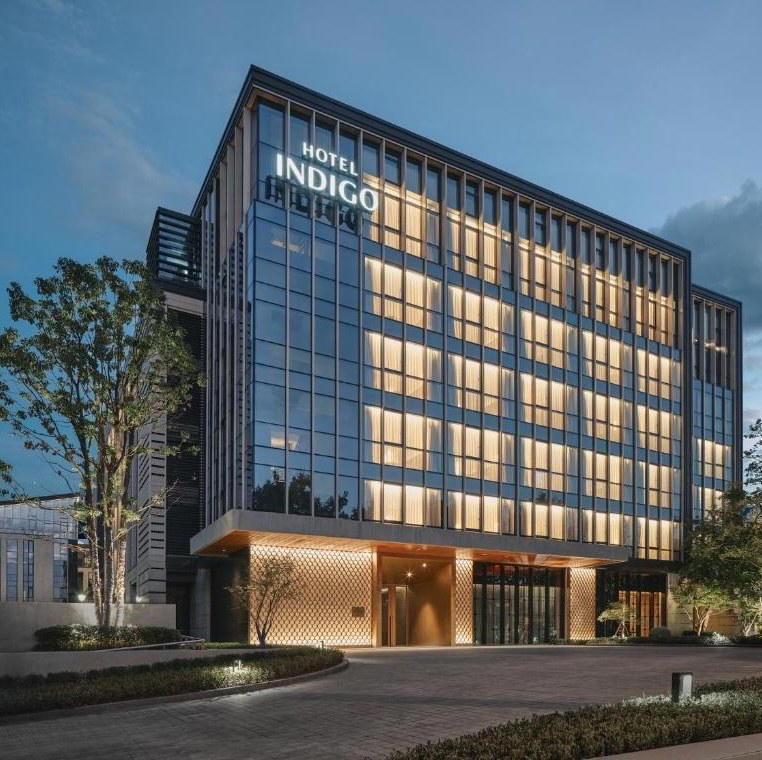
Bars in Hangzhou
All bars in Hangzhou →
Details
- Romantic
- Quiet
- Elegant
- Scenic
- Intimate
- Sophisticated
- Honeymoon
- Romantic Getaway
- Anniversary
- Wellness Retreat
- Garden
- Private Villa
- Historic Building
- Wi Fi
- Room Service
- Spa
- Laundry Service
- Concierge
- Restaurant
- Garden
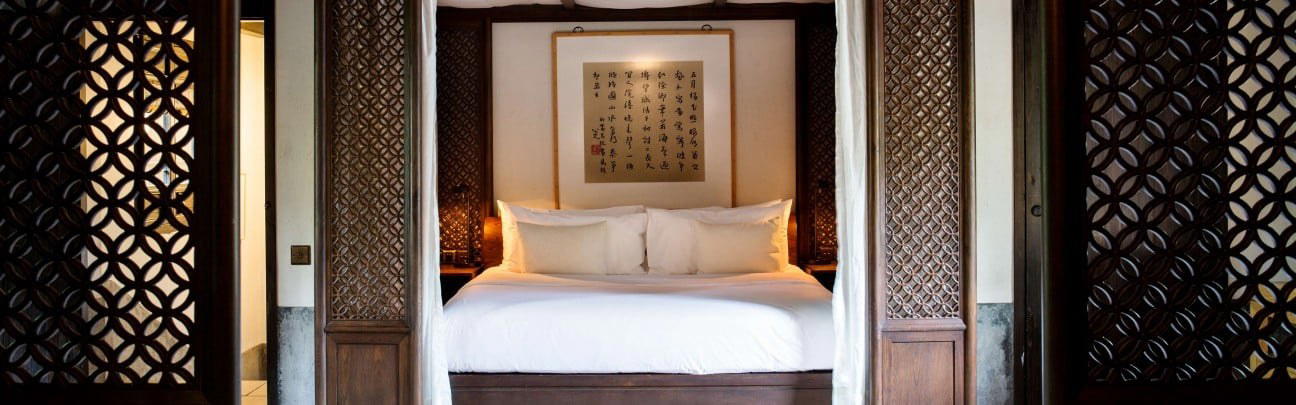
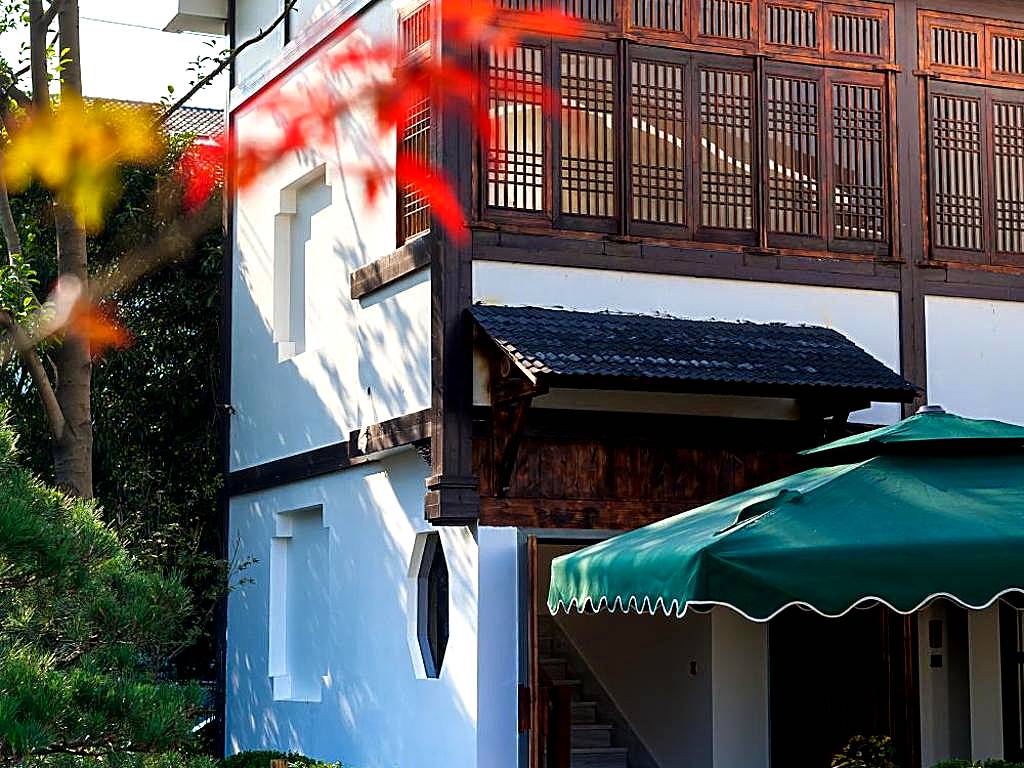
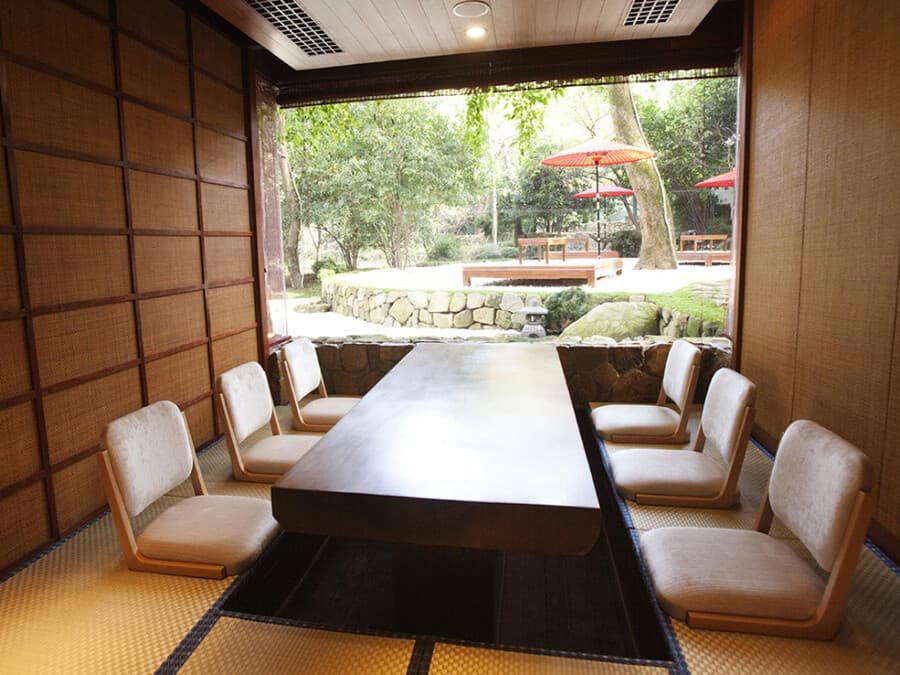
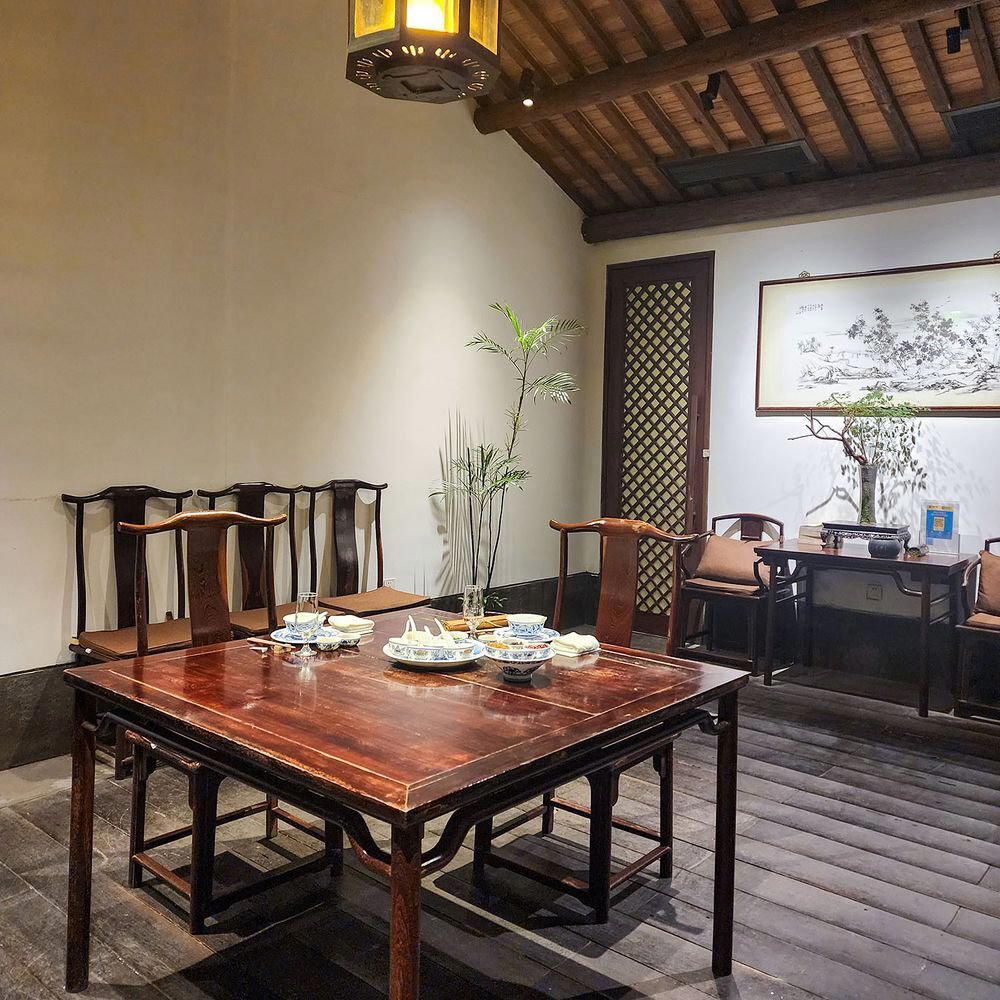
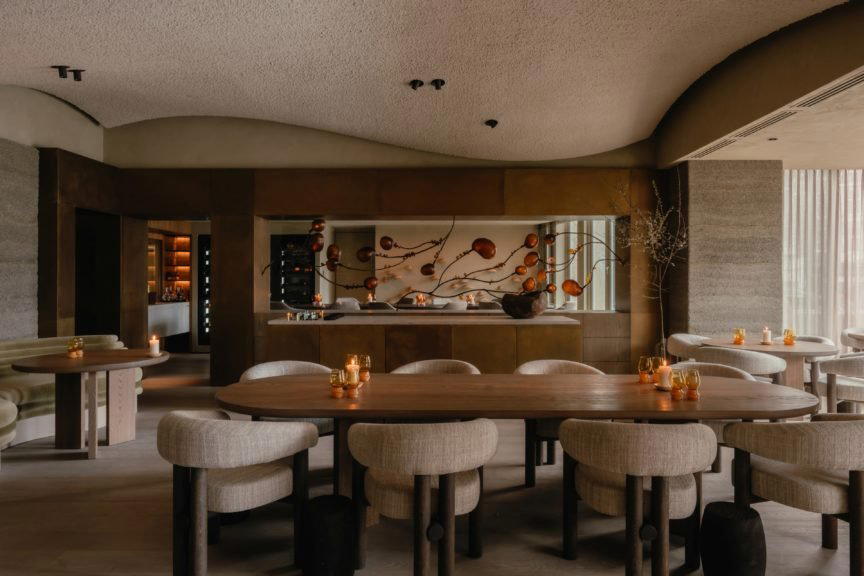
Tranquil Zen atmosphere with natural light through glass walls, manicured lawns, wooden architecture, and a sense of calm inspired by classic Chinese and Japanese design.