




2 Michelin Keys · La Liste Top Hotels · Forbes Recommended
Set within the West Lake UNESCO World Heritage Site, Four Seasons Hotel Hangzhou at West Lake places 78 rooms across 17 acres of classical Chinese gardens, ponds, and pavilions. Recognised by Forbes Travel Guide, La Liste (91pts, 2026), and World Travel Awards as Zhejiang's Leading Boutique Hotel 2025, it combines architectural fidelity to the historic district with Jin Sha's eleven-room private dining program drawing on Hangzhounese, Cantonese, and Shanghainese cooking.

Pearl is the En Primeur Club membership app, where members save venues, book tables and use the concierge.
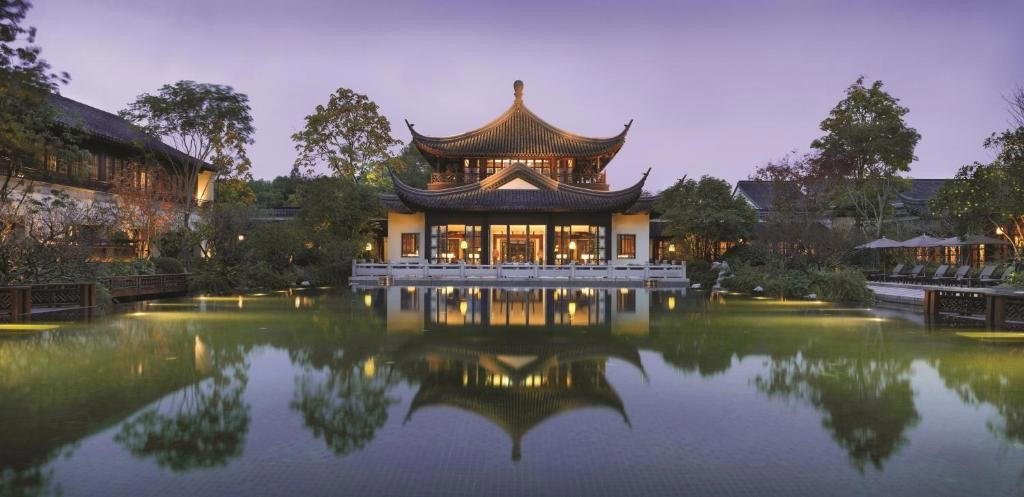
Where West Lake's History Checks In
Approaching along Lingyin Road, the property reads less like a hotel arrival and more like crossing into a private precinct of the Song dynasty. Low-slung pavilions in white render rise behind courtyard walls, their dark-tiled pagoda rooflines disappearing into the same canopy of camphor trees that has shaded this corridor since the Tang period. The mist that rolls off West Lake most mornings does not discriminate between the ancient temples on the hill behind the property and the hotel's own garden ponds, from certain angles at dawn, the two blur into a single, centuries-old scene. That atmospheric continuity is not accidental. The West Lake historic district imposes strict height restrictions, which is why 78 rooms are distributed across just two floors and 17 acres rather than stacked into a tower. The constraint that elsewhere might read as a limitation here produces architecture that is genuinely at home in one of China's most storied landscapes.
West Lake itself anchors the context. Designated a UNESCO World Heritage Site, the lake has shaped Chinese cultural identity for more than a millennium: Su Dongpo dredged and causeways it in the eleventh century, Marco Polo passed through and called the city the finest in the world, and an ancient proverb still cited across the country runs, "In the universe, there is heaven; on earth, there is Hangzhou." Hotels in a setting this freighted with meaning either fight the landscape or work with it. This property, carrying Forbes Travel Guide recognition and scoring 91 points on the 2026 La Liste Leading Hotels ranking, belongs firmly to the second category.
The Architecture of Restraint
China's regional luxury market has been bifurcating for several years. At one end sit large international-flag properties designed to announce scale; at the other, a smaller group of properties, among them Amanfayun and Banyan Tree Hangzhou, that derive their authority from restraint of scale and fidelity to place. At 78 rooms across five suites, three residential villas, and standard category rooms starting from 678 square feet, this Four Seasons sits in that second cohort. The comparison with Four Seasons Hotel Hangzhou at Hangzhou Centre is instructive: the brand operates in two registers in the same city, one pitched at the business and convention market, this one oriented entirely toward the lake, the garden, and the historic district.
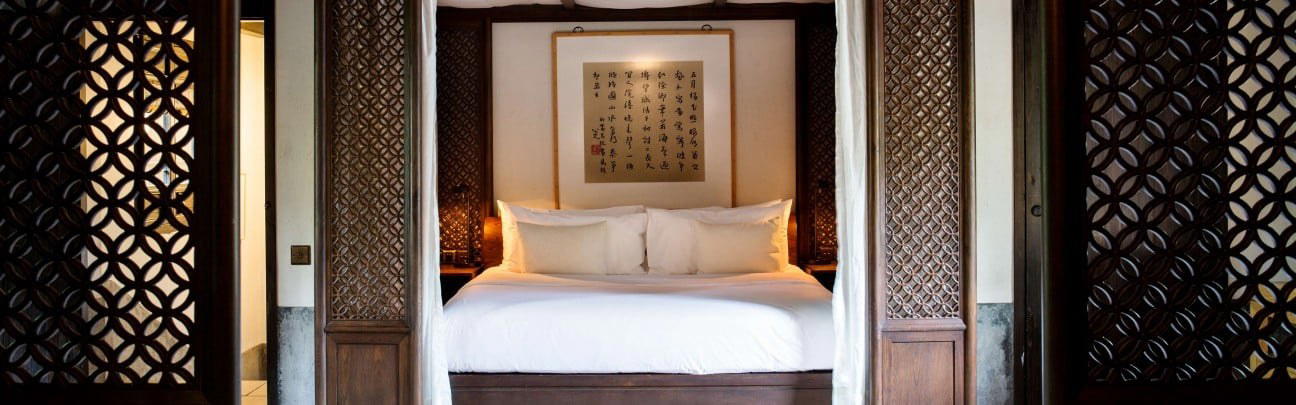
Interiors follow a logic that might be called disciplined chinoiserie. The lobby is airy and south-facing, with sunlight diffused through full-height windows rather than concentrated into a single dramatic chandelier. Rooms carry a beige and dark gray palette broken by fresh flowers and textiles, conservative by the standards of design-forward properties, but coherent with the landscape outside every window. The three-story villas are the exception: each operates as a self-contained residence with its own spatial logic, and for guests who want to treat Hangzhou as a week-long base rather than a two-night transit, they represent an entirely different mode of stay.
The spa is built along the same translation of traditional form: its entrance doors are the circular moon-gate openings associated with classical Chinese garden design, and treatment rooms are fitted with private steam rooms, with some suites incorporating sunken tubs. Properties in the Midtown, Hangzhou tier compete on amenity volume; this property competes on atmosphere-per-square-metre.
Jin Sha and the Question of Regional Cooking
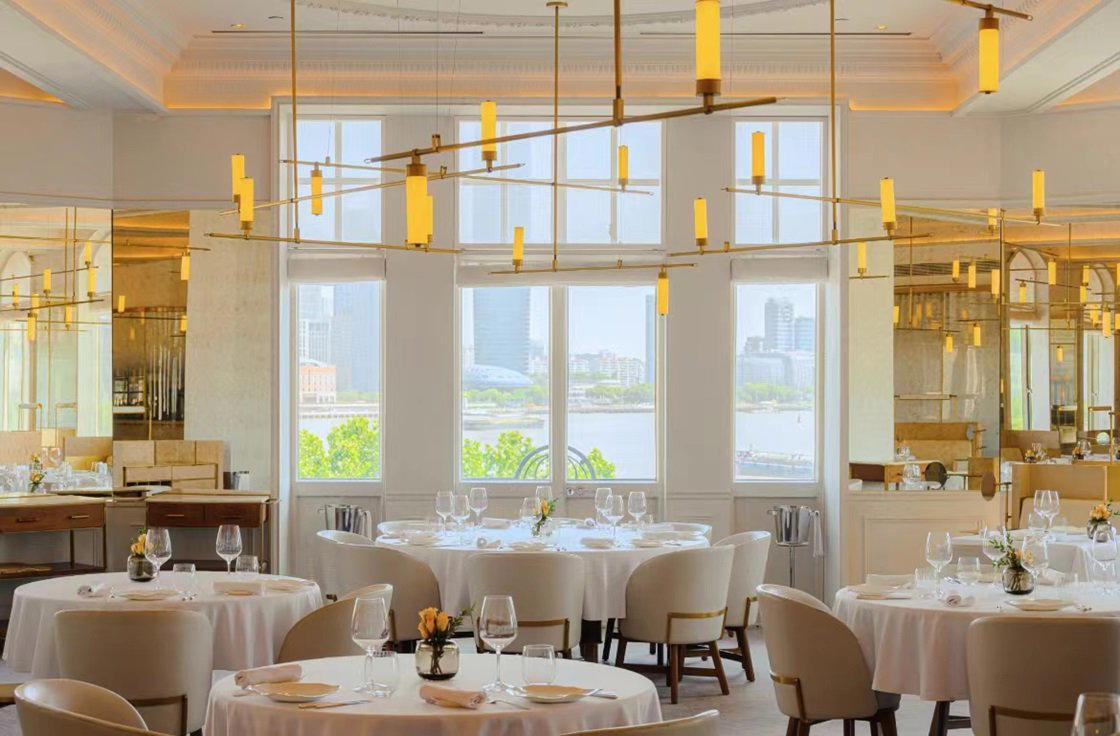
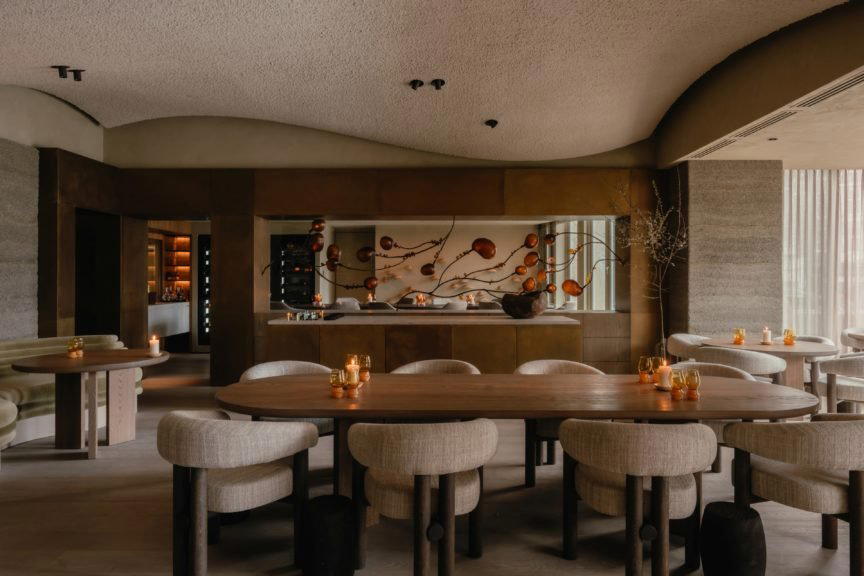
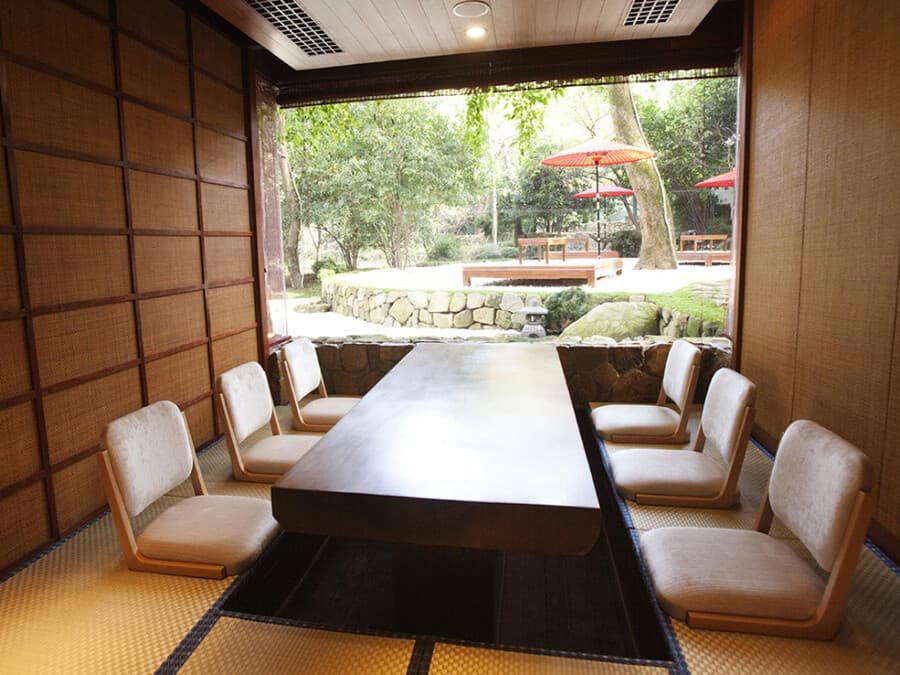
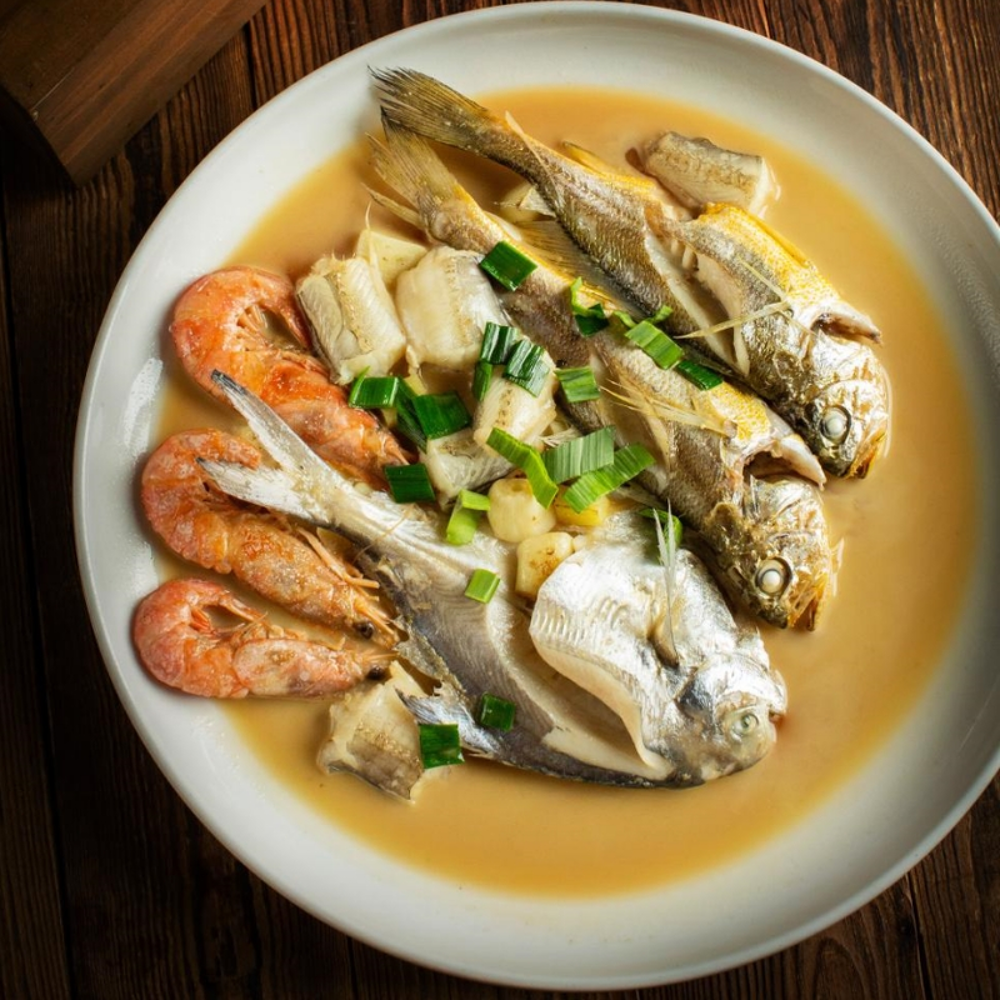
Hangzhounese cuisine sits in an awkward position in the hierarchy of Chinese regional cooking. It does not have the international recognition of Cantonese, the heat-driven intrigue of Sichuan, or the dumplings-first tourism pull of Shanghai. What it has is a long literati tradition, the cuisine of a city that was, for roughly 150 years during the Southern Song dynasty, the imperial capital, and an insistence on freshness and seasonal produce that aligns naturally with the preferences of contemporary high-end dining. Jin Sha, the hotel's main dining room, operates at the intersection of Hangzhounese, Cantonese, and Shanghainese cooking, sourcing from regional farms including free-range chickens from local producers. The room is divided into eleven private dining rooms, each with a terrace facing the gardens, a format that mirrors how elite dining has historically functioned in China: not in the open hall but behind a screen, in a room with a view of water and plants.
The honey barbecue pork is cited specifically in inspector notes as a dish worth seeking out: sweet, tender, and representative of the Hangzhounese preference for a gentler sweet-savory balance than its neighboring regional traditions. For visitors calibrating this property against comparable dining hotel programs elsewhere in China, the Mandarin Oriental Qianmen in Beijing operates a similar model of historically-rooted Chinese cooking in an architecturally significant setting.
Logistics and the Lake
The hotel sits at 5 Lingyin Lu, placing it within the West Lake Scenic Area and within a five-minute walk of the lake's eastern shore. Complimentary bicycles are available for guests, which is the appropriate mode for this neighbourhood: the paths around West Lake are flat, car-free in sections, and designed for the kind of purposeless wandering that is, in itself, the point of being in Hangzhou. A gondola ride is available at check-in, less a tourist attraction than a sensible first orientation to the property's waterway system. For the mornings that matter here, the protocol is established: Longjing tea in the Lobby Lounge, then bicycles, then return for the spa, then dinner in one of Jin Sha's private rooms. The hotel is part of Virtuoso's Regional Program for Global Program, which provides planning advantages for guests booking through affiliated agencies.
Spring and early summer are when the West Lake gardens operate at full intensity, wisteria and lotus sequencing through April and into July, and when Longjing tea, harvested from the terraced hillsides above the city, is at its freshest. The pre-Qingming (清明) harvest in early April is considered the finest grade; staying in proximity to those gardens during that window gives the ritual of a morning cup a sourcing logic that no urban hotel can match. Autumn offers a different register: the lake's willows turn, the crowds thin relative to the golden-week peak, and the mist that characterizes the property's atmosphere thickens into something more cinematic.
Other Hangzhou properties worth calibrating against include Fuchun Resort Hotel Fuyang for those drawn to a more removed, resort-format stay, and Conrad Hangzhou for guests who want a more urban-skewed base. Hangzhou Muh Shoou Xixi Hotel and Conrad Hangzhou Tonglu address entirely different parts of the city and serve different trip logics. For guests whose China itinerary extends beyond Hangzhou, the JW Marriott Hotel Shanghai at Tomorrow Square and properties like Andaz Shenzhen Bay or 1 Hotel Haitang Bay, Sanya offer context for how this property fits within the broader tier of China's premium hotel market. For those connecting to properties further afield, Amandayan in Lijiang and Xiamen Yunding Resort represent similar logic applied to other historically significant Chinese destinations.
A broader view of the Hangzhou dining scene, beyond the hotel's own restaurants, is available in our full Hangzhou restaurants guide.
City Peers
| Venue | Price | Awards |
|---|---|---|
| Four Seasons Hotel Hangzhou at West LakeThis venue (the venue you are viewing) | Not listed | 2 Michelin Keys · La Liste Top Hotels |
| Amanfayun | Not listed | Michelin Selected · La Liste Top Hotels |
| Banyan Tree Hangzhou | $300–500 | Michelin Selected · Forbes 4-Star |
| Conrad Hangzhou | Not listed | Forbes Recommended |
| Park Hyatt Hangzhou | $200–300 | Michelin Guide New Hotels New Hotel · Michelin Selected |
| Fuchun Resort Hotel Fuyang | Not listed | La Liste Top Hotels · Forbes Recommended |
Recognition history
Dated appearances from independent guides and award organizations, with the underlying list record or original source where available.
Michelin 2 Keys
Michelin
La Liste Top Hotels
La Liste
Forbes Recommended
Forbes
Virtuoso Luxury Hotel Partner
Virtuoso
World Travel Awards
World Travel Awards
Full recognition history (6 entries)
Forbes 4-Star
Forbes
Continue exploring
More in Hangzhou
Hotels in Hangzhou
All hotels in Hangzhou →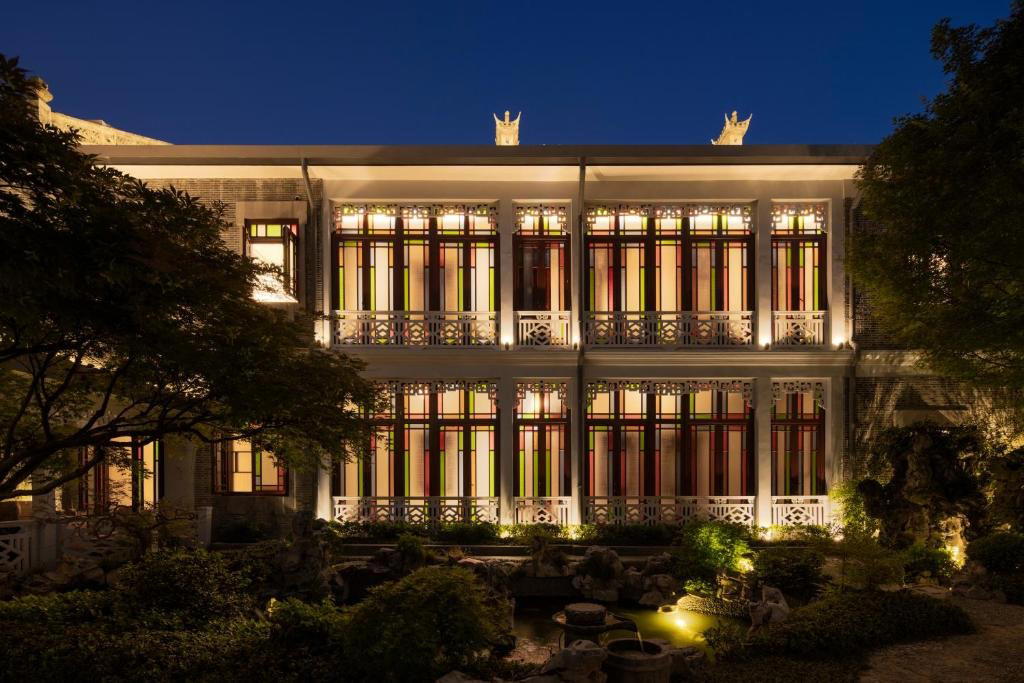
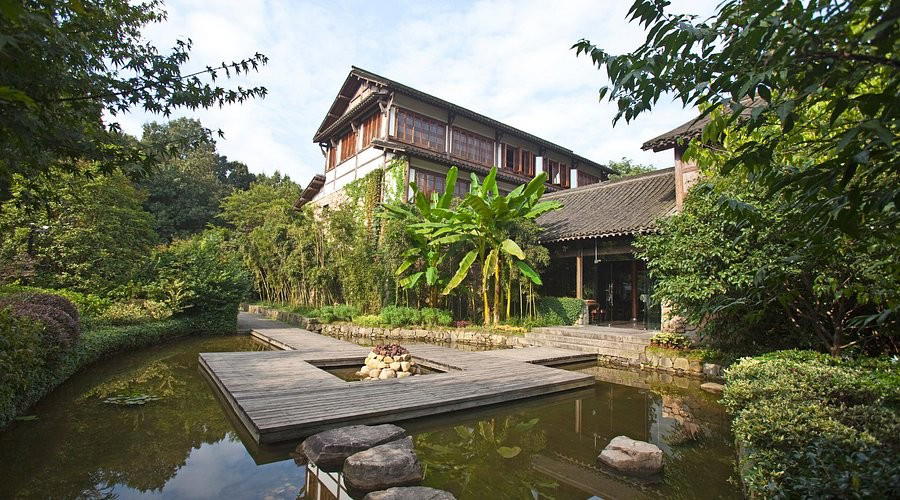
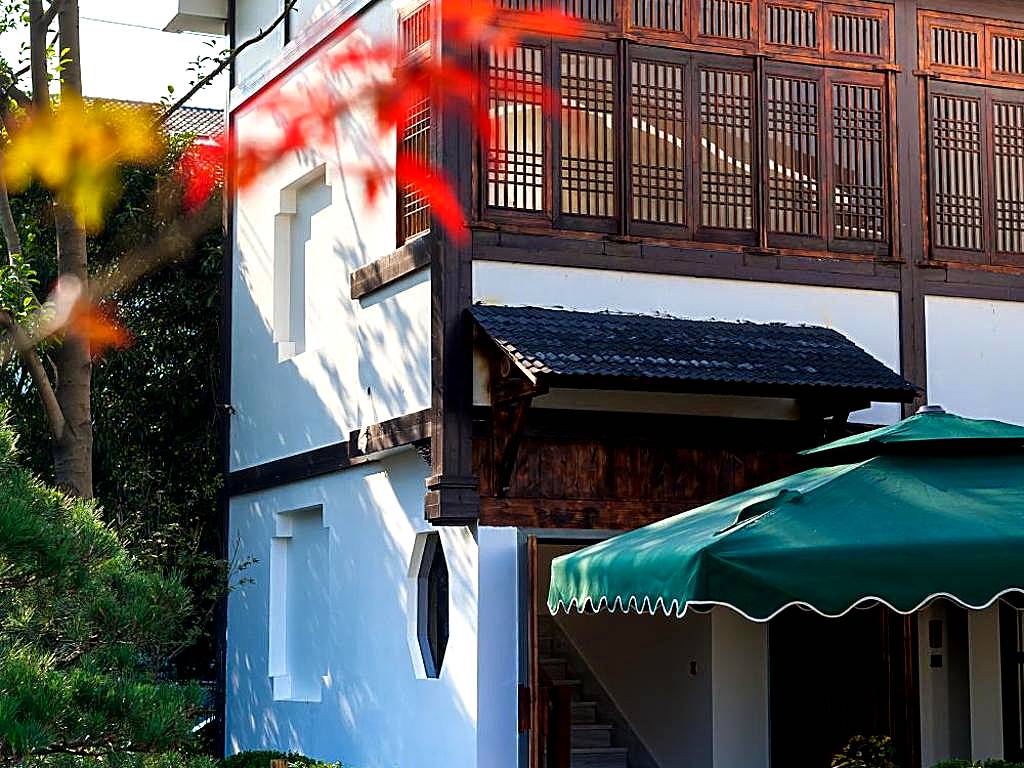
Bars in Hangzhou
All bars in Hangzhou →
Details
- Romantic
- Quiet
- Elegant
- Scenic
- Sophisticated
- Ornate
- Honeymoon
- Romantic Getaway
- Family Vacation
- Wellness Retreat
- Anniversary
- Waterfront
- Infinity Pool
- Panoramic View
- Garden
- Terrace
- Wi Fi
- Pool
- Spa
- Fitness Center
- Room Service
- Concierge
- Business Center
- Valet Parking
- Waterfront
- Garden
- Wheelchair Accessible
- Step Free Entrance
- Accessible Parking
- Elevator
Peaceful and serene with beautiful gardens, soundproof rooms, and a calm, elegant atmosphere enhanced by traditional Chinese elements and natural surroundings.