


La Liste Top Hotels · Forbes Recommended · World Travel Awards
Inspired by a 14th-century Song Dynasty landscape scroll, Fuchun Resort in Fuyang sits among tea plantations and a private lake roughly an hour from central Hangzhou. Its 85 rooms and suites earned a 96.5-point score on La Liste's 2026 Top Hotels ranking and the 2025 World Travel Awards title for China's Leading Villa Resort, placing it in a small tier of design-led rural retreats that trade urban access for immersive natural setting.

Pearl is the En Primeur Club membership app, where members save venues, book tables and use the concierge.
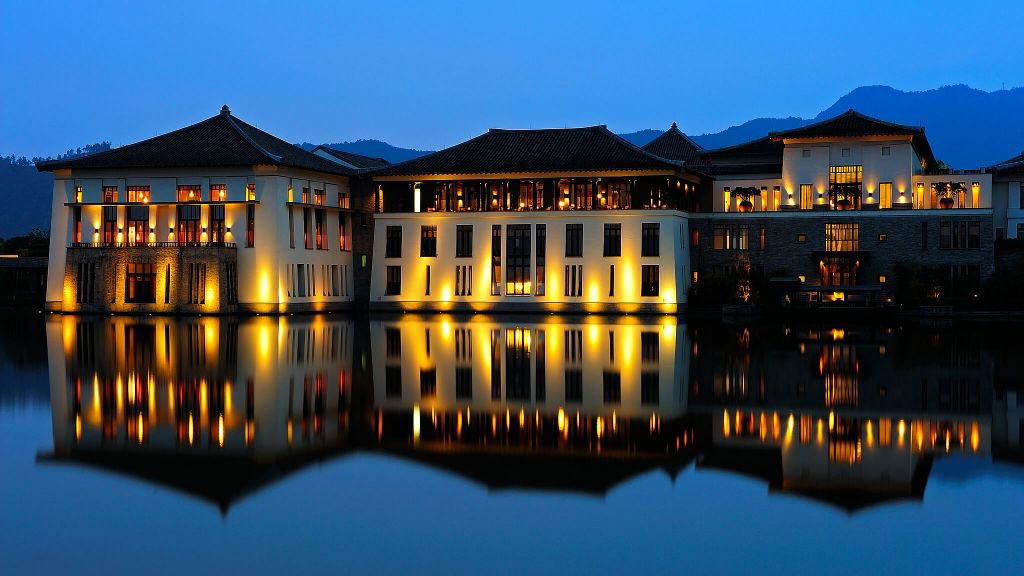
Where the Scroll Becomes the View
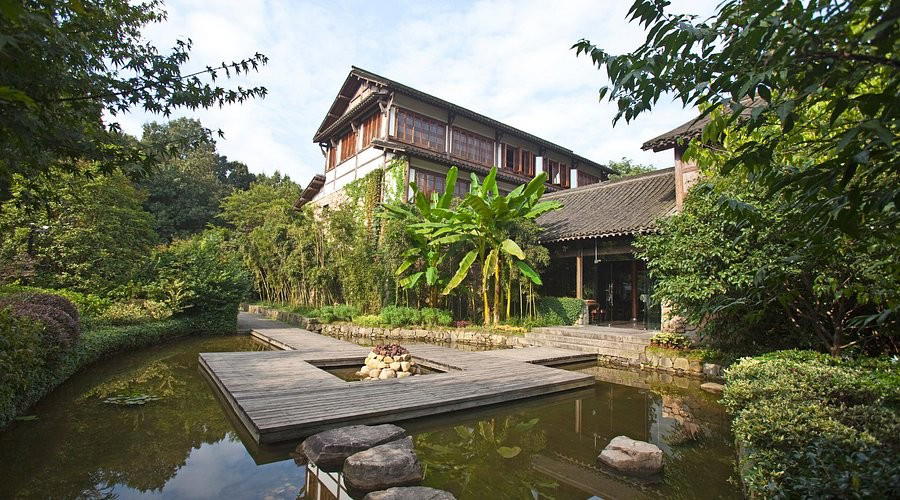
The tradition of the Chinese landscape scroll treats nature as something to move through slowly, panorama unfolding across paper rather than framed in a single static image. Fuchun Resort, positioned on the eastern bank of the Fuchun River in Fuyang District, roughly an hour's drive southwest of central Hangzhou, translates that sensibility directly into architecture and site planning. The reference point is A Dwelling in the Fuchun Mountains, a 14th-century handscroll by local artist Huang Gongwang, and the property's relationship with its terrain, rolling tea plantations, a private lake, forested ridgelines, reads less like landscaping and more like a deliberate act of geographical citation.
That framing matters because it sets expectations correctly. This is not a resort that competes primarily on proximity to Hangzhou's West Lake circuit or on urban-adjacent convenience. Properties like Four Seasons Hotel Hangzhou at West Lake and Amanfayun occupy that closer-in tier, where classical garden culture and temple proximity are core to the offer. Fuchun operates in a different register: the draw is distance from the city, not closeness to its monuments. Visitors who make the drive are exchanging cultural access for something quieter and more landscape-centred.
The Architecture of Restraint
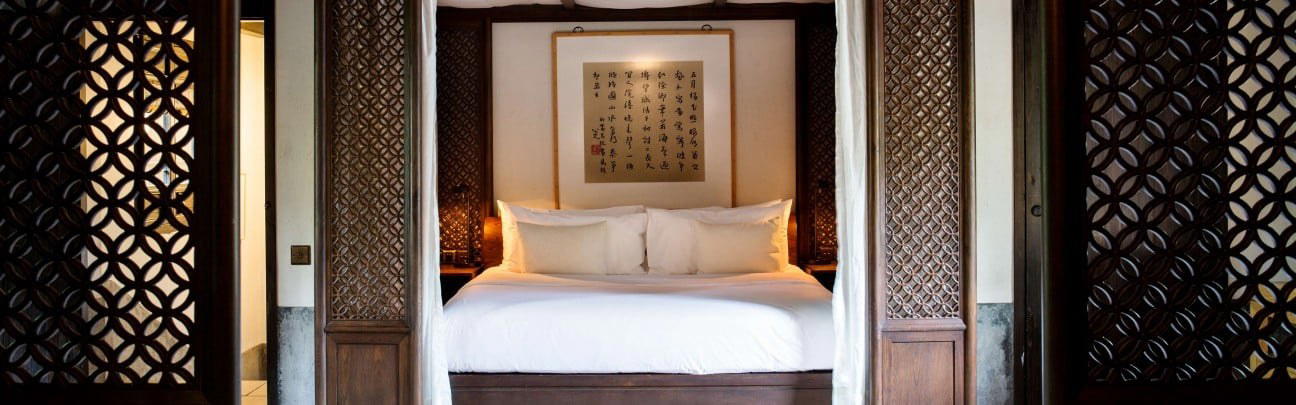
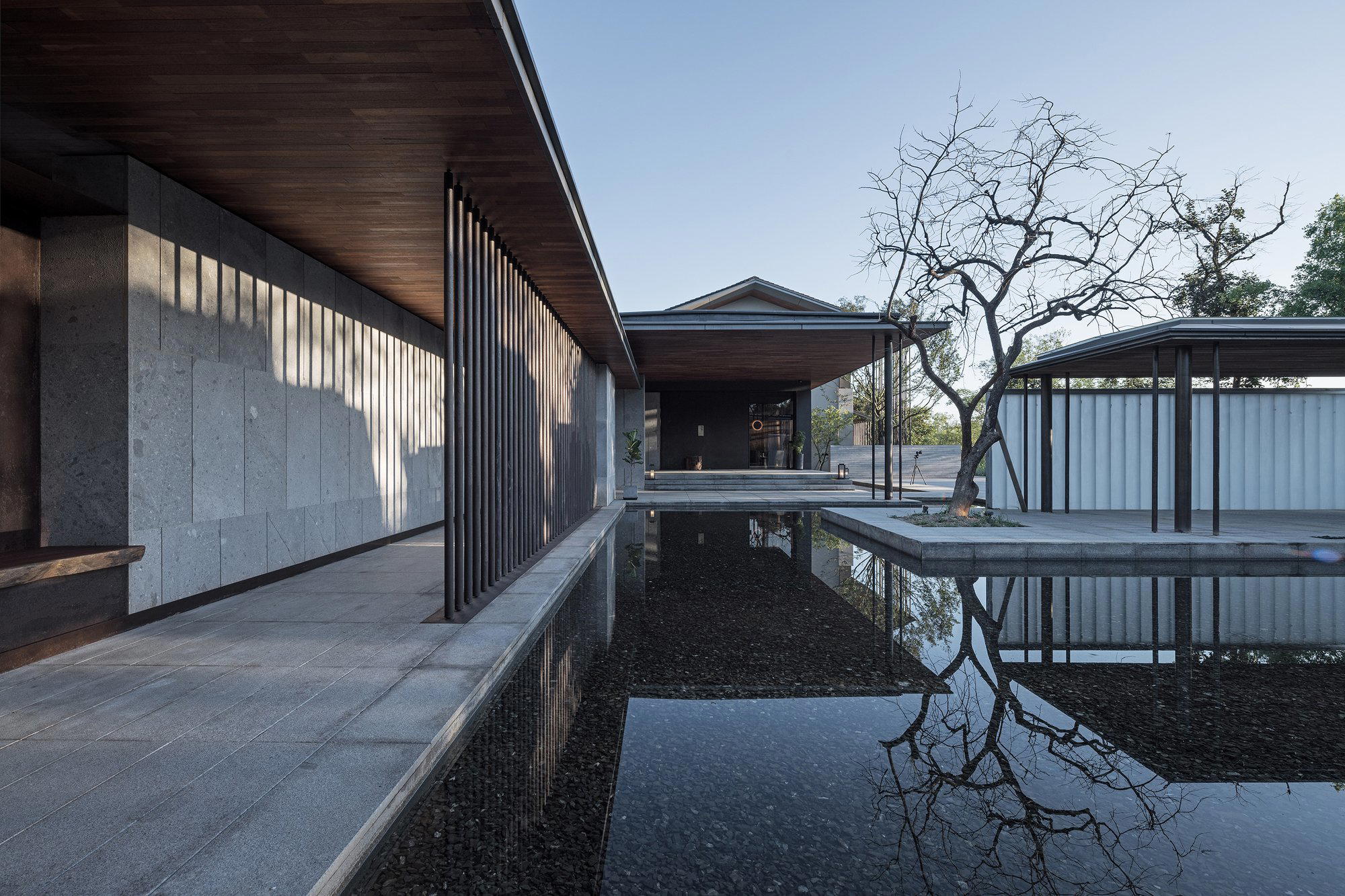
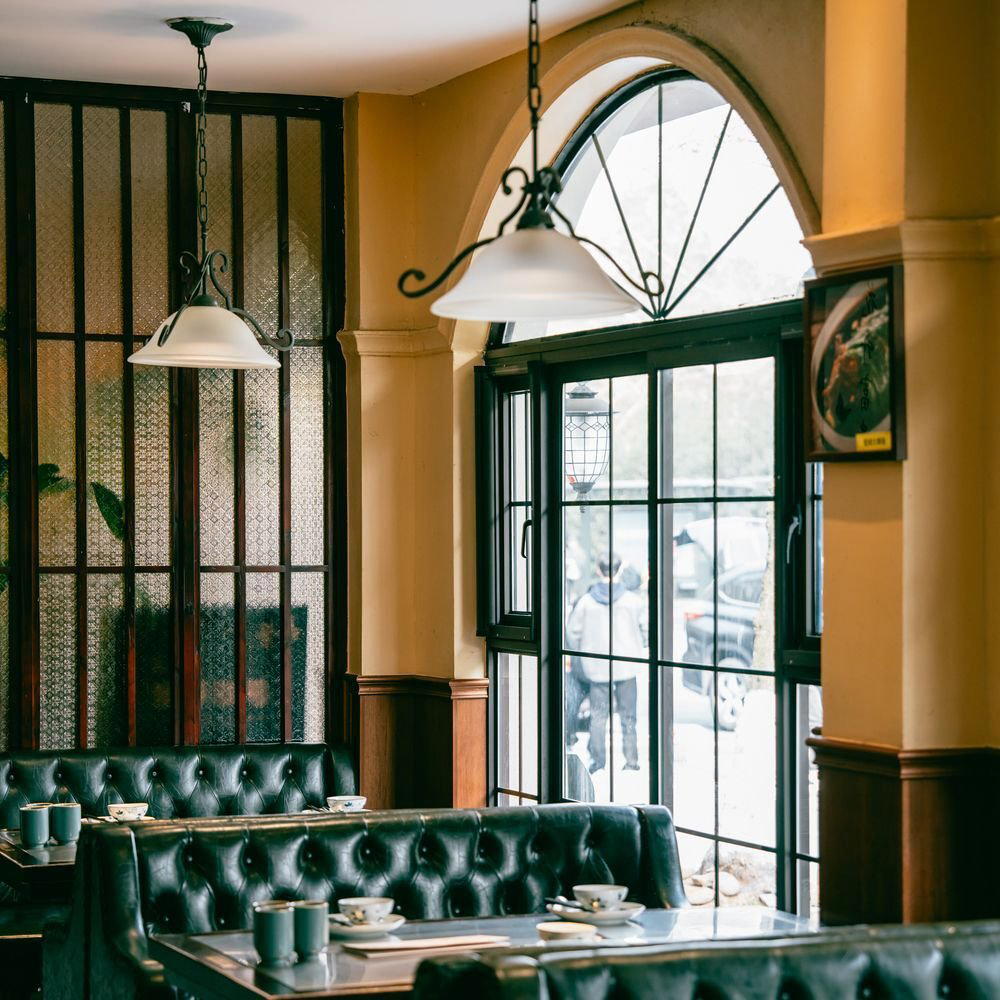
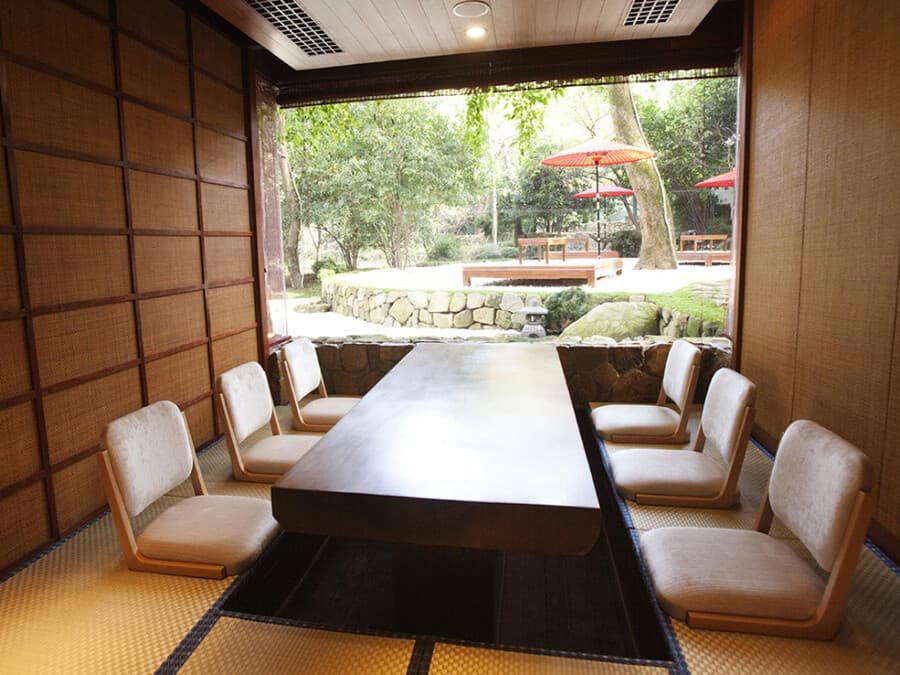
Chinese resort design frequently resolves the tension between local tradition and international luxury through addition: layered ornamentation, theatrical lobbies, materials selected to signal expense. Fuchun takes the opposite approach. The design vocabulary draws on Song Dynasty structural forms, with dark wooden pillars that anchor the lobby, gleaming wooden floors throughout, and furnishings that are described as simple and sturdy rather than decorative. Contemporary Chinese art from Taiwan introduces colour without disrupting the tonal register. A Balinese influence appears in certain spatial and material choices, but the overall effect is one of considered subtraction rather than accumulation.
This places the property in a specific niche within Chinese luxury hospitality, closer in philosophy to Amandayan in Lijiang or Xiamen Yunding Resort than to the internationally branded towers represented by Midtown, Hangzhou or Conrad Hangzhou.
The Rooms: Living Inside the Painting
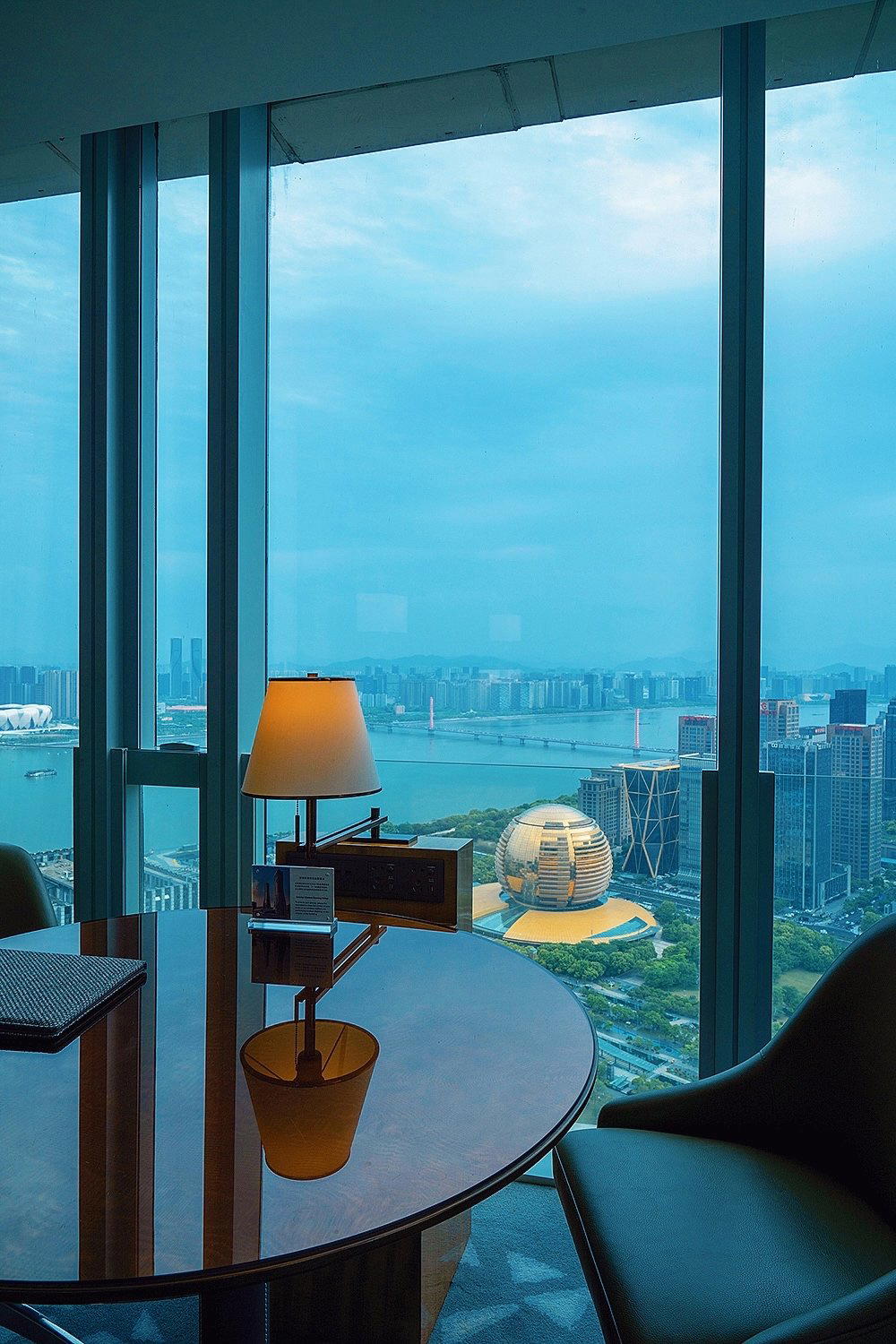
The overnight experience at Fuchun is organised around a single architectural decision: nearly every space in the property incorporates windows oriented toward the natural surroundings. In practice, this means that the quality of your room is partly a function of what you can see from it, and partly a function of how the bathroom is positioned relative to that view.
The property holds 28 rooms and 57 suites, spanning a range from a 388-square-foot deluxe garden view room to a 2,540-square-foot lakeside villa with its own garden and Jacuzzi. The room-to-suite ratio is deliberately skewed toward larger configurations, which reflects both the clientele's expectations and the site's capacity to absorb space without crowding. At the entry level, the deluxe garden view rooms are equipped with Gilchrist and Soames bath products, rainforest showerheads, and heated toilet seats, alongside the dark wood furniture and flooring consistent across all categories. One practical note: superior and deluxe room categories include a shower stall without a bathtub. If a soaking bath is part of how you decompress, the suite tier is necessary, not optional.
Suite bathroom is a more deliberate design statement. The bathtub is positioned against a window, which means the view, tea plantations, lake surface, tree line depending on orientation, is part of the bathing experience rather than walled off from it. This is a compositional choice with a specific logic: the resort is arguing that the landscape is not backdrop but material, something to be inhabited from multiple positions throughout the day, including horizontal ones. Robes, kimonos, and slippers are provided to extend that logic into movement around the property.
At the top of the range, the lakeside villa format provides a living room and private garden with Jacuzzi, which effectively creates a self-contained compound. For families or guests who prefer their luxury bounded rather than shared, this configuration operates at a different scale than the standard room categories, closer in feel to the villa-format properties represented by Banyan Tree Hangzhou or 1 Hotel Haitang Bay, Sanya.
Seasons and Activities: The Property as Calendar
The resort's activity programming changes with the season in ways that reward repeat visits across the calendar. Spring and summer lean into the lake and trail network: bike routes through the tea fields and boat trips across the property's lake are the primary draws during these months, both oriented toward movement and low-intensity engagement with the terrain. The tea plantation setting acquires additional significance during spring, when longjing (Dragon Well) tea, the variety Hangzhou is historically associated with, is at its most active cultivation cycle.
Autumn shifts the activity profile toward harvest-oriented experiences: orange picking and sweet potato roasting are listed among the seasonal options, which function as genuinely family-accessible programming rather than curated performance. Winter contracts the outdoor radius but introduces the Lake Lounge as a focal point, where locally grown longjing tea, Chinese checkers, and access to a heated pool form the core of the cold-weather offer. For properties that depend heavily on outdoor setting, winter can expose structural weaknesses; at Fuchun, the indoor offer is coherent enough to hold interest, though guests visiting primarily for landscape access will find the warmer months more rewarding.
Recognition and Peer Positioning
The property earned a 96.5-point score on La Liste's 2026 Leading Hotels ranking, a reference list that draws on global critical sources and restaurant inspection methodology applied to hotels. It also holds the 2025 World Travel Awards title for China's Leading Villa Resort. These two signals position it clearly within the upper tier of China's design-led rural resort category, alongside properties such as Mohe Youran Mountain Residence and Vanke Lake Songhua Yunlu Hotel that share the broader pattern of landscape immersion as the primary value proposition.
Within Hangzhou specifically, the property occupies a distinct position by virtue of its distance from the city centre. Visitors choosing between Fuchun and closer-in alternatives like Four Seasons Hotel Hangzhou at Hangzhou Centre, Hangzhou Muh Shoou Xixi Hotel, or Conrad Hangzhou Tonglu are making a genuine trade-off: the West Lake cultural circuit, the city's tea houses, and its restaurant density are less accessible from Fuyang. The return is proportional: fewer competing guests, a more controlled sensory environment, and a setting that has been deliberately calibrated to reflect a specific chapter of Chinese landscape history.
Planning Your Stay
Fuchun Resort is located at No. 339 Jiangbin Dong Road, Fuyang District, Hangzhou, Zhejiang, 311401. The address puts it approximately 45 to 60 minutes by road from Hangzhou's urban core, and the drive itself passes through river valley terrain that transitions gradually from suburban to agricultural. There is no public transit connection of practical use, so arriving by car or organised transfer is standard. For guests arriving in Hangzhou from other Chinese cities, high-speed rail to Hangzhou East station followed by a private transfer is the most efficient route; for international arrivals, Hangzhou Xiaoshan International Airport is the primary gateway.
The 85-unit property, relatively small by Chinese resort standards, means availability across peak spring and autumn periods warrants advance planning. The seasonal activity calendar makes timing meaningful: guests who want to participate in harvest activities or spring tea experiences should confirm programming before booking around those periods.
For broader context on where Fuchun sits within Hangzhou's hospitality offer, see our full Hangzhou restaurants guide. For comparison points in China's wider luxury hotel circuit, Mandarin Oriental Qianmen in Beijing and Andaz Shenzhen Bay represent the urban-luxury counterpart to Fuchun's rural positioning. For international reference within the Aman design tradition that shares some of Fuchun's restraint philosophy, Aman Venice and Aman New York occupy comparable territory in their respective cities.
In Context: Similar Options
Comparable venues nearby, for context on price, style, and recognition.
| Venue | Cuisine | Price | Awards | Notes |
|---|---|---|---|---|
| Fuchun Resort Hotel FuyangThis venue (the venue you are viewing) | Lakeside luxury resort with traditional Chinese influences | Not listed | La Liste Top Hotels · Forbes Recommended | Not listed |
| voco Hangzhou Binjiang Minghao | Modern design hotel with Art Deco architecture and thoughtful, unstuffy charm. | $100–200 | Michelin Selected | Binjiang District |
| Seven Villas | Intimate Relais & Chateaux resort with seven traditional Chinese villas in a forested West Lake setting. | $500–750 | Relais Chateaux Award | Hangzhoushi |
| Banyan Tree Hangzhou | Seasonally-themed luxury suites and villas blending traditional Jiangnan style with modern comforts in a wetland paradise. | $300–500 | Michelin Selected · Forbes 4-Star | Yuhangxian |
| Amanfayun | traditional Chinese village resort | Not listed | Michelin Selected · La Liste Top Hotels | Hangzhoushi |
| Four Seasons Hotel Hangzhou at Hangzhou Centre | contemporary urban luxury hotel | Not listed | Michelin Selected · Star Wine List | Hangzhoushi |
Recognition history
Dated appearances from independent guides and award organizations, with the underlying list record or original source where available.
La Liste Top Hotels
La Liste
Forbes Recommended
Forbes
World Travel Awards
World Travel Awards
Continue exploring
More in Hangzhou
Hotels in Hangzhou
All hotels in Hangzhou →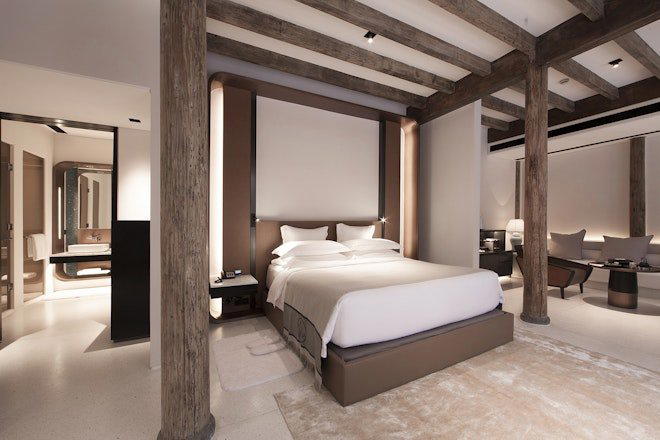
Bars in Hangzhou
All bars in Hangzhou →
Details
- Scenic
- Elegant
- Quiet
- Sophisticated
- Romantic Getaway
- Wellness Retreat
- Weekend Escape
- Golf Course
- Waterfront
- Infinity Pool
- Panoramic View
- Wi Fi
- Pool
- Spa
- Fitness Center
- Room Service
- Concierge
- Business Center
- Valet Parking
- Garden
- Mountain
- Elevator
Serene and elegant atmosphere with natural lighting from lake and garden views, enhanced by traditional Chinese architectural elements around the spacious indoor pool.