
Star Wine List
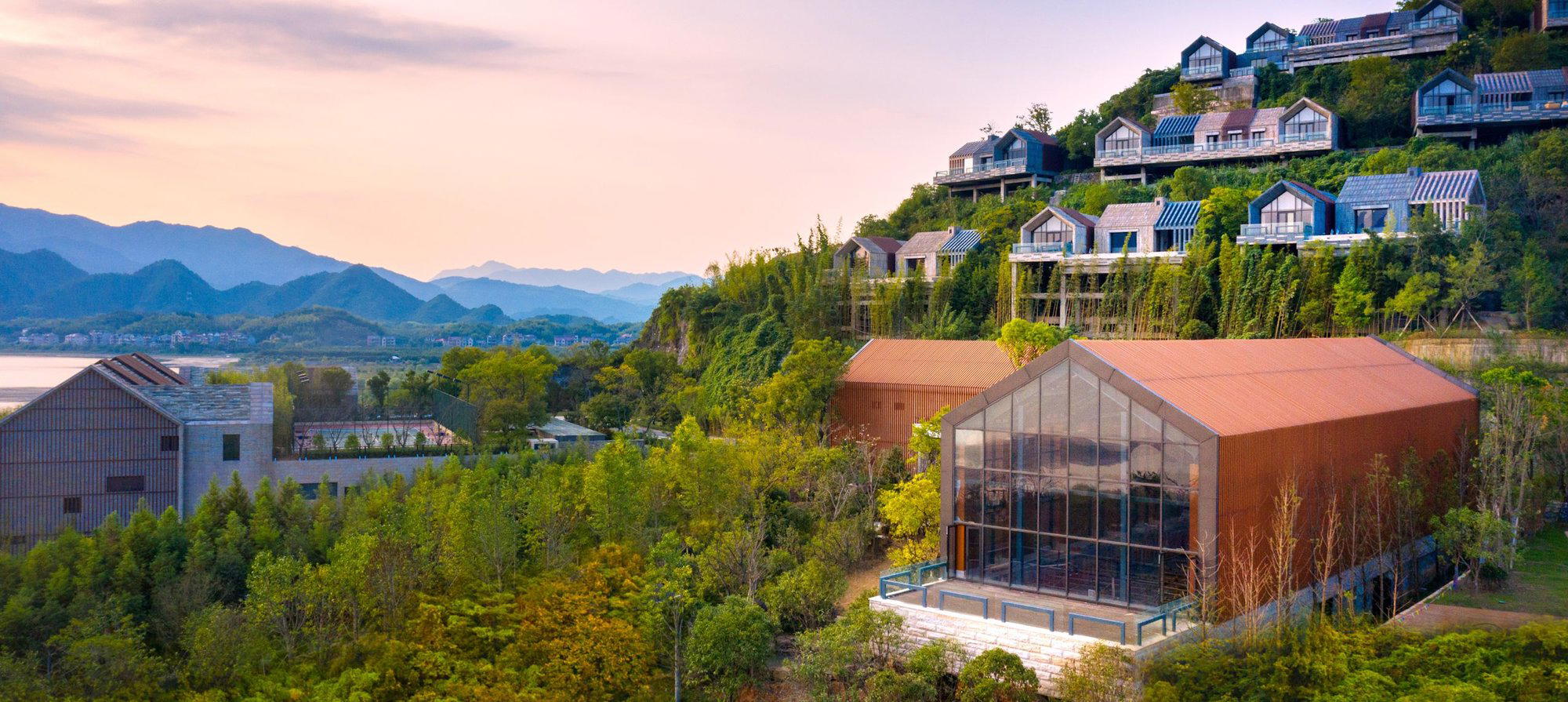
Positioned on the edge of Fenshui Tianxi Lake in the hills west of Hangzhou, Conrad Hangzhou Tonglu operates in a different register from the city's West Lake properties. For travelers weighing Hangzhou's urban and rural options, Tonglu offers the harder-to-reach, quieter end of that spectrum.

Pearl is the En Primeur Club membership app, where members save venues, book tables and use the concierge.
A Different Kind of Hangzhou Address
Hangzhou's reputation as a luxury hotel destination rests heavily on West Lake, where properties like Four Seasons Hotel Hangzhou at West Lake and Amanfayun have spent years refining a particular grammar of lakeside calm. But West Lake is also, in high season, a managed spectacle: tour groups, timed entry points, and hotels that must negotiate proximity to one of China's most-visited sites. The hills to the west tell a different story. Fenshui Town, in Tonglu County, sits along the Fuchun River watershed, a stretch of landscape that Song dynasty painters considered the model for what Chinese hills and water should look like. Conrad Hangzhou Tonglu occupies a position on the edge of Fenshui Tianxi Lake that puts it inside that older tradition rather than adjacent to the city's heritage tourism circuit.
The distinction matters practically. Guests arriving at Tonglu are not sharing a shoreline with day-trippers or competing for restaurant tables with conference groups rotating through a city-center ballroom. The address imposes a certain commitment, this is not a property you drop into for one night between connecting flights, and that commitment shapes who stays and what they find when they arrive.
What the Lake Provides
Chinese resort hospitality has split in recent years between large-footprint properties anchored to infrastructure and smaller, more topographically specific hotels that treat their setting as the program. Conrad Hangzhou Tonglu belongs to the second category. Fenshui Tianxi Lake is not a municipal amenity; it functions as the spatial logic of the property. The water defines sightlines, moderates temperature, and sets a rhythm that urban Hangzhou hotels, regardless of their amenity lists, cannot replicate.
Both sit in the category of Hangzhou-area retreats where the commute from the city center is deliberate rather than incidental, and where the surrounding environment is the primary argument for choosing them. The Banyan Tree Hangzhou and Midtown, Hangzhou serve a different need: urban accessibility and proximity to commercial Hangzhou. Conrad Hangzhou Tonglu is not competing in that segment.
The Wine Program in Context
A Star Wine List recognition in 2026 is not incidental for a hills-and-lake retreat in Zhejiang. The Star Wine List designation tracks beverage programs across hospitality categories and tends to favor properties where the wine offering reflects genuine curation rather than a formulaic international list assembled for brand compliance. For a property operating at this address and distance from the city, holding that recognition signals that the beverage program has been built with the same specificity as the location itself.
Among Hangzhou's broader hotel set, this places Conrad Hangzhou Tonglu in a narrower tier. Properties like Four Seasons Hotel Hangzhou at Hangzhou Centre and Hangzhou Muh Shoou Xixi Hotel serve urban Hangzhou's professional and leisure traveler base. A dedicated wine program recognized by a specialist list is less common in the rural-resort segment, where food and beverage often plays second to spa and activity programming. Regionally across China, properties earning this kind of beverage recognition include the Mandarin Oriental Qianmen in Beijing and urban flagship hotels like JW Marriott Hotel Shanghai at Tomorrow Square, making Tonglu's inclusion in that cohort worth noting for travelers who treat the wine list as part of their criteria for selecting a retreat.
Planning the Stay
Conrad Hangzhou Tonglu is reached via Tonglu County, approximately 70 to 80 kilometers southwest of central Hangzhou. High-speed rail connects Hangzhou East Station to Tonglu Station on the Hangzhounan line, and the property sits a further drive into the Fenshui area. Travelers arriving by car from Hangzhou city will find the journey through the Fuchun River valley corridor a reasonable extension of the hotel experience rather than a logistical obstacle; the landscape transition from urban periphery to forested hills is gradual and legible.
Seasonal timing carries weight at this kind of address. The Hangzhou hills manage their leading light in spring and autumn, when mist over the lake is a feature rather than a forecast problem, and summer humidity, while present, is softened by the elevation relative to the city basin. Winter stays are quieter and the hills take on a different palette; guests seeking solitude over scenery will find the off-peak months reward that preference. For context on how Tonglu fits into a broader Hangzhou itinerary, our full Hangzhou restaurants guide maps the city's dining and hospitality options across neighborhoods and price tiers.
Travelers interested in comparing this property's rural-resort format to similar Chinese offerings elsewhere might consider the Xiamen Yunding Resort in Xiamen, the Vanke Lake Songhua Yunlu Hotel in Jilin, or the Mohe Youran Mountain Residence in Da Hinggan Ling, all of which operate in the category of Chinese resort properties where topography is the primary differentiator. At the other end of the scale and geography, international comparisons might extend to Aman Venice or Amandayan in Lijiang, properties that similarly use a historically significant natural or cultural setting as the architectural logic for the guest experience.
Also worth cross-referencing within the Hilton brand family: Conrad Hangzhou in the city center provides a useful contrast point for travelers deciding between urban and rural Conrad options within the same market. The city property trades on business amenities and lake proximity; Tonglu trades on removal from that infrastructure entirely.
A Lean Comparison
Comparable venues nearby, for context on price, style, and recognition.
| Venue | Price | Awards | Notes |
|---|---|---|---|
| Conrad Hangzhou TongluThis venue (the venue you are viewing) | Not listed | Star Wine List | Not listed |
| voco Hangzhou Binjiang Minghao | $100–200 | Michelin Selected | Binjiang District, Modern design hotel with Art Deco architecture and thoughtful, unstuffy charm. |
| Qiushui Villa | $1,500–2,500 | Small Luxury Hotels of the World Member | Hangzhoushi, Historic villa blending Jiangnan architecture with contemporary luxury |
| Four Seasons Hotel Hangzhou at Hangzhou Centre | Not listed | Michelin Selected · Star Wine List | Hangzhoushi, contemporary urban luxury hotel |
| Amanfayun | Not listed | Michelin Selected · La Liste Top Hotels | Hangzhoushi, traditional Chinese village resort |
| Conrad Hangzhou | Not listed | Forbes Recommended | Jianggan, Contemporary luxury tower with riverfront positioning |
Recognition history
Dated appearances from independent guides and award organizations, with the underlying list record or original source where available.
Star Wine List
Star Wine List
Continue exploring
More in Hangzhou
Bars in Hangzhou
All bars in Hangzhou →
Restaurants in Hangzhou
All restaurants in Hangzhou →
Details
- Scenic
- Elegant
- Sophisticated
- Romantic
- Honeymoon
- Romantic Getaway
- Wellness Retreat
- Family Vacation
- Anniversary
- Celebration
- Private Villa
- Infinity Pool
- Destination Spa
- Waterfront
- Garden
- Terrace
- Panoramic View
- Wi Fi
- Pool
- Spa
- Fitness Center
- Room Service
- Concierge
- Valet Parking
- EV Charging
- Restaurant
- Bar
- Tennis Court
- Waterfront
- Mountain
- Garden
- Wheelchair Accessible
- Elevator
- Step Free Entrance
- Accessible Restroom
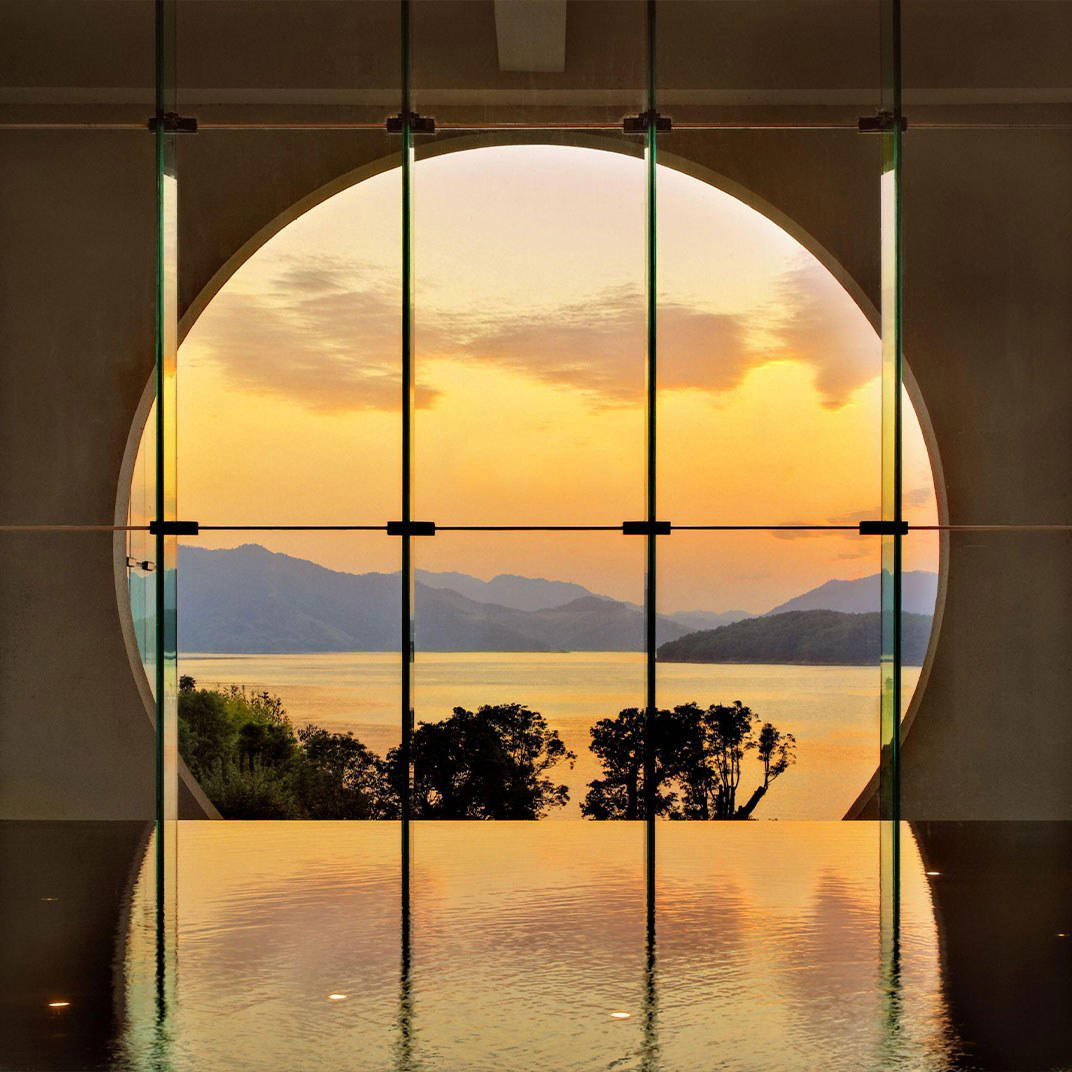
Serene and sophisticated with natural wood and stone elements, soft earthy tones, and abundant natural light; guests praise the poetic lake and mountain views with stylish indoor pool overlooking the landscape.